
As sun protection evolves beyond basic UV defense, tinted sunscreens have surged in popularity—especially among those who value both skincare and appearance. Marketed as multitaskers that blend SPF with light coverage, these formulas promise to protect, even out skin tone, and reduce makeup steps. But do they deliver on all fronts? And what about the common complaint of white cast or residue? For many, the choice between tinted sunscreen and traditional SPF isn’t just about efficacy—it’s a balance between cosmetic elegance and functional reliability.
This article dives deep into the differences between tinted and regular sunscreens, examining their ingredients, application experience, suitability for different skin types, and long-term impact on skin health. Whether you're building a minimalist routine or seeking optimal sun protection without compromising aesthetics, understanding the real trade-offs is essential.
What Sets Tinted Sunscreen Apart?
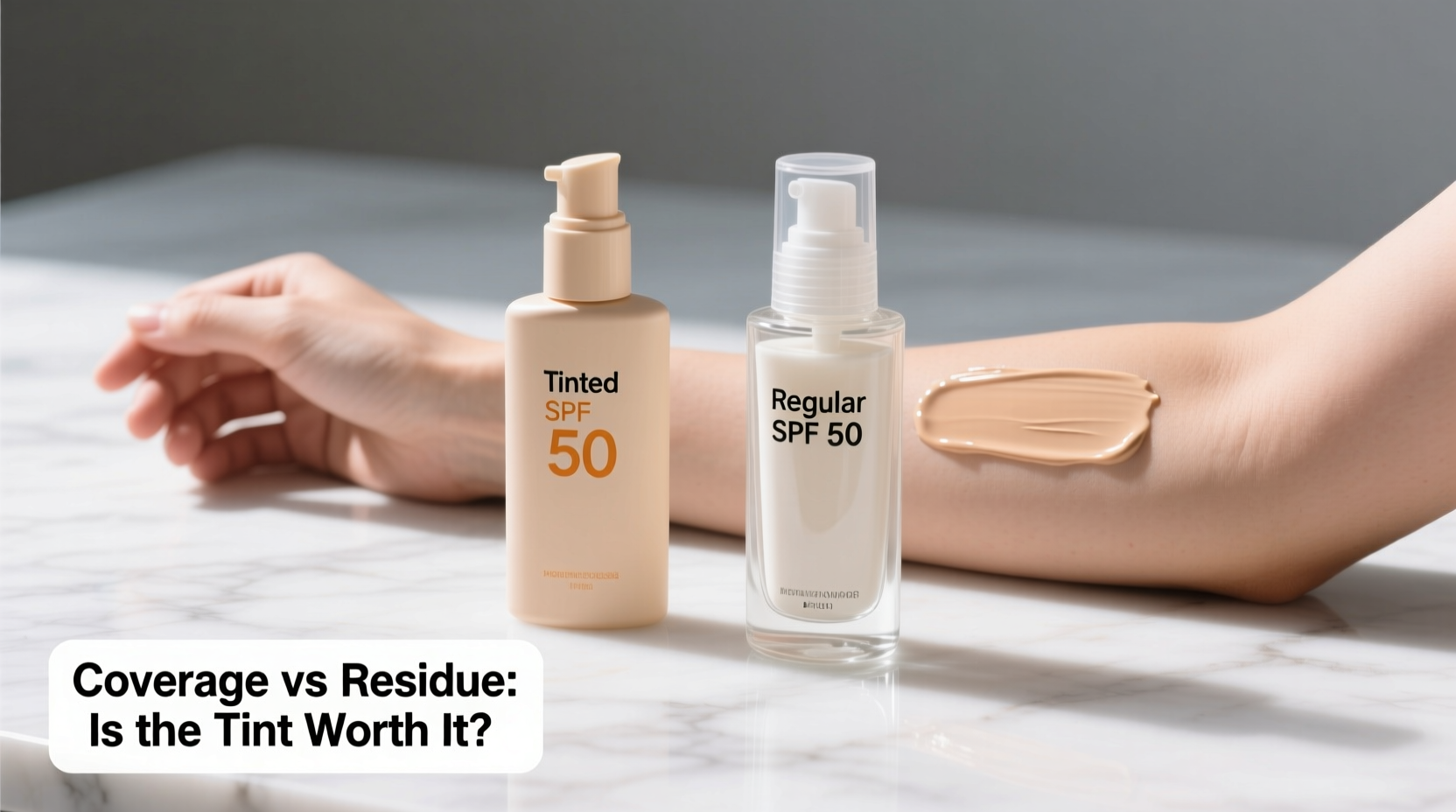
Tinted sunscreens contain mineral-based active ingredients—typically zinc oxide or titanium dioxide—combined with iron oxides that provide subtle color correction. Unlike chemical sunscreens, which absorb UV rays, mineral filters sit on the skin’s surface and deflect them. The addition of pigment helps neutralize the white cast often associated with high concentrations of zinc oxide, especially on deeper skin tones.
The tint serves multiple purposes: it camouflages redness, evens out discoloration, and can function as a lightweight alternative to foundation. Many users appreciate the “no-makeup” look it supports—providing sun protection while enhancing natural radiance without clogging pores or requiring additional products.
However, this convenience comes with limitations. Because the pigments are dispersed unevenly across batches or mismatched to skin tones, some users report patchiness, oxidation (darkening after application), or an unnatural finish. These cosmetic issues are not flaws in protection but rather formulation challenges that affect user satisfaction.
How Regular SPF Performs Across Skin Types
Traditional sunscreens come in two primary forms: chemical and physical (mineral). Chemical variants like avobenzone, octinoxate, and oxybenzone penetrate the skin and convert UV radiation into heat. They tend to be lighter in texture, easier to layer under makeup, and less likely to leave visible residue. However, they may irritate sensitive skin and require 20 minutes to become effective after application.
Mineral SPFs, meanwhile, act immediately upon application and are generally better tolerated by reactive or acne-prone complexions. Their downside? A chalky appearance, particularly on medium to deep skin tones, unless formulated with micronized particles or dispersion technologies to minimize whitening.
For individuals prioritizing simplicity and compatibility over cosmetic enhancement, regular SPF remains a reliable standard. It’s widely available in various textures—from gels to sprays—and often integrates more seamlessly into diverse skincare regimens without introducing variables like shade matching.
Comparative Analysis: Tinted vs. Regular SPF
| Feature | Tinted Sunscreen | Regular SPF |
|---|---|---|
| UV Protection | Broad-spectrum (UVA/UVB), typically mineral-based | Broad-spectrum; depends on active ingredients |
| Cosmetic Finish | Light coverage, evens tone, reduces redness | Invisible or slightly glossy; no color correction |
| White Cast | Minimal due to iron oxides | Common with mineral-only formulas |
| Skin Type Suitability | Better for dry to normal skin; limited shades for deep tones | Versatile; options for oily, sensitive, and acne-prone skin |
| Makeup Replacement | Potentially eliminates need for BB cream or light foundation | No coverage; requires separate base product |
| Residue Risk | Moderate (oxidation, pilling with incompatible layers) | Low to moderate (depends on formula) |
The Residue Debate: Cosmetic Trade-Offs Explained
One of the most frequent complaints about tinted sunscreens is residual texture—whether it's slight greasiness, pilling when layered with other products, or a mask-like appearance after several hours. This residue stems from interactions between emollients, film formers, and pigments in the formula, particularly when combined with silicones or certain moisturizers.
Moreover, because tinted versions often rely on heavier bases to suspend color evenly, they may feel thicker than their untinted counterparts. While modern formulations have improved significantly—with fluid textures and airier finishes—residue remains a concern for users with combination or oily skin.
“Tinted sunscreens offer real benefits for daily wear, but formulation quality varies widely. Poorly blended pigments can lead to separation or flashback under flash photography.” — Dr. Lena Torres, Board-Certified Dermatologist
Another issue is longevity. Some tinted sunscreens oxidize throughout the day, darkening beyond the intended shade match. This phenomenon occurs due to reactions between iron oxides and sebum or environmental pollutants. In contrast, regular SPFs maintain consistent appearance but offer zero aesthetic adjustment.
Real-World Use Case: A Week with Tinted SPF
Sophia, a 34-year-old marketing professional with light-medium olive skin and mild rosacea, decided to test a popular tinted mineral sunscreen for seven days. Her goal was to simplify her morning routine and eliminate the need for a green-tinted primer and lightweight foundation.
She chose a broad-spectrum SPF 40 tinted sunscreen known for its inclusive shade range. On day one, she noticed immediate redness reduction and a healthy glow. However, by midday, slight shine developed along her T-zone, and after reapplying at lunch, she experienced minor pilling around her nose where her serum hadn’t fully absorbed.
By day four, she adjusted her layering order—using a water-based moisturizer and waiting three minutes before applying the sunscreen. Results improved dramatically: smoother application, no pilling, and consistent wear through eight-hour workdays. On weekends, when she skipped makeup entirely, the sunscreen provided enough coverage to feel polished.
Still, during an outdoor evening event under warm lighting, a friend pointed out a faint grayish undertone near her hairline. Upon checking a photo later, Sophia observed slight flashback—a common issue with zinc oxide when exposed to camera flashes.
Her takeaway? Tinted sunscreen worked well with proper prep and realistic expectations, but wasn’t foolproof. For high-glow situations or night events, she preferred her regular SPF paired with a tinted moisturizer.
Expert Recommendations for Choosing Wisely
Dermatologists emphasize that the best sunscreen is the one you’ll use consistently. If tinted SPF encourages daily application because it improves your complexion, it may be worth navigating minor cosmetic drawbacks. However, effectiveness should never be sacrificed for aesthetics.
- Check active ingredients: Ensure the product offers broad-spectrum protection with at least SPF 30. Look for non-nano zinc oxide for stable UVA protection.
- Match your undertone: Warm, cool, or neutral—many brands now offer dual-shade systems or gradient blends for better customization.
- Avoid fragrance and alcohol: These can increase irritation risk, especially in daily-wear products.
- Reapply effectively: Tinted sunscreens are harder to reapply over makeup. Consider a compatible powder SPF or setting spray with SPF for touch-ups.
“The ideal sunscreen balances protection, wearability, and personal preference. Tinted options fill a niche for those wanting simplicity—but only if the shade matches and doesn’t compromise comfort.” — Dr. Rajiv Mehta, Photodermatology Specialist
Step-by-Step Guide: How to Incorporate Tinted Sunscreen Into Your Routine
- Cleanse and tone: Start with a fresh face to ensure even absorption.
- Apply treatment serums: Use vitamin C, hyaluronic acid, or niacinamide as needed.
- Moisturize: Choose a lightweight, non-comedogenic formula suited to your skin type.
- Wait 3–5 minutes: Allow previous layers to absorb fully to prevent pilling.
- Apply tinted sunscreen: Use two fingers’ worth for the face and neck. Blend outward and downward for seamless edges.
- Evaluate finish: Let it set for five minutes. If too shiny, blot lightly or set with translucent powder.
- Reapplication strategy: Keep a sponge or puff and a travel-sized version for midday touch-ups if going makeup-free.
Frequently Asked Questions
Can I use tinted sunscreen if I have oily skin?
Yes, but choose oil-free, matte-finish formulas labeled “non-comedogenic.” Some tinted sunscreens are specifically designed for combination to oily skin, using silica or clay to control shine. Avoid heavy creams or those with coconut oil derivatives.
Do tinted sunscreens replace foundation?
They can for light coverage needs. Most tinted SPFs offer sheer to medium buildable coverage, ideal for everyday wear. However, they lack the pigment concentration or staying power of full-coverage foundations, especially in humid conditions or for special events.
Are tinted sunscreens reef-safe?
Many are, especially those using non-nano zinc oxide and excluding oxybenzone and octinoxate. Always verify labels against reef-safe certifications like “Protect Land + Sea” or Hawaii’s regulatory standards if swimming in marine environments.
Final Checklist Before You Switch
- ✔️ Have I tested the shade in natural light?
- ✔️ Does it leave a white cast or oxidize within two hours?
- ✔️ Is the texture comfortable for my skin type?
- ✔️ Does it pill when layered with my current products?
- ✔️ Am I still getting adequate SPF application volume?
- ✔️ Can I reapply easily during the day?
Conclusion: Balancing Coverage and Comfort
Tinted sunscreen represents a meaningful evolution in sun protection—one that acknowledges the desire for both health and harmony in daily routines. For many, the slight risk of residue is outweighed by the benefits of simplified regimens, reduced makeup dependency, and enhanced confidence in bare-faced moments.
Yet, it’s not a universal upgrade. Those with highly sensitive skin, specific texture preferences, or inconsistent reapplication habits may find greater value in trusted regular SPF paired with separate color correctors or moisturizers. Ultimately, the decision hinges on personal priorities: Is the convenience of coverage worth occasional cosmetic compromises?
The answer varies from person to person. What matters most is consistent, sufficient sun protection—regardless of whether it comes with a hint of color or stays perfectly invisible. Evaluate your lifestyle, test thoroughly, and choose the option that supports long-term adherence. After all, the best sunscreen isn’t the fanciest or trendiest—it’s the one you actually use every single day.




 浙公网安备
33010002000092号
浙公网安备
33010002000092号 浙B2-20120091-4
Comments
No comments yet. Why don't you start the discussion?