
Choosing the right sunscreen isn’t just about SPF numbers or texture—it’s about how it performs on your skin. For many, especially those with deeper skin tones or sensitive complexions, the dreaded white cast from traditional sunscreens is a major concern. Enter tinted sunscreen: a hybrid product that promises sun protection and cosmetic elegance in one. But does it really outperform regular sunscreen when it comes to coverage and eliminating white residue? The answer depends on formulation, skin tone, and daily needs.
Understanding the differences between tinted and regular sunscreens—and how each interacts with various skin types—can help you make a smarter, more personalized choice for both skincare and appearance.
How Sunscreen Causes White Cast
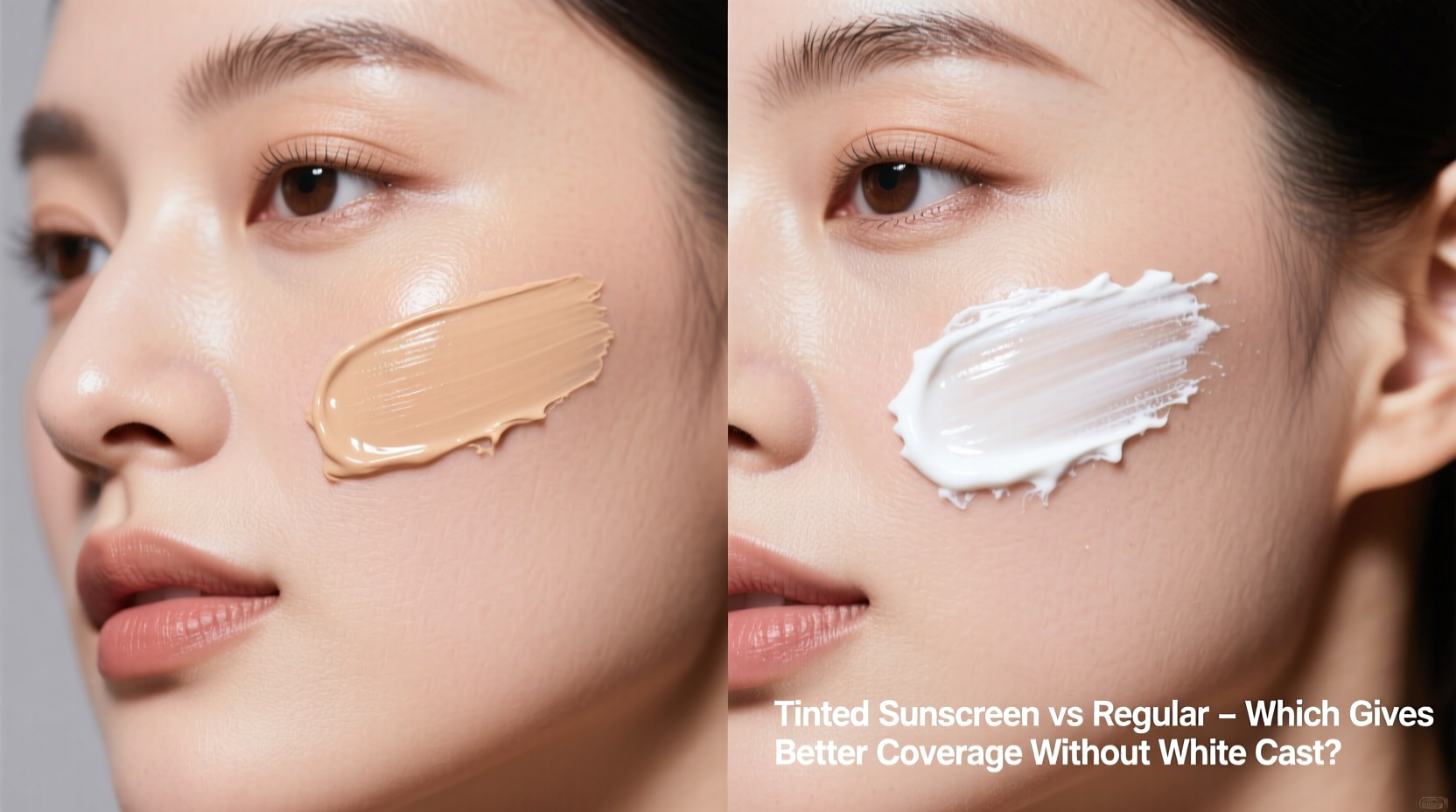
The white cast commonly associated with sunscreens stems primarily from physical (mineral) UV filters like zinc oxide and titanium dioxide. These ingredients sit on top of the skin and reflect UV rays, which makes them effective and less likely to cause irritation. However, their natural opacity can scatter light unevenly, resulting in a chalky, ashen appearance—especially on medium to deep skin tones.
Chemical sunscreens, which absorb UV radiation rather than reflecting it, typically avoid this issue due to their transparent nature. Yet, they may not be suitable for all skin types, particularly those prone to sensitivity or reactivity.
Tinted sunscreens aim to bridge this gap by incorporating iron oxides into mineral formulas. These pigments counteract the white cast by blending with the skin’s natural tone, offering a more seamless finish while still providing broad-spectrum protection.
Key Differences: Tinted vs Regular Sunscreen
While both types protect against UVA and UVB rays, their composition and aesthetic outcomes vary significantly. Below is a detailed breakdown of core distinctions.
| Feature | Tinted Sunscreen | Regular Sunscreen |
|---|---|---|
| UV Filters | Often mineral-based with added iron oxides | Mineral, chemical, or hybrid |
| White Cast Risk | Low to none (if matched to skin tone) | High in mineral versions; low in chemical |
| Coverage | Light to medium (evens tone, hides redness) | None (purely protective) |
| Skin Tone Suitability | Broad range, especially beneficial for deeper tones | Limited in mineral forms for darker skin |
| Makeup Replacement? | Potentially yes—acts as a base layer | No |
| Sensitivity-Friendly | Often yes (mineral + pigment = stable) | Depends on formula |
The inclusion of colorants in tinted sunscreens does more than improve aesthetics. Iron oxides also provide additional protection against visible light, which has been shown to exacerbate hyperpigmentation, particularly in individuals with melasma or post-inflammatory marks. This makes tinted options especially valuable for people of color and those managing pigmentary disorders.
Who Benefits Most From Tinted Sunscreen?
Tinted sunscreens are not universally necessary, but they offer distinct advantages for specific groups:
- Darker skin tones: Mineral sunscreens often leave an unnatural gray or purple hue on rich complexions. Tinted versions neutralize this effect with warm undertones.
- Individuals with melasma or PIH: Iron oxides block high-energy visible light, reducing triggers for pigment activation.
- Minimalist routines: People who want sun protection plus light coverage without applying foundation benefit from the two-in-one function.
- Sensitive skin users: Many tinted sunscreens use gentle, non-comedogenic mineral bases ideal for reactive skin.
“Tinted sunscreens represent a significant advancement in inclusive skincare. They address both photoprotection and cosmetic acceptability—two factors that directly impact compliance.” — Dr. Lena Patel, Board-Certified Dermatologist
A Real-World Example: Sarah’s Switch to Tinted SPF
Sarah, a 34-year-old marketing executive with Fitzpatrick skin type V, had long avoided mineral sunscreens due to the persistent ashiness they left on her skin. She resorted to chemical formulas, but frequent breakouts led her to reconsider. After trying a tinted mineral sunscreen recommended by her dermatologist, she noticed immediate improvements—not only was there no white cast, but her post-acne marks appeared less noticeable under natural light.
Within weeks, Sarah eliminated her lightweight concealer from her morning routine. “It’s not full coverage,” she said, “but it evens things out enough that I feel confident without makeup.” Her experience reflects a growing trend: consumers prioritizing multifunctional products that respect both health and appearance.
Choosing the Right Shade: Avoiding Common Mistakes
Even the best tinted sunscreen fails if the shade doesn’t match. Unlike foundation, SPF tints are often offered in limited ranges—usually just 3–5 options. Here’s how to select wisely:
- Test in natural light: Artificial lighting distorts perception. Apply a small amount along your jawline outside during midday.
- Check blendability: Does it sheer out evenly or settle into patches? A good tint should melt into the skin without streaking.
- Look beyond depth: Undertone matters. Warm, cool, and neutral variants affect how naturally the product disappears.
- Reapply realistically: If you're using a tinted SPF over makeup, consider whether reapplication will disrupt your look.
Step-by-Step Guide to Transitioning to Tinted Sunscreen
If you’re ready to try tinted sunscreen, follow this practical sequence to ensure success:
- Evaluate your current sunscreen issues: Are you dealing with white cast, pilling, or poor wear time? Identify pain points to guide selection.
- Determine your skin type: Oily, dry, combination, or sensitive? Choose a formula (matte, hydrating, etc.) accordingly.
- Assess your need for coverage: Do you want to replace your BB cream or just eliminate white residue? This affects opacity preference.
- Research inclusive brands: Prioritize companies known for diverse shade ranges (e.g., Supergoop!, EltaMD, Black Girl Sunscreen).
- Sample before committing: Use travel sizes or single-dose packets to test shade and texture.
- Incorporate into routine: Apply after moisturizer and before makeup (or alone). Allow 2–3 minutes to set before layering.
- Monitor performance: Track how it wears throughout the day, especially under humidity or sweat.
This methodical approach prevents wasted spending and ensures compatibility with your lifestyle and aesthetic goals.
Do's and Don'ts of Using Tinted Sunscreen
| Action | Recommendation |
|---|---|
| Do patch-test for sensitivity | Especially important with iron oxides, though rare, some may react. |
| Do shake well before use | Pigments can settle; shaking ensures even distribution. |
| Don’t apply too thickly | Over-application increases rubbing off and may look cakey. |
| Don’t skip reapplication | Tint fades with friction and sweat—reapply every 2 hours when exposed. |
| Do pair with a makeup sponge for seamless finish | Helps press product into skin without dragging. |
| Don’t assume one shade fits all seasons | You may need a lighter tint in winter and deeper in summer. |
Frequently Asked Questions
Can tinted sunscreen replace my foundation?
For light coverage, yes—especially if you have minor redness or discoloration. However, it won’t match the buildable coverage of most foundations. Think of it as a “skin enhancer” rather than a full replacement.
Is tinted sunscreen safe for acne-prone skin?
Many tinted sunscreens are non-comedogenic and formulated for sensitive or acne-prone skin. Look for labels like “oil-free,” “non-pore clogging,” and avoid heavy silicones if breakouts are a concern.
Why do some tinted sunscreens pill when layered?
Pilling often results from ingredient incompatibility—particularly between water-based actives (like vitamin C) and silicone-heavy sunscreens. To prevent this, allow each layer to absorb fully, or switch to formulations with similar base chemistry.
Final Verdict: Which Offers Better Coverage Without White Cast?
When evaluating coverage and white cast elimination, tinted sunscreen clearly outperforms regular sunscreen—provided the shade matches your complexion. It delivers invisible protection, evens skin tone, and offers mild corrective benefits, all while maintaining the safety profile of mineral UV filters.
Regular sunscreens, particularly chemical ones, may avoid white cast but lack the added visual correction and visible light defense of tinted versions. Meanwhile, untinted mineral sunscreens remain problematic for many due to residual pallor.
Ultimately, if you’ve struggled with the appearance of traditional sunblocks, switching to a well-formulated tinted option could solve both functional and cosmetic concerns. The key lies in thoughtful selection: matching shade, understanding your skin’s needs, and prioritizing products designed with inclusivity in mind.




 浙公网安备
33010002000092号
浙公网安备
33010002000092号 浙B2-20120091-4
Comments
No comments yet. Why don't you start the discussion?