
Flying with a cat in the cabin can be a daunting experience—for both pet owners and their feline companions. Unlike dogs, cats are highly sensitive to environmental changes, and the unfamiliar sights, sounds, and smells of an airport and airplane can trigger anxiety, vocalization, or even panic. However, with proper preparation and thoughtful strategies, it’s entirely possible to help your cat remain calm and quiet throughout the flight. This guide provides practical, evidence-based techniques used by veterinarians, animal behaviorists, and experienced pet travelers to ensure a smoother journey.
Understand Your Cat’s Travel Personality
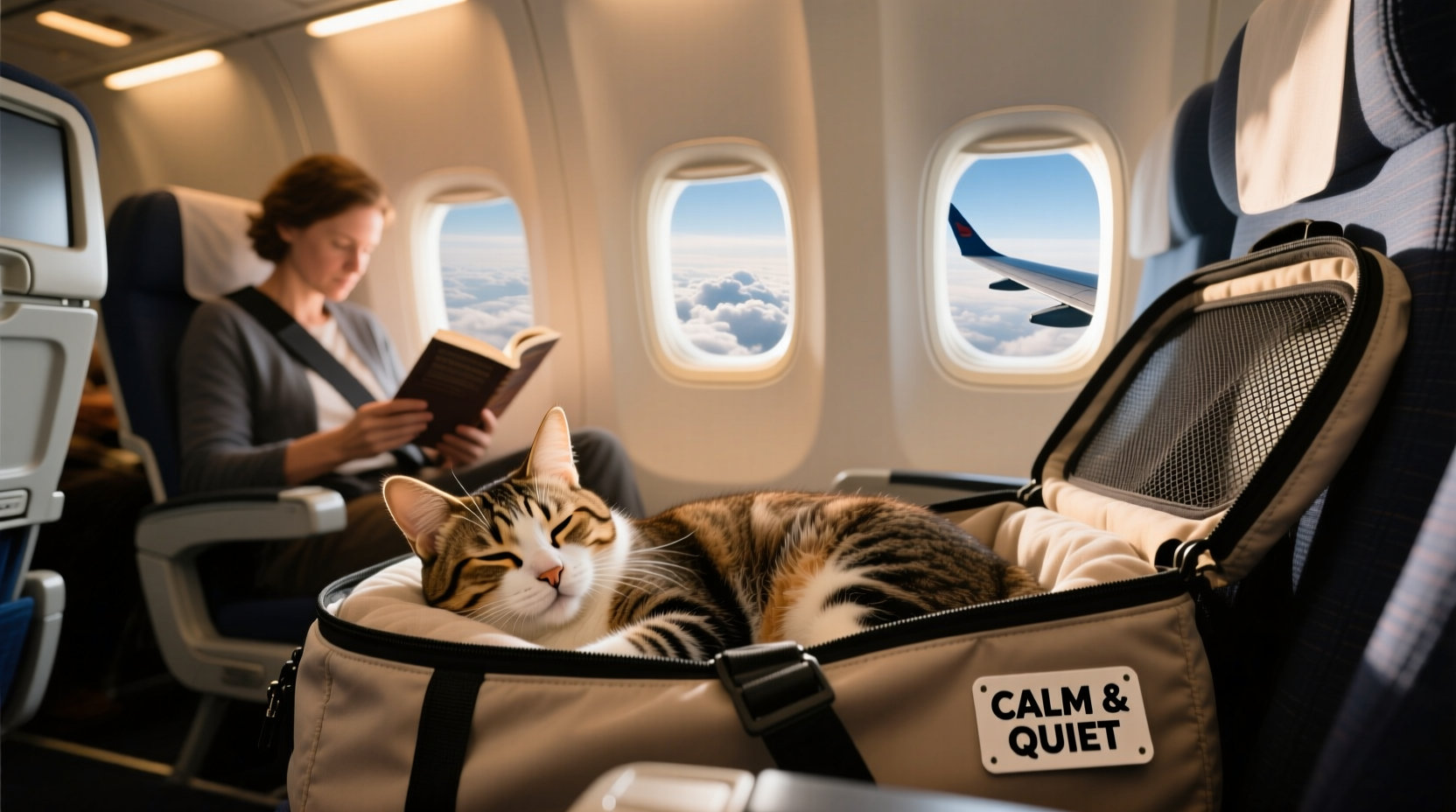
Cats vary widely in temperament. Some adapt easily to new environments, while others become stressed at the mere sight of a carrier. Before booking a flight, assess your cat’s baseline reaction to change. Does your cat hide when guests arrive? Panic during car rides? Or do they remain curious and composed under mild disruptions?
Knowing your cat’s stress triggers helps tailor your approach. A nervous cat will need more desensitization and calming aids, while a confident one may only require routine preparation. Never assume all cats react the same way—individualized care is key.
Choose the Right Carrier and Acclimate Early
The carrier is your cat’s safe zone during travel. It should be airline-compliant (soft-sided, under 18 x 11 x 11 inches for most U.S. carriers), well-ventilated, and escape-proof. But functionality isn’t enough—it must also feel like a den, not a prison.
Begin acclimating your cat weeks before departure. Leave the carrier open in a quiet room with a soft blanket, treats, and toys inside. Encourage exploration by placing meals near it, then gradually inside. Never force entry. Over time, your cat may start napping in it voluntarily—a sign of comfort.
“Cats form strong associations with spaces. If the carrier becomes a positive environment pre-travel, it reduces fear responses during transit.” — Dr. Lena Patel, Feline Behavior Specialist, American Veterinary Medical Association
Step-by-Step: Acclimation Timeline (4 Weeks Before Flight)
- Week 1: Place carrier in living area with door open; add favorite blanket and treats.
- Week 2: Feed meals near the carrier; toss treats inside to encourage entry.
- Week 3: Close the door briefly while your cat is inside, offering praise and rewards.
- Week 4: Take short car rides (5–10 minutes) with the carrier secured on the floor.
Pre-Flight Preparation: Health, Documentation, and Packing
Airline policies for in-cabin pets vary. Most require health certificates issued within 10 days of travel, proof of rabies vaccination, and a carrier that fits under the seat. International flights often have stricter rules, including microchip requirements and import permits.
Schedule a vet visit at least two weeks prior to confirm your cat is healthy enough to fly. Older cats or those with respiratory conditions may struggle with cabin pressure changes. Discuss sedation options cautiously—most airlines prohibit sedatives unless medically necessary, as they can impair breathing at altitude.
Essential In-Cabin Cat Travel Checklist
- ✔ Airline-approved carrier with secure zippers
- ✔ Recent health certificate and vaccination records
- ✔ Soft absorbent pad or liner for the carrier bottom
- ✔ Familiar-smelling item (e.g., worn t-shirt from owner)
- ✔ Collapsible food/water bowl
- ✔ Small supply of food, water, and treats
- ✔ Waste disposal bags and mini litter scoop
- ✔ Calming pheromone spray (e.g., Feliway)
- ✔ Leash and harness (for emergencies only)
- ✔ Copy of emergency contact and vet info
Strategies to Keep Your Cat Calm During the Flight
Once onboard, your goal is to minimize stimulation and maintain a sense of safety. The cabin environment—overhead bins closing, engine noise, passenger movement—is inherently stressful. Proactive management makes all the difference.
Use Sound Dampening Techniques
Background noise can spike a cat’s heart rate. Consider draping a lightweight blanket partially over the carrier to create a visual barrier. Avoid covering ventilation areas. For extra sound reduction, use noise-dampening fabric or a purpose-made carrier cover.
Do not play music or white noise directly into the carrier—this can disorient your cat. Instead, use your own noise-canceling headphones to stay calm, which indirectly benefits your pet through your demeanor.
Maintain a Low-Profile Presence
A quiet cat avoids attention. Keep the carrier under the seat in front of you throughout the flight. Avoid opening it during boarding or turbulence. If your cat meows, speak softly and gently place a hand near the carrier to offer reassurance without disturbing other passengers.
Leverage Scent Familiarity
Cats rely heavily on smell. Rubbing a piece of clothing worn for several days around the carrier lining transfers your scent, which has a grounding effect. Avoid strong perfumes or cleaning agents on your hands before handling the carrier.
Minimize Handling and Eye Contact
While it’s tempting to check on your cat frequently, constant peering into the carrier increases their alertness. Limit interaction to brief, calm verbal reassurances. Let them retreat into the back of the carrier if needed—this is normal hiding behavior, not distress.
What Not to Do: Common Mistakes That Increase Stress
Even well-intentioned actions can backfire. Below is a comparison of recommended practices versus counterproductive behaviors.
| Do | Don’t |
|---|---|
| Introduce the carrier gradually over weeks | Wait until travel day to bring out the carrier |
| Feed a light meal 3–4 hours before flight | Feed right before boarding (risk of nausea) |
| Use Feliway or vet-approved calming supplements | Administer human sedatives or essential oils (toxic to cats) |
| Keep the carrier on the floor under the seat | Lift carrier onto lap during takeoff/landing (pressure sensitivity) |
| Stay calm and speak in low tones | Panic or coo loudly if cat vocalizes (reinforces anxiety) |
Real-World Example: Flying with Luna, a Shy Domestic Shorthair
Sophie, a software engineer from Portland, flew with her 3-year-old cat Luna from Seattle to Boston for a family visit. Luna had never left the house and was known to hide under the bed during thunderstorms.
Sophie started preparing four weeks ahead. She purchased a soft-sided Sherpa carrier and left it in the living room with Luna’s favorite fleece blanket. She fed Luna’s breakfast beside it, then gradually moved the bowl inside. By week three, Luna entered willingly for naps.
Ten days before the flight, Sophie visited her vet, who approved travel and recommended Zylkène, a milk-protein-derived supplement given daily for five days pre-flight. On departure day, she sprayed Feliway in the carrier and placed a T-shirt she’d slept in beside Luna.
At the airport, Sophie avoided crowded waiting areas and stayed near a quiet gate. During boarding, she kept the carrier covered with a dark towel. Once seated, she kept her voice low and stroked the carrier gently when Luna meowed once during takeoff.
The flight lasted five hours. Luna remained quiet after the first 20 minutes and even slept for nearly two hours. No complaints were reported by nearby passengers.
Sophie credits success to early acclimation, scent familiarity, and managing her own anxiety. “I focused on breathing slowly,” she said. “If I stayed calm, Luna followed.”
FAQ: Common Questions About Flying with Cats in Cabin
Can I give my cat Benadryl to calm them down?
Not without veterinary guidance. While diphenhydramine (Benadryl) is sometimes used off-label for motion sickness or mild sedation in cats, dosing is weight-dependent and side effects include agitation or lethargy. Many airlines discourage sedation due to risks at altitude. Always consult your vet before administering any medication.
What if my cat starts meowing or crying during the flight?
Soft vocalizations are common, especially during takeoff. Speak calmly and gently touch the carrier. Avoid opening it. Most cats settle within minutes. If persistent, assess for signs of distress: excessive panting, drooling, or vomiting. Notify a flight attendant if you suspect medical issues.
Are there airlines that are more pet-friendly than others?
Yes. Alaska Airlines, Delta, and American Airlines are frequently rated higher for pet accommodations, with clear policies and trained staff. Southwest allows small pets but has limited daily capacity per flight. Always check breed, carrier, and documentation requirements in advance—policies change frequently.
Final Thoughts: Preparation Is the Best Calming Aid
There is no magic solution to guarantee a silent, stress-free flight with your cat. But consistent preparation, understanding feline behavior, and respecting your pet’s limits dramatically improve outcomes. The goal isn’t to suppress natural reactions but to create a buffer against overwhelming stimuli.
Remember: a calm owner leads to a calmer cat. Your breathing, tone of voice, and physical presence matter more than any product or trick. When you approach the journey with patience and empathy, you’re not just surviving the flight—you’re building trust that lasts far beyond landing.




 浙公网安备
33010002000092号
浙公网安备
33010002000092号 浙B2-20120091-4
Comments
No comments yet. Why don't you start the discussion?