
Sleeping 10 hours should leave you feeling refreshed and energized. Yet, if you’re consistently waking up groggy, fatigued, or mentally foggy despite long rest periods, something deeper may be at play. Excessive sleep duration combined with persistent tiredness is not normal—and it’s often a sign that quality, not just quantity, matters. This article explores five key reasons why you might feel tired after 10 hours of sleep and provides actionable solutions grounded in sleep science and clinical research.
1. Poor Sleep Quality Over Quantity
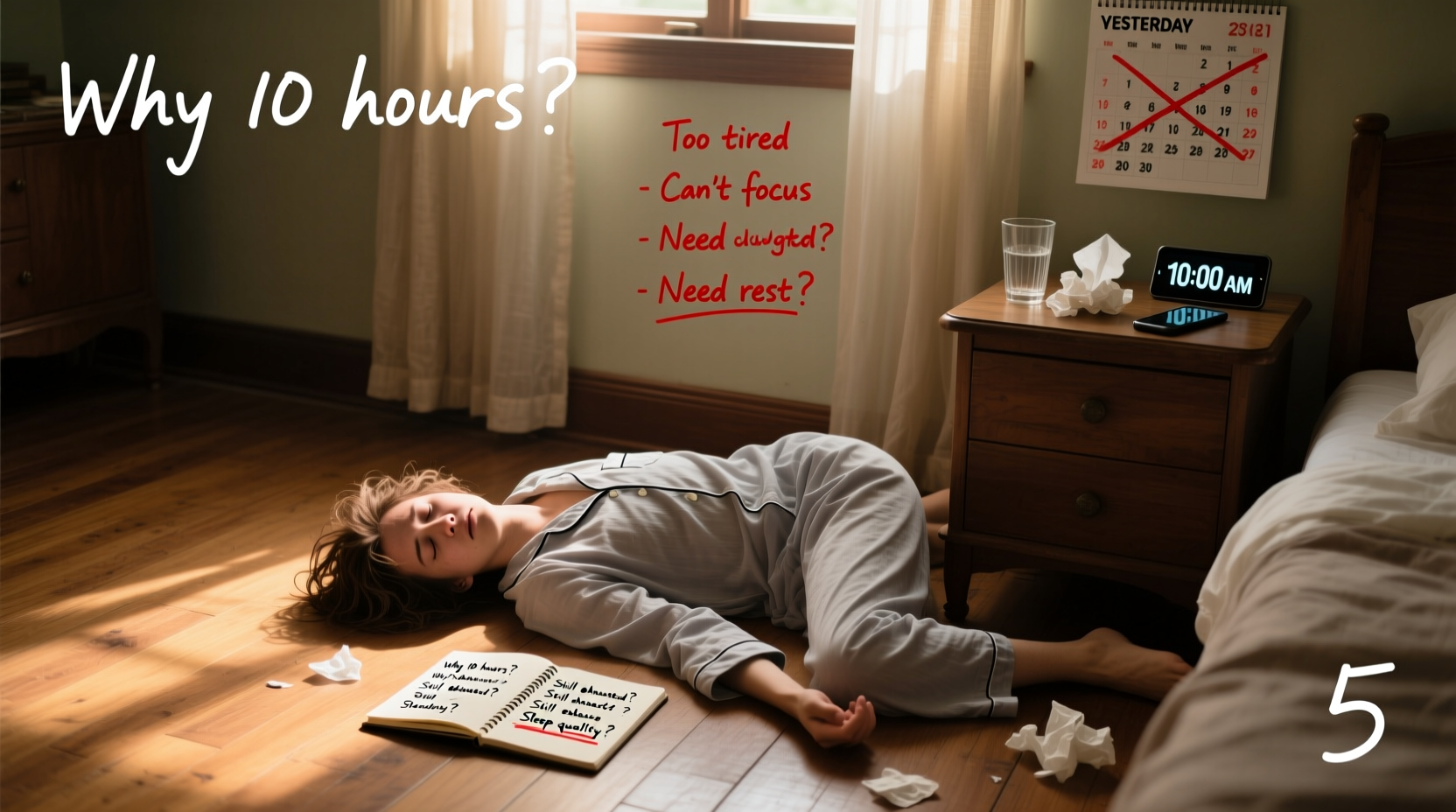
Spending 10 hours in bed doesn’t guarantee restorative rest. What truly matters is the quality of those hours. Fragmented sleep, frequent awakenings, or disruptions in sleep architecture—particularly in deep (N3) and REM stages—can prevent your brain and body from recovering properly.
Common culprits include undiagnosed sleep apnea, nocturia (frequent nighttime urination), stress-induced hyperarousal, or an inconsistent sleep schedule. Even minor disturbances like light exposure, noise, or an uncomfortable mattress can degrade sleep continuity without fully waking you.
2. Oversleeping Disrupts Circadian Rhythms
While short-term recovery sleep helps, chronic oversleeping can throw off your internal body clock. Your circadian rhythm relies on consistent wake-up times to regulate hormones like melatonin and cortisol. Sleeping 10+ hours regularly delays this cycle, leading to “social jet lag” and next-day fatigue.
A 2020 study published in Chronobiology International found that individuals who slept more than nine hours per night had significantly lower energy levels and cognitive performance compared to those sleeping 7–8 hours—even when controlling for baseline health.
“Sleeping too much can be just as disruptive as sleeping too little. The body thrives on rhythm, not excess.” — Dr. Rebecca Robbins, Sleep Scientist, Harvard Medical School
3. Underlying Medical Conditions
Persistent fatigue despite long sleep durations may point to medical issues such as:
- Hypothyroidism: Low thyroid hormone slows metabolism, causing lethargy.
- Anemia: Iron deficiency reduces oxygen delivery, increasing fatigue.
- Diabetes: Blood sugar fluctuations impair energy regulation.
- Chronic Fatigue Syndrome (ME/CFS): Characterized by unexplained exhaustion not relieved by rest.
- Depression: Often linked with hypersomnia (excessive sleep) and non-restorative sleep.
If you’ve ruled out lifestyle causes, consult a healthcare provider for blood work and screening. Early diagnosis can dramatically improve outcomes.
4. Sleep Inertia and Extended Sleep Cycles
Waking up in the middle of a sleep cycle—especially during deep sleep—triggers prolonged sleep inertia: that heavy, disoriented feeling upon waking. When you sleep for 10 hours, you increase the chance of interrupting a cycle late into the morning, worsening grogginess.
The average sleep cycle lasts about 90 minutes. Ideal sleep durations align with complete cycles (e.g., 7.5 or 9 hours). Ten hours equates to roughly 6.5 cycles, meaning you’re likely waking mid-cycle.
| Sleep Duration | Number of 90-Minute Cycles | Wake-Up Risk |
|---|---|---|
| 6 hours | 4 cycles | Low |
| 7.5 hours | 5 cycles | Optimal |
| 9 hours | 6 cycles | Low |
| 10 hours | 6.5 cycles | High (mid-cycle interruption) |
5. Sedentary Lifestyle and Poor Daytime Habits
Counterintuitively, being inactive during the day contributes to poor nighttime recovery. Without sufficient physical or mental stimulation, your body doesn’t build up enough homeostatic sleep pressure—the biological drive to sleep. This leads to longer but lighter, less satisfying sleep.
Lack of sunlight exposure, irregular meal timing, and evening screen use also disrupt natural alertness rhythms. You may fall asleep easily due to boredom or habit, but the sleep lacks depth.
Mini Case Study: Mark’s Journey from Exhaustion to Energy
Mark, a 42-year-old software developer, reported sleeping 9–10 hours nightly but waking unrefreshed. He struggled with afternoon crashes and low motivation. After tracking his sleep, he discovered he was frequently waking due to acid reflux and blue light exposure from late-night coding.
With guidance from a sleep coach, Mark adjusted his dinner time, eliminated screens two hours before bed, and reduced caffeine after noon. He also started walking 30 minutes each morning. Within three weeks, he dropped to 8 hours of sleep and reported higher energy, better focus, and improved mood—even with less time in bed.
Step-by-Step Guide to Fixing Post-Sleep Fatigue
- Track Your Sleep: Use a journal or fitness tracker for one week to log bedtime, wake time, awakenings, and energy levels.
- Set a Fixed Wake Time: Wake up at the same time every day, even on weekends, to stabilize your circadian rhythm.
- Optimize Sleep Environment: Ensure your bedroom is dark, cool (60–67°F), and quiet. Consider a white noise machine if needed.
- Limit Sleep Window: Gradually reduce time in bed to 8–8.5 hours. Avoid napping past 3 p.m.
- Seek Medical Evaluation: If fatigue persists, get tested for sleep apnea, thyroid function, vitamin deficiencies, and mental health conditions.
Checklist: Are You Setting Yourself Up for Restorative Sleep?
- ✅ I go to bed and wake up at consistent times (within 30 minutes).
- ✅ My bedroom is dark, quiet, and cool.
- ✅ I avoid caffeine after 2 p.m.
- ✅ I get at least 20 minutes of natural light in the morning.
- ✅ I engage in moderate physical activity most days.
- ✅ I wind down with a screen-free routine before bed.
- ✅ I’ve discussed my fatigue with a doctor if it persists.
FAQ
Is it bad to sleep 10 hours a night?
Occasional long sleep is fine, especially after deprivation. However, habitual 10-hour sleep linked with fatigue may indicate poor sleep quality, underlying illness, or circadian misalignment. It's associated with increased risks for cardiovascular disease and cognitive decline in long-term studies.
Can depression cause excessive sleep and tiredness?
Yes. Depression isn't always linked to insomnia; a subtype called \"atypical depression\" includes hypersomnia—sleeping excessively yet still feeling tired. Emotional numbness, low motivation, and disrupted sleep architecture contribute to non-restorative rest.
How can I feel more rested with less sleep?
Focus on improving sleep quality. Prioritize consistency, reduce stimulants, manage stress, and enhance your sleep environment. Most adults need 7–9 hours; exceeding that without benefit suggests inefficiency, not deficiency.
Conclusion: Reclaim Your Energy With Smarter Sleep
Feeling tired after 10 hours of sleep is a signal—not a life sentence. The solution rarely lies in sleeping more, but in sleeping better. By addressing sleep quality, aligning with your natural rhythm, and ruling out medical causes, you can transform how you wake up and feel throughout the day.




 浙公网安备
33010002000092号
浙公网安备
33010002000092号 浙B2-20120091-4
Comments
No comments yet. Why don't you start the discussion?