
Choosing the right eyeglass frames isn’t just about style or comfort—it’s a long-term investment in both vision and personal aesthetics. With daily exposure to skin oils, temperature changes, UV light, and occasional drops, your frames endure constant stress. Among the most popular materials, titanium and acetate stand out for their distinct qualities. But when it comes to lasting performance over years of use, which one truly holds up better?
This guide dives deep into the structural integrity, resilience, and real-world longevity of titanium versus acetate frames. By comparing material science, environmental resistance, repairability, and user experience, you’ll gain a clear understanding of which option delivers superior durability—so you can make an informed decision that lasts.
Durability Showdown: Material Science Behind the Frames
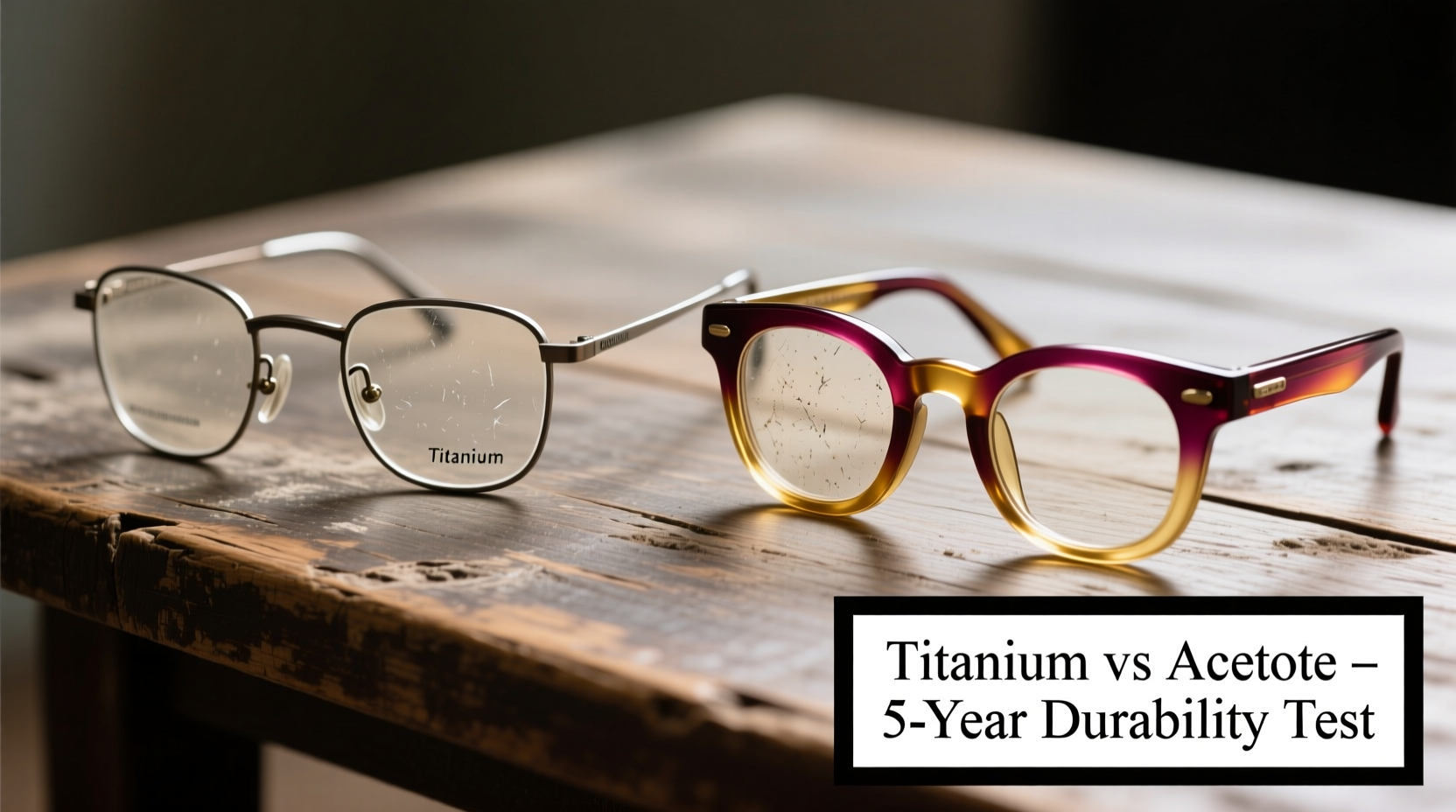
Titanium and acetate are fundamentally different in composition, manufacturing, and physical behavior. Understanding these differences is key to evaluating how each stands up to time.
Titanium is a lightweight metal alloy known for its high strength-to-density ratio. In eyewear, it's often used in pure titanium, beta-titanium (a more flexible variant), or as titanium-nickel blends. It resists corrosion, doesn’t tarnish, and maintains structural integrity under repeated stress. Its tensile strength means it can bend slightly without breaking—a crucial feature for everyday wear.
Acetate, short for cellulose acetate, is a plant-based plastic derived from cotton and wood pulp. It’s prized for rich color depth, gloss finish, and design versatility. However, unlike metals, acetate is a thermoplastic—meaning it softens with heat and hardens when cooled. While this allows for intricate shaping during production, it also makes acetate susceptible to warping under extreme temperatures or prolonged pressure.
In terms of raw durability, titanium wins on mechanical strength. It resists dents, cracks, and deformation far better than acetate. Acetate, while tough in normal conditions, can develop microfractures over time, especially at stress points like hinges and temple arms.
Long-Term Wear Performance: What Happens After Years?
To assess real-world longevity, consider how each material ages across five critical factors: flexibility, weight distribution, joint stability, surface wear, and chemical resistance.
- Flexibility & Fatigue Resistance: Titanium excels here. Beta-titanium temples return to shape after bending, reducing hinge strain. Acetate lacks elasticity; repeated flexing leads to brittleness and eventual cracking.
- Weight Distribution: Titanium frames distribute weight evenly due to consistent density. Acetate can feel heavier on the nose and ears, increasing pressure points over time.
- Hinge Longevity: Metal frames typically have integrated hinge mechanisms with screws set in durable sockets. Acetate relies on drilled holes for screws, which can strip or crack with frequent adjustments.
- Surface Degradation: Acetate may fade or lose luster with prolonged sun exposure. Titanium retains its finish unless scratched, and even then, scratches are less likely due to protective coatings.
- Chemical Exposure: Skin oils, lotions, and cleaning agents affect acetate more than titanium. Over time, chemicals can dull acetate’s shine or cause discoloration.
“Titanium frames are engineered for endurance. I’ve seen patients wear the same pair for 15+ years with minimal maintenance. Acetate rarely lasts beyond a decade without structural compromise.” — Dr. Lena Park, Optometric Consultant and Eyewear Specialist
Comparative Breakdown: Titanium vs Acetate Over Time
| Factor | Titanium Frames | Acetate Frames |
|---|---|---|
| Resistance to Bending/Flexing | Excellent – returns to shape, fatigue-resistant | Fair – prone to cracking after repeated stress |
| Heat Resistance | High – unaffected by typical environmental heat | Poor – warps at moderate heat (e.g., car dashboard) |
| Scratch Resistance | Good – especially with coated finishes | Moderate – polishable but shows fine scratches |
| Corrosion/Water Resistance | Exceptional – ideal for humid climates or sports | Good – but prolonged moisture may degrade internal layers |
| Lifespan (with care) | 10–20+ years | 5–10 years |
| Repairability | High – hinges, nose pads, arms easily replaced | Limited – broken acetate often requires replacement |
| Allergenic Risk | Low – hypoallergenic, especially pure titanium | Very Low – rare reactions, but possible with dyes |
Real-World Example: Two Users, Ten Years Later
Consider two professionals who bought prescription glasses in 2013—one chose titanium, the other acetate.
Case Study: Mark, IT Consultant (Titanium Frames)
Mark selected a sleek titanium frame for its featherlight feel and promised durability. He wears them daily, travels frequently, and occasionally forgets them in pockets or bags. After ten years, he still uses the same pair. The nose pads were replaced twice, and one screw was tightened annually. The frame shows minor scuffing but no structural issues. His optician confirmed the hinges remain tight and the temples spring back perfectly.
Case Study: Sarah, Graphic Designer (Acetate Frames)
Sarah loved the bold tortoiseshell pattern of her acetate frames. She wore them daily and appreciated the aesthetic. By year six, she noticed the left temple arm developing a small crack near the hinge. A repair attempt failed when the screw hole stripped. After eight years, the top rim began to warp slightly, affecting lens alignment. She replaced the frame entirely at nine years, citing “fatigue in the material.”
These cases reflect broader trends: titanium frames withstand mechanical stress and routine neglect better, while acetate, despite strong initial appeal, tends to degrade earlier at stress points.
Maintenance Requirements: How Care Impacts Longevity
No frame lasts decades without proper care—but the level of effort required differs significantly between materials.
Titanium Care: Minimal. Wipe with a microfiber cloth and mild soapy water. Rinse and dry thoroughly. Check screws every 6–12 months. Store in a hard case when not in use. Avoid abrasive cleaners that could damage anti-reflective or anti-scratch coatings.
Acetate Care: More involved. Clean gently to avoid stripping color. Never expose to heat. Polish occasionally with a specialized acetate buffer to restore shine. Inspect for hairline cracks monthly, especially behind earpieces. Store flat or in a padded case to prevent warping.
Step-by-Step: Extending Frame Lifespan Regardless of Material
- Inspect Monthly: Look for loose screws, asymmetry, or early signs of cracking.
- Tighten Screws Gently: Use a micro-screwdriver; overtightening can strip threads, especially in acetate.
- Clean Daily: Remove oils and debris with a soft cloth. Buildup accelerates wear.
- Store Properly: Always use a rigid case. Never leave glasses lens-down on surfaces.
- Schedule Annual Tune-Ups: Visit your optician for professional adjustment and inspection.
- Avoid Extreme Environments: Keep away from saunas, direct sunlight, and cold drafts that cause expansion/contraction.
When Style Meets Substance: Balancing Aesthetics and Durability
Acetate remains a favorite among designers for its vibrant colors, layered patterns, and glossy finish. It offers unmatched visual variety—from translucent pastels to deep marbled effects. Titanium, while available in polished, matte, or ion-plated finishes, tends toward minimalist, metallic tones. For fashion-forward users, acetate’s aesthetic edge is undeniable.
However, durability shouldn’t be sacrificed for style. Many premium brands now blend materials—using titanium cores within acetate exteriors or reinforcing acetate with metal inserts. These hybrids aim to deliver the best of both worlds: visual richness with improved structural resilience.
If long-term wear is your priority, lean toward titanium or hybrid designs with metal reinforcement. If you rotate glasses seasonally or prioritize bold looks, acetate can still be a worthwhile choice—just expect to replace it sooner.
Frequently Asked Questions
Can acetate frames be repaired if they crack?
Minor surface cracks may be smoothed with professional polishing, but structural breaks—especially near hinges—are rarely repairable. Unlike metal, acetate cannot be welded. Some opticians use epoxy or pinning techniques, but these are temporary fixes that compromise strength.
Are titanium frames worth the higher price?
For long-term wearers, yes. Titanium frames typically cost 20–50% more than acetate, but their lifespan often doubles or triples that of acetate. When amortized over 15 years, the cost per year is significantly lower. Plus, fewer replacements mean less environmental waste.
Do titanium frames lose their color over time?
Not under normal conditions. Most titanium frames are coated with ion plating or PVD (physical vapor deposition) for color. This layer is highly resistant to fading and scratching. If damaged, refinishing is possible through specialty labs.
Final Verdict: Which Holds Up Better Over Years?
The evidence is clear: **titanium frames hold up significantly better over years of wear**. Their superior strength, resistance to environmental stressors, and repairability make them the go-to choice for durability. They maintain structural integrity, require less intensive maintenance, and often outlast the wearer’s prescription changes.
Acetate, while stylish and comfortable, is inherently more vulnerable to aging. It degrades gradually due to thermal cycling, mechanical fatigue, and chemical exposure. Even with meticulous care, most acetate frames reach their functional limit within a decade.
That said, the “better” choice depends on priorities. If you value heirloom-quality construction, active lifestyle compatibility, and low lifetime cost, titanium is the winner. If you prioritize fashion expression and plan to update your look every few years, acetate offers compelling short-term appeal.




 浙公网安备
33010002000092号
浙公网安备
33010002000092号 浙B2-20120091-4
Comments
No comments yet. Why don't you start the discussion?