
Confusing tomato paste with tomato sauce is one of the most common kitchen missteps—even experienced cooks occasionally mix them up. While both originate from tomatoes, their roles in cooking are fundamentally different. Using one in place of the other without adjustments can result in a dish that’s too watery, overly acidic, or lacking depth. Understanding the distinction isn’t just about following recipes correctly—it’s about mastering flavor concentration, texture control, and ingredient functionality. Whether you're building a rich ragù, seasoning a stew, or crafting a homemade pizza, knowing when to reach for tomato paste versus tomato sauce makes all the difference.
Definition & Overview
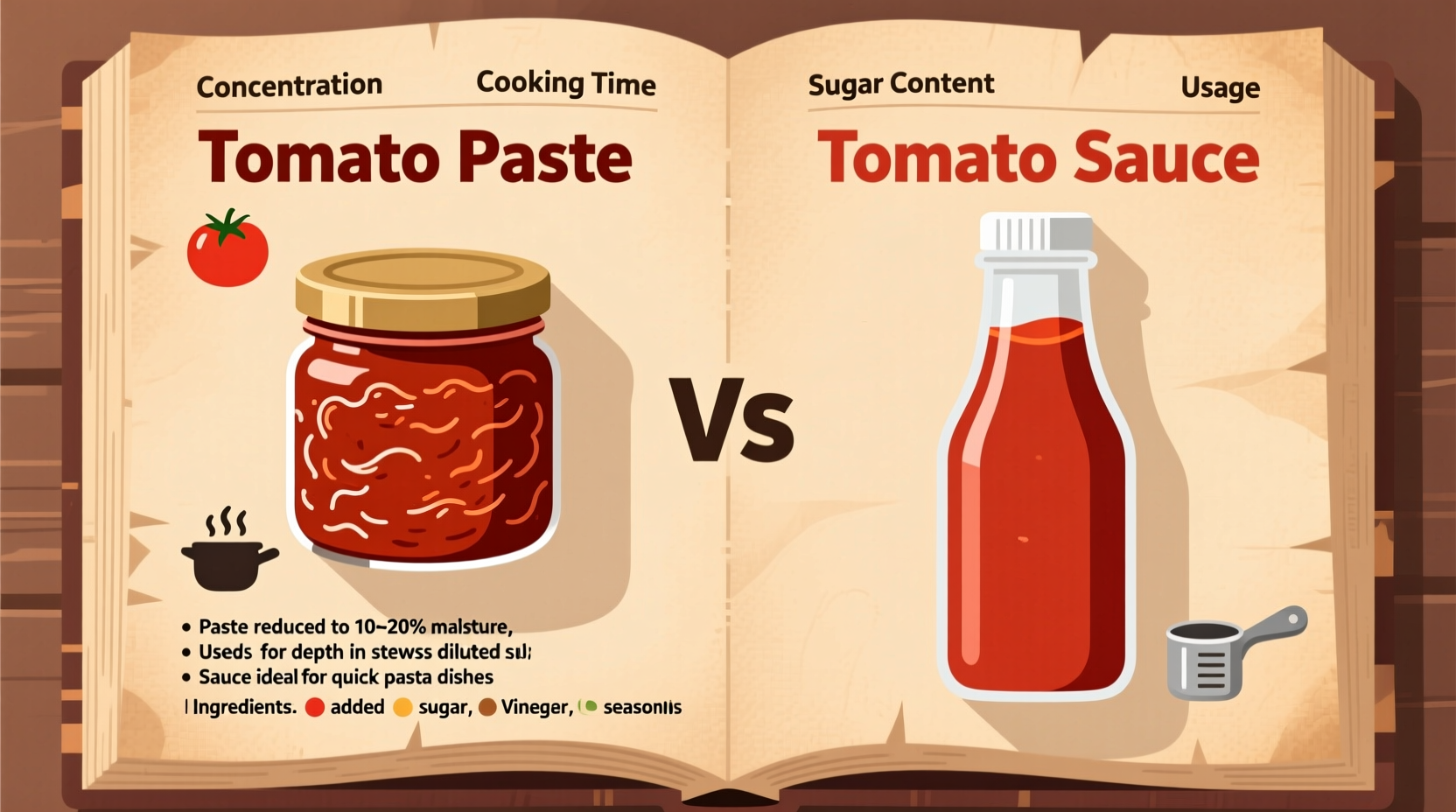
Tomato paste is a highly concentrated form of tomatoes that have been cooked down for several hours to remove nearly all water content. The result is a thick, deep red purée with an intense umami-rich tomato flavor. It typically contains only tomatoes—sometimes with added salt or citric acid—and serves as a flavor base rather than a standalone component.
Tomato sauce, by contrast, refers to a pre-cooked liquid made from tomatoes that have been simmered with herbs, onions, garlic, and sometimes sweeteners or oils. It has a pourable consistency and is often used as a ready-to-use ingredient in dishes like pasta, casseroles, and braises. Unlike paste, it’s not intended to be reduced further but rather incorporated as-is to add moisture and seasoned tomato flavor.
Their shared origin creates confusion, but their culinary purposes diverge sharply. Tomato paste is a flavor amplifier; tomato sauce is a base ingredient. Mistaking one for the other alters not just taste but also the structural integrity of a dish.
Key Characteristics
| Attribute | Tomato Paste | Tomato Sauce |
|---|---|---|
| Texture | Thick, dense, paste-like; does not pour | Smooth, pourable, broth-like consistency |
| Flavor Profile | Intensely savory, slightly sweet, concentrated umami | Balanced tangy-sweet, herb-infused, milder tomato essence |
| Color | Deep brick red to dark maroon | Bright red to medium red, less saturated |
| Water Content | Very low (7–15%) | High (about 85–90%) |
| Culinary Function | Flavor enhancer, color booster, thickening agent | Moisture provider, base for saucy dishes |
| Shelf Life (Unopened) | 18–24 months (canned or tube) | 12–18 months (canned or jarred) |
| Storage After Opening | Refrigerate; use within 5–7 days (can freeze) | Refrigerate; use within 5–7 days |
Practical Usage: How to Use Each Ingredient
When to Use Tomato Paste
Tomato paste excels in applications where depth, richness, and browning matter. Its high concentration allows it to caramelize when sautéed, developing complex Maillard reaction flavors. This technique is essential in professional kitchens and elevated home cooking.
To maximize its potential:
- Sauté first: Add a spoonful to hot oil or rendered fat (like bacon drippings or olive oil) and cook 2–3 minutes until it darkens slightly and smells fragrant. This step removes raw acidity and unlocks sweetness.
- Build flavor foundations: Use in conjunction with onions, garlic, and carrots during the soffritto or mirepoix stage of soups, stews, and sauces.
- Boost umami: A teaspoon can deepen the savoriness of chili, Bolognese, curries, or even vegetarian gravies without adding bulk.
- Thicken sauces: Its low moisture content helps reduce cooking time while enhancing body.
Example: In a classic French ragoût de boeuf, tomato paste is browned with beef bones and vegetables before liquid is added. This creates a deeper, more cohesive flavor profile than simply stirring in sauce later.
Pro Tip: For even distribution, mix tomato paste with a small amount of warm water or stock to create a slurry before adding to simmering dishes. This prevents clumping and ensures even dispersion.
When to Use Tomato Sauce
Tomato sauce functions as a convenient, seasoned foundation. It saves time and delivers consistent flavor, especially in weeknight meals.
Best uses include:
- As a base for quick pasta dishes (e.g., spaghetti with meatballs).
- In baked ziti, lasagna, or eggplant Parmesan where layering and moisture retention are key.
- As a braising liquid for meats like short ribs or chicken cacciatore.
- In slow cooker recipes where long simmering would break down fresh tomatoes.
Because commercial tomato sauce often contains added seasonings (oregano, basil, garlic), always taste before adding extra spices. Over-seasoning is a common error when layering store-bought sauce into already-flavored dishes.
Smart Substitution Note: If using plain tomato sauce in place of seasoned varieties, enhance it with fresh herbs, a bay leaf, or a splash of red wine vinegar to match recipe expectations.
Variants & Types
Types of Tomato Paste
Not all tomato pastes are created equal. Variations affect color, sweetness, and processing method:
- Double-Concentrated Paste: Cooked longer for even greater intensity. Often labeled “double strength” or “concentrato doppio.” Ideal for long-simmered dishes needing maximum depth.
- Single-Concentrated Paste: Standard version, reduced once. Most common in supermarkets.
- Tubed Paste: Sold in squeeze tubes (common in Europe). Fresher tasting due to lower heat processing and no metallic aftertaste. Lasts weeks in the fridge after opening.
- Organic or Fire-Roasted Paste: Offers smokier notes. Excellent in barbecue sauces or roasted vegetable dishes.
Professional chefs often prefer tubed or artisanal pastes for superior freshness and nuanced flavor, though canned versions remain practical for high-volume cooking.
Types of Tomato Sauce
Tomato sauce comes in multiple formulations, each suited to specific dishes:
| Type | Characteristics | Best Used For |
|---|---|---|
| Plain Tomato Sauce | Simple cooked tomatoes, minimal seasoning | Customizable bases; ideal when full control over flavor is needed |
| Marinara Sauce | Garlic, oregano, basil, quick-cooked | Pasta, dipping, pizza (when thinned) |
| Creamy Tomato Sauce | Contains dairy or oil emulsion | Penne alla vodka, creamy pastas |
| Arrabbiata | Spicy, with chili flakes | Heat-forward dishes, bold pastas |
| Passata-Based Sauce | Smooth, uncooked texture preserved | Fresh-tasting dishes, cold sauces |
Selecting the right type ensures harmony with the rest of your ingredients. For example, using arrabbiata in a delicate seafood stew may overpower subtle flavors, while plain sauce offers flexibility.
Comparison with Similar Ingredients
Tomato paste and sauce are frequently confused not only with each other but also with related tomato products. Here's how they differ:
| Ingredient | Difference from Tomato Paste | Difference from Tomato Sauce |
|---|---|---|
| Tomato Purée | Less concentrated; cannot substitute 1:1 without reducing | Thinner than sauce; lacks herbs; requires seasoning |
| Crushed Tomatoes | No concentration; chunky texture; adds bulk | Less smooth; contains seeds and skin; needs longer cooking |
| Passata | Raw, strained juice; no caramelization potential | Similar texture but fresher, less cooked flavor |
| Ketchup | Sweetened, vinegary, spiced—unsuitable as substitute | Too sweet and tangy; alters dish balance completely |
“In my restaurant, we never add tomato sauce to a reduction base. That would dilute everything. We start with paste, build layers, then finish with stock or wine. Sauce belongs on the plate, not in the pot.” — Marco Tullio, Executive Chef, Il Forno Romano
Practical Tips & FAQs
Can I substitute tomato paste for tomato sauce?
Yes, but not directly. To replace 1 cup of tomato sauce, combine ¼ cup tomato paste with ¾ cup water, plus a pinch of sugar and salt. Simmer 5–7 minutes and season with dried herbs if needed. This mimics texture and flavor closely.
Can I use tomato sauce instead of paste?
Only with caution. Using sauce in place of paste introduces excess liquid and diluted flavor. To compensate, reduce the sauce by boiling it down first—cook 1 cup until it becomes about ¼ cup. This concentrates flavor and removes water, making it functionally closer to paste.
How much paste equals one tomato?
Approximately 2 tablespoons of tomato paste equals the concentrated flavor of one large ripe tomato. However, this varies based on tomato variety and paste concentration.
Does tomato paste need to be cooked?
Yes. Raw tomato paste has a sharp, metallic taste. Cooking it in fat for 2–3 minutes mellows acidity and develops sweetness through caramelization. Skipping this step leaves a flat, harsh note in finished dishes.
How should I store leftover tomato paste?
Transfer unused paste to an airtight container and refrigerate for up to one week. Alternatively, portion it into teaspoon-sized dollops on parchment paper, freeze, then transfer to a bag. Use frozen paste directly in sautés or stews. Tubed paste can stay in the refrigerator for up to six weeks.
Is there a sodium-free tomato paste?
Yes. Many brands offer no-salt-added versions, ideal for low-sodium diets. Always check labels, as some contain citric acid or preservatives even in “natural” lines.
Why do some recipes call for both paste and sauce?
This combination leverages the best of both: paste provides concentrated flavor and color, while sauce contributes moisture and volume. It’s standard in authentic Italian ragùs, where complexity and balance are paramount.
Quick Storage Hack: Squeeze leftover paste into the indentations of a clean ice cube tray, cover with plastic wrap, and freeze. Once solid, pop out cubes and store in a freezer bag. Each cube is roughly one tablespoon—perfect for soups, stews, or scrambled eggs.
Summary & Key Takeaways
Understanding the difference between tomato paste and tomato sauce is foundational to skilled cooking. They are not interchangeable without modification, nor do they serve the same purpose in a dish. Recognizing their distinct properties empowers better decision-making in the kitchen.
- Tomato paste is a concentrated flavor booster—use it early in cooking, sauté it in fat, and rely on it for depth and color.
- Tomato sauce is a seasoned, liquid base—ideal for adding volume and ready-made flavor to complete dishes.
- Never substitute one for the other without adjusting for water content and seasoning.
- Explore variants like double-concentrated paste or tubed versions for improved quality and convenience.
- Store leftovers properly to extend usability and minimize waste.
Mastering these ingredients means moving beyond recipe-following toward intuitive cooking. The next time you’re building a sauce, consider whether you need a whisper of tomato (go for sauce) or a roar of umami (reach for paste). Your palate will thank you.
Challenge Yourself: Try making a simple beef stew twice—once with only tomato sauce, once with sautéed tomato paste added at the start. Taste the difference in richness and complexity. It’s a revealing exercise in the power of proper ingredient use.




 浙公网安备
33010002000092号
浙公网安备
33010002000092号 浙B2-20120091-4
Comments
No comments yet. Why don't you start the discussion?