
Kettlebells have earned their place as one of the most effective tools in strength and conditioning. Their unique design—compact, off-center weight distribution—challenges stability, builds explosive power, and improves functional fitness. Whether you're training at home or in a gym, integrating kettlebells into your routine can deliver full-body results in less time than traditional equipment. But to get the most out of your workouts, it's critical to pair the right exercises with the proper gear.
This guide outlines the top 10 kettlebell exercises proven to build strength, endurance, and mobility. Alongside them, we’ll cover essential accessories that support performance, prevent injury, and extend the life of your equipment.
Why Kettlebells Work: The Science Behind the Swing
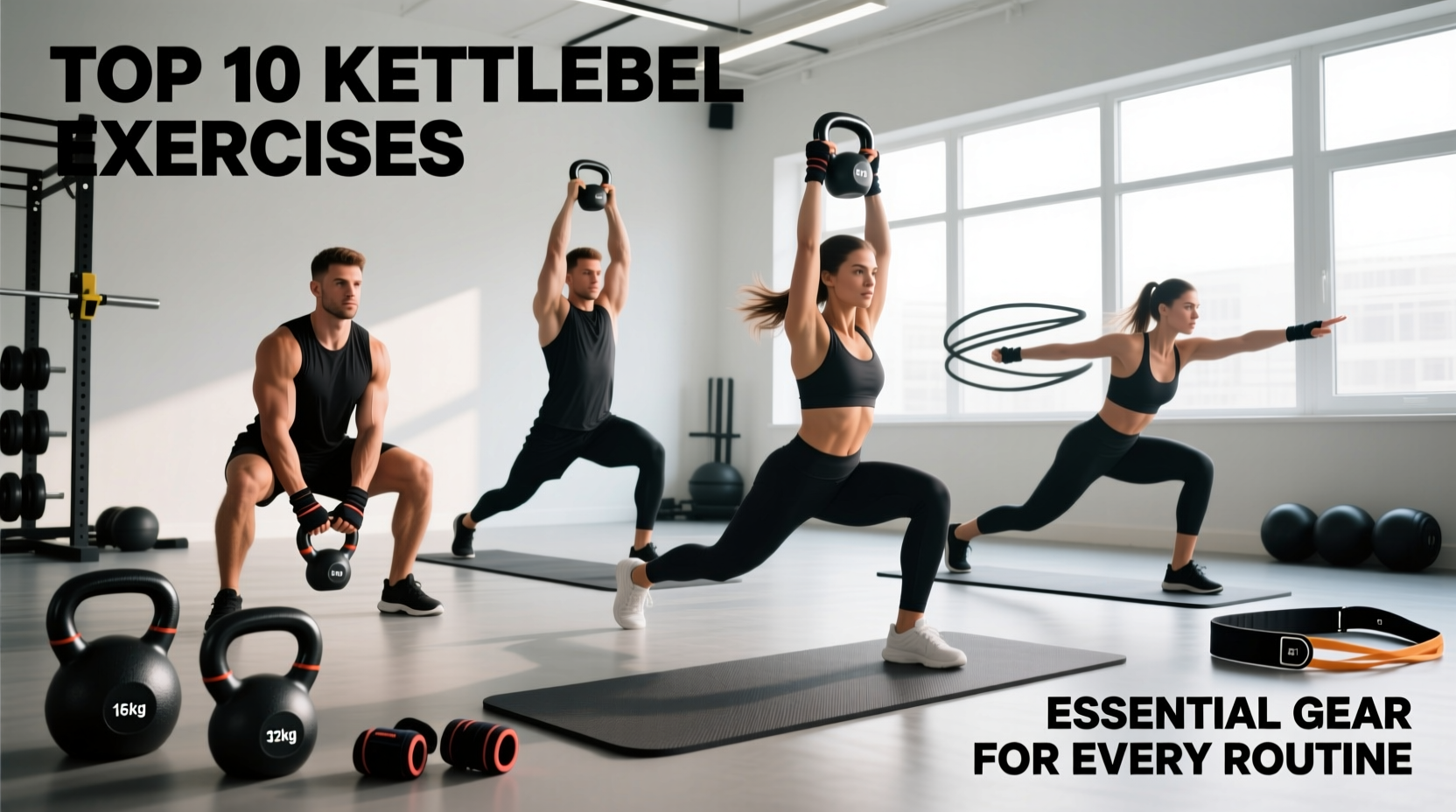
The effectiveness of kettlebells lies in their ability to combine resistance training with dynamic movement. Unlike dumbbells, the handle and bell shape allow for fluid, arc-based motions that engage more muscle groups simultaneously. Research shows that kettlebell training improves cardiovascular capacity, core stability, and posterior chain development—especially when exercises like swings and cleans are performed correctly.
“Kettlebells teach the body to move as a unit. They’re not just about lifting weight—they’re about generating power from the ground up.” — Dr. Stuart McGill, spine biomechanics researcher
Because many kettlebell movements rely on hip hinge mechanics, they strengthen glutes, hamstrings, and lower back while minimizing spinal compression when form is maintained. This makes them ideal for both athletic performance and injury prevention.
Top 10 Best Kettlebell Exercises for Full-Body Results
The following exercises are selected based on versatility, muscle engagement, and long-term training value. Each targets multiple muscle groups and can be scaled for beginners or advanced users by adjusting weight or reps.
- Kettlebell Swing – The cornerstone of kettlebell training. Develops explosive hip drive, cardio endurance, and posterior chain strength. Stand with feet shoulder-width apart, hinge at the hips, and swing the bell to chest height using momentum from the glutes—not the arms.
- Goblet Squat – A front-loaded squat that improves squat depth and core bracing. Hold the kettlebell close to your chest, elbows tucked, and descend into a deep squat while keeping your chest upright.
- Deadlift – Builds foundational strength. Use a two-kettlebell setup or single bell. Hinge at the hips, keep the back flat, and lift by driving through the heels.
- Turkish Get-Up – A complex, multi-phase movement that enhances stability, shoulder health, and coordination. Start lying down with the kettlebell pressed overhead, then rise to standing while maintaining a straight arm.
- Single-Arm Kettlebell Clean – Trains power transfer from the hips to the upper body. Explosively pull the bell from the floor to rack position (resting on the forearm near the shoulder) in one motion.
- Press (Shoulder Press) – Strengthens deltoids, triceps, and core stabilizers. Perform standing or seated, pressing the bell overhead while avoiding arching the lower back.
- Snatch – An advanced full-body power move. Similar to the swing but extends into an overhead lockout in one continuous motion. Requires precision and timing.
- Farmer’s Carry – Simple yet highly effective for grip strength, posture, and core endurance. Walk steadily while holding one or two kettlebells at your sides.
- Renegade Row – Combines plank stability with unilateral back strength. In a push-up position with hands on kettlebell handles, row one bell upward while balancing on the other.
- Halo – A mobility drill that warms up shoulders, neck, and thoracic spine. Circle the kettlebell slowly around your head, keeping your core tight and spine neutral.
Essential Gear for Every Kettlebell Routine
No matter how skilled you are, your performance depends partly on the tools you use. While the kettlebell itself is the star, supporting gear ensures safety, comfort, and longevity of your training.
| Gear | Purpose | Recommended For |
|---|---|---|
| Adjustable Dumbbell Platform or Mat | Protects floors and reduces noise during drops or rolls | All users, especially home gyms |
| Closed-Toe Training Shoes or Barefoot Minimalist Shoes | Provides grip and foot sensitivity for balance-intensive moves | Turkish get-ups, snatches, cleans |
| Chalk or Liquid Grip | Improves hand friction and prevents slipping | High-rep swings, snatches, heavy lifts |
| Weightlifting Belt (Optional) | Supports lumbar spine during heavy lifts | Advanced users doing maximal deadlifts or cleans |
| Kettlebell Gloves (Use Sparingly) | Reduces calluses but may reduce grip feedback | Beginners sensitive to grip fatigue |
“Grip is everything with kettlebells. If your hands slip, your form breaks. Chalk and proper footwear make a noticeable difference.” — Sarah Vance, Certified Kettlebell Instructor
Common Mistakes and How to Avoid Them
Even experienced lifters can fall into poor habits. These errors undermine progress and increase injury risk:
- Using arms instead of hips in swings: The power should come from the glutes, not biceps. Focus on snapping the hips forward, not pulling with the arms.
- Rounding the back during lifts: Maintain a neutral spine in all hinge and squat patterns. Engage your core early and often.
- Choosing too heavy a bell too soon: Technique trumps load. Start light to master form, then gradually increase weight.
- Neglecting warm-up and cool-down: Dynamic stretches and mobility drills prepare joints for movement. Don’t skip them.
Sample Weekly Kettlebell Routine (Beginner to Intermediate)
A balanced approach integrates strength, power, and mobility. This 3-day weekly plan uses compound movements to maximize efficiency.
- Day 1: Power & Posterior Chain
- Two-Handed Kettlebell Swings: 4 sets of 15
- Goblet Squats: 3 sets of 12
- Single-Arm Cleans: 3 sets of 8 per side
- Farmer’s Carry: 3 laps of 30 seconds - Day 2: Mobility & Stability
- Turkish Get-Ups: 3 reps per side
- Halos: 2 sets of 8 per direction
- Renegade Rows: 3 sets of 6 per arm
- Plank with Shoulder Taps: 3 sets of 20 taps - Day 3: Full-Body Endurance
- Kettlebell Snatch (moderate weight): 5 rounds of 10 per side
- Deadlifts: 3 sets of 10
- Press: 3 sets of 8 per arm
- Cool-down: 5 minutes of breathing drills and stretching
Frequently Asked Questions
How do I choose the right kettlebell weight?
For men, beginners typically start with 16kg (35 lbs), women with 8–12kg (18–26 lbs). Adjust based on exercise: lighter for snatches and get-ups, heavier for swings and deadlifts. You should be able to maintain form for the full set.
Can I build muscle with only kettlebells?
Yes. When combined with progressive overload—increasing weight, volume, or intensity over time—kettlebells stimulate hypertrophy and strength gains comparable to traditional weights, especially in functional muscle groups.
Are kettlebells safe for older adults?
They can be, provided movements are modified and form is prioritized. Exercises like halos, goblet squats, and light swings improve balance, joint stability, and daily function. Consult a trainer or physical therapist if you have existing conditions.
Conclusion: Build Strength That Moves With You
Kettlebell training isn’t just about lifting—it’s about moving with purpose. The top 10 exercises listed here form a blueprint for building resilient, powerful bodies capable of handling real-world demands. When paired with the right gear, from durable mats to supportive footwear, your routine becomes safer, more efficient, and sustainable over time.
Start with mastery, not max effort. Focus on clean technique, consistent practice, and gradual progression. Whether you're training for performance, health, or longevity, kettlebells offer unmatched versatility. Now that you know the essentials, pick up a bell, execute with intention, and feel the difference in every rep.




 浙公网安备
33010002000092号
浙公网安备
33010002000092号 浙B2-20120091-4
Comments
No comments yet. Why don't you start the discussion?