
In a world where accuracy matters—from home cooking to scientific research—having the right scale can make all the difference. Whether you're measuring ingredients for a delicate pastry, tracking your fitness progress, or calibrating chemicals in a lab, precision is non-negotiable. The market is flooded with options, but not all scales deliver consistent performance, durability, or smart functionality. This guide cuts through the noise to spotlight the top 10 best scales designed for both precision tasks and daily practicality.
What Makes a Scale Truly Reliable?
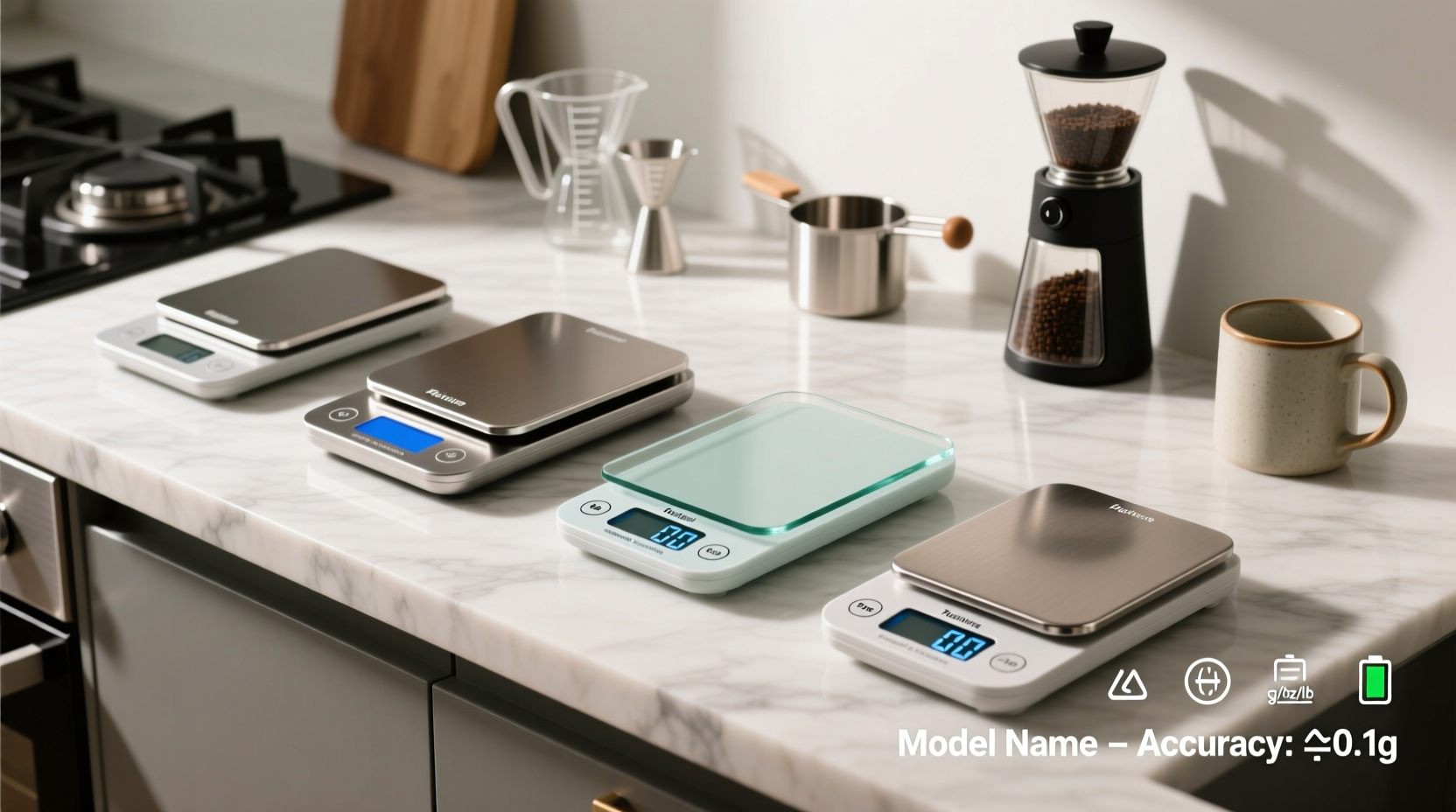
A high-quality scale does more than display numbers—it ensures repeatability, stability, and responsiveness under varying conditions. Key factors include sensor type (strain gauge vs. load cell), calibration frequency, capacity range, readability (minimum increment), tare function, build material, and connectivity features like Bluetooth or app integration.
Precision scales typically offer readability down to 0.01g or less, while everyday models may suffice with 1g increments. Smart scales often sync data to mobile apps, enabling long-term tracking of weight, body composition, or ingredient usage.
“Accuracy isn’t just about technology—it’s about consistency across time and environment.” — Dr. Alan Reeves, Metrology Researcher at NIST
Top 10 Best Scales for Precision and Everyday Use
The following list balances performance, value, and real-world usability. Models are categorized by primary use case but many serve dual purposes.
- Eatsmart Digital Kitchen Scale (Precision Master) – 0.1g readability, stainless steel platform, tare and auto-off functions. Ideal for bakers and coffee enthusiasts.
- Ozeri ZK14-S Kitchen Scale – Slim design with 5kg capacity and 1g precision. Includes pull-out display for countertop convenience.
- ACCUWEIGHT Digital Pocket Scale – Ultra-portable with 0.01g resolution. Perfect for jewelers, herbalists, and travelers.
- Shopper’s Kitchen Pro Scale with Timer – Combines weighing and cooking timer. Backlit LCD works in low light.
- Tanita KD-500 Digital Diet Scale – Measures body fat, muscle mass, bone weight, and hydration. Syncs via Bluetooth to health apps.
- Withings Body+ Smart Scale – FDA-cleared bioimpedance analysis. Supports unlimited user profiles and integrates with Apple Health, Google Fit.
- Mettler Toledo PJ3603E/1S – Laboratory-grade balance with 3600g capacity and 0.01g readability. RS232 output for data logging. <8> Escali Primo Digital Scale – Budget-friendly yet accurate kitchen tool. Large LCD and simple interface ideal for seniors or beginners. <9> MyWeigh DigiChef Scale – Dual-display shows two units simultaneously (e.g., oz and g). Great for international recipes. <10> Renegade Lab Scale by Adam Equipment – Rugged construction, overload protection, and internal calibration. Built for frequent use in educational or small lab settings.
Comparison Table: Key Features at a Glance
| Model | Type | Max Capacity | Readability | Smart Features | Best For |
|---|---|---|---|---|---|
| Eatsmart Precision Master | Kitchen | 500g | 0.1g | No | Baking, coffee dosing |
| Ozeri ZK14-S | Kitchen | 5kg | 1g | No | Daily food prep |
| ACCUWEIGHT Pocket | Portable | 200g | 0.01g | No | Jewelry, herbs, powders |
| Tanita KD-500 | Body Composition | 150kg | 0.1kg | Bluetooth, App Sync | Fitness tracking |
| Withings Body+ | Smart Bathroom | 180kg | 0.1kg | Wi-Fi, Multi-user, App | Family health monitoring |
| Mettler Toledo PJ3603E | Laboratory | 3600g | 0.01g | RS232 Output | Scientific measurement |
| Escali Primo | Kitchen | 5kg | 1g | No | Home cooks |
| MyWeigh DigiChef | Kitchen | 5kg | 1g | Dual Display | International cooking |
| Renegade Lab Scale | Industrial | 6000g | 0.1g | Internal Calibration | School labs, workshops |
| Shopper’s Kitchen Pro | Kitchen | 5kg | 1g | Cooking Timer | Meal prep efficiency |
Real-World Example: A Baker’s Journey to Consistency
Sarah Lin, a home baker from Portland, struggled with inconsistent sourdough results for months. She used volume measurements—cups and spoons—until a local artisan suggested switching to a digital scale. She purchased the Eatsmart Precision Master and began weighing flour, water, and starter by grams. Within three weeks, her loaves improved dramatically: better rise, even crumb, and consistent crust. “I didn’t realize how much variation there was in a ‘cup’ of flour,” she said. “Now I weigh everything. It’s changed my baking forever.”
How to Choose the Right Scale: A Step-by-Step Guide
Selecting the best scale doesn’t have to be overwhelming. Follow this decision-making process:
- Define Your Primary Use: Are you measuring food, body metrics, jewelry, or lab samples? Each requires different specs.
- Determine Required Precision: Baking and chemistry need 0.1g or finer; general cooking tolerates 1g.
- Check Capacity Needs: Don’t buy a 200g pocket scale if you plan to weigh whole chickens.
- Evaluate Power Source: Battery-powered scales offer portability; AC adapters suit fixed stations.
- Assess Connectivity: Do you want automatic syncing to fitness apps or spreadsheets?
- Test User Interface: Look for clear displays, responsive buttons, and easy tare functions.
- Verify Calibration Options: Some scales allow manual calibration with standard weights—critical for long-term accuracy.
Common Mistakes to Avoid When Using Scales
- Ignoring Tare Function: Failing to zero out containers leads to inaccurate net weights.
- Placing on Uneven Surfaces: Even slight tilts affect sensor alignment.
- Overloading Beyond Capacity: Can permanently damage strain gauges.
- Not Allowing Warm-Up Time: High-precision scales need 30–60 seconds to stabilize after power-on.
- Storing Improperly: Keep in dry areas away from moisture and temperature extremes.
FAQ
Can one scale work for both kitchen and body weight?
Technically possible, but not advisable. Kitchen scales lack the structural support and safety certification for human weight. Conversely, bathroom scales don’t offer the gram-level precision needed for recipes.
Why does my scale give different readings each time?
This could stem from an uneven surface, low battery, static electricity, or lack of calibration. Always restart the scale, ensure it's on a flat surface, and recalibrate if possible.
Are smart scales safe for people with pacemakers?
No. Most smart scales use bioelectrical impedance analysis (BIA), which sends a weak electrical signal through the body. This can interfere with implanted devices. Consult your physician before use.
Final Checklist Before Buying
- ✅ Define main use case (kitchen, fitness, lab, etc.)
- Ensures appropriate feature set.
- ✅ Confirm readability and capacity
- Match to your typical weighing needs.
- ✅ Check for tare and unit conversion
- Essential for flexibility in use.
- ✅ Verify power source and battery life
- Important for portability and convenience.
- ✅ Review warranty and customer support
- Protects your investment over time.
Conclusion
The right scale is more than a tool—it’s a gateway to consistency, health, and mastery in whatever you do. From perfect pastries to precise formulations, these top 10 picks deliver unmatched reliability for both everyday users and professionals. Whether you prioritize smart connectivity, laboratory-grade accuracy, or simple kitchen utility, there’s a model here that fits your lifestyle. Invest in accuracy. Measure with confidence. Start today by choosing the scale that aligns with your goals—and never guess again.




 浙公网安备
33010002000092号
浙公网安备
33010002000092号 浙B2-20120091-4
Comments
No comments yet. Why don't you start the discussion?