
Simon Says is more than just a classic children’s game—it’s a powerful tool for building listening skills, focus, and physical coordination. When played with creativity and energy, it transforms ordinary playtime into an interactive experience that keeps kids laughing, moving, and learning. The key to its success lies in the commands. The right ones challenge attention, spark imagination, and maintain momentum. Below are the top 10 Simon Says commands carefully selected for maximum engagement, adaptability, and developmental benefit.
Why Command Choice Matters in Simon Says
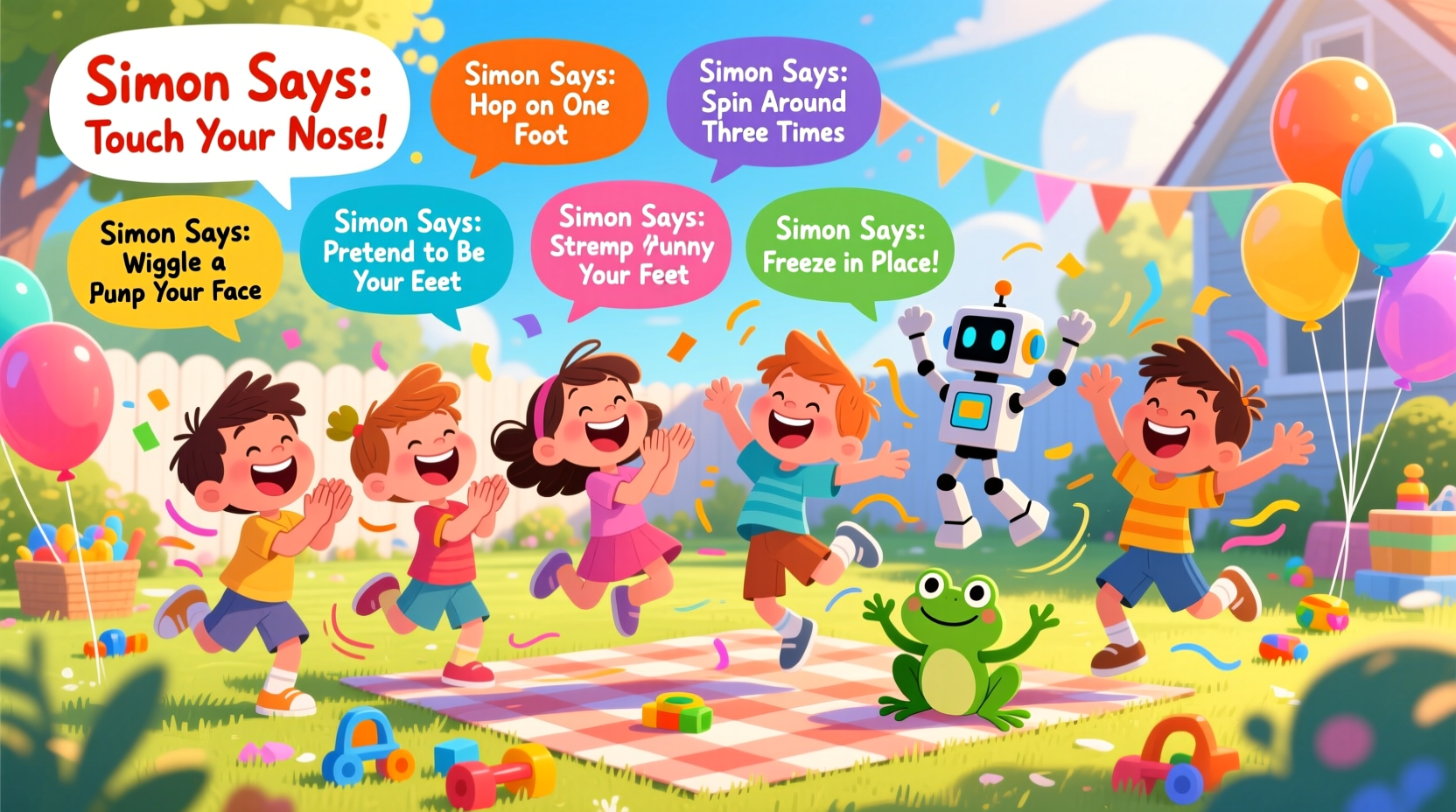
The effectiveness of Simon Says hinges on how well the leader chooses commands. Too simple, and children lose interest. Too complex, and younger players may feel excluded. The best commands strike a balance: they’re easy to understand but require concentration to follow correctly—especially when “Simon says” is omitted.
Well-chosen actions also support cognitive development. According to Dr. Laura Hernandez, child development specialist at the National Play Institute:
“Games like Simon Says reinforce executive function skills such as impulse control, working memory, and attention regulation. The more varied and imaginative the commands, the greater the mental workout.” — Dr. Laura Hernandez, Child Development Specialist
With this in mind, the following commands are designed not only to entertain but also to promote growth through active play.
Top 10 Best Simon Says Commands for Maximum Fun
- Simon says hop on one foot like a bunny! – This command gets kids moving while improving balance and coordination. It’s playful, physically engaging, and easy to visualize.
- Simon says touch your nose to your elbow! – A silly stretch that requires flexibility and focus. Kids love the absurdity, and it encourages body awareness.
- Simon says freeze like a statue until I say move! – Builds self-control and patience. Use this after high-energy moves to create dynamic pacing.
- Simon says roar like a lion three times! – Adds vocal expression and dramatic play. Great for boosting confidence and emotional release.
- Simon says crawl like a crab across the room! – Engages core muscles and promotes cross-lateral movement, which supports brain development.
- Simon says whisper your favorite animal sound! – Encourages quiet focus and listening. A nice contrast to louder actions. <7> Simon says spin around five times and try not to fall! – Delivers giggles and challenges equilibrium. Best used mid-game to reset energy.
- Simon says march in place like a soldier! – Simple but effective. Helps younger children stay involved while maintaining rhythm.
- Simon says pretend you’re melting like ice cream in the sun! – A creative slow-motion action that fosters imagination and expressive movement.
- Simon says jump as high as you can and stick the landing! – Builds leg strength and proprioception. Add a superhero pose for extra flair.
How to Level Up the Game: Variations and Tips
To keep Simon Says fresh and inclusive, consider these proven variations:
- Reverse Simon: If “Simon says” comes *after* the action (e.g., “Jump up and down—Simon says!”), players should *not* do it. This advanced version tests listening precision.
- Emotion Edition: Focus on facial expressions—“Simon says look surprised!” or “Simon says frown like you lost your ice cream!”
- Theme Rounds: Run a jungle round (“climb a vine,” “swing like a monkey”) or space adventure (“float in zero gravity,” “dodge meteorites”).
- Team Mode: Divide into teams. Each team earns a point for every correct move. Reduces elimination stress and promotes cooperation.
Checklist: Hosting a Successful Simon Says Session
- Choose a clear, open space free of tripping hazards.
- Set basic rules: no pushing, listen carefully, respect others’ turns.
- Select commands appropriate for age and ability.
- Mix physical, verbal, and stillness-based actions.
- Watch for overstimulated or disengaged players; adjust pace as needed.
- End on a positive note—even eliminated players can join the final round.
Real Example: Simon Says in a Kindergarten Classroom
In Ms. Rivera’s kindergarten class in Portland, Oregon, Simon Says is part of the daily morning circle. She noticed students struggling with transitions and impulse control. After introducing themed Simon Says games—such as “Ocean Explorers” and “Superhero Training”—she observed significant improvements.
One Tuesday, she led a “Jungle Adventure” round. Commands included “Simon says slither like a snake” and “Simon says climb a tall palm tree.” Students remained fully engaged for 12 minutes—unusually long for group activities at that time of day. Over the next month, Ms. Rivera documented a 35% decrease in off-task behavior during transitions.
“It’s not just about movement,” she said. “They’re learning to wait, to watch, to think before acting. And they don’t even realize they’re practicing self-regulation.”
Do’s and Don’ts of Choosing Simon Says Commands
| Do’s | Don’ts |
|---|---|
| Use clear, specific language (“Touch your left ear”) | Ambiguous instructions (“Move your hand somewhere”) |
| Include diverse movements (jumping, bending, freezing) | Repeat the same action type too often |
| Add humor and imagination (“Flap like a penguin!”) | Use potentially embarrassing actions (e.g., “Wiggle your bottom”) |
| Adjust difficulty based on age group | Assume all kids have the same motor skills |
| Incorporate learning elements (colors, numbers, emotions) | Introduce overly complex sequences early on |
Frequently Asked Questions
Can Simon Says be played with toddlers?
Yes, but simplify commands and reduce speed. Use basic actions like “Simon says clap your hands” or “Simon says stomp your feet.” Keep rounds short—3 to 5 minutes—and include lots of repetition and praise.
What if a child gets upset when they’re out?
Modify the rules to avoid elimination. Try scoring with stickers or allowing “second chance” rounds. Emphasize participation over winning. You might say, “Everyone who did the last move correctly gets a thumbs-up!”
How can I use Simon Says for speech or therapy goals?
Speech therapists often use Simon Says to practice following multi-step directions or articulating sounds. For example, “Simon says say ‘ssss’ like a snake” reinforces the /s/ sound. Occupational therapists use it to improve motor planning and bilateral coordination.
Conclusion: Turn Play Into Growth
Simon Says is deceptively simple, but in the right hands, it becomes a dynamic tool for joy and development. The ten commands listed here are just a starting point. With creativity and observation, you can tailor each round to your audience—whether it’s a backyard birthday party, a classroom warm-up, or a therapeutic session.
The most important ingredient isn’t the command itself, but the energy behind it. Be expressive, be consistent, and above all, be fun. When kids laugh, listen, and move together, they’re not just playing—they’re growing.




 浙公网安备
33010002000092号
浙公网安备
33010002000092号 浙B2-20120091-4
Comments
No comments yet. Why don't you start the discussion?