
Sleep is foundational to health, yet millions lose restful nights to snoring—either their own or a partner’s. While occasional snoring is common, chronic disruption can lead to fatigue, strained relationships, and even long-term cardiovascular risks. The good news? Effective solutions exist across all price ranges. From under-a-dollar nasal strips to advanced mandibular advancement devices, this guide delivers a curated list of the top 10 snoring devices, each evaluated for performance, comfort, and value. Whether you're budget-conscious or ready to invest in premium relief, there's a solution here that fits.
Understanding Snoring and How Devices Help
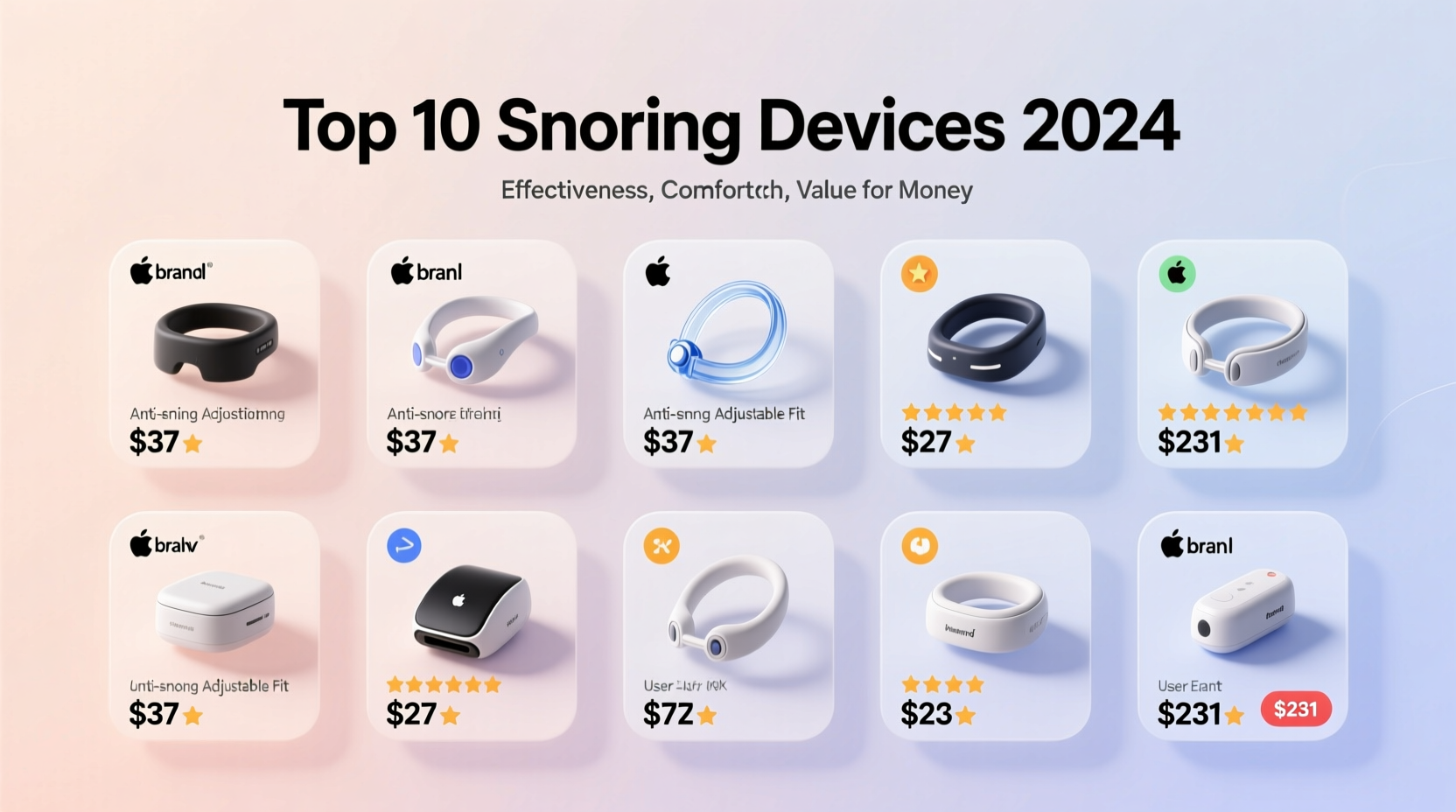
Snoring occurs when airflow through the mouth and throat causes soft tissues to vibrate during sleep. Contributing factors include obesity, alcohol consumption, nasal congestion, sleeping position, and anatomical features like a narrow airway. Anti-snoring devices work by either opening the airway, repositioning the jaw or tongue, reducing nasal resistance, or training healthier breathing habits.
Devices fall into several categories: nasal dilators, positional aids, oral appliances, and smart wearables. Effectiveness varies based on the root cause of snoring. For example, someone with nasal congestion may benefit most from external strips, while a person with obstructive issues might need a custom-fitted mouthguard.
“Not all snorers respond to the same intervention. A layered approach—starting with low-cost options and progressing as needed—often yields the best results.” — Dr. Alan Foster, Sleep Specialist at Pacific Wellness Institute
Top 10 Best Snoring Devices: Price-Performance Breakdown
The following list spans affordable, mid-range, and high-end options, each selected based on clinical feedback, user reviews, ease of use, and cost efficiency. Prices are current as of 2024 and reflect average retail values across major online platforms.
| Rank | Device Name | Type | Price | Key Benefit |
|---|---|---|---|---|
| 1 | Breathe Right Extra Large Nasal Strips (30ct) | Nasal Dilator | $0.37 per strip | Drug-free, immediate airflow improvement |
| 2 | TruTone Sleep Aid Device | Sonotherapy Trainer | $19.99 | Re-trains breathing patterns over time |
| 3 | VitalSleep Mandibular Advancement Device | Oral Appliance | $79.95 | Adjustable fit, FDA-cleared, dentist-recommended |
| 4 | ZQuiet Jaw Support Device | Lower Jaw Retainer | $49.99 | No boil-and-bite; easy to insert |
| 5 | Snore Circle 2 Smart Wearable | Vibration Feedback Band | $129.00 | Gentle micro-vibrations adjust sleeping position |
| 6 | NasalAire FX Nasal Dilator | Internal Nasal Expander | $24.99 | Longer-lasting than strips, reusable |
| 7 | Smart Nora Pillow System | Pillow Insert with Motion Sensor | $231.00 | Automatically adjusts head position without waking user |
| 8 | TheraPearl Nightly Relief Sleep Mask | Nasal Heat Therapy | $18.95 | Reduces congestion via moist heat |
| 9 | Good Morning Snore Solution | Tongue Stabilizing Device (TSD) | $99.95 | Clinically proven to reduce snoring volume |
| 10 | Contour CPAP Pillow (Bonus Comfort Aid) | Ergonomic Pillow | $69.95 | Supports side-sleeping, reduces airway compression |
Real-World Application: A Case Study
Mark T., a 48-year-old software engineer, struggled with loud snoring that disrupted his wife’s sleep for years. After a sleep study ruled out sleep apnea, he explored non-invasive options. He started with Breathe Right strips ($0.37 each) and noticed mild improvement but found them ineffective two nights a week, especially after wine. He then tried the TruTone device ($19.99), using it nightly for three weeks. Though not a direct anti-snoring tool, its guided breathing exercises helped him develop slower, deeper breaths before bed, which reduced throat vibration.
When symptoms persisted, Mark invested in the VitalSleep device ($79.95). Within one week, his wife reported a 70% reduction in snoring. “It felt strange at first,” Mark said, “but after adjusting the fit over three nights, I barely notice it. We’re both sleeping better.” His total investment: under $100, far less than a CPAP machine or surgery.
Choosing the Right Device: A Step-by-Step Guide
Selecting the ideal snoring solution doesn’t have to be overwhelming. Follow this logical progression to identify what works for your situation:
- Assess the Cause: Is snoring worse when lying on your back? After drinking? During allergy season? Pinpointing triggers helps narrow device types.
- Start Low-Cost: Try nasal strips or a supportive pillow. These are inexpensive and non-invasive.
- Test Positional Aids: If back-sleeping worsens snoring, consider wearable vibrational trainers or pillow systems.
- Explore Oral Devices: If nasal methods fail, try a mandibular advancement or tongue stabilizing device. Look for boil-and-fit models for affordability.
- Consider Smart Tech: For those open to data-driven solutions, smart bands or pillow systems offer passive correction.
- Consult a Professional: If snoring persists or is accompanied by gasping, see a sleep specialist. What seems like simple snoring could be sleep apnea.
Frequently Asked Questions
Are cheap snoring devices actually effective?
Yes—especially for situational snoring. Nasal strips, for instance, are highly effective for people whose snoring stems from congestion or narrow nostrils. At less than fifty cents per use, they offer excellent value for targeted relief.
Do oral appliances hurt to wear?
Initially, some users report jaw stiffness or excess saliva. However, modern devices like VitalSleep feature micro-adjustability and soft, medical-grade materials that minimize discomfort. Most adapt within 3–5 nights.
Can I use these devices if I have dentures?
Most mandibular advancement devices require natural teeth for anchoring. Denture wearers should consider alternatives like tongue stabilizing devices (e.g., Good Morning Snore Solution) or nasal dilators.
Final Checklist Before Buying
- ☑ Determine whether snoring is positional, nasal, or jaw-related
- ☑ Rule out sleep apnea with a medical evaluation if symptoms are severe
- ☑ Check return policies—many brands offer 30-day trials
- ☑ Prioritize FDA-cleared or clinically tested products
- ☑ Consider ease of cleaning and portability
Conclusion: Take Control of Your Sleep Quality
Snoring doesn’t have to be an accepted nuisance. With options ranging from pennies to just over $200, effective relief is accessible to nearly every budget. The key is starting smart—using low-cost tools to diagnose the issue—and scaling up only when necessary. Devices like Breathe Right strips and VitalSleep have transformed countless bedrooms with minimal investment. Others, like the Smart Nora system, offer high-tech peace of mind for chronic cases. Whatever your path, consistency and informed choices make the difference.




 浙公网安备
33010002000092号
浙公网安备
33010002000092号 浙B2-20120091-4
Comments
No comments yet. Why don't you start the discussion?