
When it comes to laundry, not all washing machines are created equal. The debate between top load and front load washers has persisted for years, especially as consumers prioritize both cleaning performance and water efficiency. With rising utility costs and growing environmental concerns, knowing which type of washer delivers superior cleaning with minimal water use is more important than ever. This article breaks down the mechanics, advantages, and real-world outcomes of both designs—so you can make an informed decision based on facts, not marketing claims.
Cleaning Performance: How Each Washer Works
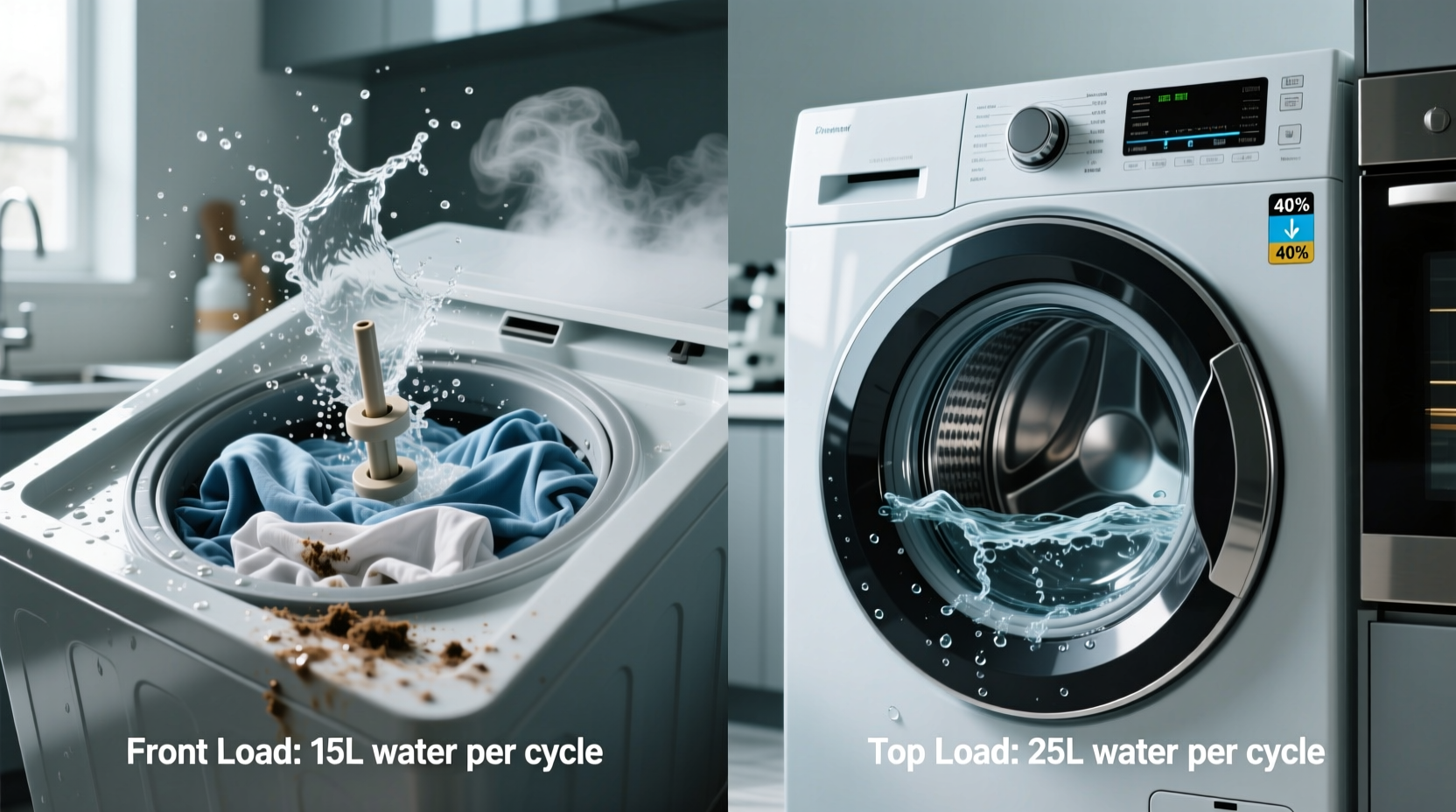
The core difference between top load and front load washers lies in their agitation method and drum orientation. These design choices directly impact how thoroughly clothes are cleaned.
Top Load Washers: Traditional top loaders use a central agitator that twists and turns to move clothes through water. High-efficiency (HE) models without agitators rely on impellers or wash plates to create turbulent water flow. While effective for loosening dirt, agitator-based models can be harsh on fabrics and often leave clothes twisted or tangled, reducing consistent exposure to detergent and water.
Front Load Washers: These machines tumble clothes through a small pool of water at the bottom of a horizontally oriented drum. As the drum rotates, gravity pulls garments up and then drops them back into the water. This tumbling action provides mechanical scrubbing without the need for a central agitator. Because the drum fills only partially, front loaders use significantly less water while still ensuring thorough cleaning.
In independent tests conducted by Consumer Reports and the U.S. Department of Energy, front load washers consistently outperform top loaders in stain removal—especially on ground-in soils like grass, oil, and food stains. The tumbling motion allows longer, more controlled contact between fabric and detergent, improving cleaning efficacy even in cold water cycles.
Water Efficiency: Front Loaders Lead by Design
Water conservation is a critical factor in modern appliance selection. Front load washers use approximately 20–25 gallons per cycle, compared to 30–40 gallons in traditional top loaders. Even high-efficiency top loaders typically consume 25–30 gallons—still more than most front loaders.
This efficiency stems from the fundamental operating principle: front loaders don’t need to fully submerge clothes. Instead, they reuse water throughout the cycle, filtering and recirculating it during rinse phases. Many models also feature sensors that adjust water levels based on load size and soil level, further minimizing waste.
According to ENERGY STAR, switching from a standard top load washer to a certified front load model can save the average household over 3,000 gallons of water annually. That’s enough to fill a small swimming pool—or sustain one person’s daily water needs for nearly ten months.
“Front loaders clean more effectively using less water because they rely on tumbling action rather than deep immersion. It’s physics, not just engineering.” — Dr. Linda Chen, Appliance Efficiency Researcher, National Institute of Standards and Technology
Comparative Analysis: Key Features Side-by-Side
| Feature | Front Load Washer | Top Load Washer (Agitator) | Top Load HE (Impeller) |
|---|---|---|---|
| Avg. Water Use (gallons/cycle) | 20–25 | 35–40 | 25–30 |
| Cleaning Effectiveness | Excellent (removes tough stains) | Good (struggles with set-in stains) | Fair to Good |
| Energy Use | Low (especially with cold wash) | Moderate to High | Moderate |
| Gentleness on Fabrics | High (no twisting) | Low (agitator causes wear) | Moderate |
| Detergent Required | HE only, less quantity | Regular or HE, higher volume | HE only, moderate |
| Bulk Item Capacity | High (larger drum volume) | Lower (agitator takes space) | High |
| Price Range | $800–$1,600 | $400–$800 | $600–$1,000 |
While front loaders lead in water efficiency and cleaning performance, they come at a higher initial cost. However, long-term savings on water, energy, and clothing longevity often offset this premium within 3–5 years.
Real-World Example: A Family’s Switch to Front Load
The Thompson family in Portland, Oregon, replaced their decade-old agitator top loader with a new ENERGY STAR-rated front load washer. Prior to the switch, they ran four loads weekly, using about 160 gallons of water. After installation, their average dropped to 85 gallons per week—a 47% reduction.
More importantly, they noticed visible improvements in cleaning. Their children’s soccer uniforms, previously requiring pre-soaking for mud stains, now came out spotless on regular cycles. They also reduced detergent use by half, eliminating residue issues that had caused skin irritation.
“We were skeptical about the price,” said Maria Thompson. “But after seeing how much cleaner the clothes were—and how little water we used—we realized it was an investment, not an expense.”
Common Misconceptions About Front Load Washers
Despite their performance advantages, front load washers face criticism based on outdated or exaggerated concerns.
- “They develop mold and mildew.” This issue primarily occurs when users neglect maintenance. Leaving the door closed after use traps moisture. Simply wiping the gasket and leaving the door ajar prevents most odor problems.
- “They take too long to wash.” While some eco-cycles run longer (up to 2 hours), express cycles complete in under 30 minutes. The trade-off is gentler treatment and lower resource use.
- “They’re hard to load.” Bending down can be inconvenient, but many models offer pedestal stands that elevate the drum. Additionally, front loaders allow easier access to large items like comforters.
Step-by-Step Guide to Maximizing Cleaning with Less Water
Regardless of your washer type, follow these steps to optimize cleaning efficiency and conserve water:
- Sort by Soil Level: Separate heavily soiled clothes from lightly worn ones. Heavily soiled loads benefit from longer wash times and appropriate detergents.
- Use the Right Detergent: Only use HE detergent in high-efficiency machines (both front and HE top loaders). Regular detergent creates excess suds, interfering with cleaning and damaging components.
- Don’t Overload: Crowded drums restrict movement, reducing friction and rinsing effectiveness. Leave space equivalent to two fists between the top of the load and the drum lid.
- Select Cold Water When Possible: Modern detergents work well in cold water, and it prevents color bleeding and fabric shrinkage. Reserve hot water for whites and heavily soiled items.
- Maintain Your Machine: Clean the filter monthly, inspect hoses annually, and wipe seals on front loaders. A well-maintained washer performs better and lasts longer.
- Run Full Loads (But Not Too Full): Maximize efficiency by waiting until you have a full—but not overstuffed—load. This reduces total cycles and conserves water over time.
Expert Tips for Choosing the Right Washer
When shopping for a new washer, consider more than just price. Focus on lifecycle value, cleaning ability, and fit for your lifestyle.
“The best washer isn’t the cheapest—it’s the one that cleans your clothes well, uses resources wisely, and fits your routine.” — James Reed, Senior Editor, *Appliance Today*
Ask yourself:
- Do I frequently wash bulky items (comforters, towels)? → Front loaders handle these better.
- Is bending down difficult? → Consider a pedestal base or high-efficiency top loader as a compromise.
- Do I care about long-term utility savings? → Front loaders pay for themselves over time.
- Am I willing to perform basic maintenance? → Front loaders require minor upkeep for optimal performance.
FAQ
Can a top load washer clean as well as a front load washer?
Most traditional top loaders with agitators fall short in stain removal compared to front loaders. However, high-efficiency (HE) top loaders without agitators come closer in performance, though they still generally use more water and may not match the deep-cleaning action of tumbling.
Do front load washers really use less water?
Yes. On average, front load washers use 30–40% less water per cycle than conventional top loaders. This is due to their tumbling mechanism, which doesn’t require full drum submersion. Sensors and recirculation systems further enhance efficiency.
Are front load washers worth the extra cost?
For most households, yes. The combination of superior cleaning, lower utility bills, and reduced clothing wear means front loaders often deliver better value over a 7–10 year lifespan. Families doing 3+ loads per week see the fastest return on investment.
Final Recommendations and Action Plan
If your priority is cleaning performance with minimal water use, front load washers are the clear winner. Their design leverages mechanical action and smart water usage to deliver cleaner clothes, extend garment life, and reduce environmental impact. While the upfront cost is higher, the long-term savings and performance justify the investment for most users.
That said, high-efficiency top load washers offer a strong middle ground—especially for those with mobility concerns or limited budgets. They eliminate the agitator, improve cleaning, and reduce water use compared to older models, though they still lag behind front loaders in overall efficiency.
To make the best choice:
- Test both types in-store if possible.
- Check ENERGY STAR ratings and water factor (WF) numbers—lower is better.
- Read verified customer reviews focusing on stain removal and reliability.
- Consider installation requirements (e.g., floor strength, drainage).




 浙公网安备
33010002000092号
浙公网安备
33010002000092号 浙B2-20120091-4
Comments
No comments yet. Why don't you start the discussion?