
Choosing between a top load and front load washer isn’t just about convenience or price—it’s about how well your clothes are treated and whether your laundry routine introduces hidden risks like mold growth. Many consumers assume all washing machines clean the same way, but differences in design, water usage, and agitation mechanics significantly affect fabric longevity and hygiene. For households concerned with gentle cleaning and long-term maintenance, understanding these distinctions is essential.
This guide breaks down the core differences between top load and front load washers, focusing on their impact on clothing care and susceptibility to mold. You’ll learn which model handles delicate fabrics more carefully, what causes mold in certain designs, and how to make an informed decision based on real-world performance—not marketing claims.
How Washing Machines Clean: The Mechanics Behind Fabric Care
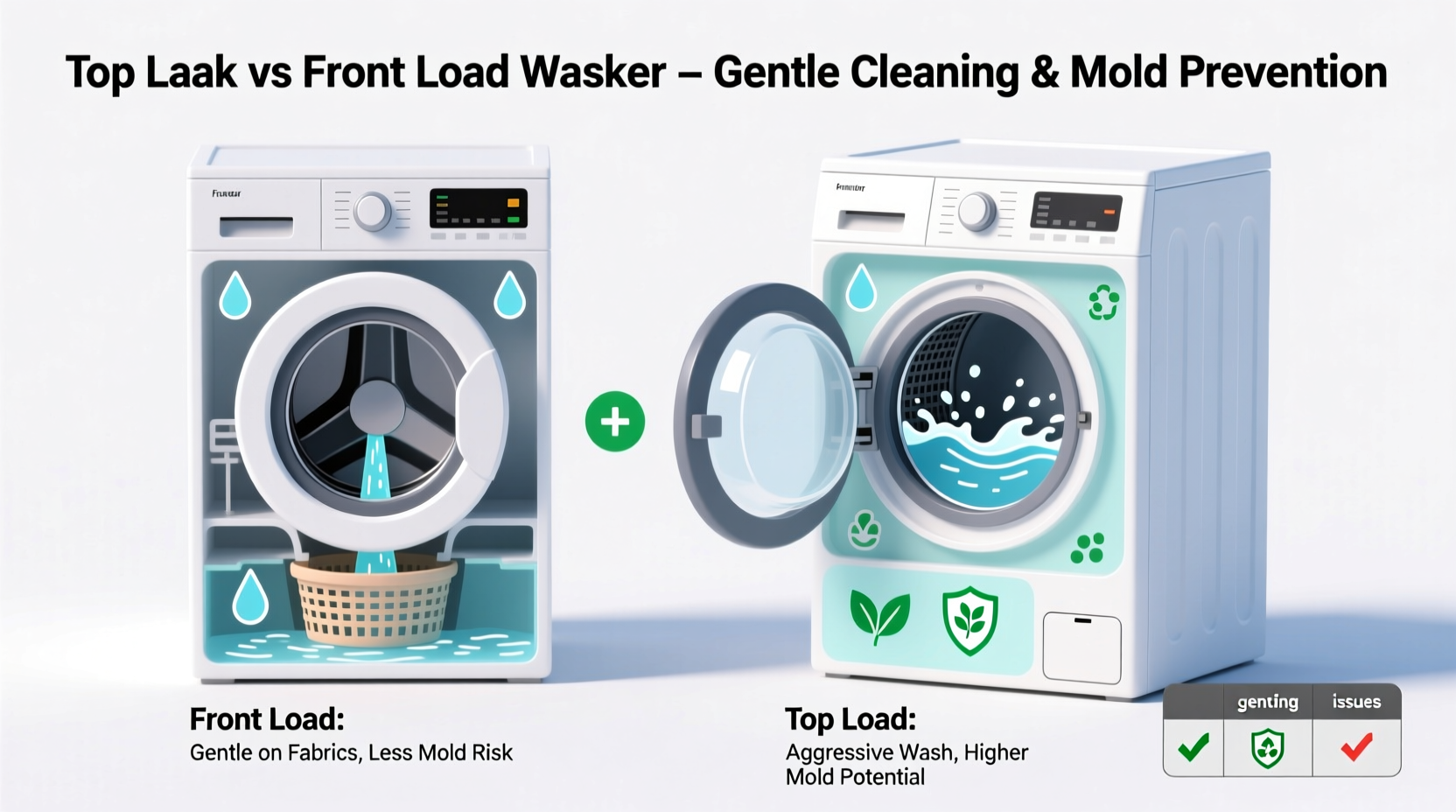
All washing machines use a combination of water, detergent, mechanical action, and time to remove dirt and odors from clothing. However, the method by which they agitate clothes varies dramatically between top load and front load models, directly influencing how gently—or harshly—fabrics are treated.
Traditional top load washers typically feature a central agitator—a vertical post that twists and turns to move clothes through water. This creates strong friction, which can lead to fiber damage over time, especially with delicate materials like silk, lace, or spandex blends. While effective at removing heavy soil, this aggressive motion contributes to pilling, stretching, and faster wear.
In contrast, most front load washers operate without an agitator. Instead, they use a tumbling action: the drum rotates horizontally, lifting clothes and dropping them into a small pool of soapy water. This mimics hand-washing in its gentleness, reducing stress on fibers while still achieving deep cleaning through prolonged soaking and repeated drops. Because front loaders rely more on water temperature and detergent efficiency than brute force, they tend to preserve garment integrity better over hundreds of cycles.
Mold and Mildew: Why It Happens and Which Washer Is More Susceptible
Mold and mildew aren’t just unpleasant—they can trigger allergies, leave persistent odors, and even transfer to your clothes. One of the biggest concerns among washer owners, particularly those with front load models, is the development of black mold around the rubber door gasket.
The root cause lies in design. Front load washers seal tightly to prevent leaks during horizontal spinning. That rubber gasket retains moisture after each cycle, especially if the door is closed immediately afterward. Trapped humidity, combined with residual detergent and organic matter (like lint and skin cells), creates an ideal breeding ground for mold.
Top load washers, particularly those with a central agitator, are less prone to this issue because they lack a sealing gasket and allow greater airflow. Even high-efficiency (HE) top loaders without agitators usually have open lids that promote drying. However, poor ventilation in laundry rooms or leaving wet clothes inside for hours can still encourage musty smells in any machine.
“Front-loading washers are more energy-efficient and gentler on clothes, but they require consistent user maintenance to avoid microbial buildup.” — Dr. Lena Patel, Home Appliance Hygiene Researcher, National Institute of Household Sciences
Performance Comparison: Top Load vs Front Load Washers
| Feature | Top Load Washer | Front Load Washer |
|---|---|---|
| Cleaning Performance | Good for heavily soiled items; may miss spots on delicate settings | Superior overall cleaning due to longer soak times and tumbling action |
| Gentleness on Fabrics | Average to poor (especially with agitator); higher abrasion | Excellent; minimal fiber stress due to no central agitator |
| Mold Risk | Low to moderate (mainly from damp interiors) | High if not maintained; gasket and drain trap are problem zones |
| Water Usage | Higher (35–50 gallons per load) | Lower (15–30 gallons per load) |
| Energy Efficiency | Lower; often requires more hot water | Higher; uses less water and heats smaller volumes efficiently |
| Space & Ergonomics | Easier loading (no bending); takes up floor space when lid is open | Lid opens forward; requires bending; stackable with dryer |
| Lifespan | 8–10 years average | 10–13 years with proper care |
Real-Life Example: A Family's Switch from Top Load to Front Load
The Thompson family had used a traditional agitator top load washer for over a decade. While it handled muddy soccer uniforms well, they noticed increasing damage to their children’s school uniforms—collars frayed, knit sleeves stretched, and colors faded prematurely. After researching options, they invested in a high-end front load model with a steam cleaning function and anti-microbial seal treatment.
Within weeks, they observed cleaner whites and softer fabrics—even on cold cycles. However, six months later, a musty smell developed. Upon inspection, they found black specks in the rubber gasket. They consulted a technician who explained that closing the door immediately after washing trapped moisture. Following his advice, they began wiping the seal dry, leaving the door ajar, and running monthly bleach-free cleaning cycles.
Today, their clothes last longer, their energy bills are lower, and mold has not returned. Their experience underscores a key truth: front loaders deliver superior fabric care, but only when users commit to basic hygiene practices.
Step-by-Step Guide to Preventing Mold in Any Washing Machine
Mold doesn’t have to be inevitable. Whether you own a front load or top load washer, follow this routine to keep your machine fresh and hygienic:
- Leave the door or lid open after each use. Allow air circulation to dry internal surfaces. Wait at least 30 minutes before closing.
- Wipe the rubber seal (front loaders). Use a dry or slightly damp cloth weekly to remove moisture and debris from the gasket folds.
- Run a cleaning cycle monthly. Use a manufacturer-approved cleaner or a cup of white vinegar and baking soda on the hottest setting. Avoid chlorine bleach unless specified—it can degrade rubber seals.
- Clean the detergent drawer regularly. Remove and rinse under warm water to dissolve residue that fosters bacteria.
- Remove wet clothes promptly. Don’t let laundry sit for more than 1–2 hours post-cycle to prevent odor and mildew.
- Check the drain pump filter. Clear lint and foreign objects every 2–3 months to maintain drainage and reduce standing water.
What Experts Recommend for Long-Term Fabric Health
Textile scientists and appliance engineers agree: minimizing mechanical stress is the single most important factor in extending garment life. A study conducted by the American Association of Textile Chemists found that fabrics washed in agitator-based machines lost 30% more tensile strength over 50 cycles compared to those in front load units.
Additionally, HE (high-efficiency) top load washers—those without agitators but with impellers—are emerging as a middle ground. These models use a low-profile cone or disc at the bottom of the drum to create currents that move clothes gently. They offer better fabric care than traditional agitator models and fewer mold issues than front loaders, though they still consume more water and energy.
“Modern HE top loaders have closed the gap in cleaning performance, but front loaders remain the gold standard for preserving fine textiles.” — Mark Delaney, Senior Engineer at Consumer Appliance Review Lab
Checklist: Choosing the Right Washer for Gentle Cleaning and Mold Prevention
- ✅ Determine your primary laundry needs: heavy-duty cleaning vs. delicate care
- ✅ Prioritize front load if you wash silks, wool, workout gear, or designer clothing
- ✅ Consider HE top load (impeller-style) if you want gentler cleaning without mold-prone seals
- ✅ Avoid traditional agitator models if fabric longevity is a concern
- ✅ Assess your ability to perform regular maintenance (e.g., wiping seals, cleaning cycles)
- ✅ Ensure your laundry space is well-ventilated and not overly humid
- ✅ Look for models with self-cleaning features, stainless steel drums, and anti-microbial seals
Frequently Asked Questions
Can I eliminate mold completely in a front load washer?
While you can't guarantee 100% elimination, consistent maintenance reduces mold risk to negligible levels. Wiping the gasket, using the right detergents (low-suds HE formulas), and running hot cleaning cycles monthly will keep your machine hygienic. Some newer models include automatic venting systems that dry the drum post-cycle, further reducing moisture retention.
Are front load washers really gentler on clothes?
Yes. Independent tests show front loaders cause less physical stress on fabrics due to the absence of a central agitator. The tumbling action cleans through soaking and gravity rather than twisting and pulling. Garments retain color, shape, and texture longer when washed in front load machines, especially on delicate or eco-friendly cycles.
Is there a top load washer that cleans as well as a front load without the mold risk?
Modern high-efficiency (HE) top load washers with impellers come close. They use less water and energy than traditional models and treat clothes more gently by relying on water currents instead of an agitator. While they don’t match the cleaning depth of premium front loaders on heavily soiled items, they offer excellent balance between performance, fabric care, and low maintenance. Plus, no door seal means far less mold risk.
Conclusion: Make the Choice That Fits Your Lifestyle and Laundry Values
The debate between top load and front load washers ultimately comes down to priorities. If your main goal is protecting delicate fabrics, saving water, and maximizing efficiency, a front load washer is the superior choice—provided you’re willing to adopt simple maintenance habits to prevent mold. On the other hand, if ease of access, lower upkeep, and faster loads matter more, a high-efficiency top load model offers a compelling alternative with fewer hygiene concerns.
No machine is perfect, but informed decisions lead to better outcomes. By understanding how each type treats your clothes and manages moisture, you can choose a washer that keeps both your wardrobe and your home environment healthy for years to come.




 浙公网安备
33010002000092号
浙公网安备
33010002000092号 浙B2-20120091-4
Comments
No comments yet. Why don't you start the discussion?