
When shopping for a new washing machine, the choice between top loader and front loader models often comes down to cleaning performance and long-term reliability—especially regarding mold and mildew. Both types have loyal followings, but they differ significantly in design, efficiency, and hygiene. Understanding these differences helps you make an informed decision that balances superior cleaning with minimal maintenance headaches.
Front loaders are widely praised for water and energy efficiency, while top loaders offer faster cycles and easier access. But when it comes to deep cleaning clothes and avoiding persistent mold problems, one clearly outperforms the other—though both can succeed or fail depending on user habits and maintenance.
Cleaning Performance: How Each Machine Handles Dirt and Stains
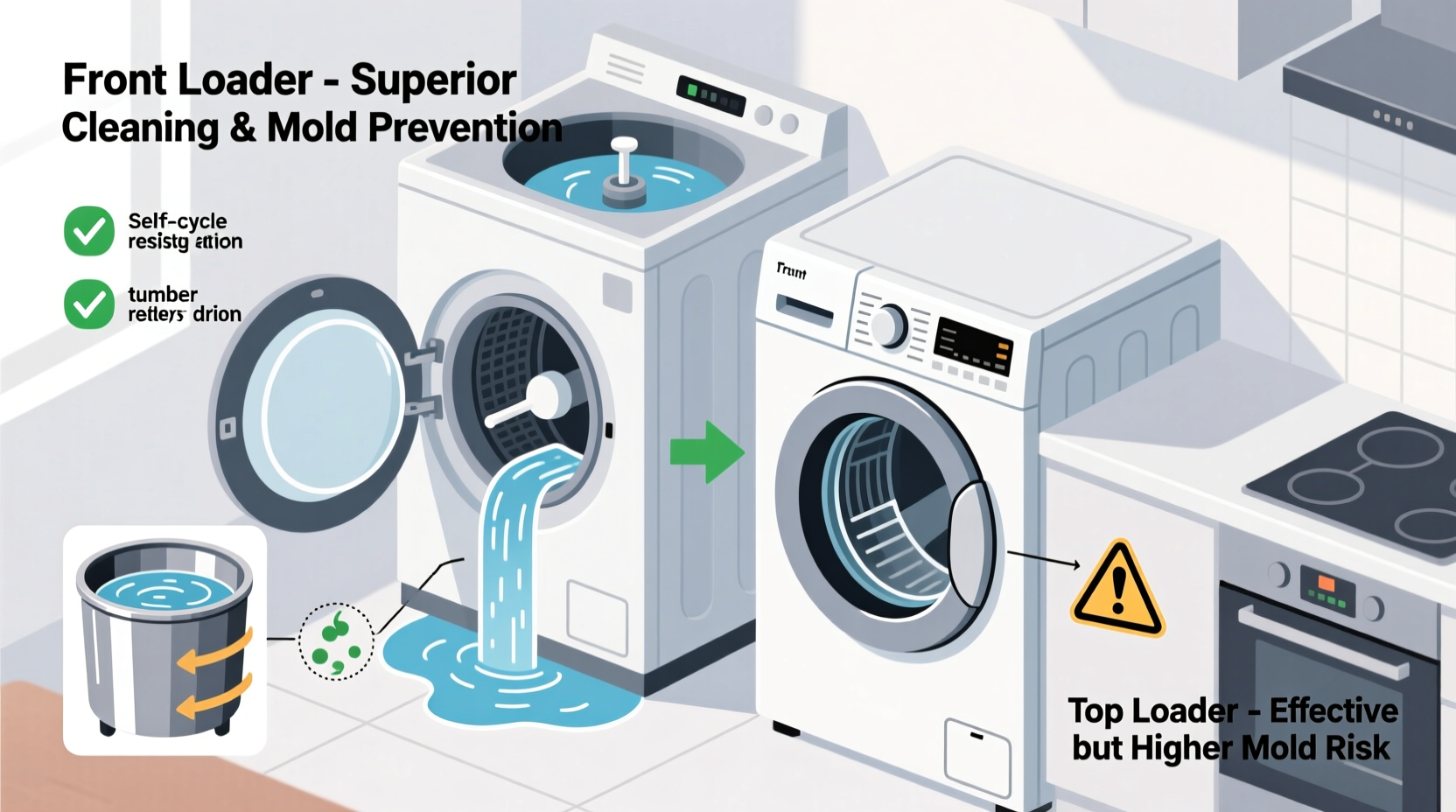
The core function of any washing machine is to remove dirt, stains, and odors from clothing. Front loaders generally achieve this more effectively than top loaders due to their tumbling action and lower water usage.
In a front loader, clothes are lifted by a rotating drum and then dropped into a small pool of soapy water at the bottom. This repeated tumbling creates mechanical friction that loosens soil more efficiently than the agitator-based system found in many top loaders. Because less water is used, detergent concentration remains higher, enhancing cleaning power. Independent tests by Consumer Reports show that front loaders remove up to 15% more stains than comparable top-loading models.
Top loaders, particularly those with central agitators, rely on vigorous water movement to scrub clothes. While effective on heavy-duty grime, this method can be harsh on fabrics and may not penetrate tightly woven materials as thoroughly. High-efficiency (HE) top loaders without agitators use impellers instead, offering gentler yet still capable cleaning—but they still use more water per load, diluting detergent and reducing stain-fighting effectiveness.
Mold and Mildew: The Hidden Cost of Poor Design and Maintenance
Mold and mildew are among the most common complaints associated with washing machines—particularly front loaders. The rubber door gasket, moisture-trapped drum seals, and enclosed door design create a dark, damp environment ideal for microbial growth. Over time, this leads to unpleasant odors, black specks on clothing, and potential respiratory concerns.
Top loaders, by contrast, are naturally less prone to mold because they lack a sealed door gasket and allow air to circulate freely after each cycle. However, this doesn’t mean they’re immune. Leaving wet clothes inside a top loader for hours, using too much detergent, or running frequent cold-water washes can lead to bacterial growth and musty smells—even without visible mold.
“Front-loading washers clean better but require consistent upkeep. Neglect the gasket and dispenser drawer, and you’ll pay for it in odor and hygiene.” — Dr. Linda Chen, Home Appliance Hygiene Researcher, University of Illinois
Why Front Loaders Are More Susceptible to Mold
- Sealed Door Gasket: Traps moisture and lint, creating a breeding ground for mold.
- Lower Water Levels: While efficient, they leave residues behind if detergent isn’t fully rinsed.
- Enclosed Design: Limits airflow, slowing drying after cycles.
- Detergent Buildup: In dispensers and under the drum, especially with gel detergents or fabric softeners.
How Top Loaders Avoid Mold (Mostly)
- Open Tub Design: Allows natural ventilation post-wash.
- No Rubber Seal: Eliminates the primary mold trap found in front loaders.
- Frequent Agitation: Helps dislodge debris and prevent stagnation.
Comparative Analysis: Front Loader vs Top Loader
| Feature | Front Loader | Top Loader |
|---|---|---|
| Cleaning Effectiveness | Excellent – superior stain removal, gentle on fabrics | Good – effective but may miss embedded soils |
| Water Usage | Low – uses 20–25 gallons per load | High – uses 30–40 gallons per load |
| Energy Efficiency | High – heats less water, shorter dry times | Moderate – uses more hot water |
| Mold Risk | High – if not maintained properly | Low – but possible with poor habits |
| Load Accessibility | Poor – requires bending, door swings forward | Excellent – open-top, easy loading |
| Cycle Time | Longer – 60–90 minutes typical | Shorter – 30–50 minutes average |
| Lifespan | 10–13 years (with care) | 8–12 years |
Maintenance Practices That Prevent Mold in Both Machines
Regardless of type, every washing machine demands routine care to remain hygienic and effective. The key difference is that front loaders require more frequent attention to avoid mold, while top loaders benefit from occasional deep cleaning to prevent hidden buildup.
Step-by-Step Guide: Monthly Washing Machine Maintenance
- Run a Cleaning Cycle: Use hot water (at least 140°F) and either bleach (for top loaders) or vinegar + baking soda (for front loaders). Avoid mixing chemicals.
- Wipe the Door Gasket (Front Loaders): Pull back the rubber seal and dry all folds with a microfiber cloth. Remove lint and debris.
- Clean the Detergent Dispenser: Remove drawers and soak in warm, soapy water. Scrub with a toothbrush.
- Leave the Door Open: After each use, keep the lid or door ajar for several hours to allow moisture to evaporate.
- Inspect the Drain Pump Filter: Located near the bottom front panel. Clean every 3–6 months to prevent clogs and stagnant water.
- Use the Right Detergent: Always choose HE detergent for high-efficiency machines. Avoid overuse—stick to manufacturer-recommended amounts.
Mini Case Study: Sarah’s Front Loader Turnaround
Sarah, a mother of two in Portland, Oregon, bought a premium front-loading washer for its energy savings and cleaning power. Within six months, she noticed a sour smell and black spots on her husband’s white shirts. Frustrated, she nearly returned the machine.
After consulting a technician, she learned she had been using regular detergent instead of HE, adding fabric softener daily, and closing the door immediately after cycles. By switching to HE detergent, eliminating fabric softener, wiping the gasket weekly, and leaving the door open, the odor disappeared within three weeks. She now runs a cleaning cycle monthly and reports no recurrence in over a year.
Her experience highlights a crucial point: even the best front loader will develop mold without proper care. But with disciplined maintenance, it can deliver excellent cleaning without hygiene trade-offs.
Which Machine Cleans Better Without Mold Issues?
If cleaning performance were the only factor, front loaders would win decisively. They remove more stains, use less water, and are gentler on clothes. However, mold risk cannot be ignored. Left unattended, front loaders degrade into smelly, unsanitary appliances.
The answer lies not in the machine type alone, but in the user’s willingness to maintain it. A well-cared-for front loader offers the best of both worlds: superior cleaning and mold-free operation. Conversely, a neglected front loader becomes a health hazard. A top loader, while less effective on tough stains, is far more forgiving in terms of maintenance and rarely develops serious mold issues.
For households prioritizing cleanliness and efficiency—and willing to commit to monthly upkeep—a front loader is the better choice. For busy families, renters, or those who prefer low-maintenance appliances, a high-efficiency top loader provides reliable performance with fewer hygiene risks.
Checklist: Choosing the Right Washer for Your Lifestyle
- ✅ Do you wash heavily soiled clothes (e.g., work uniforms, sports gear)? → Consider a front loader.
- ✅ Are you willing to wipe the gasket and run monthly cleaning cycles? → Front loader viable.
- ✅ Do you prioritize speed and ease of loading? → Top loader may suit you better.
- ✅ Is someone in your home sensitive to mold or allergies? → Prioritize hygiene; choose front loader with strict maintenance or HE top loader.
- ✅ Are you replacing an old machine in a tight laundry closet? → Measure clearance—front loaders need space in front for door swing.
Frequently Asked Questions
Can I completely eliminate mold in a front loader?
Yes, with consistent maintenance. Wipe the gasket after each use, use HE detergent, avoid fabric softener, leave the door open, and run a monthly hot water clean cycle with bleach or manufacturer-approved cleaner. These steps prevent moisture and residue buildup—the root causes of mold.
Do all top loaders resist mold?
Most do, but not automatically. If you frequently wash in cold water, overload the machine, or leave wet clothes inside for days, bacteria and mildew can grow. Running a monthly hot water cycle with vinegar helps prevent this. HE top loaders with sealed tubs may retain more moisture than traditional models, so ventilation remains important.
Is there a washing machine that cleans like a front loader but doesn’t get moldy?
Some newer models address this gap. Certain brands offer front loaders with self-cleaning drums, antimicrobial gaskets, or automatic door-opening features that activate post-cycle to dry the seal. Miele and LG’s SmartThinQ line include such innovations. While more expensive, they reduce maintenance burden while preserving cleaning superiority.
Conclusion: Make the Choice That Fits Your Habits
The debate between top loader and front loader washing machines isn’t just about technology—it’s about lifestyle. Front loaders clean better, save resources, and deliver professional-level results, but only if you commit to their upkeep. Top loaders offer convenience and resilience, making them ideal for households that value simplicity over peak efficiency.
Ultimately, the machine that “cleans better without mold issues” is the one matched to your habits. Choose a front loader if you’re ready to maintain it diligently. Opt for a high-efficiency top loader if you want strong performance with minimal fuss. Either way, proper detergent use, airflow, and periodic cleaning are non-negotiable for long-term hygiene.




 浙公网安备
33010002000092号
浙公网安备
33010002000092号 浙B2-20120091-4
Comments
No comments yet. Why don't you start the discussion?