
When it comes to choosing a washing machine, one question consistently rises to the top: which type actually cleans clothes better—top loader or front loader? With both designs dominating the market, consumers face conflicting claims from manufacturers, retailers, and even friends and family. Some swear by the power of top loaders, while others insist front loaders deliver superior results with less water and energy. The truth lies in understanding how each system works, what \"cleaning\" really means, and how various factors like fabric type, soil level, and detergent use influence outcomes.
This article breaks down the mechanics, performance data, and real-world experiences behind both types. Whether you're upgrading your laundry setup or simply curious about the science of clean clothes, this guide delivers clarity grounded in engineering principles and consumer testing.
How Washing Machines Clean Clothes: The Basics
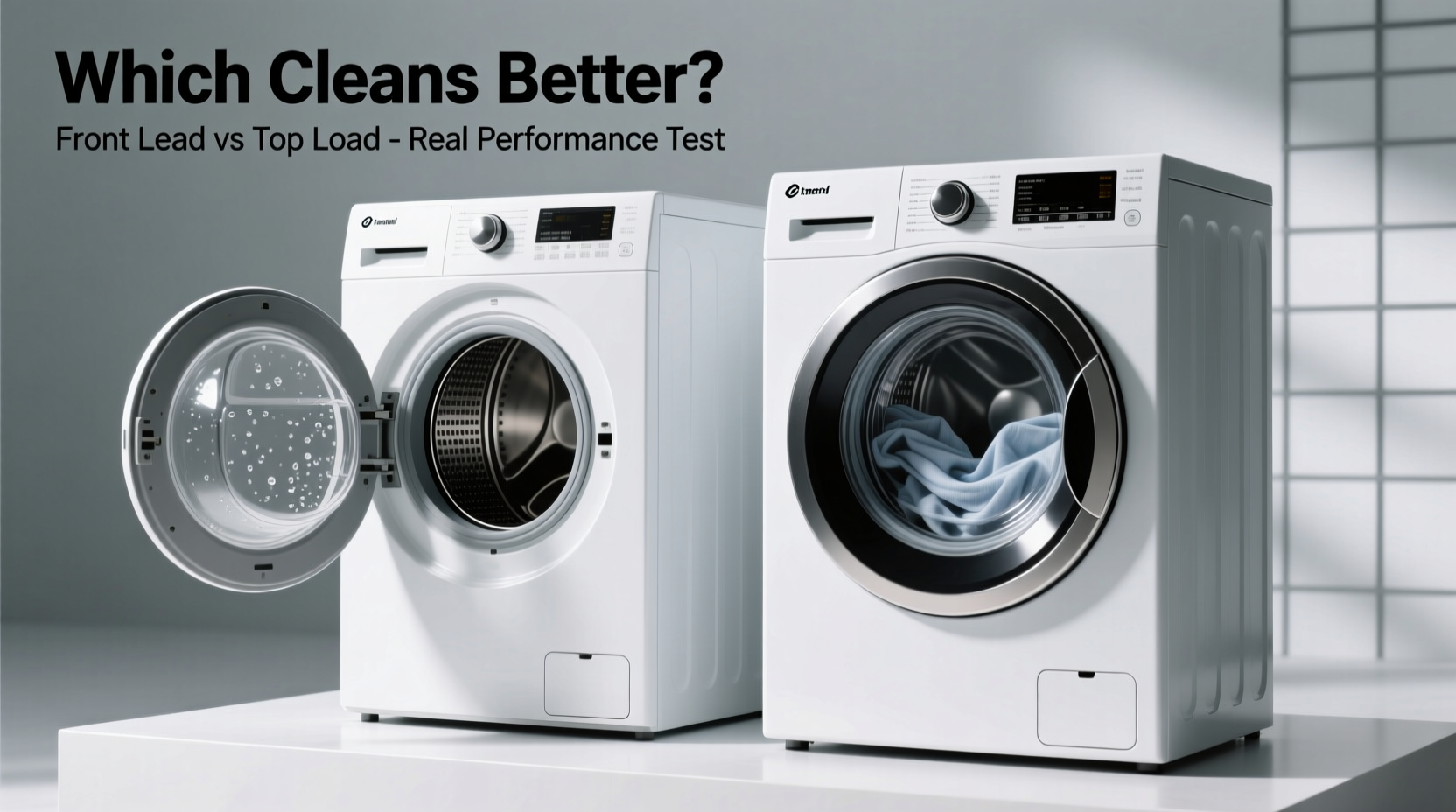
Cleaning isn't just about soaking clothes in soapy water—it's a combination of mechanical action, chemical reaction (detergent), thermal energy (water temperature), and time. The effectiveness of any washing machine depends on how well it balances these four elements, known in textile engineering as the Sinner’s Circle.
- Mechanical Action: Physical movement that dislodges dirt from fabric fibers.
- Chemical Action: Detergents break down oils, proteins, and stains.
- Thermal Action: Hotter water improves solubility of soils and activates enzymes in detergents.
- Time: Duration of wash cycle impacts overall soil removal.
Front-loading machines typically rely more on tumbling action and longer wash times at lower water levels, while top loaders use impellers or agitators to create vigorous motion in a full tub of water. These fundamental differences shape their cleaning capabilities.
Cleaning Performance: Front Loaders Have the Edge
Independent tests conducted by organizations like Consumer Reports, NSF International, and the U.S. Department of Energy consistently show that front-loading washing machines remove more soil and stains than top loaders. On average, front loaders achieve 7–10% higher soil removal efficiency under standardized testing conditions.
The reason lies in their design. Front loaders tumble clothes through a shallow pool of water and detergent, creating consistent friction between garments. This tumbling mimics hand-scrubbing and allows detergent to penetrate deeply into fabric weaves. Because water usage is low—typically 15–20 gallons per load—the concentration of detergent remains high, enhancing cleaning power.
In contrast, traditional top loaders with central agitators can trap clothes around the post, reducing contact with water and detergent. Even modern high-efficiency (HE) top loaders with impellers, which eliminate the agitator, still use significantly more water—up to 25–35 gallons per load—diluting detergent and reducing its effectiveness unless precisely measured.
“Front loaders provide more uniform mechanical action across all fabrics in the drum. That consistency leads to better stain removal without excessive wear.” — Dr. Linda Chen, Textile Research Scientist, Georgia Tech
Water and Detergent Efficiency Comparison
Efficiency doesn’t just affect your utility bills—it directly influences cleaning performance. Using too much water dilutes detergent, while too little can leave residues. Here’s how the two types compare:
| Feature | Front Load Washer | Top Load Washer (Agitator) | Top Load HE (Impeller) |
|---|---|---|---|
| Average Water Use (gallons/load) | 13–18 | 28–35 | 20–25 |
| Detergent Efficiency | High (concentrated solution) | Low (diluted by excess water) | Moderate (requires HE detergent) |
| Energy for Heating Water | Lower (less water to heat) | Higher | Moderate |
| Cycle Time (avg. regular cycle) | 60–90 minutes | 45–60 minutes | 50–70 minutes |
| Soil Removal Score (out of 100) | 88–94 | 75–82 | 80–86 |
As shown, front loaders use less water but deliver higher cleaning scores due to optimized mechanical action and detergent concentration. However, they require high-efficiency (HE) detergents specifically formulated for low-water environments. Using regular detergent can lead to oversudsing, poor rinsing, and long-term buildup.
Special Considerations: Fabric Care and Real-World Use
While front loaders win on raw cleaning power, real-world usability matters. Many users report concerns about mold and mildew in front loader door gaskets, especially in humid climates. The rubber seal retains moisture, creating an environment where bacteria and fungi can grow if not properly maintained.
Top loaders, particularly those with impellers, are generally easier to load and unload since the drum is accessible from above. They also tend to be gentler on bulky items like comforters or rugs, which may become unbalanced in horizontal-axis drums.
However, agitator-based top loaders can be harsh on delicate fabrics. The central post twists and pulls clothes aggressively, increasing fiber stress and leading to faster pilling or tearing over time. Front loaders, with their tumbling motion, offer a more controlled wash ideal for fine knits, silks, and workout gear with moisture-wicking coatings.
Mini Case Study: Family of Four in Suburban Chicago
The Ramirez family replaced their 12-year-old agitator top loader with a new front-loading model after noticing persistent dinginess in white towels and children’s sports uniforms. Despite using bleach and extra rinse settings, grays looked faded and whites lacked brightness.
After switching to a front loader and switching to HE detergent, they observed immediate improvements. Sweat stains on soccer jerseys lifted more easily, and towels regained softness without residue. They did note an adjustment period—longer cycle times and the need to wipe the door seal after each use—but found the trade-off worthwhile. Within three months, they reduced detergent use by 40% and cut water consumption by nearly half.
Common Misconceptions Debunked
Several myths persist about both machine types, often clouding objective comparisons.
- Myth: Top loaders clean faster, so they’re better.
Reality: Shorter cycles don’t mean better cleaning. Quick washes often sacrifice agitation time and rinse thoroughness, leaving behind odors and soils. - Myth: Front loaders damage clothes more.
Reality: Studies show front loaders cause less fiber degradation over time due to reduced tangling and pulling compared to agitators. - Myth: You can’t wash large items in front loaders.
Reality: Most modern front loaders accommodate king-sized comforters. Just ensure proper load distribution and use a gentle cycle.
Step-by-Step Guide to Maximizing Cleaning Performance
No matter which machine you own, following these steps will help you get the cleanest possible results:
- Sort by Soil Level and Fabric Type: Separate heavily soiled workwear from lightly worn clothes. Wash delicates separately.
- Pre-Treat Stains: Apply a small amount of stain remover or paste of detergent and water directly to set-in stains before loading.
- Use the Right Detergent: HE detergent for high-efficiency machines (both front and newer top loaders). Avoid overuse—more suds do not equal cleaner clothes.
- Don’t Overload: Leave space for clothes to move freely. A full drum should not be packed tight; aim for ¾ capacity.
- Select the Appropriate Cycle: Use heavy-duty or deep-clean settings for dirty work clothes, and cold wash + extended soak for odor removal.
- Maintain Your Machine: Run a cleaning cycle monthly with washer-safe tablets or vinegar (check manufacturer guidelines).
Checklist: Choosing the Best Washer for Your Needs
Answer these questions to determine which type suits your household:
- ✅ Do you frequently wash heavily soiled clothes (e.g., baby clothes, athletic gear)? → Front loader preferred
- ✅ Is water or energy conservation important to you? → Front loader recommended
- ✅ Do you have back pain or mobility issues? → Top loader may be easier to access
- ✅ Are you willing to perform routine maintenance (wiping seals, cleaning dispenser)? → Necessary for front loaders
- ✅ Do you wash large or bulky items often? → Test capacity; both types vary
- ✅ Is upfront cost a major factor? → Top loaders are usually cheaper
Frequently Asked Questions
Do front load washers really clean better than top loaders?
Yes, in controlled tests and real-world usage, front loaders consistently outperform top loaders in soil and stain removal. Their tumbling action, combined with concentrated detergent solutions and longer wash times, provides more effective cleaning, especially on ground-in dirt and oily stains.
Why does my front load washer smell bad?
The odor is likely caused by mold or mildew growing in the door gasket, detergent drawer, or drain pump. To prevent this, wipe the seal dry after each use, run monthly cleaning cycles, use HE detergent, and avoid leaving wet clothes inside for extended periods.
Can I use regular detergent in a high-efficiency top loader?
No. Regular detergent creates too many suds in HE machines, which interferes with cleaning and can cause overflow or error codes. Always use high-efficiency (HE) detergent, identifiable by the HE symbol on the packaging.
Conclusion: The Verdict on Cleaning Performance
When judged solely on cleaning effectiveness, front-loading washing machines come out ahead. Their design maximizes mechanical action, optimizes detergent use, and removes more soil with less water. Independent testing, expert analysis, and long-term user feedback support this conclusion. However, “better” depends on context. If ease of access, lower initial cost, or compatibility with very large items are priorities, a high-efficiency top loader with an impeller can still deliver strong results.
The key is matching the machine to your lifestyle, being honest about maintenance willingness, and using best practices regardless of type. Whichever you choose, proper loading, correct detergent use, and regular upkeep will determine how clean your clothes truly get.




 浙公网安备
33010002000092号
浙公网安备
33010002000092号 浙B2-20120091-4
Comments
No comments yet. Why don't you start the discussion?