
Every morning, millions of professionals reach for a bag to carry laptops, notebooks, water bottles, and more. But how many pause to consider whether their choice is silently contributing to chronic shoulder pain? The debate between tote bags and backpacks isn’t just about fashion—it’s about long-term physical comfort and spinal health. While the tote exudes sophistication and ease, the backpack offers balanced weight distribution. Choosing the wrong one can lead to posture deterioration, muscle strain, or even nerve compression over time. This article breaks down the real-world implications of each option, backed by ergonomics research and lifestyle design principles, so you can make a decision that supports both your well-being and your wardrobe.
The Hidden Cost of Carrying Weight on One Shoulder
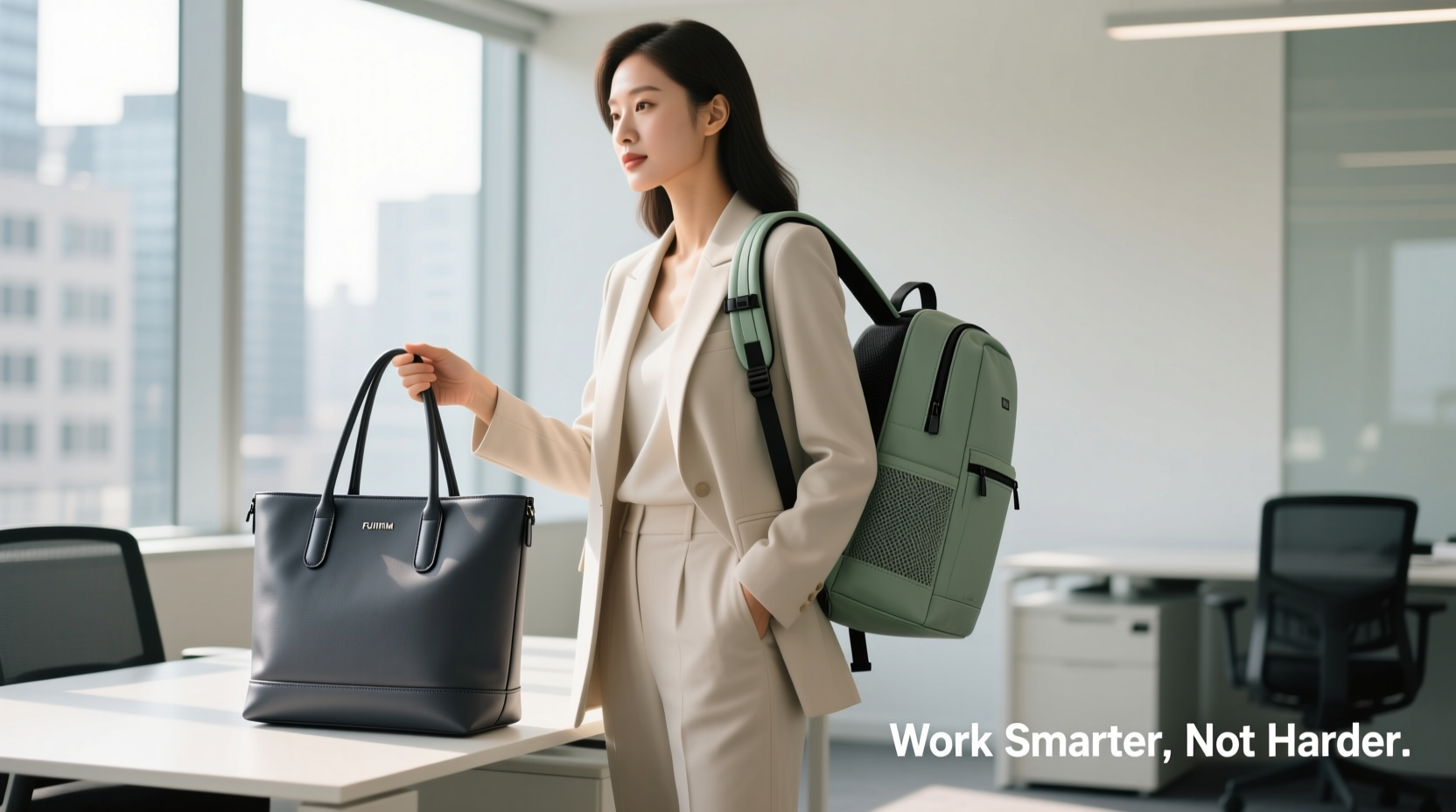
Crossbody totes and single-strap handbags are staples in urban professional fashion. They’re sleek, easy to access, and often made from premium materials. Yet, carrying significant weight on one shoulder creates biomechanical imbalances. When a heavy load pulls down on one side of the body, the spine compensates by tilting laterally. Over time, this leads to uneven muscle development, tightened trapezius muscles, and increased pressure on cervical vertebrae.
According to Dr. Lena Park, a certified occupational physiotherapist at the Urban Spine Institute:
“Carrying more than 10% of your body weight on one shoulder—even intermittently—can trigger neuromuscular adaptations within two weeks. We see patients with radiating pain, numbness in the arms, and even early signs of disc irritation due to sustained asymmetrical loading.” — Dr. Lena Park, DPT, OCS
For an average adult weighing 150 pounds (68 kg), that threshold is just 15 pounds (6.8 kg)—a common weight when packing a laptop, charger, lunch, and documents into a tote.
Evaluating Ergonomic Performance: Tote Bag vs Backpack
To understand which bag truly serves working professionals best, we need to assess them across key functional categories: weight distribution, posture impact, accessibility, load capacity, and aesthetic versatility.
| Feature | Tote Bag | Backpack |
|---|---|---|
| Weight Distribution | Poor – concentrated on one shoulder or arm | Excellent – evenly split across both shoulders and upper back |
| Posture Impact | Negative – encourages leaning, hunching, and spinal tilt | Neutral to Positive – promotes upright alignment when properly fitted |
| Accessibility | High – open top, quick access to contents | Moderate – zippers and compartments slow retrieval |
| Load Capacity | Variable – limited structure may sag under heavy loads | High – structured compartments support heavier items safely |
| Aesthetic Flexibility | High – fits seamlessly with business casual to formal wear | Improving – modern minimalist designs now suit office environments |
| Risk of Shoulder Pain | High – especially with daily use and loads >10 lbs | Low – if worn correctly and not overloaded |
The data shows a clear trade-off: the tote wins in immediacy and elegance, but the backpack dominates in long-term physical sustainability.
Modern Backpacks That Don’t Sacrifice Style
One of the main reasons professionals resist switching to backpacks is the perception that they look too casual, collegiate, or sporty. However, the market has evolved dramatically. Sleek, minimalist backpacks made from vegan leather, water-resistant nylon, or textured microfiber now blend into corporate environments effortlessly.
Look for these design features to maintain professionalism:
- Structured silhouette – avoids the “slouchy” appearance of travel packs
- Subtle branding – no loud logos or bright colors
- Hidden laptop sleeve – protects devices while keeping lines clean
- Top handle – allows briefcase-style carrying when entering meetings
- Neutral tones – black, charcoal, navy, taupe, or deep olive
Brands like Aer, Bellroy, Tumi, and Totepack offer hybrid designs that function like backpacks but present like executive accessories. Some even include magnetic closures, RFID-blocking pockets, and detachable crossbody straps for transitional use.
Real-World Case: From Chronic Discomfort to All-Day Comfort
Sarah Kim, a project manager at a tech consultancy in Seattle, used a large canvas tote for her commute and client visits. After six months, she began experiencing persistent tightness in her right shoulder and occasional tingling in her fingers. Her chiropractor diagnosed early-stage thoracic outlet syndrome—compression of nerves and blood vessels between the neck and shoulder—linked directly to her bag habits.
She transitioned to a slim-profile backpack with ergonomic straps and reduced her total carried weight from 14 lbs to 9 lbs by digitizing documents and using cloud storage. Within four weeks, her symptoms decreased significantly. “I was skeptical about wearing a backpack to board meetings,” she said, “but no one batted an eye. If anything, my posture improved, and I looked more confident standing tall.”
Smart Packing: Reducing Load, Regardless of Bag Type
No matter which bag you choose, minimizing carried weight is the most effective way to prevent pain. Many professionals overpack out of habit, fear of being unprepared, or lack of organization.
Step-by-Step Guide to Lighten Your Workload
- Inventory your bag contents weekly. List everything you carry and categorize by necessity: essential, situational, habitual.
- Digitize what you can. Replace paper notebooks with tablets or e-readers; store files in secure cloud drives.
- Leave non-essentials at the office. Keep spare chargers, headphones, or skincare products in a desk drawer.
- Use modular organization. Employ small pouches so you only grab what’s needed for a specific day.
- Set a weight limit. Aim for under 10% of your body weight—ideally closer to 7–8%.
- Weigh your loaded bag monthly. Use a kitchen scale to stay accountable.
Reducing carried weight not only prevents pain but also increases mobility and reduces fatigue during long days.
When a Tote Can Still Be Safe: Best Practices
If you’re emotionally or professionally attached to your tote—perhaps it’s part of your personal brand or required by workplace norms—you’re not doomed to shoulder pain. With adjustments, you can mitigate risks.
Checklist: Using a Tote Without Injury
- ✅ Choose a tote with a wide, padded shoulder strap to disperse pressure
- ✅ Limit contents to under 10 lbs (use a scale to verify)
- ✅ Alternate shoulders frequently during movement
- ✅ Avoid swinging the bag or letting it hang loosely
- ✅ Carry it close to your body—don’t let it swing outward
- ✅ Pair with a supportive bra or vest to stabilize upper torso muscles
- ✅ Perform daily shoulder rolls and neck stretches to release tension
Additionally, consider using a rolling tote for heavier loads—especially if you navigate stairs infrequently. These hybrid bags combine the look of a handbag with the mechanics of luggage, sparing your shoulders entirely.
Frequently Asked Questions
Can a stylish backpack really be appropriate for a business meeting?
Yes—modern minimalist backpacks in neutral colors and premium materials are widely accepted in professional settings. Look for clean lines, discreet branding, and a top handle for briefcase-style carrying when entering high-stakes meetings.
Is it worse to carry a heavy tote or a poorly fitted backpack?
A poorly fitted backpack can cause issues like shoulder chafing or lower back strain, but it still distributes weight more evenly than any single-strap tote. A badly adjusted backpack is generally less harmful than a consistently overloaded tote used on one side.
How do I know if my bag is causing my shoulder pain?
Signs include recurring stiffness on one side, visible shoulder height imbalance, numbness or tingling in the arms, or pain that worsens throughout the day. Try switching to a balanced carrier for two weeks—if symptoms improve, your bag was likely a contributing factor.
Final Recommendations: Prioritize Health Without Compromising Identity
The ideal work bag does more than hold your belongings—it supports your body, enhances your efficiency, and aligns with your self-image. While the tote bag remains a symbol of effortless professionalism, its ergonomic limitations are undeniable. For those walking more than a few blocks daily or carrying more than a tablet and wallet, the backpack is the superior choice for long-term musculoskeletal health.
That doesn’t mean abandoning style. Today’s best work backpacks are designed with aesthetics in mind, offering the same polish as high-end totes while delivering critical functional advantages. And for those who must use a tote, disciplined load management and mindful usage can reduce—but not eliminate—the risk of pain.
Your daily bag is not a minor accessory. It’s a tool that shapes your posture, energy levels, and physical resilience. By choosing wisely, you invest in both your career longevity and your bodily well-being.




 浙公网安备
33010002000092号
浙公网安备
33010002000092号 浙B2-20120091-4
Comments
No comments yet. Why don't you start the discussion?