
Choosing the right tote bag isn’t just about style or material—it’s about how well it fits into your daily routine. A common dilemma for professionals, students, parents, and travelers alike is whether to opt for a tote with built-in compartments or stick with a classic, open-style design. While both have their merits, the decision ultimately hinges on how much control you want over your belongings and how efficiently you need to access them throughout the day.
Organization isn’t merely aesthetic; it affects productivity, reduces stress, and saves time. Imagine digging through a bottomless tote during a morning commute to find your keys or wallet. That frustration can be minimized—or eliminated—with the right structure. Let’s explore what each type offers and who benefits most from which design.
The Case for Tote Bags with Compartments
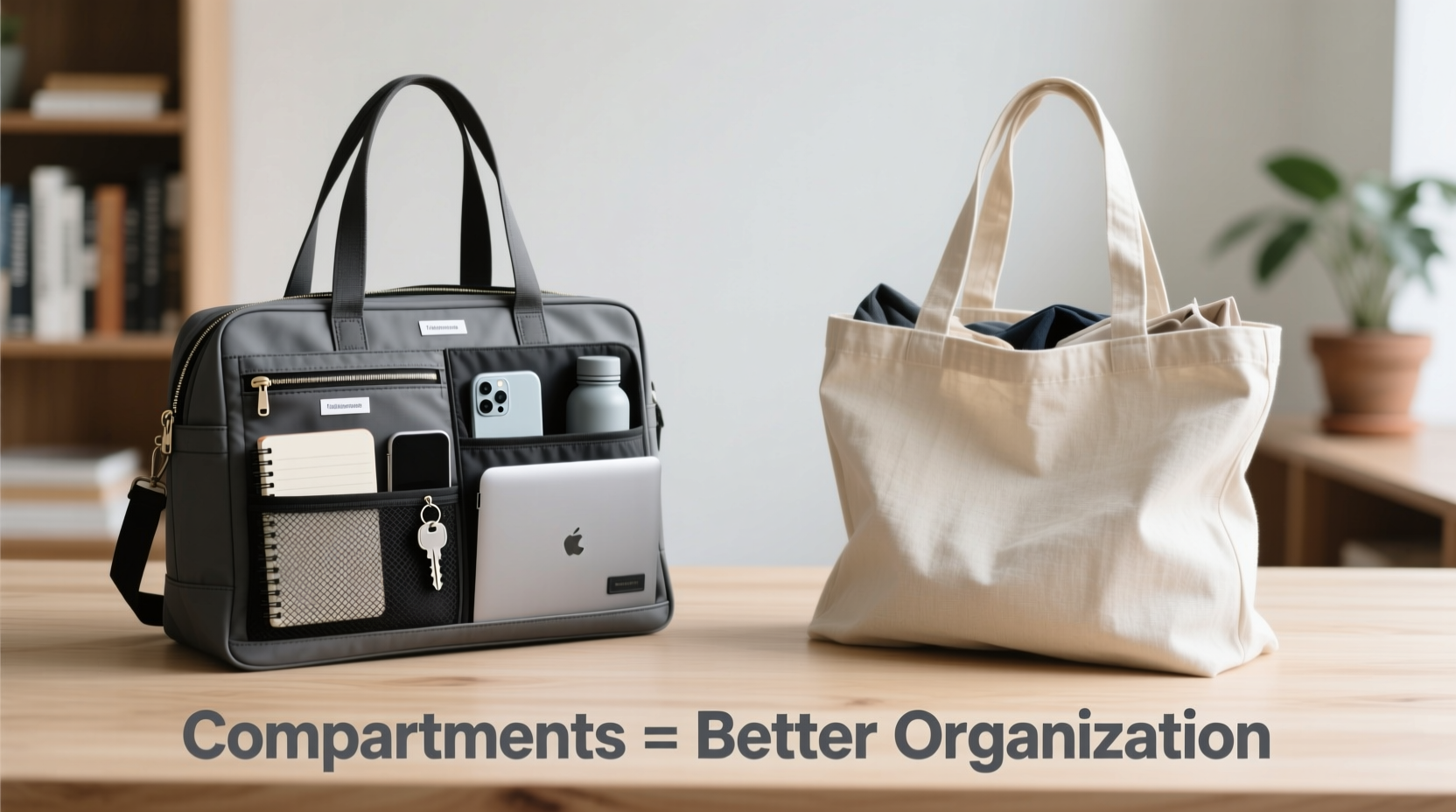
Bags equipped with internal pockets, zippered sections, laptop sleeves, and even key clips are engineered for order. These features aren’t just cosmetic—they serve functional purposes that respond to modern demands. For instance, someone carrying a tablet, notebook, water bottle, makeup pouch, and phone needs designated zones to avoid constant rummaging.
Compartments create separation between categories: electronics in padded sleeves, documents in flat pockets, personal items in secure zippers, and loose change in small slots. This segmentation prevents damage (like a pen leaking onto papers) and speeds up retrieval.
Who Benefits Most?
- Professionals: Lawyers, consultants, and remote workers often carry multiple devices and confidential files. Dedicated pockets keep everything secure and presentation-ready.
- Students: Carrying textbooks, laptops, chargers, and snacks becomes manageable when each item has its place.
- Parents on the go: Diapers, wipes, bottles, and toys stay separated from personal items like wallets and phones.
“Structured interiors reduce cognitive load. When your bag mirrors an organized workspace, your mind follows.” — Dr. Lena Torres, Behavioral Productivity Researcher
The Appeal of the Simple Tote Bag
Sometimes, less really is more. The minimalist tote—often a single-spaced canvas or leather sack—offers flexibility, ease of cleaning, and timeless elegance. Without rigid dividers, these bags adapt to changing loads. One day it might hold a gym outfit; the next, groceries or a weekend getaway kit.
Simple totes shine when you value speed over sorting. If you only carry a few essentials—a wallet, phone, book, and keys—an open layout means fewer barriers between you and your items. There's no fumbling with zippers or Velcro, and emptying the bag at the end of the day takes seconds.
Moreover, uncomplicated designs tend to last longer because they have fewer moving parts (like zippers) that can break. They’re also easier to wipe down or toss in the wash if made from durable fabric like cotton duck or recycled polyester.
When Simplicity Wins
- Minimalists: Those who follow a “carry only what you need” philosophy often prefer unrestricted space.
- Creative professionals: Artists or writers may use large totes for portfolios or sketchbooks, where compartmentalization would hinder access.
- Occasional users: If you only use a tote once or twice a week for errands or travel, full organization may be overkill.
Comparative Breakdown: Features at a Glance
| Feature | Tote with Compartments | Simple Tote |
|---|---|---|
| Organization Level | High – defined zones for different items | Low – relies on user discipline |
| Access Speed | Moderate – requires opening flaps/pockets | Fast – all items visible and reachable |
| Durability | Medium – zippers and seams wear faster | High – fewer failure points |
| Capacity Flexibility | Low – fixed sections limit bulk storage | High – adapts to oversized or irregular loads |
| Cleaning & Maintenance | Harder – crevices trap dust | Easier – smooth interior, often machine-washable |
| Ideal For | Daily commuters, multitaskers, tech carriers | Minimalists, creatives, casual users |
Real-Life Scenario: Two Commuters, Two Choices
Consider Sarah and James, both city-based professionals with similar schedules but different tote preferences.
Sarah uses a compartmentalized tote. Inside, her 13-inch laptop rests in a cushioned sleeve, her charger coils neatly in a side mesh pocket, and her planner sits upright in a front flap section. Her wallet, keys, and hand sanitizer each have assigned spots. On busy mornings, she grabs her coffee, slings the bag over her shoulder, and boards the train knowing exactly where everything is. She rarely searches and never loses small items.
James prefers a wide-mouth canvas tote. He drops in a folder, his e-reader, a water bottle, and a sweater. Everything tumbles in loosely. While he appreciates the spaciousness, he often spends extra time fishing for his transit card. Once, he spilled his bag trying to find earbuds before a meeting. Still, he values the lightweight feel and the ability to toss in bulky items without constraint.
Their experiences reflect a fundamental truth: organization isn’t one-size-fits-all. It depends on habits, priorities, and tolerance for chaos.
How to Maximize Organization—Regardless of Style
Even if you love your simple tote, you can improve its functionality. Here’s a practical checklist to boost organization:
Organization Checklist
- Use small pouches or pencil cases to group similar items (e.g., tech accessories, cosmetics).
- Assign a dedicated spot in the bag for high-use items (like your phone going always in the left corner).
- Empty and reset your tote weekly to prevent clutter buildup.
- Invest in a foldable inner organizer that fits inside any tote.
- Avoid overloading—keep weight under 10% of your body weight to protect posture.
Frequently Asked Questions
Can I add compartments to a simple tote?
Yes. Many brands sell insert organizers designed to fit standard tote dimensions. Alternatively, DIY solutions like sew-in pockets or magnetic dividers can customize your bag without permanent alterations.
Are compartmentalized totes heavier?
Typically, yes. Extra lining, padding, and hardware increase weight by 10–25%. However, this trade-off often pays off in protection and usability, especially for those carrying delicate electronics.
Do structured interiors make cleaning harder?
They can. Deep pockets and seams collect lint and crumbs. To maintain hygiene, shake out the bag weekly and use a handheld vacuum or damp cloth monthly. Avoid soaking unless the care label permits.
Final Verdict: Which Keeps Your Stuff More Organized?
The answer is clear: a tote bag with compartments keeps your belongings significantly more organized than a simple tote—provided you actually use the sections as intended. Structure enforces order, protects fragile items, and streamlines daily routines. However, this advantage comes with reduced flexibility and higher maintenance.
A simple tote rewards minimalism and versatility but demands self-discipline. Without external support, staying organized depends entirely on your habits. For most people juggling work, family, and personal life, the compartmentalized option offers a sustainable edge.
Ultimately, the best choice aligns with your lifestyle. If you frequently carry diverse items and hate searching, go structured. If you value openness, simplicity, and adaptability, a clean, spacious tote may suit you better—especially when paired with smart packing strategies.




 浙公网安备
33010002000092号
浙公网安备
33010002000092号 浙B2-20120091-4
Comments
No comments yet. Why don't you start the discussion?