
Commuting through busy city streets, crowded subways, or bustling train stations demands more than just punctuality—it requires vigilance over your belongings. One of the most overlooked yet critical choices you make each morning is what kind of tote bag to carry. The debate between zippered totes and open-top designs isn’t just about aesthetics or ease of access; it’s fundamentally about personal security, item protection, and peace of mind during daily transit.
While both styles have loyal followings, understanding their functional differences can help you decide which better suits your lifestyle, environment, and risk tolerance. Whether you're carrying a laptop, wallet, phone, or personal documents, the right closure type can mean the difference between a smooth commute and a costly loss.
Security: The Core Difference Between Zipper and Open-Top Totes
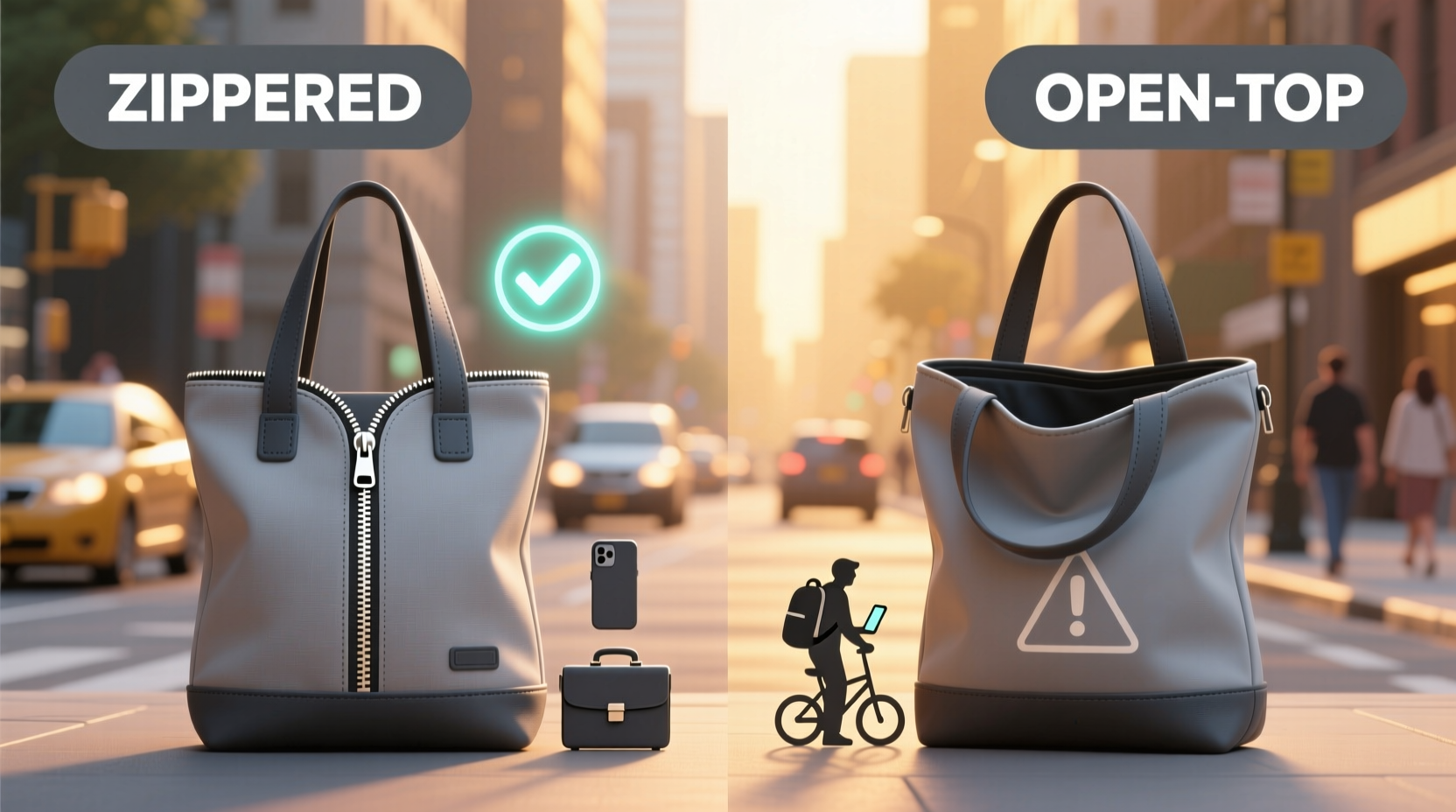
The primary distinction lies in how well each design protects against opportunistic theft and accidental item loss. In high-density environments—such as rush-hour public transportation or packed sidewalks—open-top bags are inherently more vulnerable. Without a physical barrier, contents remain exposed not only to pickpockets but also to jostling that may dislodge smaller items like keys, pens, or headphones.
A zippered tote introduces a mechanical seal that deters casual tampering. Even a partially closed zipper creates a noticeable obstruction, making unauthorized access more difficult and detectable. This added layer of defense aligns with crime prevention strategies recommended by urban safety experts.
“From a behavioral standpoint, thieves prefer low-effort targets. A visible zipper signals effort—and risk—discouraging quick grabs.” — Detective Maria Tran, Urban Crime Prevention Unit, Seattle PD
In contrast, open-top totes offer zero resistance. Their appeal lies in convenience, but that same openness invites both accidental drops and intentional intrusion. For commuters in cities with higher rates of petty theft, this trade-off becomes unacceptable.
Accessibility vs. Protection: Balancing Daily Needs
While security is paramount, usability matters just as much. Many professionals rely on frequent access to phones, transit cards, or notebooks throughout their commute. An open-top tote allows instant retrieval without fumbling for zippers, especially when hands are full or movement is restricted in a packed car.
However, modern zippered designs have evolved to address these concerns. Magnetic snap zippers, dual-pull sliders, and partial-top closures now allow one-handed operation while maintaining coverage over essential compartments. Some models feature dedicated external pockets for frequently used items, effectively merging security with efficiency.
Consider this real-world scenario:
This illustrates how a small design change can significantly impact both physical safety and psychological comfort.
Comparative Analysis: Zipper vs Open Top
| Feature | Zipper Tote | Open-Top Tote |
|---|---|---|
| Theft Resistance | High – physical barrier deters grab-and-run attempts | Low – fully exposed interior |
| Item Retention | Excellent – prevents accidental drops when jostled | Poor – loose items easily fall out |
| Access Speed | Moderate to High (depends on zipper design) | Very High – immediate hand entry |
| Weather Protection | Good – keeps rain, snow, and dust out | None – contents exposed to elements |
| Durability Concerns | Zipper mechanism may wear or jam over time | No moving parts; generally longer structural life |
| Style Flexibility | Slightly more structured; limited boho options | Broad range of casual, slouchy designs |
The table underscores a key insight: there is no universally superior option. Instead, the best choice depends on your route, routine, and priorities. If your commute involves long walks through poorly lit areas or standing in dense crowds, security should outweigh speed. Conversely, if you drive or walk short distances in low-risk zones, an open-top may suffice.
Choosing the Right Bag for Your Commute: A Step-by-Step Guide
Selecting the safest tote isn’t arbitrary. Follow this decision-making process to match your needs with the right features:
- Map Your Commute Route: Identify high-risk zones—crowded platforms, dimly lit alleys, or areas with known theft activity. These signal a need for enhanced security.
- Inventory What You Carry: List all items you bring daily. If they include valuables (phone, wallet, laptop), prioritize containment.
- Assess Frequency of Access: How often do you reach into your bag mid-commute? Frequent access may justify external pockets rather than sacrificing closure.
- Evaluate Weather Conditions: Rain, wind, or snow exposure makes a sealed top more practical regardless of theft risk.
- Test Closure Mechanisms: Visit stores or order samples to test zipper smoothness, durability, and ease of single-hand use.
- Check Interior Organization: Even the best zipper fails if items are disorganized. Look for padded laptop sleeves, zippered inner pockets, and secure compartments.
- Consider Long-Term Maintenance: Zippers require occasional cleaning and lubrication. Open tops are lower maintenance but more prone to interior stains from spilled drinks or rain.
Expert Recommendations and Real-World Adjustments
Urban mobility consultants increasingly recommend hybrid solutions. Rather than choosing strictly between zippered and open-top styles, many suggest combining structure with smart organization.
“The ideal commuter bag isn’t defined by closure alone. It’s about layered security: a main zipper, secondary internal locks, and situational awareness.” — Dr. Alan Reeves, Transportation Safety Researcher, MIT AgeLab
For example, some users keep a zippered tote but store high-theft-risk items—like wallets and passports—in a crossbody pouch worn underneath clothing. Others use open-top bags but line them with waterproof inserts and secure loose items in zippered clutch cases inside the tote.
This layered approach acknowledges that no single design eliminates all risks. Instead, it empowers users to adapt based on context. On a quiet weekend errand run? An open-top might be perfectly safe. During peak weekday transit? That same bag could become a liability.
Frequently Asked Questions
Is a zipper enough to prevent theft?
While a zipper significantly reduces the likelihood of casual theft, it is not foolproof. Determined pickpockets can still operate zippers discreetly. However, it raises the effort required, making you a less attractive target. Combine zipper use with positioning the bag in front of you and avoiding overcrowded blind spots.
Can I convert my open-top tote into a more secure bag?
Yes—though with limitations. Add-ons like drawstring cinch covers, magnetic flap converters, or internal locking pouches can improve security. However, these are not as reliable as factory-built zippers. For regular commuting, investing in a purpose-built zippered tote is safer and more durable.
Are zippered totes harder to clean?
Not necessarily. Most zippered totes are designed with wipeable interiors and removable liners. The zipper itself requires minimal care—just avoid submerging it in water unless specified by the manufacturer. Open-top bags may seem easier to clean at first glance, but their exposed interiors often collect more debris and stains over time.
Essential Checklist: Choosing a Safer Commuter Tote
- ✅ Choose a tote with a full or partial top zipper that closes securely
- ✅ Opt for water-resistant or weatherproof materials (e.g., coated canvas, nylon)
- ✅ Ensure the bag has designated secure pockets for phone, wallet, and keys
- ✅ Select a size that fits only what you need—overstuffing strains zippers and distorts shape
- ✅ Wear the bag across your body or keep it firmly in your lap on transit
- ✅ Avoid placing it on the floor or hanging it on chair backs in public
- ✅ Regularly inspect zippers and straps for signs of wear or damage
Final Thoughts: Safety Is Part Design, Part Behavior
The question of whether a tote bag with a zipper is better than an open-top model for commuting safety doesn’t have a one-size-fits-all answer—but the evidence strongly favors zippers for most urban environments. They provide measurable advantages in theft deterrence, item retention, and environmental protection.
That said, even the most secure bag fails if used carelessly. A zippered tote left unattended at a café or swung behind your back on a subway offers little real protection. True safety emerges from the combination of smart design and mindful habits.
If you're currently using an open-top tote for daily commuting, consider upgrading to a zippered alternative—or at minimum, reorganize your essentials into a secured inner pouch. Small changes today can prevent major losses tomorrow.




 浙公网安备
33010002000092号
浙公网安备
33010002000092号 浙B2-20120091-4
Comments
No comments yet. Why don't you start the discussion?