
Choosing the right iPhone case isn’t just about aesthetics—it’s about balancing protection, usability, and longevity. Two of the most common materials on the market are TPU (thermoplastic polyurethane) and hard plastic (typically polycarbonate). While they may look similar at a glance, their performance, feel, and long-term value differ significantly. Understanding these differences helps ensure your iPhone stays safe without sacrificing design or function.
Understanding the Materials: What Are TPU and Hard Plastic?
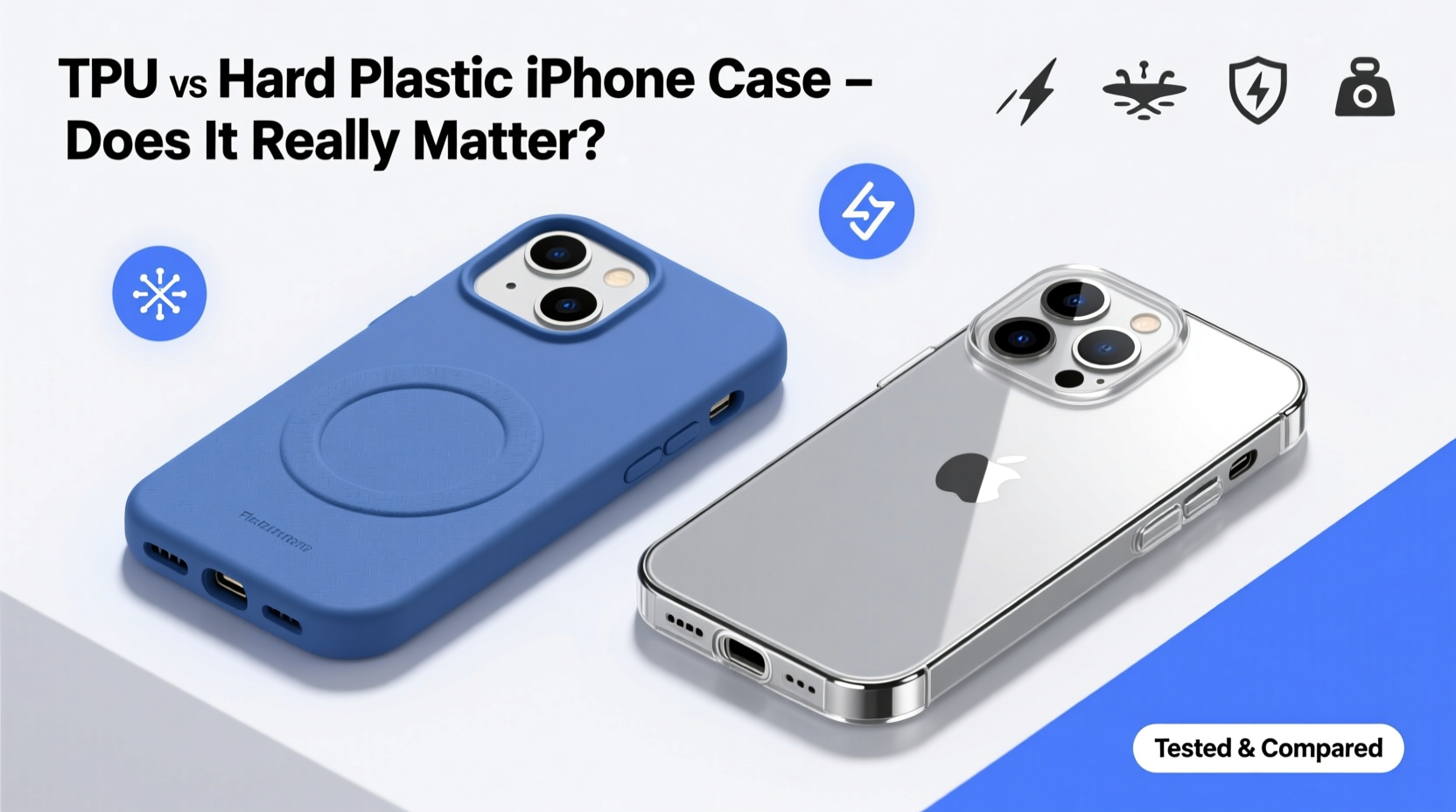
Before comparing the two, it's essential to understand what each material is made of and how it behaves under stress.
TPU (Thermoplastic Polyurethane) is a flexible, rubber-like plastic known for its shock absorption and resistance to scratches and abrasions. It's commonly used in cases that have a soft-touch finish and slight give when pressed. Because of its elasticity, TPU conforms closely to the iPhone’s shape, offering snug protection around buttons and ports.
Hard Plastic (Polycarbonate), on the other hand, is rigid and durable. It’s the same material used in bulletproof glass and aerospace components—renowned for impact resistance without flexibility. Polycarbonate cases are typically thinner, more scratch-resistant, and maintain their clarity longer than many TPU options.
“Material choice directly affects drop performance and daily usability. A flexible case can absorb energy, while a rigid one deflects it—but both have trade-offs.” — Dr. Lena Park, Materials Engineer at MobileTech Labs
Protection Performance: Which One Keeps Your iPhone Safer?
Dropping your iPhone is inevitable. The question is whether your case can handle it.
TPU excels in absorbing impact due to its elasticity. When dropped, the material compresses slightly, dissipating force across the surface rather than transferring it directly to the phone. This makes TPU especially effective for corner and edge drops—the most common types of impact.
Hard plastic doesn’t compress, but it resists cracking and deformation under pressure. In high-impact scenarios, polycarbonate often holds up structurally better than TPU, though it may transmit more shock to the device. However, many premium hard cases combine polycarbonate shells with internal silicone or air-cushioning systems to improve shock absorption.
Design and Daily Usability Comparison
Beyond protection, user experience matters. How a case feels in your hand, how easy it is to clean, and how well it integrates with your lifestyle are all critical factors.
TPU cases tend to be grippier, reducing the chance of slipping out of your hand. They also come in a wider range of colors and finishes, including translucent, matte, and glitter options. However, lower-quality TPU can yellow over time, especially when exposed to UV light or oils from skin.
Hard plastic cases offer a sleek, minimalist profile. They’re easier to clean (a quick wipe removes smudges), maintain transparency better, and don’t attract lint like softer materials. But their rigidity means they’re less forgiving during installation and removal, and they provide less grip on smooth surfaces.
| Feature | TPU Case | Hard Plastic Case |
|---|---|---|
| Shock Absorption | High – flexible material absorbs impact | Moderate – relies on structure, not compression |
| Scratch Resistance | Moderate – prone to micro-scratches over time | High – harder surface resists scuffs |
| Durability (Longevity) | Varies – cheaper TPU yellows; premium lasts longer | High – maintains clarity and shape for years |
| Grip & Handling | Excellent – soft texture improves hold | Fair – slippery unless textured |
| Weight & Thickness | Slightly thicker due to cushioning | Thinner, more compact profile |
Real-World Example: Commuter vs. Outdoor Enthusiast
Consider two users: Sarah, a city commuter who rides the subway daily, and Mark, a hiker who takes his iPhone on rugged trails.
Sarah values slimness and style. She prefers a clear hard plastic case because it shows off her iPhone’s color and fits easily into tight coat pockets. She rarely drops her phone, but when she does, it’s usually from waist height onto concrete. Her case has survived three minor drops thanks to its rigid frame and raised bezel protecting the screen.
Mark, however, prioritizes durability. He uses a black TPU case with reinforced corners. On a recent hike, his phone slipped from his hand and tumbled down a rocky slope. The TPU absorbed repeated impacts, and though the case was scratched, the phone emerged unscathed. “I’d never trust a hard case out here,” he says. “It might crack after the first big fall.”
Their experiences highlight a key truth: the best case depends on how and where you use your phone.
How to Choose the Right Case for Your Lifestyle
Instead of asking which material is objectively better, ask which one aligns with your habits. Follow this checklist to make an informed decision:
- Do you frequently drop your phone? → Prioritize TPU or hybrid cases with shock-absorbing edges.
- Do you prefer a slim, lightweight feel? → Opt for hard plastic or ultra-thin polycarbonate.
- Are you using your phone outdoors or in harsh environments? → Choose TPU for grip and resilience.
- Do you want to show off your iPhone’s design? → Clear hard plastic preserves aesthetics longer.
- Are you sensitive to sticky or greasy textures? → Avoid low-quality TPU, which can degrade and feel tacky.
Frequently Asked Questions
Does TPU turn yellow over time?
Lower-quality TPU can yellow due to exposure to UV light, heat, and skin oils. High-end TPU with anti-yellowing coatings resists discoloration for up to two years. To minimize yellowing, avoid leaving your phone in hot cars or direct sunlight for extended periods.
Is hard plastic better for wireless charging?
Both materials work well with wireless charging, as neither interferes with electromagnetic fields. However, hard plastic cases are often thinner, allowing for slightly faster charging efficiency. Just ensure the case isn’t overly bulky or metal-reinforced, which could block the signal.
Can I recycle my old iPhone case?
Most TPU and polycarbonate cases are technically recyclable, but few curbside programs accept them due to mixed materials (e.g., adhesive layers, dyes). Some manufacturers, like Pela and Speck, offer take-back programs. Alternatively, repurpose old cases as drawer organizers or donate them to schools for craft projects.
Final Recommendation: It Does Matter—Choose Intentionally
Yes, it really does matter whether you choose a TPU or hard plastic iPhone case. The difference isn't just cosmetic—it affects how well your phone survives daily wear, accidental drops, and environmental exposure. There’s no universal \"best\" option. Instead, the ideal choice reflects your routine, priorities, and expectations.
If you value grip, cushioning, and frequent pocket access, TPU is likely your best bet. If you prefer a minimalist, clean look with superior scratch resistance, go for a high-quality polycarbonate case. For those who want the ultimate defense, consider a dual-material hybrid that leverages the strengths of both.




 浙公网安备
33010002000092号
浙公网安备
33010002000092号 浙B2-20120091-4
Comments
No comments yet. Why don't you start the discussion?