
Real transformation doesn’t require grand gestures or sudden epiphanies. Lasting change is built through consistent, intentional actions taken daily. Whether you want to improve your health, relationships, career, or mindset, the foundation lies in practical habits and a clear strategy. This guide delivers proven methods to help you initiate meaningful shifts—starting today.
1. Start Small: The Power of Micro-Habits
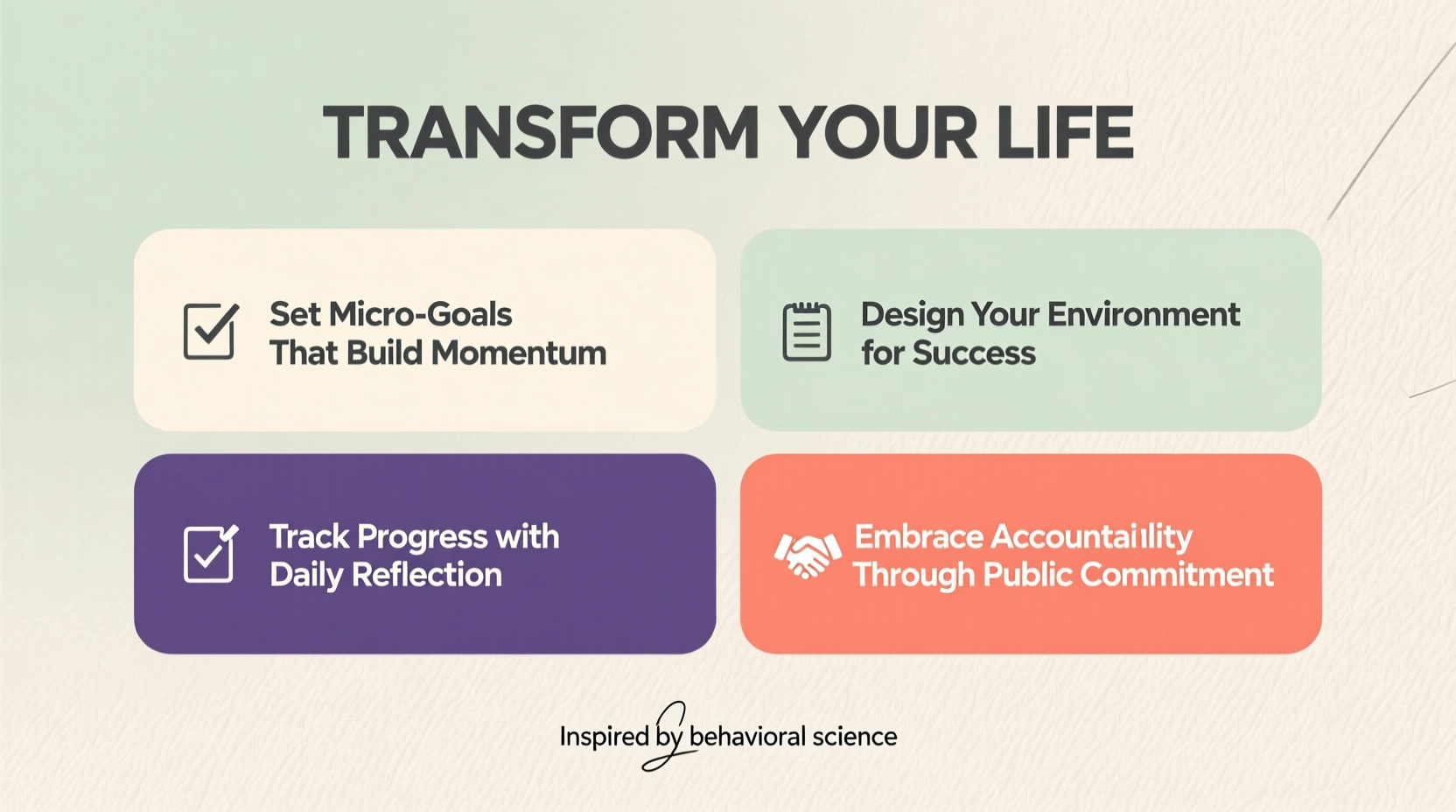
One of the most common reasons people fail to transform their lives is attempting too much too soon. When change feels overwhelming, motivation fades quickly. Instead, focus on micro-habits—tiny behaviors so easy they feel effortless.
For example, if your goal is to become more physically active, commit to two minutes of stretching each morning. If you want to read more, start with one page per night. These small actions build momentum without triggering resistance.
Research shows that habit formation takes an average of 66 days, but early repetition strengthens neural pathways. By mastering small wins, you train your brain to expect progress, making larger changes feel achievable over time.
2. Design Your Environment for Success
Your surroundings shape your behavior more than willpower ever can. A cluttered workspace invites distraction. A kitchen stocked with junk food tempts poor choices. To create lasting change, reengineer your environment to support your goals.
If you want to write a book, place your notebook and pen on your desk each morning. If you’re trying to eat healthier, keep fruit visible on the counter and store snacks out of sight. Make the right choice the easiest choice.
“Environment is the invisible hand that shapes behavior. You don’t rise to your goals—you fall to your systems.” — James Clear, author of *Atomic Habits*
| Goal | Supportive Environment | What to Remove |
|---|---|---|
| Focus & Productivity | Dedicated quiet space, phone on airplane mode | Social media apps, noisy distractions |
| Better Sleep | Cool room, blackout curtains, no screens after 9 PM | Blue light devices, caffeine after 2 PM |
| Emotional Well-being | Calming music, journal on bedside table | Negative news, unresolved clutter |
3. Track Progress with Purpose
Motivation wanes when you can’t see results. Tracking provides clarity and reinforces commitment. But not all tracking is equal. Effective tracking is simple, visual, and tied directly to behavior—not just outcomes.
Instead of only measuring weight loss, track daily water intake or workout consistency. Instead of focusing solely on income, monitor how many client outreach messages you send each week. Behavior-based tracking keeps you engaged even when results are slow.
Step-by-Step Guide to Effective Tracking
- Choose one key behavior linked to your goal (e.g., “meditate for 5 minutes”).
- Select a tracking method: paper calendar, habit app, or spreadsheet.
- Mark each day you complete the action with a checkmark or color.
- Review weekly to identify patterns and adjust as needed.
- Celebrate streaks—but don’t punish missed days. Reset and continue.
4. Real Change: A Mini Case Study
Consider Sarah, a 38-year-old marketing manager who felt overwhelmed and disconnected from her family. She wanted to reduce stress and be more present at home but kept burning out by midweek.
Instead of launching a full wellness overhaul, she began with one micro-habit: five minutes of mindful breathing before leaving work. She placed a sticky note on her laptop as a reminder and silenced notifications during that time.
After two weeks, she added a second habit: putting her phone in another room during dinner. Within six weeks, she reported improved sleep, less irritability, and deeper conversations with her children. The changes weren’t dramatic—but they were sustainable.
Sarah’s success came not from discipline, but from designing a system that worked with her reality. She didn’t rely on motivation; she relied on structure.
5. Build a Resilience Routine
Lasting change isn’t linear. Setbacks are inevitable. What separates those who transform their lives from those who stall is resilience—the ability to recover and continue.
A resilience routine includes regular reflection, self-compassion, and pre-planned responses to obstacles. For example, if you miss three days of exercise, instead of quitting, have a reset plan: “When I fall off, I’ll do a 10-minute walk to restart.”
- Practice daily gratitude (write three things you’re thankful for).
- Schedule weekly reviews to assess progress and adjust goals.
- Replace self-criticism with curiosity: “Why did I skip? What can I learn?”
“Progress is not about perfection. It’s about persistence in the face of imperfection.” — Dr. Susan David, psychologist and author of *Emotional Agility*
Checklist: Launch Your Transformation Today
- ✅ Identify one area of life you want to improve (health, focus, relationships).
- ✅ Choose one micro-habit related to that goal (e.g., drink a glass of water upon waking).
- ✅ Attach it to an existing habit (e.g., after brushing teeth).
- ✅ Modify your environment to support the new behavior (e.g., leave water bottle on the sink).
- ✅ Set up a simple tracking system (calendar, app, journal).
- ✅ Plan a weekly review (Sundays work well) to reflect and adjust.
Frequently Asked Questions
How long does it take to see real change?
Visible results vary, but behavioral shifts often begin within 2–4 weeks. Lasting transformation typically emerges between 60–90 days of consistent effort. Focus on showing up daily rather than waiting for outcomes.
What if I lose motivation?
Motivation naturally fluctuates. That’s why systems matter more than feelings. Stick to your micro-habits even when unmotivated. Action often precedes motivation—not the other way around.
Can I work on multiple changes at once?
It’s possible, but risky. Research suggests focusing on one core habit at a time increases success rates. Once a behavior becomes automatic, layer in the next. Think progression, not multitasking.
Conclusion: Begin Where You Are
You don’t need a fresh start or perfect conditions to transform your life. You need one small, deliberate action taken today. The compound effect of consistent micro-efforts reshapes your identity over time. Who you are is not fixed—it’s formed by what you repeatedly do.
Stop waiting for inspiration. Stop demanding perfection. Start where you are, use what you have, and do what you can. One decision, one habit, one day at a time—that’s how lasting change begins.




 浙公网安备
33010002000092号
浙公网安备
33010002000092号 浙B2-20120091-4
Comments
No comments yet. Why don't you start the discussion?