
Choosing the right eyewear for daily driving isn’t just about style—it’s about safety, comfort, and visual clarity. Two popular options dominate the conversation: transition lenses and polarized sunglasses. Both offer protection from sunlight and glare, but they function differently and serve distinct needs. Understanding their strengths and limitations helps you make an informed decision based on your lifestyle, driving habits, and visual demands.
For drivers who spend significant time behind the wheel—whether commuting, road-tripping, or working outdoors—the right lenses can reduce eye strain, improve reaction time, and enhance visibility in changing light conditions. But when it comes to transition lenses vs polarized, which one truly performs better in real-world driving scenarios?
How Transition Lenses Work
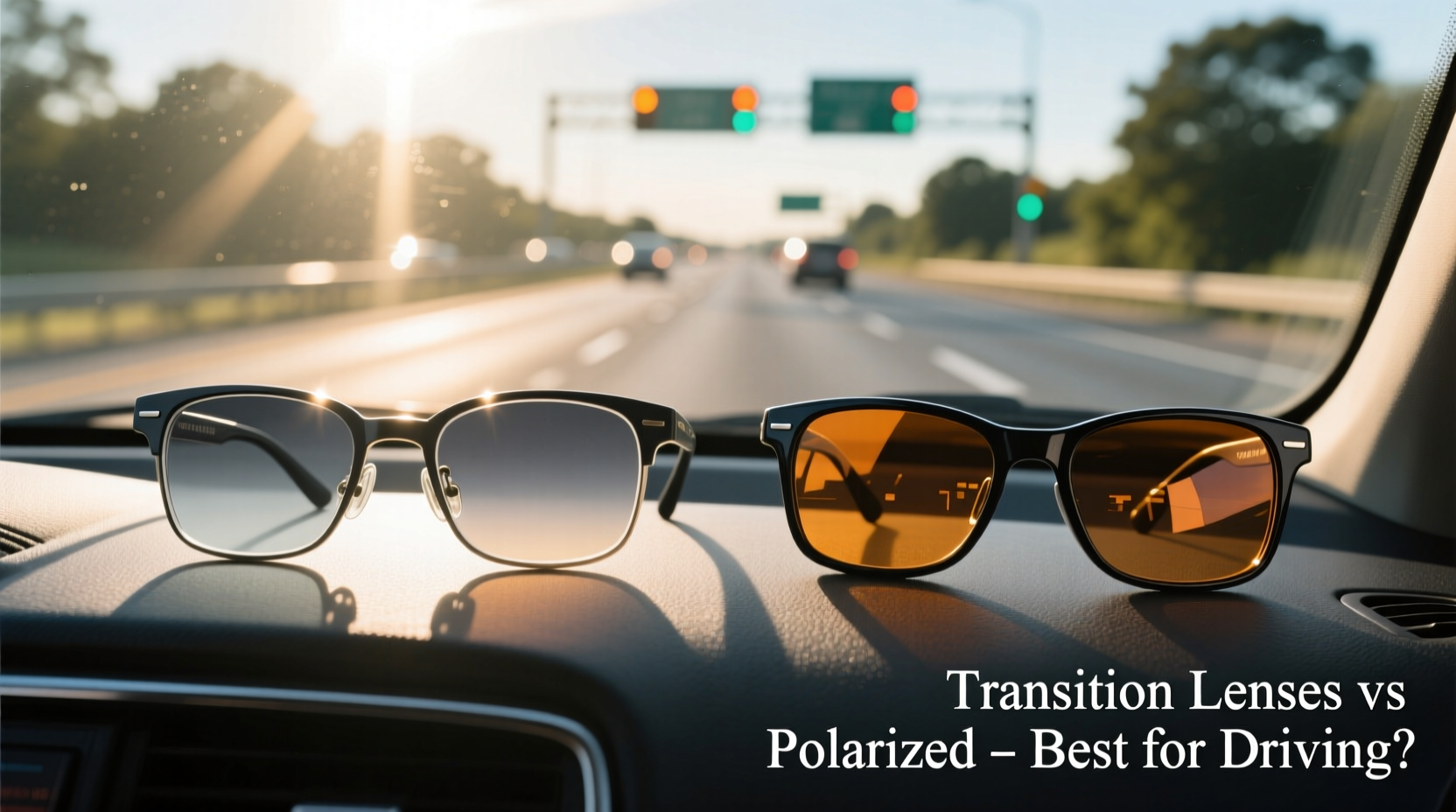
Transition lenses, also known as photochromic lenses, automatically darken when exposed to ultraviolet (UV) light. Indoors, they remain clear; outdoors in sunlight, they shift into a tinted state that protects against brightness. This dynamic response makes them convenient for people moving frequently between indoor and outdoor environments.
The technology relies on photochromic molecules embedded in the lens material. When UV rays hit these molecules, they change structure and absorb more visible light, causing the lens to darken. The process reverses when UV exposure decreases, returning the lenses to clarity.
Modern versions activate faster and perform better than older models, with some even responding partially inside vehicles thanks to improved sensitivity to visible light. However, most still face a key limitation: car windshields block the majority of UV radiation, which means transition lenses may not darken fully while driving.
How Polarized Lenses Work
Polarized lenses are designed specifically to reduce glare caused by reflected light—such as sunlight bouncing off roads, water, snow, or car hoods. They contain a special filter that blocks horizontally oriented light waves, allowing only vertically aligned light to pass through.
This filtering effect dramatically improves visual comfort and contrast, especially in bright conditions. For drivers, this means less squinting, reduced eye fatigue, and clearer vision when facing reflective surfaces during sunrise or sunset.
Unlike transition lenses, polarization is a permanent feature. Polarized sunglasses maintain their tint at all times unless combined with photochromics (available in some premium models). While excellent for daytime driving, standard polarized lenses aren’t suitable for indoor wear due to their constant dark tint.
“Polarized lenses provide superior glare reduction for drivers, particularly on wet roads or highways where reflections can impair depth perception.” — Dr. Alan Ng, Optometrist and Vision Safety Researcher
Direct Comparison: Transition vs Polarized for Driving
| Feature | Transition Lenses | Polarized Lenses |
|---|---|---|
| Glare Reduction | Moderate (no built-in polarization unless specified) | Excellent (specifically designed to block glare) |
| UV Protection | Full UVA/UVB protection both indoors and outdoors | Typically full protection, but depends on brand and coating |
| Performance Behind Windshields | Limited darkening due to UV-blocking glass | Unaffected—maintains tint and polarization |
| Day-to-Night Use | Ideal—clear at night, no need to switch glasses | Not recommended at night due to dark tint |
| Versatility | High—one pair for multiple environments | Lower—best suited for daylight outdoor use |
| Cost | Higher (premium lens technology) | Varies (can be affordable or high-end) |
Real-World Driving Scenarios: A Case Study
Consider Sarah, a delivery driver who logs 500 miles weekly across urban and rural routes. Her day starts indoors, loading packages under fluorescent lights, then transitions to midday sun, afternoon glare on wet pavement, and evening twilight. She initially used regular clear glasses with occasional clip-on sunglasses, but struggled with switching eyewear and persistent glare.
She tried polarized sunglasses first. While they significantly reduced blinding reflections from asphalt and vehicle hoods, she found them too dark during early morning and late evening drives. Switching back and forth became impractical, and she occasionally forgot her clear pair indoors.
Next, she switched to Transitions Gen 8 lenses with added polarization. These lenses darken moderately even behind the windshield and include a polarization layer. Though slightly less effective at glare control than dedicated polarized sunglasses, they offered consistent performance throughout her workday without needing multiple pairs.
Sarah concluded that while pure polarized lenses were better for peak sunlight, the hybrid solution provided the best balance for her mixed-light driving routine.
When to Choose Transition Lenses
- You move frequently between indoor and outdoor settings.
- You drive mostly during dawn or dusk when extreme brightness is less of an issue.
- You prefer convenience and want one pair of glasses for all-day wear.
- You're sensitive to frequent changes in light levels.
- You live in a region with variable weather and inconsistent sunlight.
When to Choose Polarized Lenses
- You drive long hours in direct sunlight, especially on open highways.
- Glare from wet roads, snow, or other vehicles is a major concern.
- You already own prescription glasses and can keep a separate pair for driving.
- You engage in outdoor activities beyond driving (e.g., fishing, cycling).
- You prioritize maximum visual clarity and contrast over versatility.
Frequently Asked Questions
Can I get polarized transition lenses?
Yes. Advanced models like Transitions XTRActive Polarized combine photochromic technology with polarization. These lenses darken behind glass and reduce glare, offering a strong compromise for drivers. However, they tend to be more expensive and may still not match the full darkness of traditional polarized sunglasses in extreme sun.
Are transition lenses safe for night driving?
Absolutely. Since they remain clear in low light, transition lenses pose no risk for night driving. In fact, their consistent clarity makes them safer than switching between multiple pairs, reducing distractions and misplacement risks.
Do polarized lenses interfere with digital screens?
Some drivers notice rainbow patterns or dimming when viewing LCD screens (like dashboards or GPS units) at certain angles. This occurs due to the interaction between polarized filters and screen polarization. Tilting your head or adjusting the screen angle usually resolves the issue.
Action Checklist: Choosing Your Ideal Driving Lenses
- Assess your typical driving conditions: sunny, cloudy, urban, rural?
- Determine how often you transition between indoor and outdoor environments.
- Evaluate whether glare (from roads, vehicles, or water) is a frequent problem.
- Check if your current prescription supports photochromic or polarized upgrades.
- Consult your optometrist about combining features like anti-reflective coating, blue light filtering, or polarization.
- Test drive both options—if possible, trial a pair of each in real driving conditions.
- Consider investing in two specialized pairs instead of one compromise solution.
Final Recommendation
There is no universal “better” option between transition lenses and polarized lenses for driving—only what works best for your specific needs. If your priority is seamless, all-day convenience with decent sun protection, transition lenses are likely the smarter choice. They eliminate the hassle of carrying multiple pairs and adapt well to fluctuating light.
However, if you regularly face intense glare, drive long distances in bright conditions, or value maximum visual clarity above all else, dedicated polarized sunglasses will outperform even the most advanced photochromic options.
For many modern drivers, the ideal solution lies in combination: using polarized sunglasses for daytime driving and keeping a separate pair of transition lenses for general everyday wear. Alternatively, investing in high-end photochromic polarized lenses can consolidate benefits, though at a higher cost.
“The best lens for driving is the one that supports consistent, comfortable vision without forcing compromises in safety or usability.” — National Eye Institute, Visual Performance Guidelines




 浙公网安备
33010002000092号
浙公网安备
33010002000092号 浙B2-20120091-4
Comments
No comments yet. Why don't you start the discussion?