
Choosing the right heel for an all-day event—be it a wedding, conference, or city exploration—can make the difference between feeling confident and counting down the minutes until you can kick your shoes off. Two popular styles dominate modern footwear trends: transparent heels and block heels. While both offer distinct aesthetic appeal, their real-world performance varies significantly when worn for extended periods. Understanding the structural, ergonomic, and stylistic differences between these two types of heels is essential for making a choice that balances fashion with function.
The Anatomy of Comfort: How Heel Design Impacts Wearability
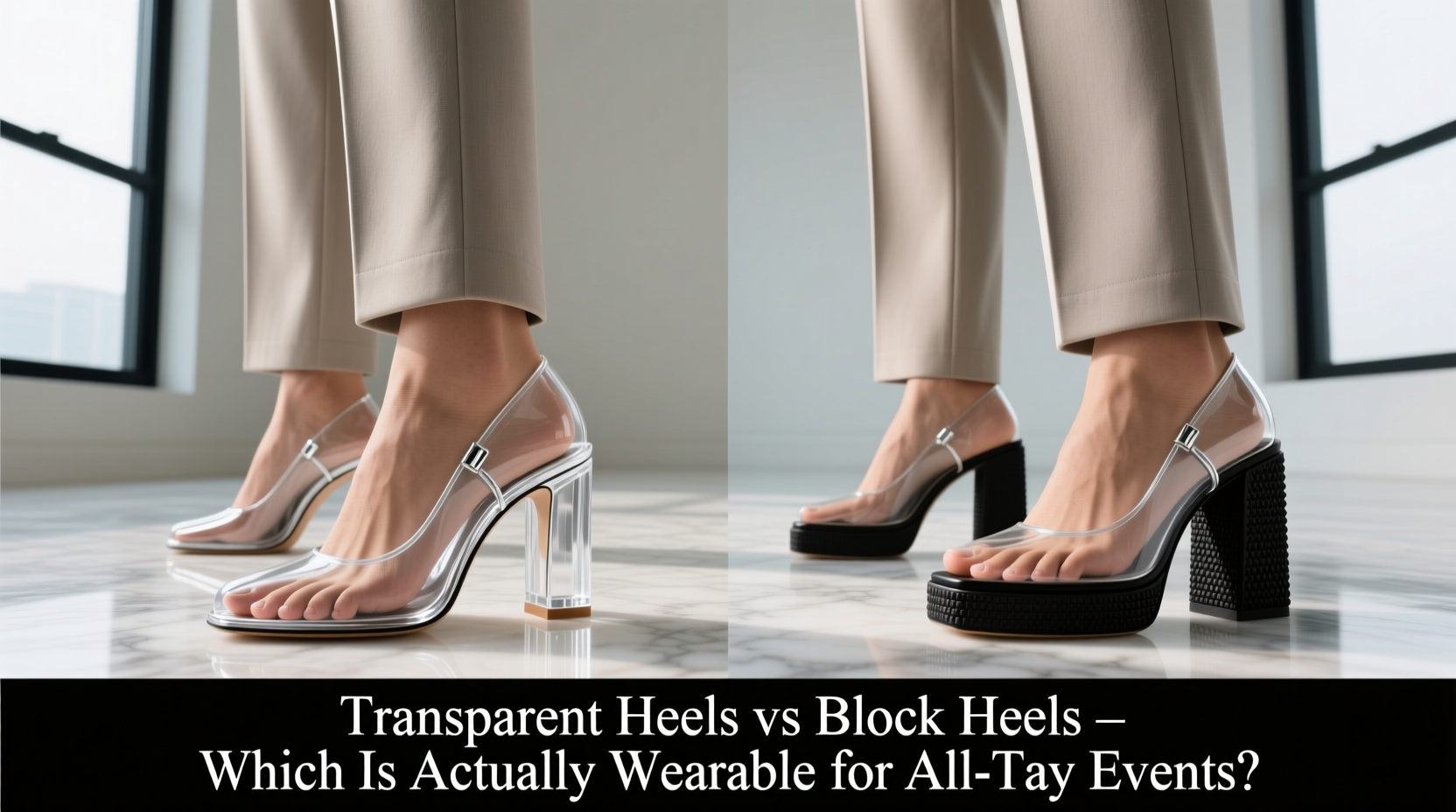
At first glance, heels may seem like simple accessories, but their design profoundly affects biomechanics. The way weight is distributed across the foot determines how much strain is placed on the ball of the foot, arch, ankle, and lower back. Transparent heels, typically made from acrylic or PVC, often mimic stiletto or kitten heel silhouettes. These designs concentrate pressure on a small surface area, increasing discomfort over time. In contrast, block heels feature a wider base that spreads body weight more evenly, reducing fatigue.
Footwear podiatrists emphasize that stability comes not just from heel height but from contact area. A narrow transparent heel—even at 2.5 inches—can be less stable than a 3.5-inch block heel due to its minimal footprint. This principle explains why many women report greater comfort in taller block heels compared to shorter stilettos or see-through styles.
Material Matters: Durability and Support Differences
Transparent heels are usually constructed from thermoplastic materials like lucite or polycarbonate. These plastics give the illusion of floating elegance but lack shock absorption. They also tend to become brittle in extreme temperatures and can crack under repeated stress. Because they’re rigid, there’s no flex to accommodate natural gait patterns, leading to increased foot fatigue.
Block heels, on the other hand, are commonly made from stacked leather, wood, rubber, or synthetic composites. These materials absorb impact better and allow slight compression with each step. Many high-quality block heel shoes include padded footbeds and structured arch support, features often sacrificed in transparent designs for visual minimalism.
Additionally, the upper material plays a role. Transparent heels frequently use thin straps or mesh fabrics to maintain the \"invisible\" effect, offering limited ankle support. Block heels are more likely to have closed backs, ankle straps, or supportive uppers that keep the foot secure during prolonged walking.
Comparative Breakdown: Transparent vs Block Heels
| Feature | Transparent Heels | Block Heels |
|---|---|---|
| Weight Distribution | Poor – concentrated pressure on heel and ball of foot | Excellent – wide base disperses weight evenly |
| Stability | Moderate to low – prone to wobbling on uneven surfaces | High – broad support reduces ankle roll risk |
| Material Comfort | Rigid plastic offers no cushioning | Softer materials with potential for internal padding |
| Durability | Low – susceptible to cracking and scratching | High – resistant to daily wear and tear |
| Fashion Flexibility | High – pairs well with minimalist, modern outfits | Moderate to high – versatile across casual and formal looks |
| All-Day Wear Score (1–10) | 4 | 8 |
“While transparent heels have redefined evening glamour, they remain fundamentally compromised in terms of ergonomics. For anything beyond three hours of standing or walking, I recommend switching to a block heel.” — Dr. Lena Torres, Podiatric Consultant & Footwear Ergonomics Researcher
Real-World Scenarios: When Each Style Shines
Not all events demand the same level of mobility. The ideal heel depends heavily on context, duration, and activity level.
A Wedding Guest’s Dilemma: Ceremony to Reception
Sophia attended a destination wedding that spanned eight hours—from a garden ceremony to a dance-filled reception. She started in elegant transparent mules with 3-inch lucite heels. By hour four, she was limping. The grassy lawn turned her delicate heels into balance hazards, and the lack of arch support caused sharp pain in her forefoot. During a bathroom break, she switched to foldable block heel sandals she’d packed discreetly in her clutch. The remainder of the night was significantly more comfortable, even during dancing.
This scenario illustrates a common issue: transparent heels excel in controlled environments—smooth floors, seated dinners, photo ops—but falter in dynamic settings. Block heels adapt better to transitions between indoor and outdoor spaces, stairs, cobblestones, or grass.
Corporate Conference Survival
Marketer Jamal needed professional yet stylish footwear for a two-day industry conference involving constant networking, walking between halls, and standing at presentations. He chose sleek black block heel ankle boots with a 2.75-inch base. The wide heel allowed him to stand for long sessions without fatigue, and the enclosed design protected his feet from swelling due to air conditioning and long hours on hard flooring. His colleague wore clear PVC heels with metallic accents—striking in photos but swapped out by midday for flats.
In professional settings where appearance matters but movement is constant, block heels provide the optimal compromise between polish and practicality.
How to Maximize Wearability: A Step-by-Step Guide
If you're set on wearing either style for an extended event, follow this preparation timeline to reduce discomfort and prevent injury.
- One Week Before the Event: Break in your chosen heels at home. Wear them for 1–2 hours daily around the house. Walk on similar surfaces (carpet, tile, pavement) to simulate real conditions.
- Three Days Before: Inspect the soles. If smooth, apply non-slip grip pads to prevent slipping—especially important for transparent heels, which often have slick bottoms.
- Day of the Event – Morning: Apply blister prevention products like moleskin or anti-friction balm on pressure points (heels, sides of toes).
- Day of the Event – Pre-Outfit: Insert gel insoles or metatarsal pads. Even a 2mm cushion can reduce impact forces by up to 30%, according to biomechanical studies.
- During the Event: Take micro-breaks every 60–90 minutes. Remove shoes if possible, stretch toes, and walk barefoot on safe surfaces to improve circulation.
- Emergency Backup Plan: Carry foldable flats or compact sandals in your bag. Never rely solely on one pair for events lasting more than four hours.
Style vs. Substance: Can You Have Both?
The fashion industry has begun responding to consumer demand for stylish yet wearable heels. Some designers now incorporate transparent elements into block heel constructions—using clear panels on the heel shaft while maintaining a broad, stable base. These hybrid styles offer the trendy “see-through” look without sacrificing support.
Brands like Sam Edelman, Naturalizer, and even higher-end labels such as Aquazzura have introduced transparent-accented block heels that merge aesthetics with functionality. These models often include padded collars, flexible outsoles, and contoured footbeds—features absent in traditional transparent stilettos.
For those who love the optical illusion of disappearing heels but need all-day endurance, seeking out these transitional designs is a smart strategy. It allows participation in current trends without compromising health or comfort.
Checklist: Choosing the Right Heel for All-Day Events
- ✅ Prioritize heel base width over height—wider is better for stability
- ✅ Check for built-in arch support or room to add custom orthotics
- ✅ Test walk on varied surfaces (carpet, tile, pavement) before committing
- ✅ Avoid completely smooth soles—look for textured or rubberized bottoms
- ✅ Ensure secure fit (ankle strap, back closure) to prevent foot slippage
- ✅ Pack backup footwear if the event exceeds five hours
- ✅ Choose rounded or almond toe shapes over pointed styles to reduce toe pressure
Frequently Asked Questions
Can transparent heels be comfortable for all-day wear?
Only in rare cases. If the transparent heel is combined with a block structure, cushioned insole, and supportive upper, it may be tolerable for six to eight hours. Traditional narrow transparent heels, however, are not designed for prolonged standing or walking and will likely cause discomfort after 2–3 hours.
Are block heels outdated or unfashionable?
No. Block heels have evolved into a fashion staple rather than a fallback option. Modern iterations come in bold colors, textures (snakeskin, patent), and architectural shapes that align with current trends. Celebrities and influencers regularly wear stylish block heels on red carpets and street-style circuits.
Do higher block heels hurt more than lower ones?
Not necessarily. A well-constructed 4-inch block heel can be more comfortable than a poorly made 2-inch stiletto because of superior weight distribution. The key factors are fit, sole flexibility, and whether the shoe aligns with your natural stride—not just height.
Final Verdict: Which Heel Wins for All-Day Wear?
When judged purely on wearability for extended events, block heels are the clear winner. Their structural advantages—superior balance, shock absorption, and foot support—make them suitable for everything from outdoor festivals to business marathons. Transparent heels, while visually captivating, remain best reserved for shorter engagements or moments when style takes precedence over stamina.
That said, personal preference and outfit coordination matter. If your ensemble hinges on the ethereal look of clear heels, consider wearing them for arrival and photos, then transitioning to more supportive footwear. Fashion should enhance confidence, not compromise well-being.
The most stylish choice isn’t always the one that turns heads—it’s the one that lets you move freely, engage fully, and enjoy every moment of the event without distraction. With thoughtful selection and preparation, you can navigate any occasion with both grace and ease.




 浙公网安备
33010002000092号
浙公网安备
33010002000092号 浙B2-20120091-4
Comments
No comments yet. Why don't you start the discussion?