
When choosing a daily carryall, the decision often comes down to style versus substance. Two of the most popular silhouettes in modern handbags—the trapezoid bucket bag and the hobo bag—frequently dominate fashion feeds and street-style photography. But beyond aesthetics, which one actually serves your lifestyle better? Is the trapezoid bucket bag’s structured shape a functional upgrade, or is the slouchy hobo still the king of comfort? This isn’t about trends; it’s about real utility.
Understanding the Designs
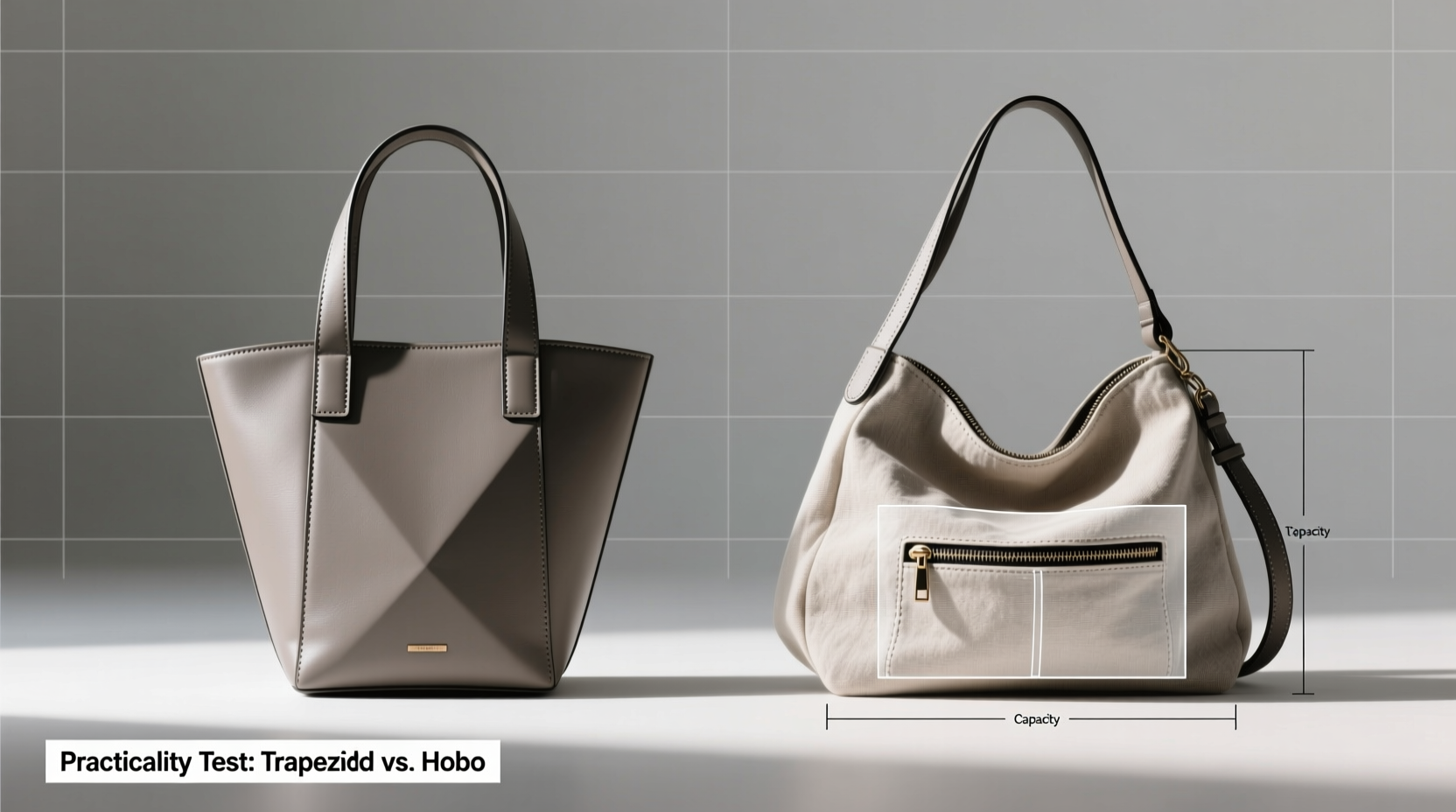
The trapezoid bucket bag and the hobo bag originate from different design philosophies. The trapezoid bucket bag features clean lines, a tapered bottom, and typically a cinched top with drawstrings or magnetic closures. Its geometric shape provides structure, making it easier to stand upright when set down. It often includes minimalist hardware and sometimes detachable straps for versatility.
In contrast, the hobo bag is defined by its crescent shape, soft silhouette, and relaxed drape over the shoulder. Originally inspired by 1930s work bags, it’s usually made from supple leather or fabric that molds to the body. It opens wide and lacks rigid support, giving it a lived-in look from day one.
While both are considered casual-chic, their structural differences influence how they perform in everyday scenarios—from commuting to weekend errands.
Practicality Compared: Capacity, Access, and Organization
One of the most critical factors in bag selection is usability. A stylish bag that makes retrieving your phone a two-handed struggle isn’t truly practical.
| Feature | Trapezoid Bucket Bag | Hobo Bag |
|---|---|---|
| Capacity | Moderate to high; well-distributed volume due to structured base | High; soft sides allow expansion but can become overstuffed |
| Access | Limited by cinch closure; requires pulling open | Wide opening allows easy access to contents |
| Organization | Better internal structure; often includes pockets and compartments | Rarely has interior organization; items tend to sink and shift |
| Security | Cinch tops or flap closures reduce risk of falling items | Open design increases chance of dropped or stolen items |
| Shape Retention | Holds form even when empty; less prone to sagging | Slumps when not full; may require stuffing to maintain look |
The bucket bag excels in controlled access and security. Its tapered design prevents overstuffing, while the cinched top keeps essentials from spilling. However, reaching into a narrow opening can be awkward, especially while walking. The hobo, on the other hand, offers effortless access and generous space—but at the cost of chaos inside. Without dividers, keys vanish, lipsticks leak, and receipts accumulate in a black hole of soft leather.
Comfort and Wearability Across Lifestyles
How a bag feels after an hour—or eight—matters more than how it looks in a selfie.
The hobo bag drapes naturally over the shoulder or across the body, distributing weight evenly along its curved frame. This makes it ideal for long days on foot, especially when carrying heavier loads. Its lack of rigidity conforms to movement, reducing strain.
The trapezoid bucket bag, while sleek, often sits more rigidly against the body. Depending on strap length and material, it can bounce or dig into the shoulder during brisk walks. However, many newer models include padded straps or crossbody options that improve comfort significantly.
“From a biomechanical standpoint, the hobo’s ergonomic curve aligns better with natural shoulder contours. But if weight distribution is managed through padding and fit, a bucket bag can be just as wearable.” — Dr. Lena Torres, Ergonomics Consultant in Fashion Design
Real-World Example: Commuting in New York City
Sophia, a graphic designer in Brooklyn, uses both styles weekly. On client days, she chooses her tan trapezoid bucket bag—it looks polished, fits her tablet, sketchbook, and makeup pouch neatly, and stands upright during meetings. But on subway-heavy days, she switches to her oversized black hobo. “It’s easier to sling over my shoulder while holding onto poles,” she says. “And I don’t worry about scratching the finish when it brushes against seats.”
Her experience reflects a broader truth: context determines functionality. The same bag that impresses in a boardroom might frustrate on a crowded train.
Style Longevity and Trend Resistance
While both designs have endured for years, their relationship with trends differs.
The hobo bag has cycled in and out of favor since the early 2000s, peaking with brands like Bottega Veneta and Céline. Its timeless slouch appeals to minimalists and maximalists alike, but poorly constructed versions can appear dated quickly due to sagging or worn hardware.
The trapezoid bucket bag emerged strongly in the mid-2010s and has maintained relevance thanks to its architectural appeal. Designers like The Row, By Far, and Staud have refined the shape into a modern classic. Because of its structured form, it ages more gracefully—less dependent on \"slouch\" as a status symbol.
Step-by-Step: Choosing the Right Bag for Your Life
Instead of defaulting to what’s trending, follow this decision framework:
- Assess your daily load: List the items you carry regularly (wallet, phone, laptop, umbrella, etc.). If you exceed 5–6 items, prioritize organization.
- Evaluate your commute: Do you walk, bike, or take transit? If mobility is key, test how each bag stays secure in motion.
- Check storage needs: Does your workplace offer safe storage, or does your bag sit on café floors? Structured bags resist deformation better.
- Consider outfit synergy: Hobo bags pair effortlessly with flowy dresses and oversized knits. Bucket bags complement tailored coats and straight-leg pants.
- Test accessibility: Try retrieving a small item (like earbuds) from each bag while standing. Which lets you do it fastest without setting the bag down?
Frequently Asked Questions
Can a trapezoid bucket bag work for travel?
Absolutely—if sized appropriately. Medium to large bucket bags with removable straps double as personal carry-ons. Their structure protects contents better than soft hobos, especially when tossed into overhead bins.
Are hobo bags suitable for professional settings?
Yes, but choose carefully. Opt for refined materials like pebbled leather, subtle branding, and neutral tones. Avoid overly slouchy versions, which can appear disheveled in formal environments.
Which bag holds its resale value better?
Generally, trapezoid bucket bags from established designers retain value longer due to limited production runs and architectural uniqueness. However, iconic hobo styles (e.g., Bottega’s Jodie) also command strong secondhand demand.
Final Verdict: Practicality Over Hype
The trapezoid bucket bag wins on organization, durability, and trend resistance. It’s the smarter choice if you value order, protection, and longevity. But the hobo bag remains unmatched in comfort, ease of access, and organic style—ideal for those who prioritize fluidity over formality.
Ultimately, neither is universally “more practical.” The right bag depends on your rhythm: your pace, your possessions, and your priorities. Don’t let social media dictate your decision. Carry what supports your life—not just your feed.




 浙公网安备
33010002000092号
浙公网安备
33010002000092号 浙B2-20120091-4
Comments
No comments yet. Why don't you start the discussion?