
In recent years, a quiet revolution has taken place in the world of travel gear. Airports once dominated by rolling suitcases now see a growing number of travelers with sleek, ergonomic backpacks slung over their shoulders. From digital nomads to weekend adventurers, more people are choosing travel backpacks over traditional suitcases — and not just for style. The shift reflects deeper changes in how we travel: faster, lighter, and more experientially driven. As cities become harder to navigate with wheels and airlines tighten baggage rules, the practical benefits of backpacks are becoming impossible to ignore.
The Rise of the Travel Backpack
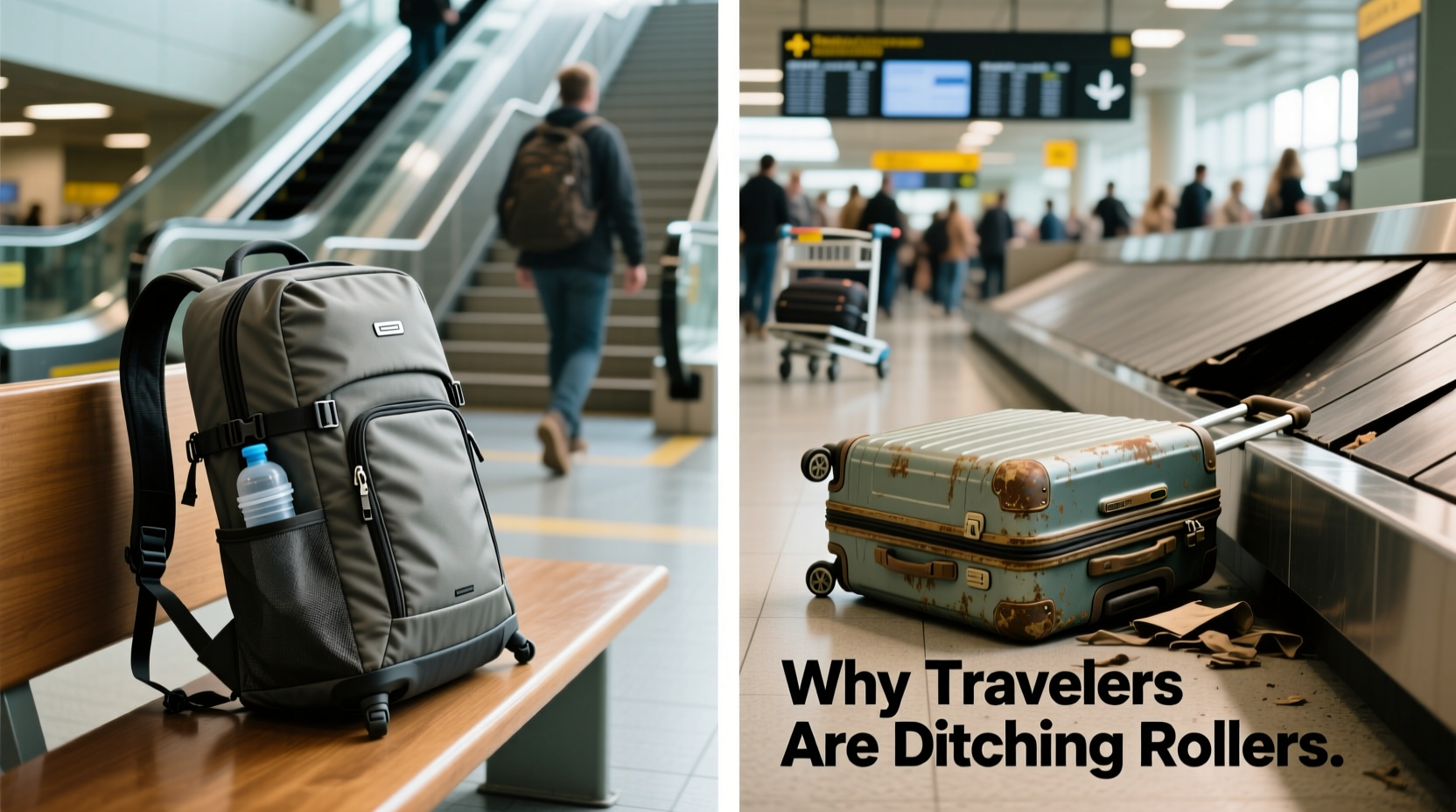
The modern travel backpack is no longer just a hiker’s companion. Today’s models are engineered for versatility, combining rugged durability with smart organization, laptop compartments, anti-theft features, and even built-in charging ports. Brands like Osprey, Nomatic, and Peak Design have redefined what a backpack can do, blurring the line between outdoor gear and urban utility.
This evolution coincides with broader travel trends. Remote work has enabled location independence, leading to longer stays in multiple destinations. Budget-conscious travelers opt for trains, buses, and budget airlines where overhead bins favor compact carry-ons. Meanwhile, city centers — often built centuries before suitcases had wheels — present cobblestone streets, narrow alleys, and endless staircases that make rollers impractical at best, unusable at worst.
Practical Advantages of Backpacks Over Suitcases
At first glance, suitcases offer structure and smooth rolling. But under scrutiny, they reveal critical limitations that backpacks overcome.
- Mobility: Backpacks keep your hands free and distribute weight evenly across your body. This is essential when climbing stairs, balancing on moving trains, or navigating crowded markets.
- Terrain adaptability: Cobblestones, gravel paths, sandy beaches, and uneven sidewalks render wheeled luggage ineffective. A backpack goes anywhere your feet can.
- Security: With your bag on your back, you’re less likely to lose it or have it tampered with in transit. Many travel backpacks also feature lockable zippers and RFID-blocking pockets.
- Airline compliance: Most travel backpacks are designed to meet carry-on size limits, eliminating check-in fees and lost luggage risks.
- Ergonomics: High-end backpacks use padded shoulder straps, sternum straps, and hip belts to transfer weight to your hips — reducing strain during long walks.
“Backpacks give you agency. You’re not dependent on elevators, ramps, or porters. That autonomy is priceless when traveling.” — Lena Torres, Adventure Travel Journalist
When Suitcases Still Make Sense
It would be misleading to claim backpacks are universally superior. Certain trips still favor suitcases, particularly those involving formal attire, extended family travel, or minimal movement between destinations.
Frequent business travelers who wear suits may prefer the wrinkle-resistant compression of a hard-shell suitcase. Families with young children often need multiple bags, and suitcases can be easier for kids to pull short distances. Cruises, all-inclusive resorts, and destination weddings typically involve stationary stays, making rollers more manageable.
But even in these cases, hybrid solutions are emerging. Convertible backpack-suitcase combos and carry-ons with dual handles (top and side) reflect the industry’s acknowledgment that pure rollers are losing dominance.
Travel Backpack vs Suitcase: A Practical Comparison
| Feature | Travel Backpack | Suitcase |
|---|---|---|
| Mobility in tight spaces | Excellent — hands-free, agile | Poor — requires flat, clear surfaces |
| Weight distribution | Balanced across back and hips | All weight on one arm or wheel base |
| Security | High — worn on body, lockable zippers | Moderate — vulnerable when unattended |
| Packing efficiency | Good — compartmentalized layouts | Excellent — flat layers, compression |
| Durability on rough terrain | High — no wheels to break | Low — wheels and handles prone to damage |
| Wrinkle control | Moderate — depends on folding technique | High — especially with garment sleeves |
Real-World Example: A Month in Southeast Asia
Consider Sarah, a freelance designer from Toronto who spent four weeks traveling through Vietnam, Laos, and Thailand. She packed only a 45L travel backpack. Her journey included overnight buses, motorbike rides, river boats, and guesthouses with steep staircases. At one point, she boarded a ferry with no ramp — passengers carried their belongings through shallow water. Her backpack went over her head and stayed dry. A fellow traveler with a suitcase struggled to lift it, then watched helplessly as seawater seeped into the seams.
Sarah never checked a bag, avoided baggage fees, and moved seamlessly between transport modes. “I used to swear by my spinner,” she said. “Now I can’t imagine lugging one through Hanoi’s Old Quarter.”
How to Transition from Suitcase to Backpack
Switching isn’t just about buying new gear — it’s a mindset shift toward minimalist, intentional packing. Here’s how to make the transition smoothly:
- Choose the right capacity: 35–45L is ideal for trips up to two weeks. Larger sizes (50L+) suit long-term travel but may exceed carry-on limits.
- Invest in quality: Look for weather-resistant fabric, YKK zippers, and breathable back panels. A hip belt is non-negotiable for loads over 10kg.
- Organize strategically: Use packing cubes to separate clothes, electronics, and toiletries. Place heavier items close to your back for balance.
- Practice wearing it: Load your backpack and walk around the block. Adjust straps until the weight feels natural.
- Learn efficient packing: Roll clothes, use compression sacks, and limit footwear to two pairs max.
Checklist: Is a Travel Backpack Right for You?
- ✅ Do you travel to cities with historic architecture or uneven sidewalks?
- ✅ Do you take public transportation or walk long distances?
- ✅ Are you looking to avoid checked baggage fees?
- ✅ Do you value quick transitions between flights and ground transport?
- ✅ Are you open to packing lighter and more efficiently?
If you answered yes to most of these, a travel backpack is likely a better fit than a suitcase.
FAQ
Can a backpack really replace a suitcase for long trips?
Absolutely — with proper packing techniques, a 45L backpack can comfortably hold two weeks’ worth of clothing and essentials. Many long-term travelers live out of 50L packs for months at a time. The key is versatility in clothing and using multi-purpose items.
Isn’t carrying a heavy backpack uncomfortable?
Modern travel backpacks are designed with ergonomics in mind. When properly fitted, up to 80% of the weight transfers to your hips via the waist belt, minimizing shoulder strain. Avoid overpacking — aim for 10–12kg maximum for carry-on compliance and comfort.
What if I need to bring formal clothes?
Use wrinkle-resistant fabrics and roll garments carefully. Some backpacks include suiter compartments. Alternatively, pack a lightweight foldable garment folder. For high-stakes events, consider shipping a small second bag ahead or using hotel laundry services.
Conclusion: Embracing Smarter Travel
The trend of ditching rollers isn’t just about fashion — it’s a response to the realities of modern travel. As destinations become more complex and travelers seek greater freedom, the backpack offers unmatched agility, security, and simplicity. It represents a move away from excess toward intentionality, from dependence on infrastructure to self-reliance.
That doesn’t mean suitcases will vanish. But for those willing to rethink their relationship with luggage, the backpack opens doors — literal and metaphorical — to richer, smoother, and more immersive journeys. If you’ve been hesitating at the crossroads of tradition and innovation, now is the time to strap in, lighten up, and go.




 浙公网安备
33010002000092号
浙公网安备
33010002000092号 浙B2-20120091-4
Comments
No comments yet. Why don't you start the discussion?