
When holiday decorating in compact living areas, every square inch counts. Traditional tree skirts, while festive, often demand more floor space than urban apartments or studio dwellers can spare. Bulky pleats and wide hems can make a room feel cramped, especially when placed under a modestly sized tree. Fortunately, reimagining the tree skirt doesn’t mean sacrificing style or tradition. By repurposing everyday textiles like small rugs or crafting custom fabric circles, you can create elegant, space-conscious solutions that enhance your seasonal aesthetic without overwhelming your environment.
This approach is not only practical but also sustainable—transforming unused household items into meaningful decor reduces waste and encourages creativity. Whether you live in a micro-apartment, share a tight-knit home with family, or simply prefer minimalist holiday styling, these alternatives offer flexibility, charm, and functionality. From vintage doormats to hand-stitched felt rounds, the possibilities are both accessible and deeply personal.
Why Rugs Work as Tree Skirt Alternatives
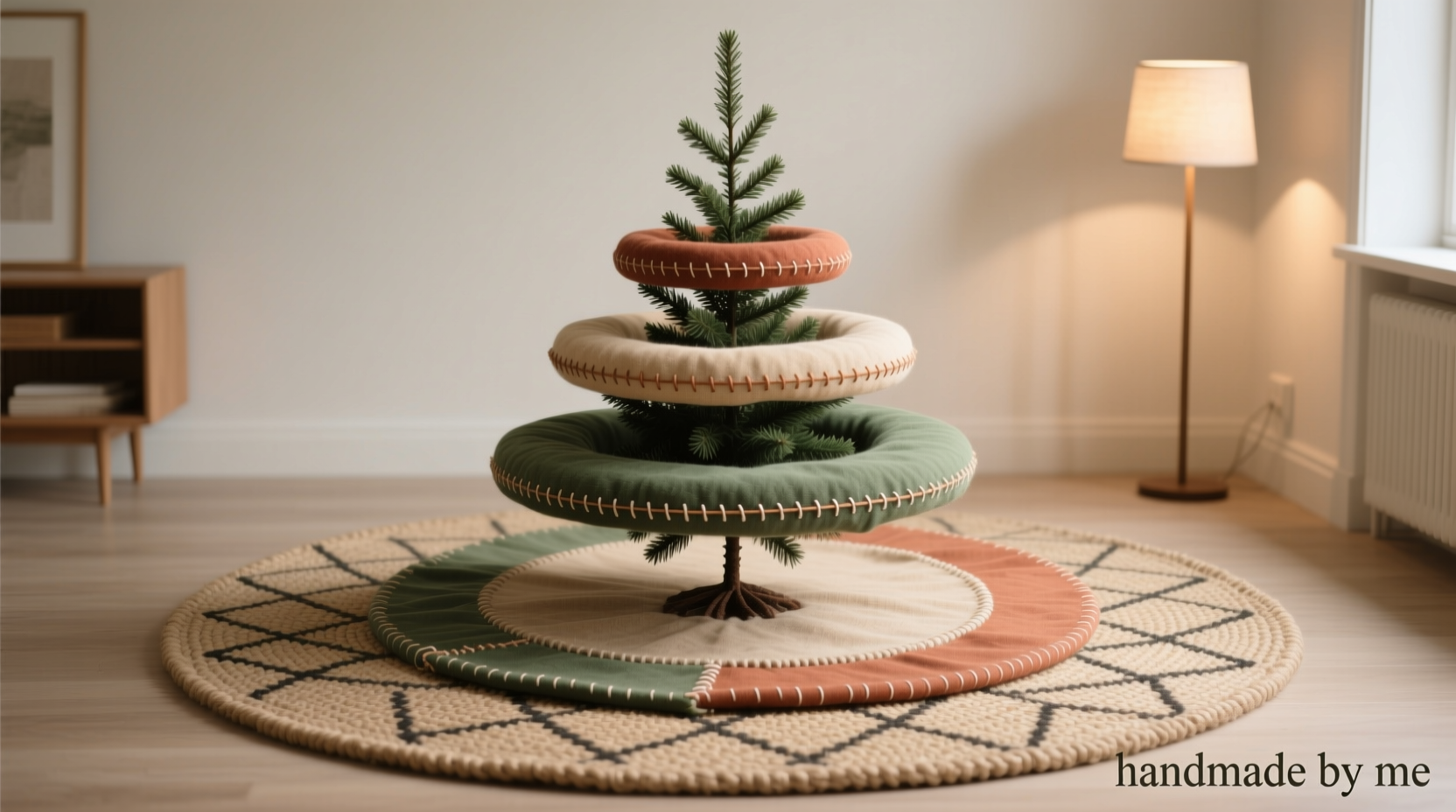
Rugs, particularly smaller ones like bath mats, entry runners, or decorative accent pieces, provide an immediate foundation beneath your tree. Their durability, texture, and design diversity make them ideal substitutes for traditional tree skirts. Unlike flimsy tinsel-trimmed options, many rugs have weight and structure, staying flat and centered even with foot traffic nearby.
One of the biggest advantages of using a rug is its pre-existing shape and edge finish. Many come with clean borders or woven hems that mimic the tailored look of a high-end tree skirt. Additionally, rugs are made to withstand wear, making them perfect for homes with pets or children who might tug at loose fabric. A well-chosen rug can anchor the tree visually, tying it into the room’s existing color scheme rather than standing out as a separate, bulky element.
For those embracing a rustic or bohemian holiday theme, jute or seagrass mats add natural warmth. Solid-colored cotton rugs allow for easy embellishment—simply drape battery-powered fairy lights around the perimeter or tuck in faux pine sprigs for a woodland effect. The key is selecting a rug slightly larger than the tree’s base diameter but no wider than 36 inches across, ensuring it fits comfortably within confined spaces.
Designing Handmade Fabric Circles: A Custom Solution
Creating a handmade fabric circle offers complete creative control and ensures a perfect fit for any tree size. Unlike standard tree skirts designed for full-sized firs, a custom circle can be scaled down to suit narrow corners or floating trees mounted on stands. This method is especially effective in studio lofts or shared rooms where furniture layouts limit open floor space.
To begin, measure the diameter of your tree’s base and add 6–8 inches for overlap. Use this measurement to cut two identical circles from fabric—one for the top layer, one for backing. Cotton, velvet, burlap, or wool blends work well depending on desired texture. Sandwich batting between layers if you want a padded appearance, then sew around the edge, leaving a small gap to turn right-side out. Finish by hand-stitching the opening closed.
Embellishments can elevate the piece further. Consider stitching on ribbon trim, attaching wooden beads, or embroidering initials or snowflakes. For a modern twist, use contrasting thread to quilt geometric patterns across the surface. These details personalize the decor and reinforce the handmade charm that mass-produced skirts often lack.
“Handcrafted elements bring soul to holiday spaces, especially when adapted to real-life constraints like limited square footage.” — Lena Torres, Interior Stylist & Sustainable Design Advocate
Step-by-Step Guide: Transforming a Rug into a Holiday Base
Repurposing a rug requires minimal effort but yields impressive results. Follow this timeline to complete the transformation in under an hour:
- Day 1 – Select and Prepare (15 minutes): Choose a rug that complements your tree’s color palette. Wash or spot-clean it to remove dust or stains. Let dry completely before use.
- Day 1 – Position and Adjust (10 minutes): Place the rug under the tree stand. Ensure it lies flat and isn’t curled at the edges. If needed, place non-slip pads underneath to prevent sliding.
- Day 1 – Decorate Thoughtfully (20 minutes): Wrap presents in coordinating paper and arrange them partially over the rug’s edge to create visual continuity. Tuck in garlands or LED string lights along the border for added glow.
- Ongoing – Maintain Through Season: Vacuum lightly once a week to prevent debris buildup. Rotate the rug occasionally if sunlight causes fading on one side.
This process allows decorators to adapt quickly without investing in new products. It’s particularly useful for renters who may need to return to neutral decor post-holidays—simply roll up the rug and store it until next year.
Comparison Table: Traditional Skirts vs. Space-Smart Alternatives
| Feature | Traditional Tree Skirt | Rug Alternative | Handmade Fabric Circle |
|---|---|---|---|
| Average Diameter | 48–60 inches | 24–36 inches | Customizable (20–40 inches) |
| Storage Size | Bulky, requires box | Rolls easily | Folds flat |
| Material Flexibility | Limited (often polyester/velvet) | High (cotton, jute, synthetic) | Full creative control |
| Ease of Personalization | Low | Medium (via placement/decor) | High (embroidery, trims, dyes) |
| Cost | $20–$50 | $0–$30 (if repurposing) | $10–$25 (fabric + thread) |
The data shows that both rug and handmade alternatives significantly reduce spatial footprint while offering greater versatility and cost efficiency. For city dwellers, these options eliminate the need for dedicated storage bins, freeing up closet or shelf space year-round.
Real Example: A Brooklyn Studio’s Holiday Transformation
In a 400-square-foot Brooklyn studio, resident Maya Chen faced the annual challenge of fitting a 5-foot tree into her combined living-sleeping area. Her previous attempts with a standard tree skirt resulted in obstructed pathways and a cluttered appearance. Determined to maintain festive cheer without sacrificing function, she experimented with alternatives.
She selected a circular indigo-dyed cotton rug (30 inches in diameter) from her entryway collection and placed it beneath a slim-profile artificial tree. To unify the look, she wrapped gifts in navy and cream paper, echoing the rug’s hues. Battery-operated copper wire lights were coiled around the outer edge, creating a warm halo effect visible from her bed and kitchen nook.
The result was transformative. Not only did the setup take less than 20 minutes, but it also allowed her to keep her yoga mat nearby and maintain clear access to drawers. Neighbors visiting during a building open house praised the “intentional” design, unaware it was born from necessity. Maya now uses the same rug annually, storing it rolled in a linen closet alongside her ornaments.
Checklist: Creating Your Own Space-Saving Tree Base
- Measure your tree’s base diameter and available floor space
- Select a small rug (bath mat, round accent rug, or runner section)
- Alternatively, cut two fabric circles plus batting for padding
- Sew or glue layers together, finishing edges neatly
- Place under tree and adjust for symmetry
- Add coordinated decorations: wrapped gifts, greenery, lights
- Secure with non-slip pads if flooring is slick
- Label and store flat or rolled for future use
Frequently Asked Questions
Can I use any type of rug under my Christmas tree?
Most indoor rugs work well, but avoid shaggy or high-pile varieties that could destabilize the tree stand or pose tripping risks. Low-profile cotton, jute, or flatweave rugs are safest. Always check that the rug lies completely flat and doesn’t curl at the edges.
How do I keep a fabric circle from fraying over time?
Finish the edges with a zigzag stitch, bias tape binding, or iron-on hem tape. Natural fibers like cotton or wool are less prone to unraveling than synthetics. If washing is needed, hand-wash gently and air dry to preserve integrity.
Are handmade alternatives suitable for real trees?
Yes, but extra precautions are necessary. Place a waterproof liner between the tree stand and fabric to protect against water spills and sap. Check daily for moisture buildup, especially in warmer rooms. Using a rug with inherent water resistance (like outdoor-rated polypropylene) adds another layer of protection.
Final Thoughts and Call to Action
Holiday traditions don’t have to conform to conventional standards, especially when space is limited. Replacing a bulky tree skirt with a thoughtfully chosen rug or a handmade fabric circle isn’t just a workaround—it’s a design opportunity. These alternatives reflect mindful living, resourcefulness, and personal expression, turning logistical challenges into moments of creative joy.
Whether you’re reviving an old textile or stitching something entirely new, the process connects you more deeply to the season. You’re not just decorating; you’re adapting, innovating, and crafting memories within the reality of your space.




 浙公网安备
33010002000092号
浙公网安备
33010002000092号 浙B2-20120091-4
Comments
No comments yet. Why don't you start the discussion?