
When it comes to outerwear that blends function with timeless elegance, few pieces stand out like the trench coat and the mac coat. Both are staples in wardrobes across seasons and climates, yet they serve distinct purposes and reflect different design philosophies. While often used interchangeably, these two iconic coats differ significantly in construction, material, weather resistance, and aesthetic expression. Understanding their differences isn’t just a matter of fashion—it’s about choosing the right protection for your environment and lifestyle.
Originating from military necessity and evolving into sartorial symbols, trench and mac coats have shaped how we think about rainwear. But which one truly keeps you drier? Which offers a more refined silhouette? And how do their materials influence longevity and comfort? This article breaks down the essential distinctions between trench and mac coats, focusing on water resistance and style, so you can make an informed decision based on practicality and personal taste.
Origins and Historical Context
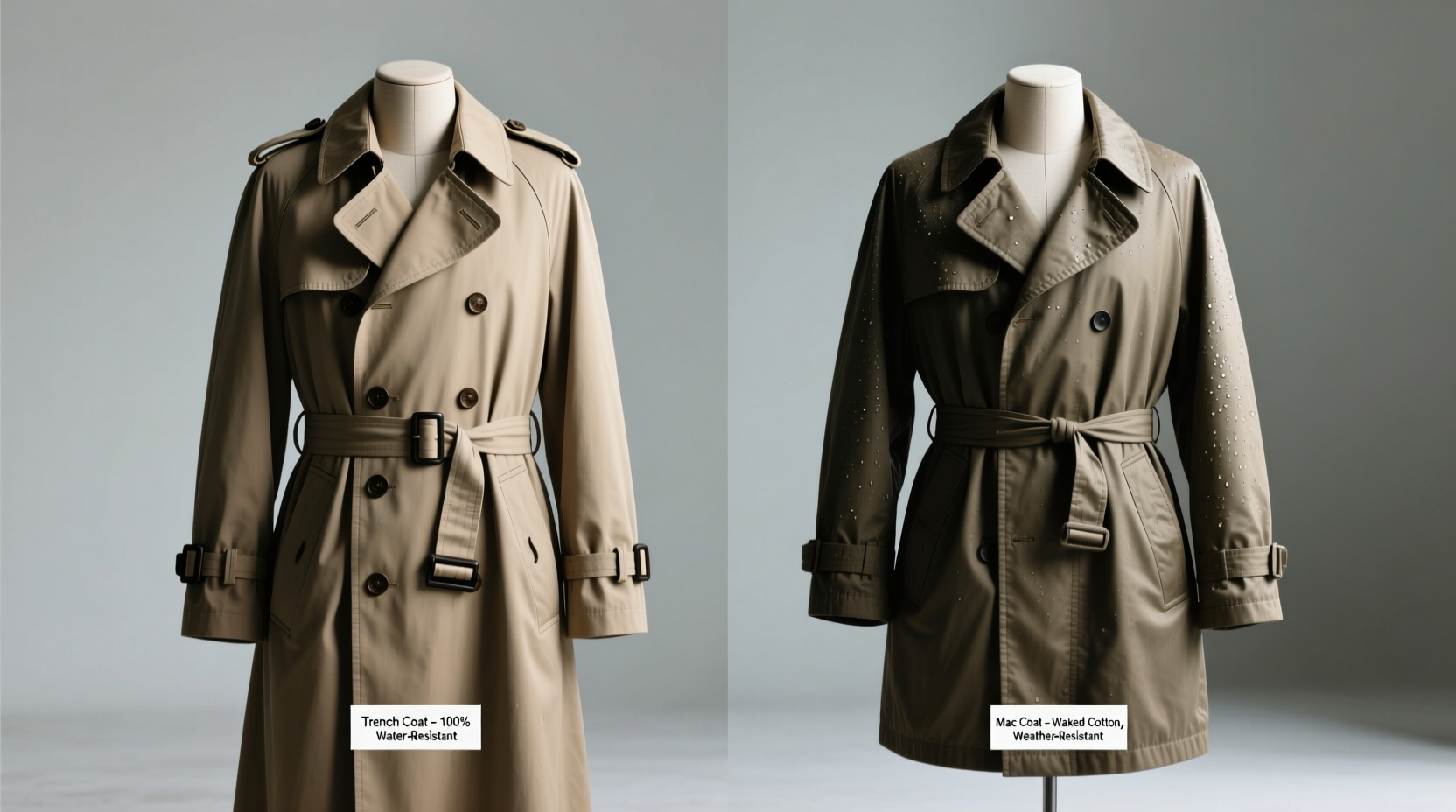
The trench coat traces its roots to World War I, developed for British officers who needed durable, weather-resistant outerwear in the muddy, rain-soaked trenches. Designed by Thomas Burberry and Aquascutum, early versions used gabardine—a tightly woven cotton fabric treated with wax to repel water—offering breathability without sacrificing protection.
In contrast, the mac coat, short for \"mackintosh,\" is named after Charles Macintosh, a Scottish chemist who invented rubberized fabric in the early 19th century. His innovation involved sandwiching a layer of liquid rubber between two fabrics, creating a fully waterproof garment. Though revolutionary at the time, early mackintoshes were stiff and prone to odor in heat. Over time, modern manufacturing improved flexibility and comfort while preserving the core trait: total waterproofing.
These origins explain why the trench evolved as a breathable, stylish field coat, while the mac was engineered purely for elemental defense. Today, both coexist in urban fashion, but their DNA still influences how they perform in wet conditions and how they’re styled.
Fabric and Water Resistance: Core Differences
The most critical distinction between trench and mac coats lies in their approach to water resistance. While both aim to keep wearers dry, they achieve this through fundamentally different methods.
| Feature | Trench Coat | Mac Coat |
|---|---|---|
| Fabric Type | Gabardine (waxed cotton), cotton-blend, or modern synthetics | Rubberized cotton, PVC, polyurethane-coated fabrics |
| Water Resistance | Water-repellent; resists light to moderate rain | Waterproof; blocks heavy rain and prolonged exposure |
| Breathability | High—allows moisture vapor to escape | Low—can trap sweat and feel clammy |
| Durability in Wet Conditions | Good for drizzle and short showers; may absorb water over time | Excellent for storms, commuting, and extended outdoor use |
| Care Requirements | Requires re-waxing; sensitive to dry cleaning | Easy wipe-down; avoid high heat and folding |
Trench coats rely on tightly woven fibers and surface treatments (like wax or DWR coatings) to cause water to bead and roll off. However, under sustained rainfall or high humidity, they can eventually saturate, especially if untreated. Their advantage lies in breathability—ideal for active use or transitional weather.
Mac coats, by contrast, create a complete moisture barrier. The sealed fabric prevents any water penetration, making them ideal for torrential downpours or environments where staying completely dry is non-negotiable. However, this impermeability often sacrifices comfort: trapped body heat and sweat can make wearing a mac coat feel stuffy during movement or warmer days.
Design and Style: Silhouette, Details, and Versatility
Styling plays a major role in how each coat is perceived and worn. Trench and mac coats project different aesthetics—one rooted in tailored sophistication, the other in utilitarian minimalism.
Trench coats are defined by structured details: epaulets, storm flaps, a double-breasted front, belted waist, and a back yoke. These elements aren’t just decorative—they originated as functional features for soldiers. The belted waist cinches the coat for wind resistance and creates a flattering, hourglass shape. Available in classic colors like beige, khaki, navy, and black, trench coats pair easily with suits, dresses, jeans, or office wear. They convey authority, elegance, and a touch of vintage charm.
Mac coats, on the other hand, favor clean lines and simplicity. Most lack ornamental hardware, featuring minimal buttons, no epaulets, and a straighter cut. Modern macs come in bold colors (red, cobalt, yellow) as well as neutrals, making them statement pieces in rainy weather. Their streamlined profile works well with casual outfits or contemporary workwear, but they rarely carry the formal weight of a trench.
“While the trench remains the gold standard for polished urban wear, the mac has become the go-to for those who prioritize performance without sacrificing visual impact.” — Lydia Chen, Fashion Editor at *Urban Outerwear Review*
Fit also differs significantly. Trench coats are typically cut longer (mid-calf) and emphasize structure. Mac coats vary more—from cropped lengths to knee-length—but generally offer less tailoring. Some premium macs now include adjustable belts or storm cuffs to bridge the gap in versatility.
When to Wear Each: A Practical Guide
Choosing between a trench and a mac shouldn’t be arbitrary. Consider these scenarios:
- Business commute in variable weather: Opt for a trench. Its professional look complements work attire, and it handles light showers gracefully.
- Daily transit in a rainy city (e.g., London, Seattle): A mac coat ensures you arrive dry even during sudden downpours.
- Springtime walks or layered winter wear: The trench integrates better with sweaters and over-dresses, offering style without overheating.
- Outdoor events or festivals: A bright mac coat provides visibility and full protection against persistent rain.
Modern Innovations and Hybrid Options
As technology advances, the line between trench and mac coats is blurring. Designers now blend the best of both worlds: trench-style cuts made with waterproof membranes, or sleek mac silhouettes enhanced with ventilation systems.
Brands like Barbour, Belstaff, and Mack Weldon offer hybrid trench-macs using laminated cotton or recycled polyester with DWR finishes. These combine the classic trench look with near-mac-level water resistance. Meanwhile, technical outerwear labels such as Arc’teryx and Fjällräven apply Gore-Tex or similar breathable waterproof fabrics to trench-inspired designs, appealing to urban professionals who demand performance.
Some newer mac coats incorporate mesh linings or underarm vents to improve airflow, reducing the “plastic bag” effect. Others use matte-finish coatings to tone down shine and elevate formality, making them suitable for office environments.
Mini Case Study: Emma’s Commute Dilemma
Emma, a marketing executive in Glasgow, faced a recurring problem: arriving at client meetings damp and disheveled despite owning a beige trench coat she loved. After researching, she realized her cotton gabardine trench, while stylish, wasn’t cutting it during Scotland’s frequent heavy rains. She switched to a navy double-breasted mac with a matte finish and internal storm flap. Not only did she stay dry, but clients began commenting on her sharp, intentional look—even in poor weather. Eventually, she kept both: the mac for rainy weeks, the trench for spring outings. Her solution? Rotate based on forecast, not fashion alone.
Care and Maintenance: Preserving Performance and Appearance
Proper care extends the life and effectiveness of both coats, but their needs differ drastically.
Trench Coat Care Checklist
- Spot clean with a damp cloth; avoid soaking.
- Re-proof every 6–12 months using a wax-based protector (for cotton gabardine).
- Air dry away from direct heat or sunlight.
- Store on a wide wooden hanger to maintain shoulder shape.
- Never machine wash unless specified by the manufacturer.
Mac Coat Care Checklist
- Wipe down with a soft, damp cloth after exposure to dirt or salt.
- Avoid folding sharply—hang to prevent crease damage to the coating.
- Keep away from high heat (radiators, dryers) to prevent cracking.
- Use mild soap if needed; never use solvents or abrasives.
- Store in a cool, dry place with good airflow.
Over time, untreated trench coats lose water repellency and may develop mildew. Mac coats, if folded or stored improperly, can suffer delamination—the separation of rubber layers—leading to leaks. Regular maintenance ensures both retain their intended function.
FAQ: Common Questions About Trench and Mac Coats
Can a trench coat be truly waterproof?
No traditional trench coat is fully waterproof. Even waxed gabardine is water-repellent, meaning it resists moisture but will eventually soak through under heavy or prolonged rain. Some modern trench coats use synthetic waterproof fabrics, but these are exceptions rather than the norm.
Are mac coats only for rainy weather?
Primarily, yes. Their design prioritizes weather protection over versatility. However, fashion-forward macs in neutral tones or minimalist cuts can be worn in dry conditions as a lightweight outer layer, especially in spring.
Which coat lasts longer?
With proper care, a high-quality trench coat made from durable cotton gabardine can last decades, developing a desirable patina. Mac coats depend on coating integrity—once the seal breaks, the coat loses functionality. Well-maintained, a mac can last 5–10 years, though less than a well-kept trench in ideal conditions.
Final Thoughts: Choosing Based on Need, Not Trend
The choice between a trench coat and a mac coat ultimately hinges on your environment, activity level, and aesthetic goals. If you value tradition, tailoring, and a coat that transitions seamlessly from day to evening, the trench is unmatched. It’s a wardrobe investment that ages gracefully and commands respect in professional settings.
If your priority is staying dry—whether navigating a monsoon-season commute or braving coastal winds—the mac coat delivers uncompromising protection. It may lack the trench’s heritage appeal, but its functional clarity has earned it a permanent place in practical fashion.
Today’s market allows for nuance. You don’t have to choose one identity. Own a trench for style and a mac for storms. Or explore hybrids that merge both ideals. What matters is understanding what each coat was built to do—and honoring that purpose with informed use and care.




 浙公网安备
33010002000092号
浙公网安备
33010002000092号 浙B2-20120091-4
Comments
No comments yet. Why don't you start the discussion?