
When selecting a daily carry bag—whether it’s a crossbody, tote, or mini backpack—capacity and silhouette are two of the most important factors. Many people assume that shape is purely aesthetic, but in reality, the geometry of a bag directly influences how much it can hold and how bulky it appears when worn. The debate between triangular and rectangular bags often centers on this balance: maximizing storage while maintaining a sleek, unobtrusive profile. Understanding the structural advantages and limitations of each shape can help you make a smarter choice based on your lifestyle, outfit preferences, and functional needs.
The Structural Logic Behind Bag Shapes
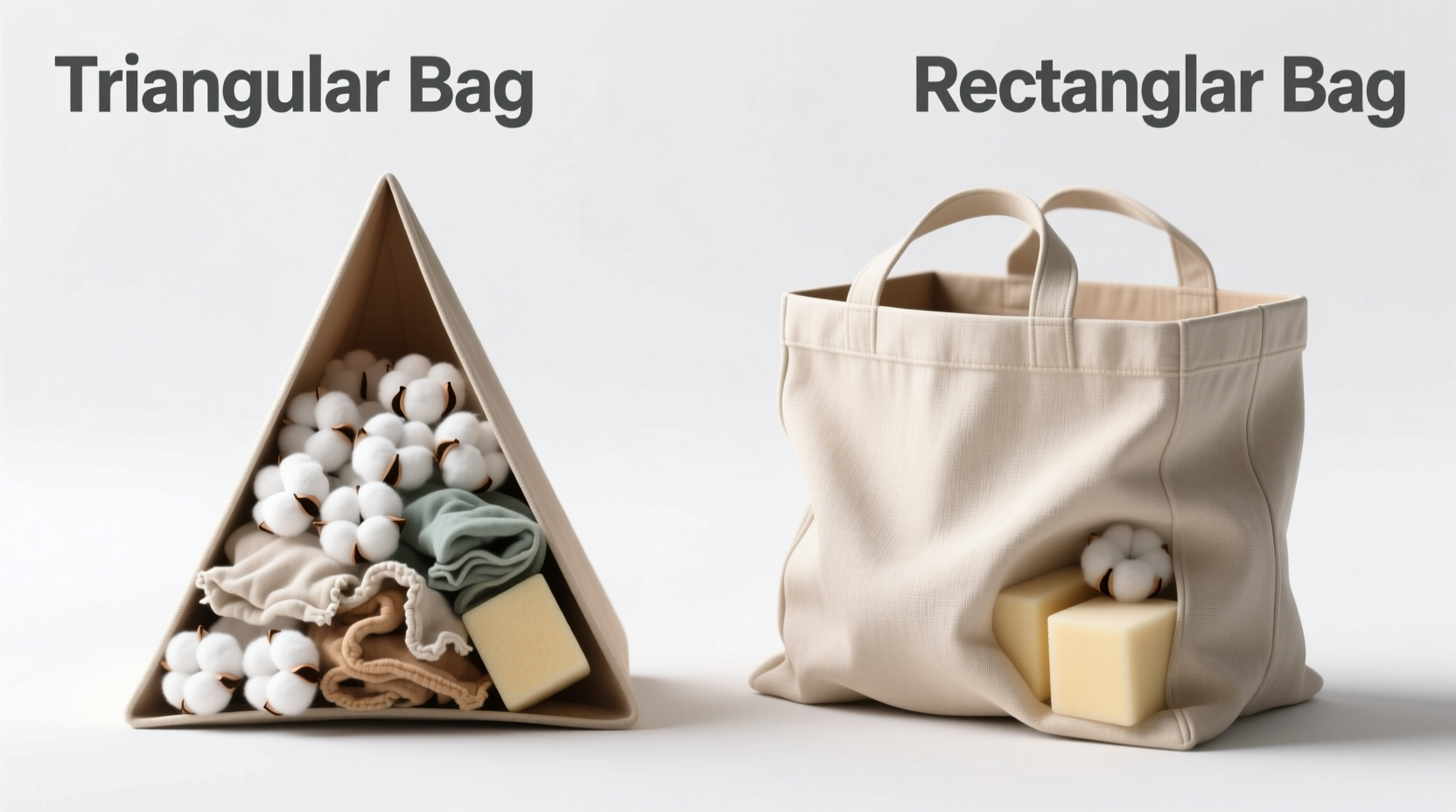
Bag design isn’t just about fashion—it’s rooted in ergonomics and spatial efficiency. Rectangular bags have straight edges and consistent depth, allowing for predictable volume calculations and organized packing. Their flat sides enable them to sit flush against the body or rest neatly on surfaces, contributing to a clean, structured look.
Triangular bags, by contrast, taper from a wider top to a narrower base. This design follows an angular gradient that shifts weight distribution and alters visual perception. While they may appear smaller at first glance, their upper volume can be surprisingly generous. The slanting sides create a dynamic profile that draws the eye upward, minimizing the appearance of bulk even when the bag is full.
This difference in geometry leads to a key insight: volume doesn’t always correlate with perceived size. A well-designed triangular bag can hold nearly as much as a similarly sized rectangle while appearing lighter and more streamlined on the shoulder or across the torso.
Capacity Comparison: Volume vs. Usability
On paper, rectangular bags typically offer greater total volume due to uniform dimensions. For example, a bag measuring 10” x 6” x 4” (length x height x width) has a theoretical volume of 240 cubic inches. A triangular bag with the same height and width but a sloped front panel might only average 5” in depth at its widest point, reducing total space slightly. However, real-world usability matters more than raw numbers.
Rectangular bags excel at holding rigid items like notebooks, tablets, or water bottles because their flat walls prevent shifting. But they tend to project outward from the body, especially when filled, creating a boxy silhouette that some find unflattering or cumbersome.
Triangular designs naturally contour to the body. As they narrow toward the bottom, they reduce swing and bounce during movement. When packed thoughtfully, their wider tops accommodate soft items like scarves, wallets, and cosmetics efficiently. Though less ideal for square-shaped objects, their ergonomic fit often makes them feel roomier in practice than their measurements suggest.
“Design elegance lies in making function invisible. A triangular bag that hugs the hip doesn’t scream utility—it whispers efficiency.” — Lena Torres, Product Designer at Urban Carry Co.
Visual Impact: How Shape Influences Perceived Bulk
Bulkiness isn’t solely determined by size; it’s heavily influenced by proportion and how a bag interacts with the wearer’s frame. A rectangular bag, even if modest in dimension, can look overstuffed if its sides bulge or it extends too far from the body. In contrast, the tapered form of a triangular bag creates a slimming optical effect, similar to how V-necklines elongate the torso.
Fashion stylists often recommend triangular silhouettes for petite individuals or those seeking a minimalist aesthetic. Because the base is narrow, these bags avoid overwhelming the lower half of the body. They also pair well with tailored outfits, where clean lines are prioritized over utilitarian shapes.
Material and Structure Matter Too
The fabric and internal framing of a bag affect how its shape performs. Stiff materials like structured leather or molded synthetics help rectangular bags maintain their form, preventing sagging when loaded. Soft canvas or nylon versions may lose their crispness, increasing visual bulk.
Triangular bags benefit from semi-rigid construction. Without some support, the wide top can collapse inward, reducing accessible space. Look for models with lightweight interlining or top-stitching that preserves the intended angle while remaining flexible enough to conform to your body.
Practical Use Cases: Who Benefits From Which Shape?
Your daily routine should guide your choice more than trends. Consider these scenarios:
- Commuter needing organization: A rectangular crossbody with multiple compartments keeps transit cards, phone, and keys easily accessible without digging.
- Evening out with essentials: A triangular clutch or micro-bag offers enough room for lipstick, ID, and a cardholder while adding a stylish diagonal line to an outfit.
- Urban walker covering long distances: A triangular sling bag distributes weight closer to the hip, reducing strain and minimizing bounce.
- Professional carrying a tablet: A rectangular satchel with padded sections protects devices and fits neatly under office chairs.
Mini Case Study: The Commuter’s Dilemma
Sophie, a graphic designer in Seattle, used to carry a small rectangular crossbody for her daily light rail commute. While it held her sketchbook and lunch container, she found it awkwardly protruded when seated, pressing into the person behind her. After switching to a triangular sling bag with the same height but a tapered base, she noticed immediate improvements. Despite holding slightly less volume, it stayed close to her side, eliminated back pressure, and looked more polished with her layered jackets. She now packs the same essentials—plus an umbrella—without feeling bulky.
Comparison Table: Triangular vs Rectangular Bags
| Feature | Triangular Bag | Rectangular Bag |
|---|---|---|
| Theoretical Capacity | Moderate (tapers downward) | High (uniform depth) |
| Perceived Bulk | Low (contours to body) | Higher (projects outward) |
| Weight Distribution | Centered near hip | Can shift forward |
| Style Versatility | Excellent with casual & smart-casual wear | Better for formal or professional looks |
| Item Organization | Best for soft, flexible items | Ideal for rigid electronics or books |
| Movement Comfort | High (less swing) | Moderate (may sway) |
How to Maximize Space Without Adding Bulk
No matter which shape you prefer, smart packing habits can improve functionality. Follow this checklist to get the most out of your bag:
- Roll clothes or soft items instead of folding to save space.
- Use small pouches to group similar items (e.g., chargers, makeup).
- Place heavier items closest to your body for better balance.
- Avoid overstuffing—leave room for the bag to close properly.
- Choose multi-functional accessories (e.g., wallet-cardholders).
Step-by-Step: Choosing the Right Shape for Your Body Type
- Assess your torso length. Tall frames can carry larger rectangular bags without imbalance. Shorter torsos benefit from vertical emphasis—triangular bags draw the eye up.
- Consider your typical outfits. If you wear flowy layers, a structured rectangle adds definition. With fitted clothing, a triangular shape prevents visual clutter.
- Test carry styles. Shoulder bags exaggerate width; slings emphasize diagonal lines. Try both shapes in your preferred carry mode.
- Load test with real items. Bring your phone, wallet, and one additional item to the store and see how each bag handles the load.
- Evaluate posture impact. Walk around for a few minutes. Does the bag pull your shoulder down or throw off your stance? Adjust accordingly.
Frequently Asked Questions
Can a triangular bag really hold as much as a rectangular one?
Not quite in total volume, but in everyday use, the difference is often negligible. Triangular bags optimize space for common personal items and reduce wasted corner space found in rectangles. For most users carrying phones, wallets, and small cosmetics, the usable capacity is comparable.
Are rectangular bags outdated?
No. They remain essential for professionals, travelers, and anyone needing structured storage. Their timeless appeal and organizational benefits ensure continued relevance, especially in workwear and luxury markets.
Do triangular bags suit men’s styles too?
Absolutely. Modern minimalist menswear embraces asymmetry and dynamic lines. A black or navy triangular sling bag complements athleisure, streetwear, or smart-casual ensembles while offering discreet storage.
Final Thoughts: Function Meets Form
The choice between triangular and rectangular bags ultimately comes down to priorities. If maximum storage and organization are non-negotiable, go rectangular. But if you value a sleek profile, body-hugging fit, and effortless style, a triangular design delivers surprising utility without visual weight.
Today’s best bags blend the strengths of both: some rectangular models feature curved edges or angled fronts to reduce projection, while high-capacity triangular styles include expandable gussets or modular inserts. By focusing on how a bag feels when worn—not just how it looks on a shelf—you’ll find a shape that enhances both convenience and confidence.




 浙公网安备
33010002000092号
浙公网安备
33010002000092号 浙B2-20120091-4
Comments
No comments yet. Why don't you start the discussion?