
When it comes to men’s wedding bands and fashion rings, the debate between tungsten and steel has grown louder in recent years. Tungsten carbide rings have surged in popularity thanks to bold marketing claims: “scratch-proof,” “permanent shine,” “the hardest metal on Earth.” But how much of that holds up under daily wear? And is stainless steel truly inferior, or are consumers being misled by hype? The truth lies not in absolutes but in material science, real-world use, and personal priorities.
Understanding the differences between tungsten and steel requires more than surface-level comparisons. It demands a look at hardness ratings, tensile strength, brittleness, corrosion resistance, and long-term maintenance. This article breaks down the facts, dispels myths, and equips you with the knowledge to make an informed decision—whether you’re choosing a wedding band, fashion ring, or durable everyday accessory.
The Science of Hardness: Mohs Scale and What It Means
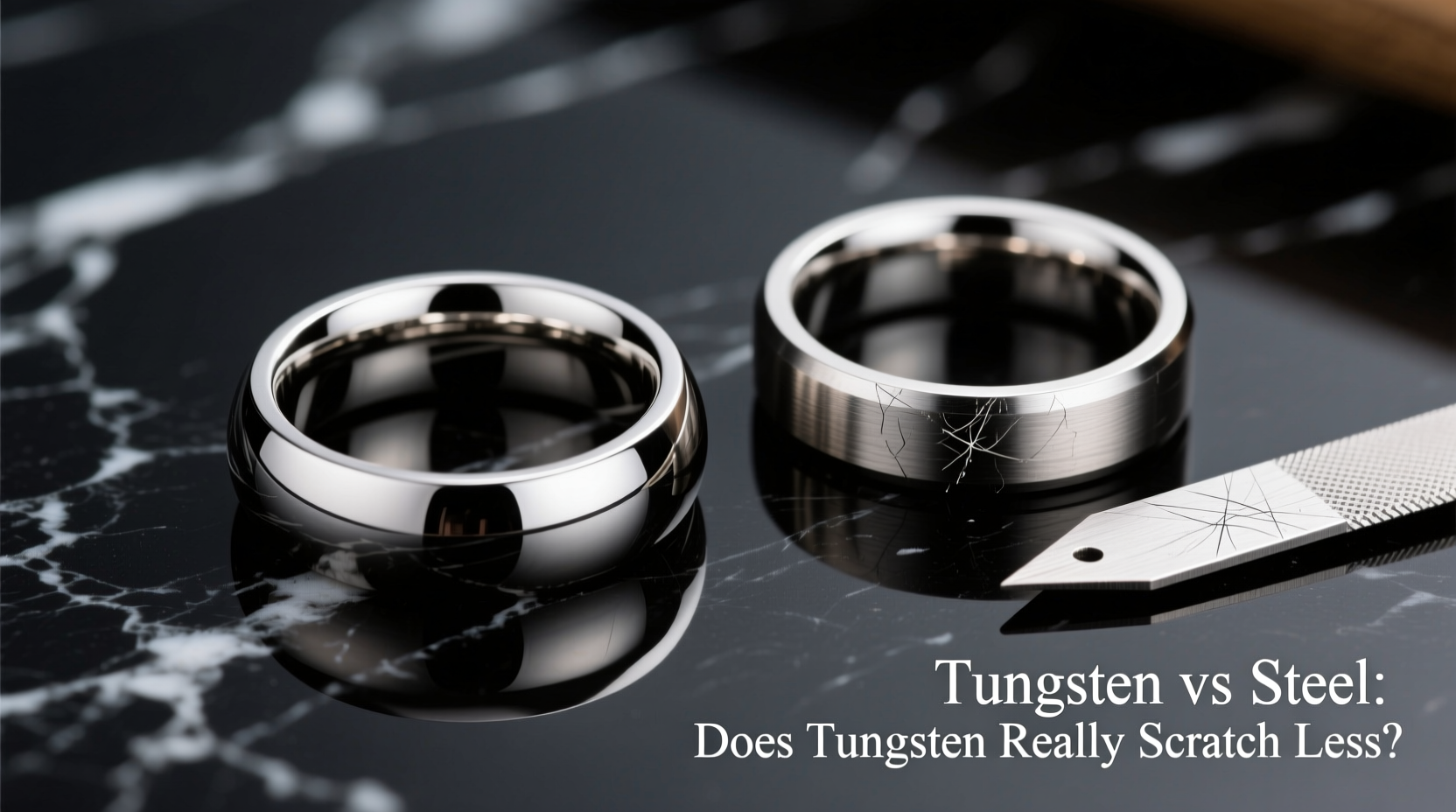
One of the primary reasons tungsten is marketed as superior in scratch resistance is its position on the Mohs scale of mineral hardness—a 10-point scale measuring a material’s ability to resist scratching. Stainless steel typically ranks between 5 and 6, while tungsten carbide measures between 8.5 and 9. That puts it closer to sapphire (9) and just below diamond (10).
This scientific edge explains why tungsten rings maintain their polish and luster far longer than steel counterparts. In controlled conditions, a tungsten ring will resist fine abrasions from keys, countertops, and minor impacts that would leave faint scratches on steel.
“Hardness isn’t everything. While tungsten wins on scratch resistance, it trades off toughness. A harder material can be more brittle.” — Dr. Alan Reeves, Materials Engineer
However, high hardness doesn’t mean invincibility. Tungsten can still be damaged—not by scratching, but by chipping or cracking under sharp impact. Steel, though softer, is more ductile and able to absorb force without fracturing.
Scratch Resistance in Real-World Use
In theory, a tungsten ring should stay pristine for years. In practice, the story is more nuanced. Consider two individuals:
- James, a software developer who wears his ring during office work and casual outings.
- Derek, a mechanic who works with tools, grease, and heavy machinery daily.
After one year, James’ tungsten ring looks nearly new—minimal signs of wear, no visible scratches. Derek’s identical ring, however, shows small chips along the edges from repeated knocks against wrenches and bolts. His steel ring, meanwhile, is uniformly scratched but remains intact and functional.
This contrast illustrates a key point: scratch resistance matters most in low-impact environments. For desk jobs or lifestyle-focused wear, tungsten delivers on its promise. For hands-on professions, the trade-off in toughness may outweigh the benefits of scratch resistance.
Comparative Analysis: Tungsten vs Steel
| Property | Tungsten Carbide | Stainless Steel |
|---|---|---|
| Mohs Hardness | 8.5–9 | 5–6 |
| Tensile Strength | High | Moderate to High |
| Corrosion Resistance | Excellent | Very Good (varies by alloy) |
| Scratch Resistance | Exceptional | Fair to Moderate |
| Impact Resistance | Poor (brittle) | Good (ductile) |
| Hypoallergenic | Usually yes (cobalt-free) | Yes (316L surgical grade) |
| Weight | Heavy (dense) | Moderate |
| Polish Longevity | Years without fading | Months to a year (requires polishing) |
| Cost | Moderate to High | Low to Moderate |
The table reveals a clear pattern: tungsten excels in maintaining appearance over time but sacrifices resilience. Steel may show wear sooner but adapts better to physical stress.
Common Misconceptions About Tungsten Rings
Marketing often oversimplifies the advantages of tungsten. Here are three widespread myths:
- Myth 1: Tungsten rings never scratch. Truth: They are highly resistant but not immune. Extremely hard materials like diamond or hardened ceramics can still mar the surface.
- Myth 2: Tungsten is indestructible. Truth: It’s one of the most brittle jewelry metals. Dropping it on tile or concrete can cause fractures.
- Myth 3: All tungsten rings are the same. Truth: Quality varies. Some use cobalt binders, which can cause skin irritation and degrade over time. Opt for nickel or carbon-bonded tungsten for longevity and safety.
Steel, while less flashy in advertising, offers consistency. Grades like 316L surgical stainless steel are proven in medical and marine applications for durability and biocompatibility.
Step-by-Step Guide to Choosing the Right Ring
Selecting between tungsten and steel shouldn’t be based on hype but on lifestyle and expectations. Follow this decision framework:
- Assess Your Daily Activities: Do you work with your hands? Play sports? Frequently handle tools or machinery?
- Evaluate Appearance Priorities: Is a mirror-like finish important? Are you willing to accept micro-scratches for greater toughness?
- Check for Allergies: Confirm whether the ring uses hypoallergenic binders. Cobalt-based tungsten may irritate sensitive skin.
- Consider Emergency Situations: Tungsten cannot be cut off easily in emergencies. Steel rings are more readily removable with standard tools.
- Set a Realistic Budget: High-end tungsten rings cost more than basic steel, but premium steel options (like brushed titanium-infused alloys) can rival tungsten in price.
Mini Case Study: A Firefighter’s Choice
Mark, a firefighter in Colorado, purchased a tungsten ring after seeing online reviews praising its “forever shine.” Within four months, he noticed hairline cracks near the inner band after a rescue involving debris. During training, the ring shattered when caught on a ladder rung.
He switched to a matte-finish 316L stainless steel ring. Though it developed fine scratches within weeks, it never cracked or deformed—even after exposure to extreme heat, water, and impact. “I don’t care if it looks worn,” Mark said. “It stays on my finger when I need it most.”
His experience underscores a crucial reality: functionality often trumps aesthetics in high-risk environments.
FAQ: Common Questions About Tungsten and Steel Rings
Can tungsten rings be resized?
No. Due to their extreme hardness and brittleness, tungsten rings cannot be resized. You must purchase the correct size initially or replace the ring entirely.
Do steel rings tarnish or rust?
High-quality stainless steel rings (especially 316L grade) resist rust and tarnish under normal conditions. Avoid prolonged exposure to chlorine or saltwater to maintain integrity.
Is tungsten safer in an emergency?
Actually, steel is safer. Tungsten rings require specialized tools to remove in medical emergencies because they don’t bend or cut easily. Steel rings can typically be removed with standard ring cutters.
Conclusion: Scratch Less? Yes. Better? It Depends.
Tungsten does scratch less than steel—that part isn’t hype. Scientifically and empirically, it outperforms steel in surface durability and long-term luster. However, labeling it “better” ignores critical trade-offs: brittleness, irreparability, and safety concerns.
For someone seeking a low-maintenance, shiny ring that symbolizes permanence, tungsten is an excellent choice. For those with active lifestyles, manual jobs, or concerns about emergency removal, stainless steel offers a smarter balance of durability, safety, and practicality.
The real winner isn’t a metal—it’s informed decision-making. Know your needs, respect the limitations of materials, and choose not based on marketing slogans, but on how a ring will perform in your life.




 浙公网安备
33010002000092号
浙公网安备
33010002000092号 浙B2-20120091-4
Comments
No comments yet. Why don't you start the discussion?