
When temperatures drop, choosing the right sweater isn't just about fashion—it's a matter of staying warm. Two staples dominate cold-weather wardrobes: the turtleneck pullover and the cardigan. While both offer comfort and versatility, they differ significantly in construction, coverage, and thermal efficiency. Understanding these differences helps you make smarter layering decisions, especially when warmth is the priority.
The debate isn’t merely aesthetic; it’s functional. Is the snug, high-neck enclosure of a turtleneck inherently warmer than the open-front practicality of a cardigan? Or can a well-layered cardigan outperform a pullover in certain conditions? The answer depends on multiple factors—material, fit, closure method, and how each garment interacts with other layers.
How Sweaters Trap Heat: The Science of Insulation
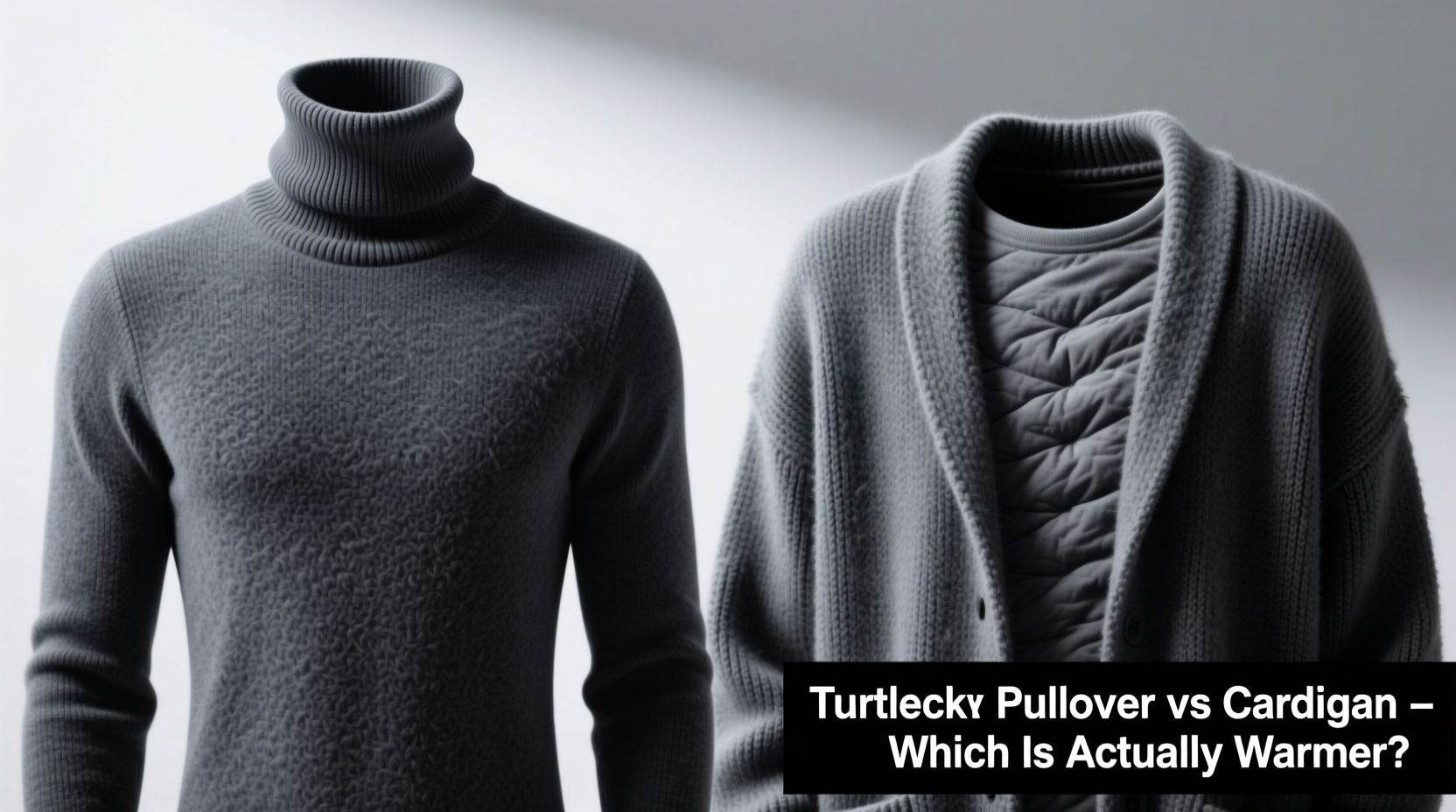
Warmth in clothing comes from trapped air. Fibers create pockets that hold body heat close to the skin while blocking cold external air. The more effectively a garment minimizes airflow and maximizes insulating volume, the warmer it feels. This principle explains why loosely knitted wool sweaters often feel cozier than tight synthetic blends—even if the latter are thicker.
Cut and structure play critical roles. Garments that conform closely to the body reduce convective heat loss—the movement of warm air away from the skin by wind or gaps in fabric. A well-fitting turtleneck seals around the neck, a major point of heat escape, while many cardigans leave this area exposed unless layered under a coat or paired with a scarf.
“Even the best-insulating material loses effectiveness if the garment has gaps. Coverage matters as much as fiber content.” — Dr. Lena Torres, Textile Physicist, Cold Climate Apparel Lab
Construction Differences: Pullover vs Cardigan
Turtleneck pullovers are typically one-piece garments pulled over the head. They feature continuous fabric from collar to hem, minimizing seams and openings. The high, folded turtleneck covers the lower face and throat, reducing exposure to drafts. Because there are no front closures, heat retention relies entirely on fit and fabric density.
Cardigans, by contrast, open at the front and are fastened with buttons, zippers, or left unbuttoned. This design offers flexibility in ventilation and layering but introduces potential heat leaks. However, some cardigans—especially shawl-collar or longline styles—can be tightly closed and worn over turtlenecks or thermal shirts, creating a composite insulation system.
Material and Knit Density: What Really Keeps You Warm?
Fabric composition significantly impacts warmth. Wool—particularly merino, cashmere, and Shetland—is naturally insulating, moisture-wicking, and breathable. Synthetic blends like acrylic or polyester may mimic wool’s texture but often trap less heat and retain moisture, leading to clamminess in damp conditions.
Knit density is equally important. A tightly knit turtleneck blocks wind better than a loose-knit cardigan, even if both are made from the same wool. Cable knits and jacquard patterns add bulk and air-trapping volume, enhancing warmth without increasing weight.
Consider this: a thick, cable-knit cashmere turtleneck pullover will generally outperform a lightweight, open-weave cotton cardigan in sub-50°F (10°C) weather. But swap in a heavyweight boiled wool cardigan with a buttoned storm flap, and the warmth gap narrows considerably.
Warmth Comparison Table: Key Features Side-by-Side
| Feature | Turtleneck Pullover | Cardigan |
|---|---|---|
| Neck Coverage | Full, high turtleneck seals in heat | Limited; often open or low collar |
| Front Closure | None – seamless body | Buttons/zippers allow adjustment but create gaps |
| Layering Flexibility | Worn over shirts only; limited adjustability | Easy to open/close; ideal for temperature regulation |
| Wind Resistance | High due to snug fit and no front opening | Moderate to low unless fully buttoned and dense knit |
| Best For | Consistently cold environments, outdoor activities | Indoor-outdoor transitions, variable climates |
Real-World Performance: A Winter Commuter’s Experience
Sophie, a graphic designer in Minneapolis, tested both styles during her 15-minute winter commute over three weeks. She wore identical base layers—a merino wool long-sleeve shirt—and recorded perceived warmth, comfort, and adaptability.
On days below 20°F (-6°C), she consistently felt colder in her favorite oatmeal-colored cardigan, despite its thick wool blend. Wind seeped through the front, and the V-neck left her throat exposed. Switching to a charcoal ribbed turtleneck pullover made a noticeable difference. “I didn’t need a scarf until the third week,” she noted. “The turtleneck stayed sealed, and I wasn’t constantly adjusting it.”
However, once indoors, the pullover became too warm. She had to remove it entirely, whereas the cardigan could simply be unbuttoned. In office environments with fluctuating temperatures, the cardigan offered superior comfort control.
This case illustrates a key insight: the “warmer” sweater depends on context. For sustained outdoor exposure, the pullover wins. For dynamic environments, the cardigan’s versatility compensates for slight thermal disadvantages.
Maximizing Warmth: Layering Strategies
Neither garment needs to stand alone. Strategic layering can elevate the warmth of either style:
- Pullover + Coat: A turtleneck pullover under a heavy wool overcoat provides excellent defense against extreme cold. The snug neck eliminates the need for a scarf in many cases.
- Cardigan + Vest: Wear a quilted or down vest over a buttoned cardigan to seal the front and add core insulation without restricting arm movement.
- Both Together: Layer a slim-fit turtleneck under a cardigan for the best of both worlds—neck coverage, adjustable front, and double insulation.
“Think of your sweater as part of a system. The right combination can outperform any single piece.” — Marcus Reed, Outdoor Gear Designer
Step-by-Step Guide: Building a Cold-Weather Outfit
- Start with a moisture-wicking base layer (e.g., merino wool or thermal synthetics).
- Add your mid-layer: Choose a turtleneck pullover for steady cold or a cardigan for variable conditions.
- Adjust based on environment: Button the cardigan fully outdoors, open slightly indoors.
- Top with an outer shell: A windproof coat or parka enhances any mid-layer’s effectiveness.
- Accessories matter: Gloves, hat, and insulated boots prevent heat loss from extremities.
FAQ: Common Questions About Sweater Warmth
Is a turtleneck always warmer than a cardigan?
Not always, but it usually is in windy or consistently cold conditions due to its sealed neckline and lack of front openings. However, a thick, fully buttoned cardigan made from high-loft wool can rival a lighter pullover in mild cold.
Can a cardigan be made warmer without changing style?
Yes. Wear it over a turtleneck or thermal shirt, use a vest over it, or choose styles with inner wind flaps. Also, ensure it’s not oversized—excess space inside allows warm air to circulate and escape.
Does color affect warmth?
Minimally. Darker colors absorb slightly more solar radiation, offering a marginal boost in direct sunlight. But fabric type and fit have far greater impact on thermal performance.
Final Verdict: Which Should You Reach For?
If your primary goal is maximum warmth during prolonged outdoor exposure—such as walking to work, hiking, or waiting for transit—the turtleneck pullover is the superior choice. Its seamless construction, high neck, and snug fit work together to minimize heat loss. It functions as a reliable thermal barrier, especially when made from natural, high-density fibers.
The cardigan excels in adaptability. While it sacrifices some inherent warmth due to its open front, its ability to be adjusted throughout the day makes it ideal for urban lifestyles with frequent indoor-outdoor transitions. When paired with smart layering, it can perform nearly as well as a pullover while offering greater comfort flexibility.




 浙公网安备
33010002000092号
浙公网安备
33010002000092号 浙B2-20120091-4
Comments
No comments yet. Why don't you start the discussion?