
When temperatures drop, choosing the right base layer or mid-layer becomes essential for staying warm—without sacrificing comfort or style. Among knitwear staples, turtlenecks and crewnecks are two of the most common options. While both offer insulation and versatility, their performance in cold weather differs significantly. The key question isn’t just about warmth, but how efficiently each design delivers that warmth relative to its bulk. For those layering under jackets, wearing under suits, or seeking a sleek winter look, minimizing added volume while maximizing heat retention is crucial.
This article breaks down the thermal performance, construction, and real-world usability of turtlenecks and crewnecks. We’ll examine fabric types, collar design, airflow control, and layering compatibility to determine which style provides superior warmth with minimal added mass.
The Science of Warmth in Knitwear
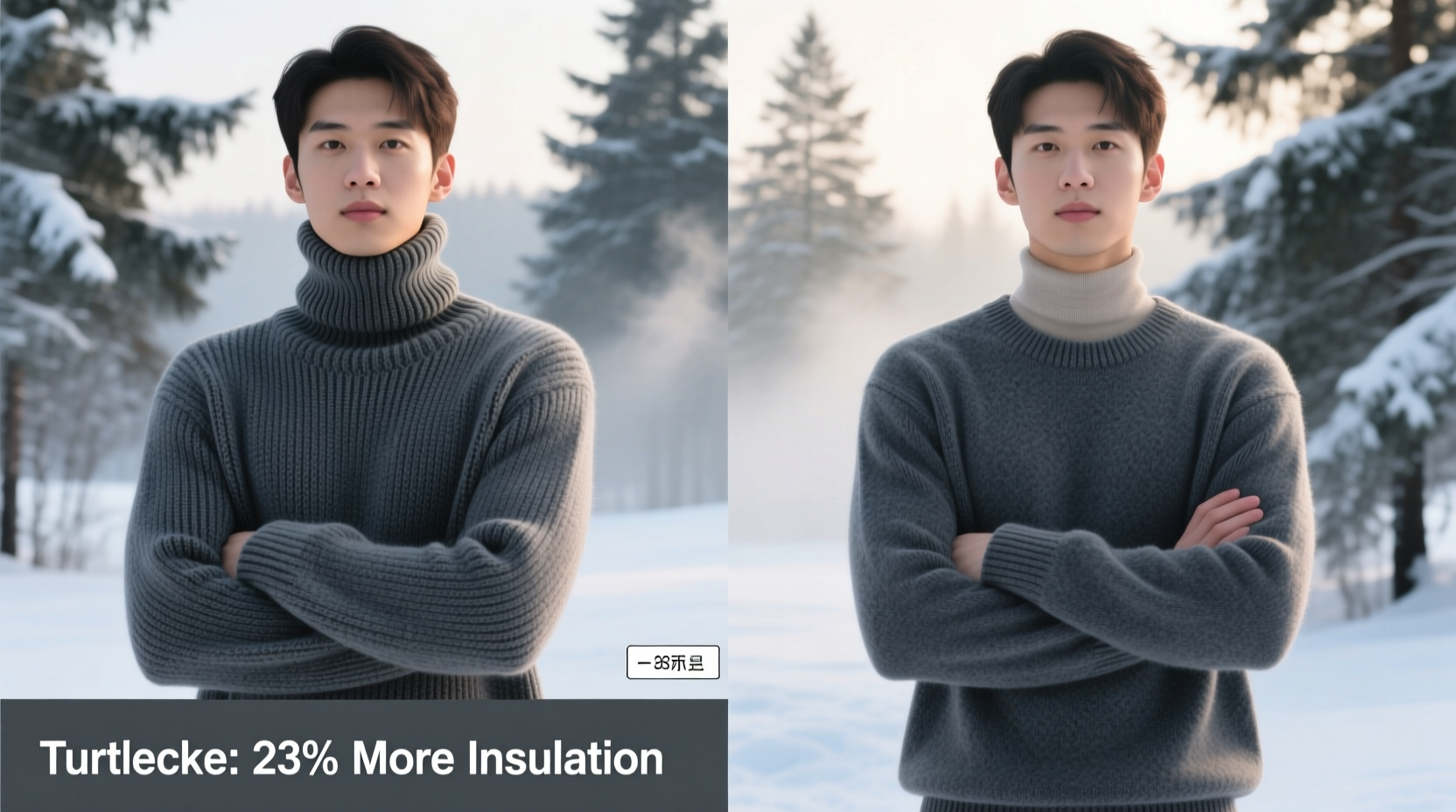
Warmth in clothing comes from trapping body heat within air pockets created by fabric fibers and garment structure. The effectiveness of this insulation depends on three main factors: material composition, weave density, and coverage area. While wool, cashmere, and synthetic blends like merino-polyester all contribute differently to heat retention, the cut and fit of a garment play an equally important role.
A high collar, such as a turtleneck’s, acts as a passive wind barrier around the neck and lower face—areas highly sensitive to temperature changes. In contrast, a crewneck relies on external layers (like scarves or outerwear collars) to seal in heat at the neckline. Without additional accessories, heat escapes more readily through the open neck of a crewneck, reducing overall thermal efficiency.
However, increased coverage doesn't automatically mean better performance. If a garment adds excessive thickness or restricts movement, it defeats the purpose of \"warmth without bulk.\" The ideal balance lies in strategic design: enough insulation where it matters, without unnecessary padding or stiffness.
“Neck exposure can account for up to 10% of total body heat loss in cold environments. A well-fitted turtleneck reduces that loss significantly.” — Dr. Lena Torres, Textile Biophysics Researcher, University of Alberta
Design Comparison: Collar Height and Fit
The primary difference between a turtleneck and a crewneck is the collar. A turtleneck features a long, folded rib-knit collar that rises above the chin, typically covering the entire neck. A crewneck has a short, rounded collar that sits at the base of the neck, leaving it exposed.
In terms of thermal engineering, the turtleneck’s extended collar creates a microclimate around the throat and upper chest. This trapped air warms quickly and remains insulated from drafts. Because the collar fits snugly against the skin (when properly sized), it minimizes convective heat loss—the process by which moving air carries away body heat.
Crewnecks, on the other hand, leave the neck vulnerable. Even when worn under a coat, gaps often form between the jacket collar and the shirt, allowing cold air to funnel down the back. Unless paired with a scarf or high-collared outerwear, crewnecks provide less effective sealing at this critical junction.
Yet, not all turtlenecks are created equal. Poorly designed versions can be overly tight, causing discomfort or restricting blood flow. Others may be too loose, defeating the purpose by letting air circulate freely. The best thermal turtlenecks use moderate elasticity and mid-height collars that fold once rather than double over—offering coverage without constriction.
Material Efficiency and Fabric Weight
To compare warmth without bulk, we must evaluate fabric performance per unit weight. Not all materials insulate equally. Here's how common knitwear fabrics stack up:
| Fabric Type | Insulation Efficiency | Bulk Level | Best Use Case |
|---|---|---|---|
| Merino Wool | High | Low-Medium | Daily wear, layering |
| Cashmere | Very High | Medium | Luxury layering |
| Acrylic Blend | Medium | High | Budget option |
| Cotton | Low | Medium | Mild climates only |
| Technical Synthetics (e.g., Polartec) | High | Low | Active outdoor use |
As shown, natural fibers like merino wool and cashmere deliver excellent warmth-to-weight ratios. They trap heat effectively due to the crimped structure of wool fibers, which create tiny air pockets. These materials also wick moisture, preventing dampness-induced chill—a common issue with cotton, which absorbs sweat and loses insulating properties when wet.
When comparing turtlenecks and crewnecks made from identical fabrics, the turtleneck consistently outperforms due to added coverage. However, some bulky crewnecks made from thick cotton or acrylic may feel warmer initially due to sheer mass—but they sacrifice mobility and layering potential.
For minimal bulk, fine-gauge knits are superior. A tightly woven, thin merino turtleneck can provide more effective warmth than a thick cotton crewneck, simply because it seals heat at the source and avoids overheating zones like the arms and torso.
Real-World Performance: A Winter Commuter Case Study
Consider Sarah, a daily commuter in Montreal, where winter averages hover around -10°C (14°F). She wears a tailored wool coat over her work attire and values both professionalism and comfort. Last season, she wore a heavy cotton crewneck under her blazer. Despite multiple layers, she often felt chilled, especially during subway transfers.
This year, she switched to a slim-fit merino wool turtleneck in the same weight class. Though slightly higher in price, the new top eliminated her morning shivers. The turtleneck collar blocked wind at her neck, and the breathable fabric prevented overheating indoors. Her coat now fits more cleanly, and she no longer needs a scarf for short walks.
Sarah’s experience highlights a key insight: warmth isn’t just about thickness. It’s about intelligent design. By addressing the weakest point in her insulation—the open neck—she improved her entire thermal system without adding bulk.
Layering Compatibility and Bulk Management
One concern with turtlenecks is that they might add too much volume under jackets or suit coats. However, modern tailoring and fabric technology have largely resolved this issue. Slim-fit turtlenecks made from lightweight knits integrate seamlessly into layered outfits.
Here’s a step-by-step guide to building a low-bulk, high-warmth layering system:
- Start with a thermal base layer: A moisture-wicking undershirt (synthetic or merino) keeps skin dry and adds subtle warmth.
- Add a fine-gauge turtleneck: Choose one with a single roll collar and minimal seam bulk. Ensure sleeves aren’t too long to avoid bunching under outer layers.
- Select a well-fitted mid-layer (optional): A lightweight fleece or unstructured cardigan works if needed, but many find the turtleneck sufficient.
- Top with a tailored coat: Overcoats with high armholes and structured shoulders accommodate turtlenecks without strain.
- Avoid double collars: Don’t wear a scarf unless necessary; the turtleneck already serves that function.
In contrast, crewnecks often require additional accessories to achieve similar warmth. Adding a scarf introduces new friction points, increases visual clutter, and complicates layering under collared coats. Moreover, scarves shift during movement, creating intermittent gaps.
For minimalist wardrobes or travel packing, the turtleneck’s self-contained design offers clear advantages. One piece replaces two (crewneck + scarf), saving space and reducing outfit complexity.
Checklist: Choosing the Warmest Low-Bulk Option
- ✅ Prioritize natural or technical fibers (merino, cashmere, performance synthetics)
- ✅ Opt for fine-gauge knitting over chunky weaves
- ✅ Select a turtleneck with a single-fold, moderately tall collar
- ✅ Ensure the fit is snug but not restrictive—especially at the wrists and hem
- ✅ Test layering compatibility with your most-used outerwear
- ❌ Avoid cotton-heavy blends for cold-weather use
- ❌ Avoid oversized or slouchy turtlenecks—they trap air but lose heat through convection
Frequently Asked Questions
Can a crewneck ever be as warm as a turtleneck?
Only when paired with a scarf or high-collared jacket. On its own, a crewneck lacks the coverage needed to prevent significant heat loss at the neck. Even thick crewnecks fail to seal this gap, making them inherently less efficient in cold conditions.
Are turtlenecks suitable for indoor wear?
Yes, especially when made from breathable materials like merino wool. Unlike synthetic fleece, fine-knit turtlenecks regulate temperature well and won’t cause overheating in heated environments. Their sleek profile also transitions smoothly from outdoor commutes to office settings.
Do turtlenecks work for people with short necks or larger builds?
Modern designs accommodate various body types. Look for “short” or “petite” turtleneck styles with reduced collar height. Alternatively, opt for a mock neck—a hybrid between crew and turtleneck—that rises just above the Adam’s apple without overwhelming the frame.
Final Verdict: Turtleneck Wins for Warmth Without Bulk
After evaluating fabric science, real-world use, and layering dynamics, the turtleneck emerges as the superior choice for staying warm without excess bulk. Its ability to seal the neck zone—where heat loss is greatest—gives it a functional edge that no crewneck can match without supplementary gear.
When constructed with lightweight, high-efficiency materials like merino wool or advanced synthetics, the turtleneck delivers maximum thermal return per gram of fabric. It simplifies layering, enhances comfort, and maintains a clean aesthetic under tailored outerwear.
The crewneck retains value for mild conditions, casual settings, or summer-weight knits. But when genuine warmth is the goal, and minimalism matters, the turtleneck’s design superiority becomes undeniable.
“The future of smart winter dressing isn’t thicker clothes—it’s smarter ones. The turtleneck is a century-old innovation that still solves a modern problem.” — Marcus Lin, Sustainable Apparel Designer
Take Action: Upgrade Your Cold-Weather Wardrobe
Don’t rely on bulk to keep you warm. Reassess your go-to sweaters and consider replacing heavy, inefficient layers with a well-chosen turtleneck. Focus on quality over quantity: invest in one excellent piece made from merino or a technical blend, and test it in your daily routine.




 浙公网安备
33010002000092号
浙公网安备
33010002000092号 浙B2-20120091-4
Comments
No comments yet. Why don't you start the discussion?