
When winter winds bite and social calendars fill up, choosing the right outerwear becomes more than just a matter of comfort—it’s a strategic decision between staying warm and staying stylish. Two popular options often spark debate: the elegant tweed sequin jacket and the classic wool coat. One dazzles with shimmer and texture; the other promises reliability and insulation. But which actually keeps you warmer while still making you look effortlessly fly?
The answer isn’t as simple as picking the heavier fabric. It involves understanding material science, climate conditions, occasion-based dressing, and long-term wearability. Let’s dissect both garments to help you make an informed, stylish choice.
Understanding the Fabrics: Tweed Sequin vs Wool
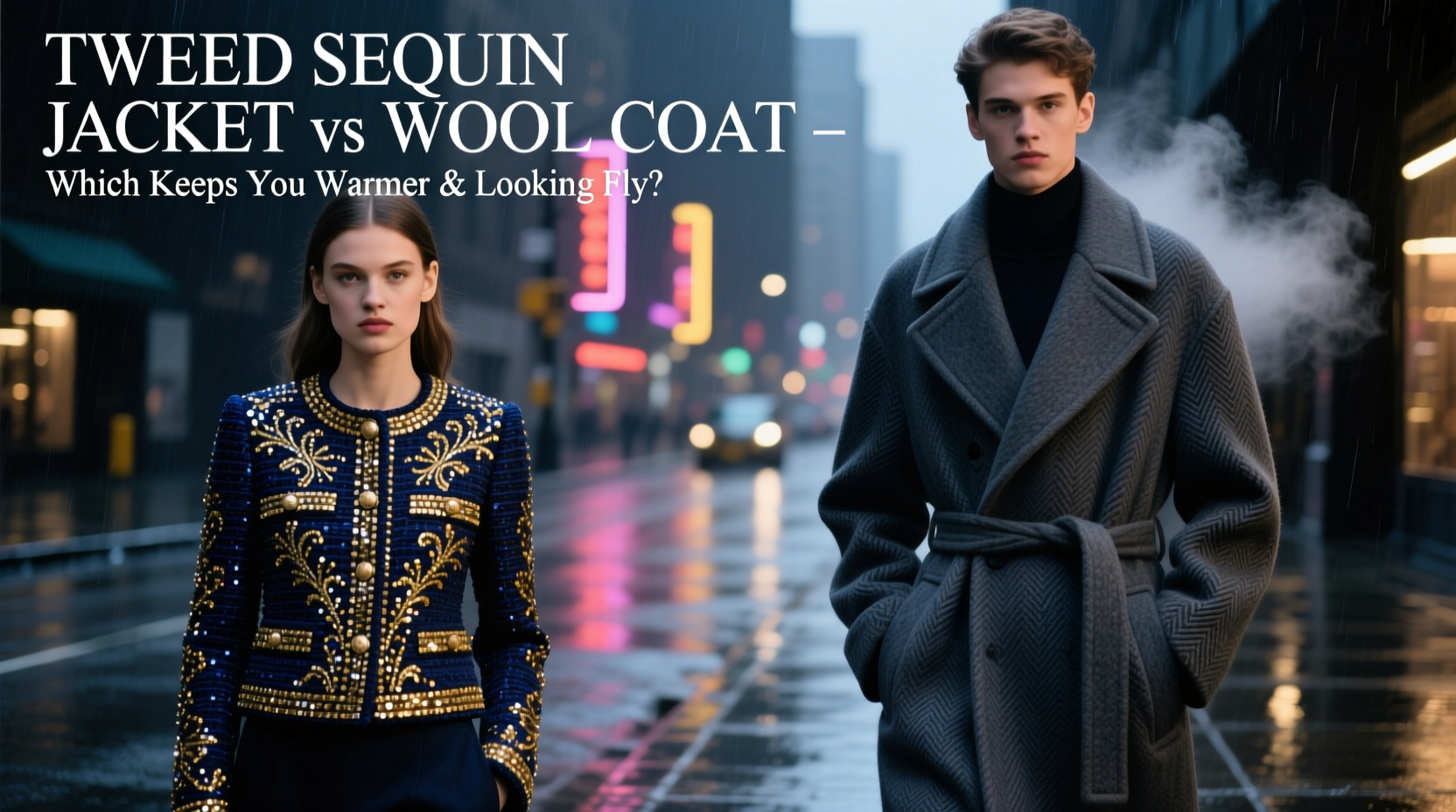
Tweed is a rough-surfaced woolen fabric traditionally woven in Scotland and Ireland. Known for its durability and textured appearance, it's often used in structured jackets and blazers. A tweed sequin jacket takes this heritage fabric and elevates it—literally—with the addition of sequins or metallic threads. These embellishments catch light and create visual interest, making the piece ideal for evening events or fashion-forward daytime looks.
In contrast, a traditional wool coat is typically made from 100% pure wool or a high-wool blend, designed specifically for cold weather protection. The fibers are tightly woven or felted to trap heat and resist wind, often featuring full-length cuts, deep collars, and storm flaps for maximum coverage.
While both garments originate from wool, their construction and purpose diverge significantly. The tweed sequin jacket leans toward aesthetic expression; the wool coat prioritizes thermal performance.
Thermal Performance: What Keeps You Warmer?
Warmth depends on three key factors: fabric density, layering capacity, and coverage. Wool coats generally win across all three.
Wool naturally traps air within its crimped fibers, creating insulating pockets that retain body heat. High-quality wool coats use dense weaves or melton finishes, minimizing airflow and blocking wind chill. Their longer length covers more of the body, including hips and thighs—areas often exposed by shorter jackets.
Tweed, while still wool-based, is usually lighter and looser in weave. When sequins are added, they replace functional textile with non-insulating decorative elements. Sequins don’t contribute to warmth and can even disrupt the fabric’s ability to form a continuous thermal barrier. Additionally, tweed sequin jackets are typically cut as hip-length blazers or cropped styles, leaving the lower torso vulnerable to cold.
In real-world terms, a wool coat can handle temperatures well below freezing, especially when layered over sweaters or coats. A tweed sequin jacket performs best in mild to cool conditions (40–60°F) and shines most indoors—at cocktail parties, dinners, or gallery openings—where ambient heating reduces the need for heavy insulation.
“Wool remains nature’s most effective insulator. Even modern synthetics struggle to match its warmth-to-weight ratio.” — Dr. Lena Hartwell, Textile Scientist at Nordic Materials Lab
Fashion Impact: Which Makes a Bolder Statement?
If warmth were the only factor, the wool coat would dominate every winter wardrobe. But fashion is equally about presence, personality, and occasion.
A tweed sequin jacket commands attention. The interplay of matte tweed and reflective sequins creates depth and movement under light. It pairs beautifully with minimalist separates—a black turtleneck and tailored trousers—or adds edge to a sleek dress. This jacket isn’t meant to disappear; it’s designed to be seen.
Wool coats, while timeless, tend to blend into the urban landscape. Classic camel, charcoal, or black coats project sophistication but rarely surprise. That said, modern variations—oversized silhouettes, bold colors, double-breasted designs—can elevate a wool coat into a statement piece. Still, it lacks the instant glamour of sequins.
Consider the context: At a holiday gala, rooftop bar, or art opening, the tweed sequin jacket turns heads. For commuting, errands, or snowy weekends, the wool coat offers understated elegance without sacrificing dignity to the elements.
Style Comparison Table
| Feature | Tweed Sequin Jacket | Wool Coat |
|---|---|---|
| Best Use Case | Evening events, fashion outings | Daily wear, cold climates |
| Insulation Level | Moderate (best above 40°F) | High (effective below freezing) |
| Style Impact | High – eye-catching, festive | Medium – classic, refined |
| Layering Flexibility | Limited – fitted cuts | High – room for thick layers |
| Durability | Moderate – sequins may snag | High – resilient fabric |
| Care Requirements | Delicate – dry clean only | Low to moderate – spot clean or professional care |
Real-World Scenario: New Year’s Eve in Chicago
Imagine you’re attending a rooftop party in downtown Chicago on December 31st. The temperature hovers around 28°F (-2°C), with wind gusts amplifying the chill. You’ve got two options: your navy wool coat or a vintage-inspired tweed sequin blazer.
You opt for the tweed sequin jacket, pairing it with a cashmere turtleneck and leather pants. Indoors, you’re the center of attention—photos flood social media, compliments pour in. But during the 10-minute walk to the venue, your arms and back freeze. Once outside for the countdown, you’re shivering despite stomping your feet.
Conversely, had you worn the wool coat over the same outfit, you’d have stayed warm throughout. You might have toned down the sparkle, but you wouldn’t have cut the evening short to escape the cold.
This scenario illustrates a crucial truth: looking fly means nothing if discomfort forces you to retreat. The smart move? Layer the tweed sequin jacket *under* a long wool coat or carry a compact puffer to wear en route. Arrive warm, remove the outer layer, and let the sequins shine.
How to Maximize Warmth and Style: A Step-by-Step Guide
You don’t have to choose between warmth and fashion. With thoughtful planning, you can achieve both. Follow this sequence:
- Assess the weather forecast – Know the temperature, wind speed, and chance of precipitation.
- Evaluate the event type – Is it formal, outdoor, or photo-heavy? Prioritize style only if you’ll spend most time indoors.
- Choose your statement piece – Decide whether the tweed sequin jacket will be your focal point.
- Select a warm base layer – Wear thermal silk, merino wool, or cashmere underneath.
- Add mid-layers strategically – A slim quilted vest or lightweight down panel shirt adds warmth without bulk.
- Use a detachable outer shell – Wear a long wool coat or tailored puffer to get there, then remove it inside.
- Accessorize smartly – Gloves, scarves, and boots extend warmth without compromising style.
FAQ
Can I wear a tweed sequin jacket in snow?
Not recommended. Snow can damage delicate sequins, cause water spots on wool, and seep through the looser weave. If unavoidable, wear a protective clear coat cover and limit exposure.
Is a wool coat suitable for formal events?
Absolutely. Opt for a tailored single-breasted wool coat in black or deep navy with satin lapels. Paired with a suit or evening dress, it exudes polished refinement.
How do I care for a tweed sequin jacket?
Always dry clean. Store on a padded hanger in a breathable garment bag. Avoid folding, as it can crush sequins and crease the structure.
Final Verdict: Warmth vs. Wow Factor
The wool coat wins decisively in warmth, practicality, and all-season versatility. It’s the armor against winter’s harshest days. The tweed sequin jacket, however, reigns supreme in style, charisma, and special-occasion appeal.
Rather than treating them as competitors, think of them as complementary pieces in a dynamic wardrobe. Use the wool coat for function; unleash the tweed sequin jacket for flair. Master the art of layering, and you won’t have to sacrifice comfort for confidence.




 浙公网安备
33010002000092号
浙公网安备
33010002000092号 浙B2-20120091-4
Comments
No comments yet. Why don't you start the discussion?