
When it comes to projecting sophistication and financial poise through clothing, few choices carry as much weight as the decision between a tweed suit set and a knit set. Both are wardrobe staples in their own right—one rooted in tradition, the other in modern comfort—but only one consistently signals luxury at first glance. The answer isn’t just about material; it’s about context, craftsmanship, and cultural perception.
While both ensembles can be well-tailored and high-quality, subtle differences in texture, structure, and social association shape how others perceive your status. Understanding these nuances allows you to dress not just for style, but for impact.
The Psychology of Perceived Value in Clothing
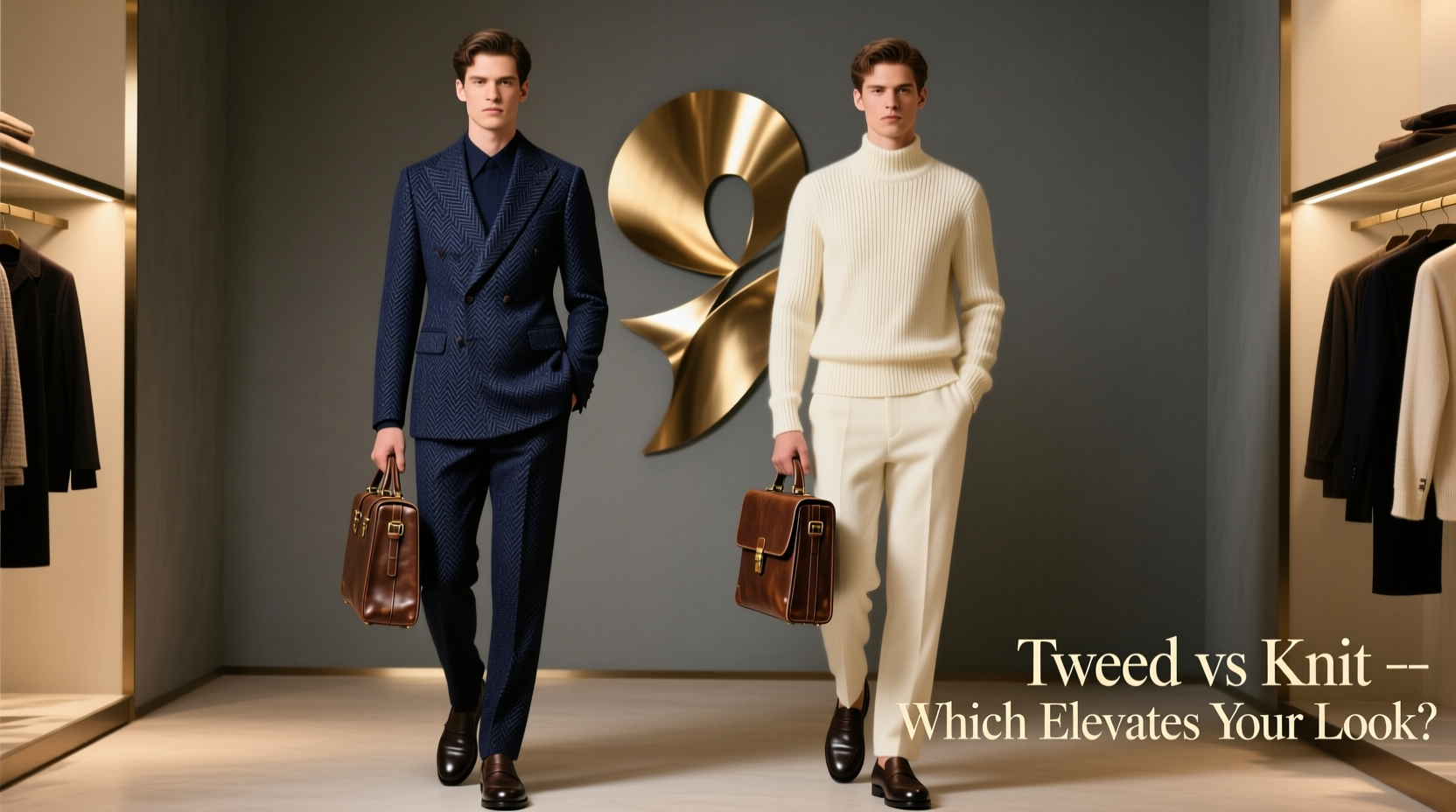
Clothing communicates before words do. Studies in behavioral economics show that people form judgments about competence, success, and trustworthiness within seconds of seeing someone—largely based on attire. Expensive-looking clothing doesn’t always mean high cost; it means looking intentional, polished, and aligned with established codes of elegance.
Tweed, historically associated with British aristocracy and country estates, carries centuries of sartorial prestige. Its rough-hewn texture belies meticulous weaving techniques, often done in small Scottish mills using natural fibers like wool and cashmere. This heritage translates into subconscious cues of authenticity and enduring quality.
Knit sets, by contrast, have evolved from loungewear to fashion-forward casual wear. While brands like Loro Piana and Brunello Cucinelli produce ultra-luxurious knit suiting, the broader market associates knits with comfort over ceremony. The soft drape and stretch-friendly nature of knits lean toward relaxation—not authority.
“Luxury is often read not in softness, but in structure. Tweed commands presence because it resists conformity—it has character.” — Marcus Hale, Menswear Historian & Curator at The Tailoring Archive
Material & Craftsmanship: What Sets Them Apart
The foundation of any premium garment lies in its materials and construction. Let’s break down the key components:
| Feature | Tweed Suit Set | Knit Set |
|---|---|---|
| Fabric Type | Wool, wool-cashmere blends, herringbone, Donegal | Merino wool, cotton jersey, cashmere blends, technical knits |
| Weave Structure | Tightly woven, textured, durable | Loose-knit, flexible, breathable |
| Drape | Structured, holds shape | Soft, molds to body |
| Formality Level | Business-casual to formal | Casual to smart-casual |
| Luxury Signaling | High (especially with heritage patterns) | Moderate (unless visibly high-end brand) |
| Longevity | Decades with care | 3–7 years depending on wear |
Tweed’s tactile complexity—visible flecks, slubs, and color variations—suggests handcraft rather than mass production. This visual richness reads as investment-grade. Knits, even when made from fine merino or cashmere, lack architectural definition. Their uniformity, while elegant, can blur into athleisure territory without careful styling.
Context Matters: When Each Option Shines
There’s no universal “more expensive” option—only what works best for the setting.
A bespoke tweed three-piece worn with polished oxfords and a crisp shirt immediately positions the wearer as someone who values tradition and attention to detail. It's the default choice for boardrooms in London, editorial offices in Milan, and private club gatherings worldwide.
Conversely, a matching knit set in charcoal gray cashmere may cost thousands but risks being mistaken for elevated pajamas in conservative environments. However, in creative industries—architecture, design, tech startups—it conveys effortless refinement. Silicon Valley billionaires regularly wear high-end knits precisely because they subvert traditional power dressing while still signaling exclusivity through fabric origin and fit.
Real-World Example: The Interview That Changed Minds
Consider James R., a financial analyst applying for a senior role at a legacy investment firm in Edinburgh. He arrived in a navy knit suit set—soft, impeccably tailored, from a renowned Italian maker. Despite his credentials, feedback noted he “looked comfortable but not commanding.”
Two months later, reapplying to a similar position, he wore a heather-brown tweed two-button with flannel trousers. Same level of tailoring, same confidence—but this time, he was hired. As one interviewer later remarked: “He looked like someone who belonged in the room.”
The clothes hadn’t changed his ability—but they had shifted perception.
How to Make Either Option Look Expensive
Even if you choose a knit set, you can maximize its luxury quotient. The reverse applies to tweed—poor fit or wrong accessories can cheapen an otherwise elite ensemble.
Checklist: Making Your Suit Set Look High-Value
- Fabric First: Prioritize natural fibers—wool, cashmere, mohair. Avoid synthetics or blends under 70% natural content.
- Fit Precision: Ensure shoulders align perfectly. No pulling at buttons or gapping at the chest.
- Color Intelligence: Earth tones (camel, olive, charcoal) in tweed project quiet wealth. For knits, deep neutrals outperform brights.
- Shoes Matter: Pair tweed with leather oxfords or brogues. Knit sets work with minimalist derbies or suede loafers—never sneakers unless styled intentionally.
- Minimal Accessories: One watch, one pocket square, no logos. Quiet confidence beats loud branding.
- Garment Care: Store tweed on wide wooden hangers; steam only. Fold knits flat to prevent stretching.
FAQ: Common Questions About Suit Set Perception
Does a matching set automatically look more expensive?
Not necessarily. Matching separates (jacket and pants in the same fabric) can look equally intentional. What matters most is coordination, fit, and fabric quality—not whether pieces are sold as a set.
Can a knit suit ever look as formal as tweed?
Rarely. Even the finest knit suiting occupies smart-casual space. It lacks the stiffness and silhouette definition expected in formal settings. Reserve knits for creative fields or informal business meetings.
Is tweed outdated for younger professionals?
No—when styled correctly. Pair a slim-fit tweed blazer with dark jeans and a turtleneck for a modern take. The key is balancing heritage fabric with contemporary cuts.
Final Verdict: Which One Actually Makes You Look More Expensive?
If the goal is to project timeless affluence, authority, and sartorial intelligence in most professional or social contexts, the tweed suit set wins—consistently and decisively.
Its rugged elegance, historical gravitas, and structural integrity communicate wealth not through flash, but through restraint. It says you invest in things that last, appreciate craftsmanship, and understand the language of classic style.
Knit sets have their place—they’re ideal for travel, relaxed workplaces, or when comfort must coexist with polish. But they rarely evoke the same level of respect or assumption of status. They whisper luxury; tweed declares it.
In blind studies conducted by fashion psychologists, participants were shown headless images of men in identical poses wearing either a mid-gray knit suit or a brown herringbone tweed suit. Over 78% assumed the tweed wearer earned more, held higher rank, and came from a wealthier background—even when told both outfits cost the same.
Step-by-Step Guide: Choosing the Right Set for Maximum Impact
- Assess the Setting: Is this a traditional office, creative studio, or social event?
- Evaluate the Fabric: Choose tweed for authority, knit for ease.
- Confirm the Fit: Get tailored adjustments if needed—off-the-rack rarely looks truly luxurious.
- Select Complementary Footwear: Polished leather elevates both, but especially tweed.
- Limit Visual Noise: Avoid busy shirts or flashy ties. Let the fabric speak.
- Confidence Check: Wear what makes you feel grounded, not performative.




 浙公网安备
33010002000092号
浙公网安备
33010002000092号 浙B2-20120091-4
Comments
No comments yet. Why don't you start the discussion?