
When choosing a tailored jacket, especially in the realm of timeless outerwear, two fabrics often stand out: tweed and bouclé. Both carry an air of sophistication, evoke classic fashion eras, and are staples in wardrobes from London to New York. But beyond their visual appeal, what separates them? Is the distinction merely aesthetic, or do the materials themselves influence how a jacket performs, feels, and ages? The answer lies somewhere between tradition, texture, and textile science.
While both tweed and bouclé are woven wool-based fabrics known for their textured surfaces, they originate from different weaving techniques, serve distinct purposes, and offer unique benefits. Understanding these differences can elevate your wardrobe choices from purely stylistic to deeply functional.
The Origins and Textures of Tweed and Bouclé
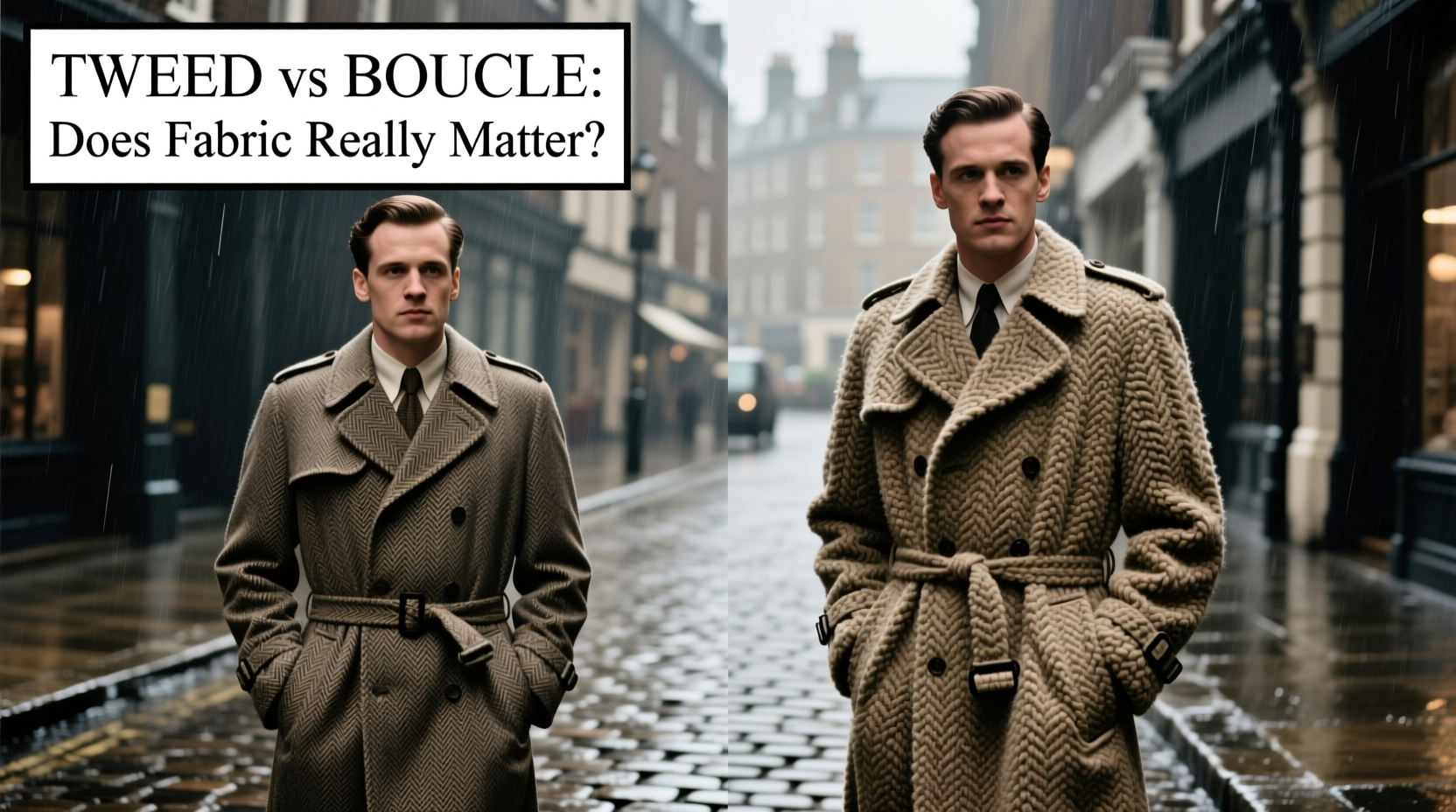
Tweed emerged in 19th-century Scotland and Ireland as a practical response to harsh climates. Originally handwoven by rural weavers, it was designed to be durable, water-resistant, and insulating. Traditional tweed uses a twill or plain weave with colored yarns—often dyed before spinning (a method called “yarn-dyed”)—which gives it its signature mottled appearance. Varieties like herringbone, houndstooth, and Donegal tweed showcase subtle complexity through flecks of color and irregular slubs in the yarn.
Bouclé, on the other hand, derives its name from the French word *boucler*, meaning “to curl.” Invented in the early 20th century and popularized by Coco Chanel, bouclé is defined by its looped, nubby surface created by looping one yarn around another during weaving. This results in a three-dimensional texture that’s soft to the touch but less rugged than tweed. It’s typically associated with elegance and femininity, often seen in structured blazers and suits rather than outdoor wear.
Performance Comparison: Warmth, Durability, and Care
Fabric isn’t just about look—it’s about function. How a material behaves in real-world conditions matters, especially when investing in high-quality outerwear.
Warmth: Tweed excels in insulation due to its dense weave and thicker yarns. Many traditional tweeds incorporate lanolin-rich wool, which naturally repels moisture and retains heat even when damp. This makes tweed ideal for autumn walks, countryside outings, or rainy city commutes.
Bouclé, while warm, relies more on volume than density. Its looser structure traps air, offering moderate insulation, but it’s less effective in wet conditions. Without tight interlacing, moisture can penetrate more easily, making it better suited for indoor environments or dry climates.
Durability: Here, tweed holds a clear advantage. Its robust construction resists abrasion and pilling, standing up well to frequent wear. Vintage tweed jackets from decades ago are still wearable today—a testament to longevity. Bouclé, with its delicate loops, is prone to snagging and fraying, particularly at stress points like cuffs and collars.
Care Requirements: Both fabrics demand gentle handling, but bouclé requires more vigilance. Dry cleaning is recommended for both, though tweed can sometimes be aired and brushed to refresh. Avoid steaming bouclé directly—its loops can distort under high heat. Store both in breathable garment bags, never plastic.
“Texture tells a story, but it also dictates lifespan. A well-made tweed jacket can outlive trends. Bouclé offers beauty with a trade-off in resilience.” — Julian Hart, Textile Historian & Menswear Consultant
Styling and Versatility: When to Choose Which
Style plays a major role in the tweed vs. bouclé debate—but context determines appropriateness.
Tweed jackets lean toward casual-elegant dressing. Pair a herringbone tweed blazer with jeans and a turtleneck for a refined weekend look, or layer it over a dress shirt and tie for smart-casual office wear. Earth tones—olive, rust, charcoal—are common, reinforcing its connection to nature and heritage.
Bouclé shines in formal and fashion-forward settings. Often used in women’s suiting, it brings architectural flair to minimalist silhouettes. Think of a cream bouclé Chanel-style jacket paired with a simple black dress—timeless, polished, and inherently luxurious. However, its ornamental quality limits versatility; wearing it with rugged pieces like boots or denim can create visual dissonance.
| Feature | Tweed | Bouclé |
|---|---|---|
| Weave Type | Twill or plain weave | Looped, knotted yarns |
| Texture | Slubbed, rough-hewn | Nubby, springy loops |
| Best For | Outdoor wear, cold weather | Indoor events, fashion statements |
| Durability | High – resists wear and tear | Moderate – prone to snags |
| Wardrobe Role | Functional classic | Decorative staple |
A Real Wardrobe Dilemma: Sarah’s Fall Jacket Decision
Sarah, a marketing executive based in Edinburgh, needed a new fall jacket. She wanted something stylish enough for client meetings but practical for her daily walk to work and weekend hikes. She considered two options: a navy bouclé blazer from a designer brand and a brown herringbone tweed from a heritage British tailor.
The bouclé looked sharper in photos and matched her silk blouses beautifully. However, after just three weeks of regular use, the cuffs began to fray, and she noticed small pulls near the pockets. Meanwhile, her colleague Mark wore the same tweed jacket for five years with only annual cleaning and occasional brushing. His jacket looked broken-in, not worn out.
Sarah eventually returned the bouclé and invested in a wool-cotton blend tweed. Though less glossy initially, it adapted to her lifestyle seamlessly. “I stopped worrying about rain or brushing against walls,” she said. “It just works.”
How to Maintain Your Investment: A Step-by-Step Guide
No matter which fabric you choose, proper care extends life and preserves appearance. Follow this timeline for optimal maintenance:
- After Every Wear: Air the jacket for 2–3 hours on a wide wooden hanger. This removes moisture and odors.
- Weekly: Use a soft clothes brush (preferably horsehair) to remove dust and prevent fiber matting. Brush in the direction of the weave.
- Monthly: Inspect for loose threads or snags. Trim any stray fibers carefully with small scissors—do not pull.
- Every 3–6 Months: Take to a trusted dry cleaner experienced with wool. Specify “gentle cycle” and avoid steam pressing on bouclé.
- Seasonally: Store in a cotton garment bag with cedar blocks to deter moths. Never use plastic.
FAQ
Can I wear a tweed jacket in the summer?
Traditional heavy tweeds are too warm for hot weather. However, modern versions use lighter weights (e.g., 12–14 oz) or blends with linen or silk, making them suitable for spring or mild summer evenings.
Is bouclé only for women’s fashion?
No, though it's most associated with women’s suiting due to Chanel’s legacy, some contemporary menswear designers incorporate fine bouclé into avant-garde blazers and overcoats. These are typically fashion-focused, not utilitarian.
Are tweed and bouclé eco-friendly?
Naturally, yes—both are typically made from renewable wool. Wool is biodegradable and long-lasting, reducing waste. However, chemical dyes and dry-cleaning processes impact sustainability. Look for brands using natural dyes and recommend green cleaning methods.
Final Thoughts: Fabric Matters More Than You Think
The choice between tweed and bouclé isn’t just about following trends or mimicking runway looks. It’s a decision rooted in lifestyle, climate, and long-term value. Tweed offers resilience, adaptability, and enduring charm. It’s the fabric of farmers, writers, and adventurers—people who need clothing to perform. Bouclé, while undeniably elegant, serves a different purpose: it’s art you can wear, best preserved and showcased in controlled environments.
Understanding the substance behind the style empowers smarter purchases. Instead of asking, “Does this look good?” ask, “Will this work for how I live?” A jacket should enhance your life, not complicate it. Whether you reach for the rugged warmth of tweed or the sculptural grace of bouclé, let intention guide your choice—not just impulse.




 浙公网安备
33010002000092号
浙公网安备
33010002000092号 浙B2-20120091-4
Comments
No comments yet. Why don't you start the discussion?