
In 2024, fashion isn’t just about looking good—it’s about feeling empowered, adaptable, and effortlessly stylish. The debate between two-piece sets and overall dresses has become a central conversation in wardrobes across the globe. While both offer elegance and ease, one format is quietly outpacing the other in versatility, wearability, and cultural relevance. The rise of modular dressing, shifting lifestyle demands, and evolving definitions of femininity are reshaping what we choose to wear—and how often we reach for it.
The Rise of the Two-Piece Set
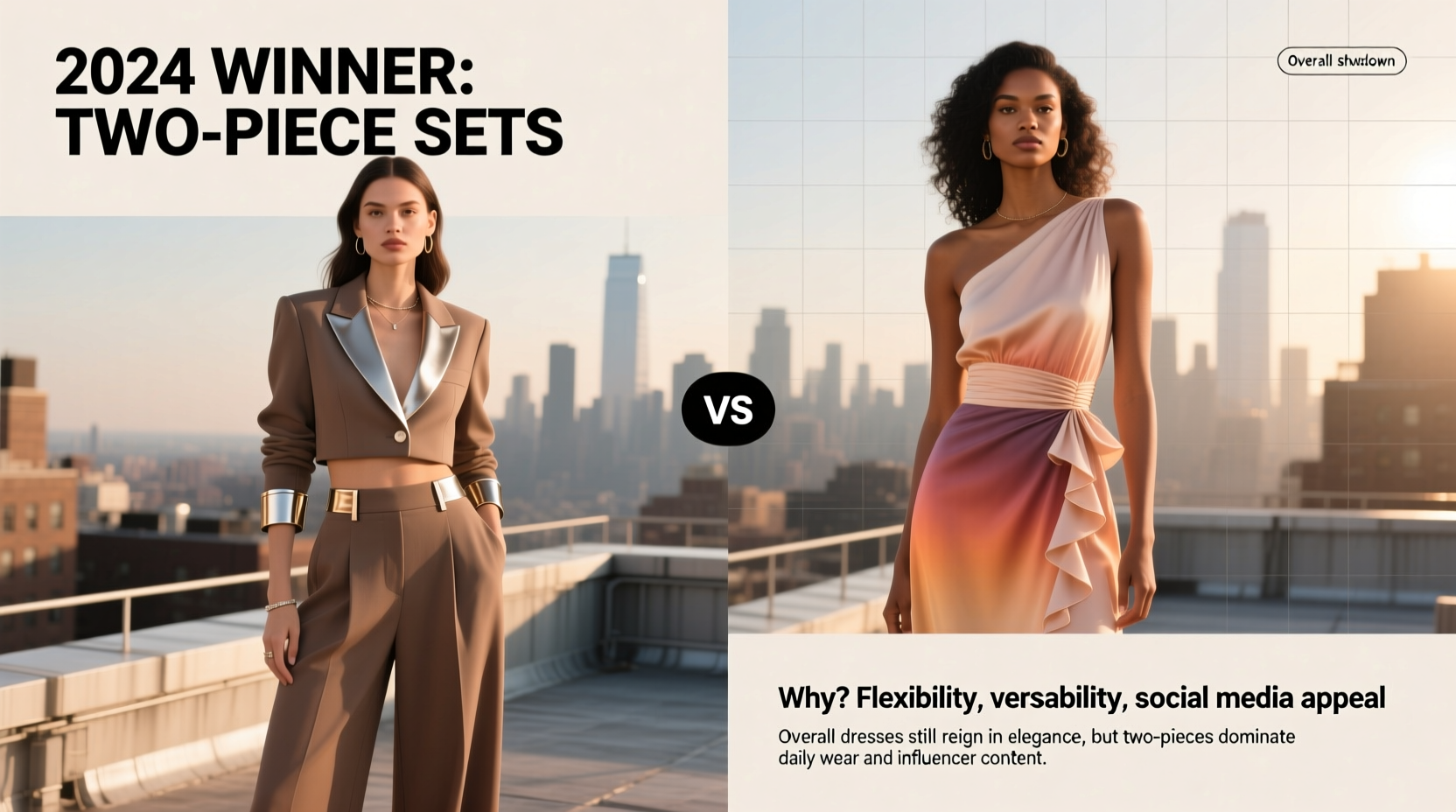
Once considered primarily resortwear or matching lounge attire, two-piece sets have evolved into full-fledged wardrobe staples. From tailored co-ords in linen and cotton to sequined ensembles worn on red carpets, these coordinated separates blend cohesion with flexibility. Designers like Khaite, Staud, and Rotate Birger Christensen have elevated the concept, offering sets that can be styled together or broken apart—maximizing utility without sacrificing aesthetic appeal.
The core strength of two-piece sets lies in their adaptability. A cropped knit top can pair with high-waisted trousers for dinner, then be worn solo with jeans the next day. This modularity aligns perfectly with 2024’s emphasis on sustainable consumption and capsule wardrobing. Consumers are no longer buying outfits—they’re investing in components that work across multiple contexts.
Overall Dresses: Elegance with Limitations
Dresses remain iconic. They symbolize simplicity, grace, and occasion-ready polish. Whether it's a slip dress, shirtdress, or structured midi, the one-and-done nature of a dress continues to appeal to those seeking minimal effort with maximum impact. However, in 2024, the limitations of dresses are becoming more apparent.
Fewer transitions. Limited layering options. Inflexible sizing (especially for hourglass or tall figures). These constraints make dresses less practical for dynamic lifestyles. A dress may dominate a wedding guest list or a gala, but it rarely survives a full workweek or travel itinerary as seamlessly as separates. Even formalwear is seeing a shift—celebrities like Zendaya and Florence Pugh have been spotted in matching blazer-skirt sets instead of traditional gowns, signaling a broader stylistic pivot.
“Today’s consumer wants clothing that works as hard as they do. Two-piece sets deliver function without compromising flair.” — Lena Torres, Fashion Editor at *Vogue Scandinavia*
Why Two-Piece Sets Are Winning in 2024
The dominance of two-piece sets isn't just anecdotal—it's backed by data, design evolution, and cultural shifts. Here’s why they’re leading the race:
- Wardrobe Efficiency: One set equals three or more outfit combinations when separated.
- Body Positivity & Fit Flexibility: Sets allow for size mixing (e.g., small top, medium bottom), accommodating diverse body shapes.
- Sustainability: Buying fewer pieces that serve multiple roles reduces overconsumption.
- Work-to-Evening Transition: Easily adapt from office meetings to dinners by swapping shoes or adding a jacket.
- Social Media Appeal: Coordinated looks photograph well, driving virality on platforms like TikTok and Instagram.
Brands like & Other Stories, Reformation, and even fast-fashion retailers are expanding their co-ord offerings, responding to surging demand. Google Trends data from early 2024 shows a 68% year-over-year increase in searches for “matching two piece outfits,” while “maxi dress” queries have plateaued.
Real-World Example: Maya’s Workweek Wardrobe
Maya, a 32-year-old marketing strategist in Toronto, used to rely heavily on dresses for her semi-formal office environment. But after investing in three versatile two-piece sets—a beige linen set, a black ribbed knit set, and a plaid wool-blend suit—she reduced her weekly laundry load by 40% and cut morning decision fatigue significantly.
She wore the linen top with wide-leg denim on casual Fridays, paired the skirt with a silk camisole for client dinners, and combined the full knit set under a trench coat for rainy commutes. “I feel put together without being restricted,” she says. “And I’m not constantly shopping because each piece pulls double duty.”
Comparison: Two-Piece Sets vs Overall Dresses
| Feature | Two-Piece Sets | Overall Dresses |
|---|---|---|
| Versatility | High – pieces can be worn separately | Low – single-use structure |
| Fit Customization | Possible to mix sizes | Rarely offered in split sizing |
| Layering Potential | Excellent – easy to add jackets, belts, etc. | Limited – depends on silhouette |
| Travel Friendliness | High – compact and multi-functional | Moderate – prone to wrinkling |
| Sustainability Score | ★★★★☆ | ★★★☆☆ |
| Style Longevity | Long – individual pieces stay relevant | Shorter – trends fade faster |
How to Build a High-Impact Two-Piece Wardrobe
Transitioning toward a co-ord-centric closet doesn’t mean abandoning dresses entirely. It means curating smarter. Follow this step-by-step guide to maximize value and style:
- Assess Your Lifestyle Needs: Identify how many work, social, and leisure events you attend monthly.
- Start with Neutrals: Choose one classic set in black, beige, or navy as your foundation.
- Add Texture or Print: Introduce a second set with subtle pattern or material contrast (e.g., corduroy, floral).
- Test Mixability: Ensure tops can pair with existing bottoms and vice versa.
- Invest in Quality Over Quantity: Prioritize natural fabrics and reinforced seams.
- Style Strategically: Use accessories to transform sets—belts, scarves, and jewelry change the narrative.
Frequently Asked Questions
Can two-piece sets be worn formally?
Absolutely. Tailored matching sets in wool, crepe, or satin are increasingly accepted in boardrooms and at weddings. Pair with heels and minimalist jewelry for polished elegance.
Are matching sets still trendy, or is this a passing fad?
This isn’t a trend—it’s a structural shift in how people consume fashion. As sustainability and functionality gain importance, co-ords represent a long-term wardrobe strategy, not a fleeting moment.
Do I need to wear both pieces together to look cohesive?
No. That’s the beauty of them. Wearing one piece solo keeps your look intentional. Just ensure color and texture harmony with the rest of your outfit.
Final Thoughts: Dressing for the Future
The verdict is clear: in 2024, two-piece sets are winning—not by replacing dresses, but by redefining what practical elegance looks like. They reflect a generation that values autonomy, adaptability, and conscious consumption. People aren’t just obsessed with matching sets; they’re embracing a new philosophy of dressing—one where every garment earns its place in the closet.
Dresses will always have their moment—the summer picnic, the anniversary dinner, the gallery opening. But for the rhythm of daily life, the balance tilts decisively toward separates. The future of fashion isn’t about choosing between comfort and style. It’s about having both, one coordinated piece at a time.




 浙公网安备
33010002000092号
浙公网安备
33010002000092号 浙B2-20120091-4
Comments
No comments yet. Why don't you start the discussion?