
In an age where information is more accessible than ever, reading remains one of the most powerful tools for personal growth, education, and entertainment. Yet, physical books can be costly, and not everyone has access to a well-stocked library. Fortunately, countless high-quality books are available online—completely free. From classic literature to academic textbooks and self-help guides, the digital world offers vast opportunities for readers on any budget.
The key lies in knowing where to look and how to navigate these resources safely and effectively. This guide provides a comprehensive roadmap to legally accessing free books online, complete with expert-backed strategies, trusted platforms, and practical advice for maximizing your reading experience without spending a dime.
Why Read Books Online for Free?
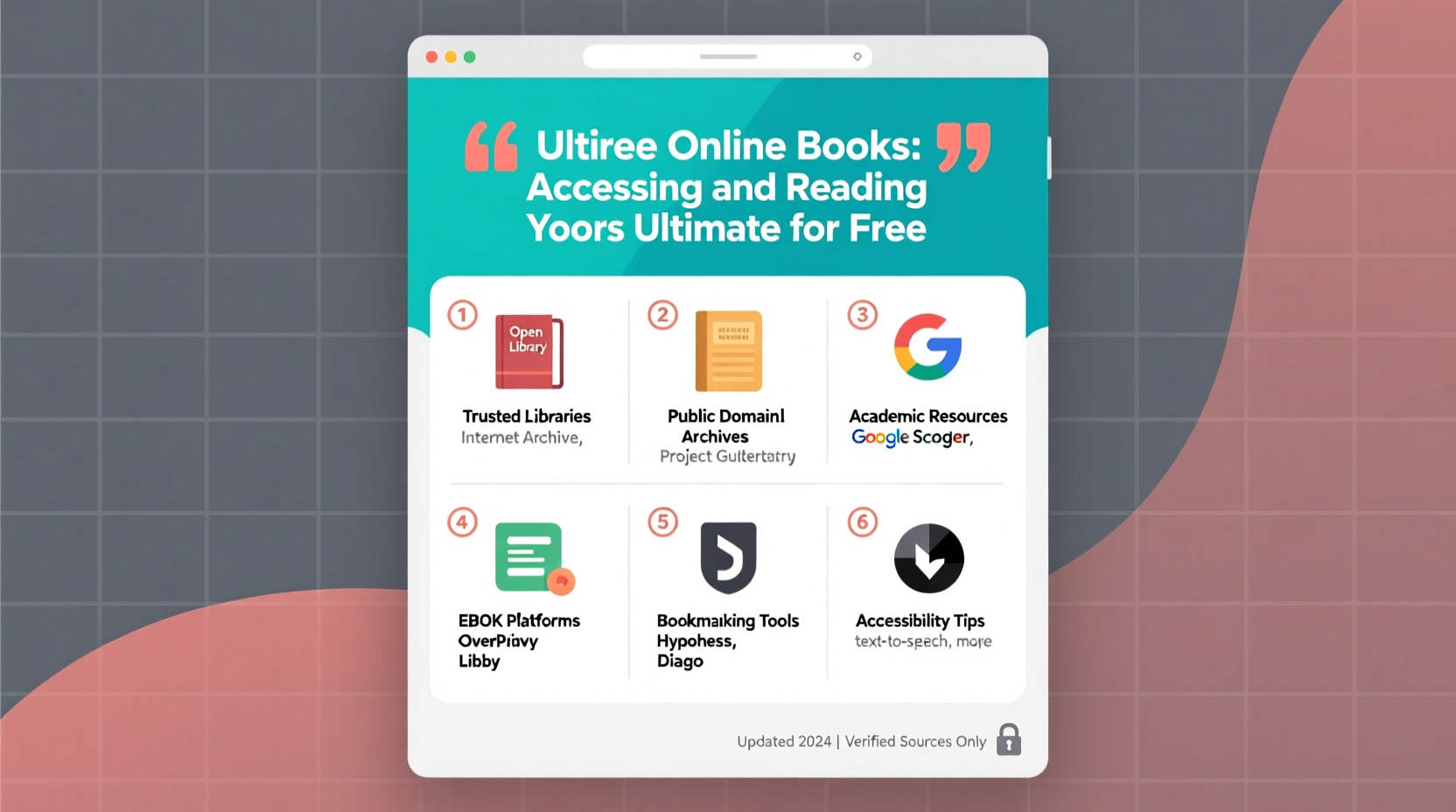
Reading online eliminates geographical and financial barriers. Students in remote areas can access university-level textbooks. Lifelong learners can explore philosophy, science, or history without paying for expensive courses. And casual readers can rediscover timeless novels from authors like Jane Austen, Mark Twain, or Fyodor Dostoevsky—all at no cost.
Beyond affordability, digital reading offers convenience. You can carry an entire library on your phone, tablet, or e-reader. Many platforms also support text-to-speech, adjustable fonts, and night mode, making reading more accessible for people with visual impairments or learning differences.
Top Trusted Platforms for Free Online Books
Not all free book sites are created equal. Some host pirated content, which poses legal and security risks. The following platforms are reputable, long-standing, and offer legitimate access to thousands of titles:
- Project Gutenberg – One of the oldest digital libraries, hosting over 70,000 free eBooks, primarily works in the public domain (published before 1928).
- Internet Archive (archive.org) – Offers a massive collection of scanned books, including textbooks, fiction, and historical documents. Its “Open Library” initiative allows users to borrow digital copies like a traditional library.
- HathiTrust Digital Library – A partnership of academic and research institutions providing access to millions of digitized books. Full access requires affiliation with a member institution, but many public-domain titles are freely available.
- Google Books – While not all books are fully readable, Google Books allows previews and full downloads of public domain works. Use its advanced search to filter by \"full view\" availability.
- ManyBooks – Curates free eBooks from multiple sources, categorizing them by genre, popularity, and format compatibility (ePub, Kindle, PDF).
- LibriVox – Offers free audiobooks of public domain titles, narrated by volunteers worldwide. Ideal for auditory learners or multitaskers.
“Digital libraries like Project Gutenberg have democratized access to knowledge, preserving cultural heritage while enabling global learning.” — Dr. Alan Liu, Professor of Digital Humanities, UC Santa Barbara
How to Find the Right Book Online: A Step-by-Step Guide
Finding quality books among the noise requires strategy. Follow this process to locate exactly what you need:
- Determine the book’s status: Is it in the public domain? Generally, books published before 1928 in the U.S. are free from copyright restrictions. For newer works, check if the author or publisher offers it for free.
- Use precise search terms: Instead of typing “free novels,” search “Pride and Prejudice PDF site:gutenberg.org” to target specific results on trusted domains.
- Leverage advanced filters: On sites like Internet Archive, use filters for language, publication date, and download format to narrow results.
- Verify file integrity: Before downloading, check user reviews or ratings if available. Look for clean formatting, especially in older digitized texts that may contain scanning errors.
- Download or read online: Choose the option that suits your device. ePub is ideal for e-readers; PDF preserves layout for academic texts.
Do’s and Don’ts When Accessing Free Books Online
| Do | Don’t |
|---|---|
| Use ad-blockers cautiously—some free sites rely on ads for funding. | Assume all “free book” sites are legal. Many distribute copyrighted material without permission. |
| Support authors by purchasing newer works or donating to open-access initiatives. | Download executable (.exe) files claiming to be eBooks—they may contain malware. |
| Check licensing details (e.g., Creative Commons) for reuse or sharing. | Share links to pirated content, even with good intentions. |
| Bookmark reliable sites for future use. | Enter personal information on unsecured websites. |
Real Example: How Maria Completed Her Degree Using Free Textbooks
Maria, a single mother pursuing a degree in psychology, struggled to afford required textbooks averaging $150 each. After learning about OpenStax—a nonprofit platform offering peer-reviewed, openly licensed college textbooks—she downloaded all her course materials for free. She supplemented these with public domain works from HathiTrust and lecture notes shared via MIT OpenCourseWare.
By combining these resources, Maria saved over $1,200 in one semester. She used the money to buy a basic tablet, which she now uses exclusively for reading digital texts. Her story highlights how strategic use of free online books can remove financial obstacles to education.
Maximizing Your Reading Experience
Accessing free books is only half the journey. To get the most out of your reading, consider these best practices:
- Sync across devices: Use cloud-based readers like Google Play Books or Apple Books to start reading on your phone and continue on your laptop.
- Adjust readability settings: Increase font size, change background color, or enable dark mode to reduce eye strain during long sessions.
- Join online reading communities: Platforms like Reddit’s r/books or Goodreads allow you to discuss free reads, discover hidden gems, and participate in virtual book clubs.
- Create a reading schedule: Dedicate 20–30 minutes daily. Use free audiobooks during commutes or chores to make progress passively.
FAQ: Common Questions About Free Online Books
Are free online books really legal?
Yes, if they come from legitimate sources such as Project Gutenberg, OpenStax, or government-funded digital libraries. These platforms distribute works that are either in the public domain or released under open licenses.
Can I download free books to my Kindle?
Absolutely. Most free eBook sites offer formats compatible with Kindle, such as MOBI or ePub (which can be converted using Amazon’s Send to Kindle tool). LibriVox audiobooks can also be transferred for offline listening.
What if I’m looking for a recent bestseller?
Newly published bestsellers are rarely available for free due to copyright. However, you can often borrow them digitally through your local library’s app (like Libby or Hoopla) using a free library card.
Essential Checklist for Getting Started
- Identify your reading goals (education, leisure, skill-building).
- Choose 2–3 trusted platforms from this guide to explore.
- Search for your first book using targeted keywords and filters.
- Download or read it in your preferred format.
- Join a community or forum to share insights and discover new titles.
- Set a weekly reading goal and track your progress.
Conclusion: Start Reading Without Limits
The ability to read should never depend on income or location. Thanks to digital innovation and open-access advocacy, anyone with an internet connection can dive into great literature, expand their knowledge, and fuel their curiosity—for free. By using the right tools and staying mindful of legality and quality, you can build a rich personal library that grows with you.




 浙公网安备
33010002000092号
浙公网安备
33010002000092号 浙B2-20120091-4
Comments
No comments yet. Why don't you start the discussion?