
Selecting the right ring size is more than a matter of comfort—it’s about fit, function, and long-term wearability. While most people default to sizing for the ring finger, an increasing number are choosing rings for the index finger, whether for style, symbolism, or practical reasons like leaving the ring hand free for a wedding band. However, the index finger presents unique challenges: it's typically slimmer at the base but wider at the knuckle, making accurate sizing critical to avoid discomfort or slippage. This guide delivers a comprehensive, step-by-step approach to measuring your index finger correctly, understanding variations, and ensuring your ring stays secure without compromising circulation or aesthetics.
Why Index Finger Sizing Differs from Other Fingers
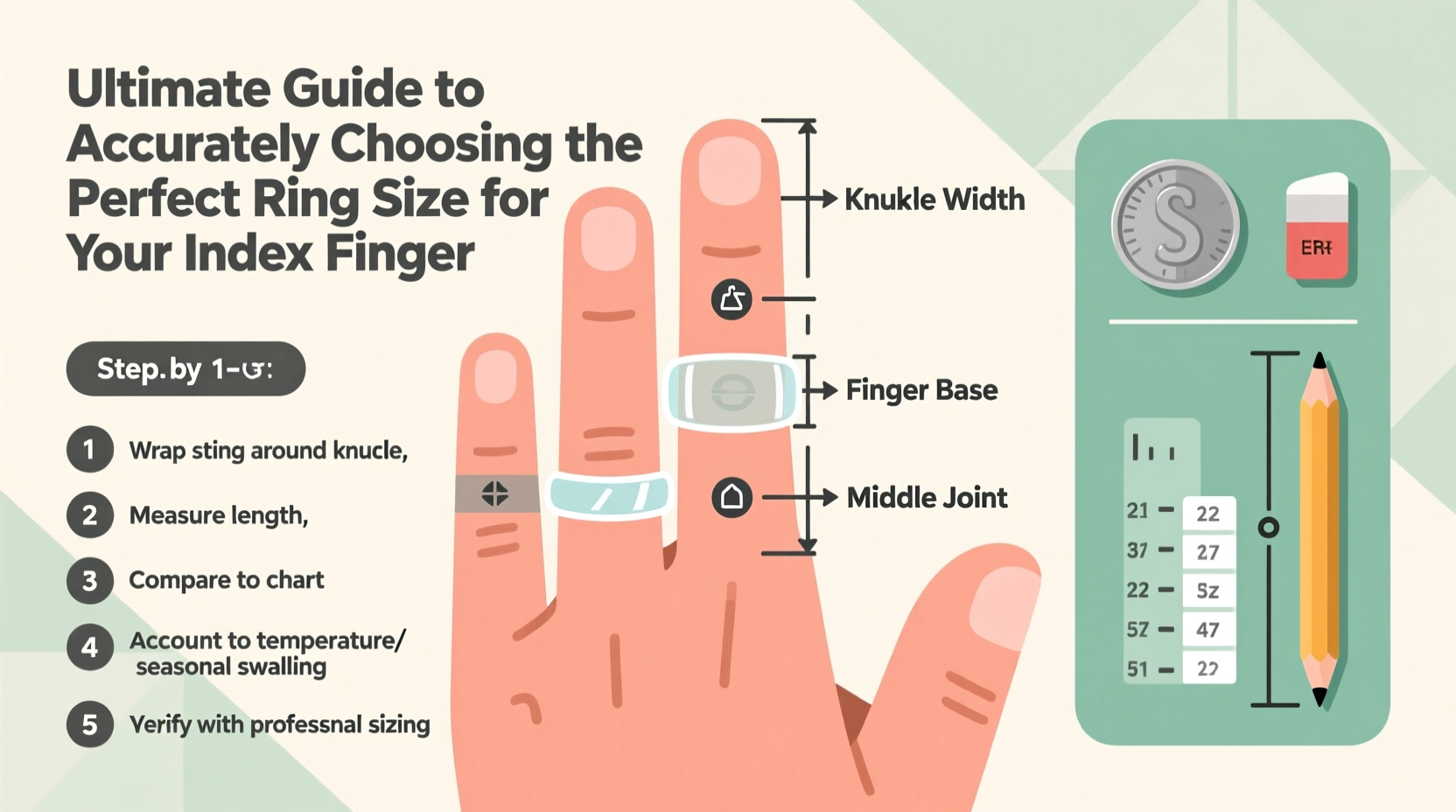
The index finger is anatomically distinct. Unlike the ring finger, which tends to have a more uniform diameter, the index finger usually features a pronounced knuckle that’s significantly larger than the base of the finger. This means a ring must be large enough to slide over the knuckle comfortably but snug enough to stay in place when worn lower down. A poorly sized ring may either get stuck on the knuckle or spin loosely, risking loss or irritation.
Additionally, index finger usage varies by lifestyle. Frequent typing, gripping tools, or playing instruments can cause swelling or calluses, further complicating sizing accuracy. Temperature also plays a role—fingers shrink in cold weather and expand in heat, so timing matters.
“Index finger rings require a balancing act between knuckle clearance and shaft security. One millimeter too small, and it won’t go on; one too large, and it spins or slips off.” — Daniel Reyes, Master Jeweler & Custom Ring Designer
Step-by-Step Guide to Measuring Your Index Finger
Accurate measurement is the foundation of a perfect fit. Follow this timeline-tested method to determine your true index finger size with precision.
- Choose the Right Time: Measure in the late afternoon or evening when fingers are naturally slightly swollen due to daily activity and temperature.
- Gather Tools: Use a flexible measuring tape, a strip of paper or thread, a ruler, and a pen.
- Wrap Method: Wrap the paper or thread snugly around the base of your index finger (not the knuckle). Mark where the ends meet.
- Measure Length: Lay the strip flat and measure the length in millimeters using a ruler.
- Convert to Ring Size: Divide the circumference by pi (3.14) to get the diameter. Match the diameter to a standard ring size chart.
- Test Knuckle Clearance: Slide a temporary ring (like a keyring or adjustable band) over your knuckle to ensure it passes without excessive force.
- Repeat Twice: Measure on two different days to account for minor fluctuations.
Do’s and Don’ts of Index Finger Ring Sizing
| Do’s | Don’ts |
|---|---|
| Measure at room temperature after normal hand use | Measure immediately after exercising or showering |
| Use a metal sizer if available for precision | Rely solely on online printable charts without verification |
| Account for knuckle size when selecting band width | Size only for the finger base and ignore the knuckle |
| Try on sample rings in person when possible | Guess based on another finger’s size |
| Consult a jeweler for professional fitting | Purchase expensive rings without verifying size first |
Real-World Example: Choosing a Statement Ring for Daily Wear
Sophia, a graphic designer from Portland, wanted a bold signet ring for her right index finger—a symbol of creativity and independence. She measured herself at home using the paper method and came up with a size 8. Excited, she ordered online. When the ring arrived, it wouldn’t pass her knuckle. Frustrated, she visited a local jeweler who used a tapered ring sizer. The correct size? 9 for the knuckle, but 7.5 at the base. The jeweler recommended a size 8.5 with a comfort-fit interior and slight flexibility in the band material. After switching to a titanium alloy version, Sophia got the balance she needed: easy on-and-off and no spinning during work.
This case highlights a common oversight: self-measurement often ignores knuckle-to-shaft variance. Professional tools and materials matter.
Expert Tips for Long-Term Comfort and Fit Stability
Even with accurate initial sizing, changes occur. Weight fluctuation, aging, and medical conditions like arthritis can alter finger dimensions over time. Proactive planning ensures lasting satisfaction.
- Opt for Adjustable Bands: Consider magnetic or spiral designs that allow micro-adjustments.
- Choose Comfort-Fit Interiors: Domed or rounded inner bands reduce friction and improve glide over the knuckle.
- Monitor Seasonal Changes: Store rings safely during winter months when fingers may shrink.
- Invest in Resizing Services: Many jewelers offer one free resize within six months of purchase—ask before buying.
- Avoid Permanent Engravings Initially: Wait until you’ve worn the ring for a few weeks to confirm the fit before engraving.
Frequently Asked Questions
Can I use my ring finger size for my index finger?
No. The index finger is typically smaller at the base but larger at the knuckle. Using ring finger size will likely result in a poor fit—either too tight over the knuckle or too loose on the shaft.
What if my knuckle is much bigger than my finger?
This is common. Consider a ring with a sprung shank (slightly flexible metal) or a hinged design. Alternatively, opt for a sizing bar underneath the band to prevent rotation while allowing knuckle passage.
How often should I recheck my ring size?
At least once every two years, or sooner if you notice changes in fit, experience swelling, or undergo significant weight changes. Seasonal adjustments may also be necessary.
Final Checklist Before Purchasing
- ✅ Measured finger at optimal time of day (afternoon/evening)
- ✅ Accounted for knuckle size versus base diameter
- ✅ Considered band width and material thickness
- ✅ Tested with a physical sizer or similar ring if possible
- ✅ Verified resizing policy with the jeweler or retailer
- ✅ Chose a comfort-fit or flexible design if knuckle is large
- ✅ Avoided permanent customization until fit is confirmed
Conclusion
Finding the perfect ring size for your index finger isn’t guesswork—it’s a blend of precision, awareness, and informed decision-making. From understanding anatomical differences to applying real-world testing methods, every step contributes to a ring that feels as intentional as it looks. Whether it’s a symbol of identity, a fashion statement, or a functional accessory, your index ring deserves the right fit. Take the time to measure accurately, consult experts when needed, and prioritize long-term comfort over instant gratification. Your fingers will thank you for years to come.




 浙公网安备
33010002000092号
浙公网安备
33010002000092号 浙B2-20120091-4
Comments
No comments yet. Why don't you start the discussion?