
Determining a woman’s ring size without her knowing—or simply from the comfort of your home—can be both practical and essential, especially when planning a surprise proposal, anniversary gift, or sentimental keepsake. While visiting a jeweler offers precision, not everyone has the time, opportunity, or desire to make an in-person appointment. Fortunately, several accurate, low-cost methods exist for measuring ring size at home with minimal tools. This guide walks you through proven techniques, common pitfalls, and expert-backed tips to ensure your measurement is as precise as possible.
Why Accurate Ring Sizing Matters
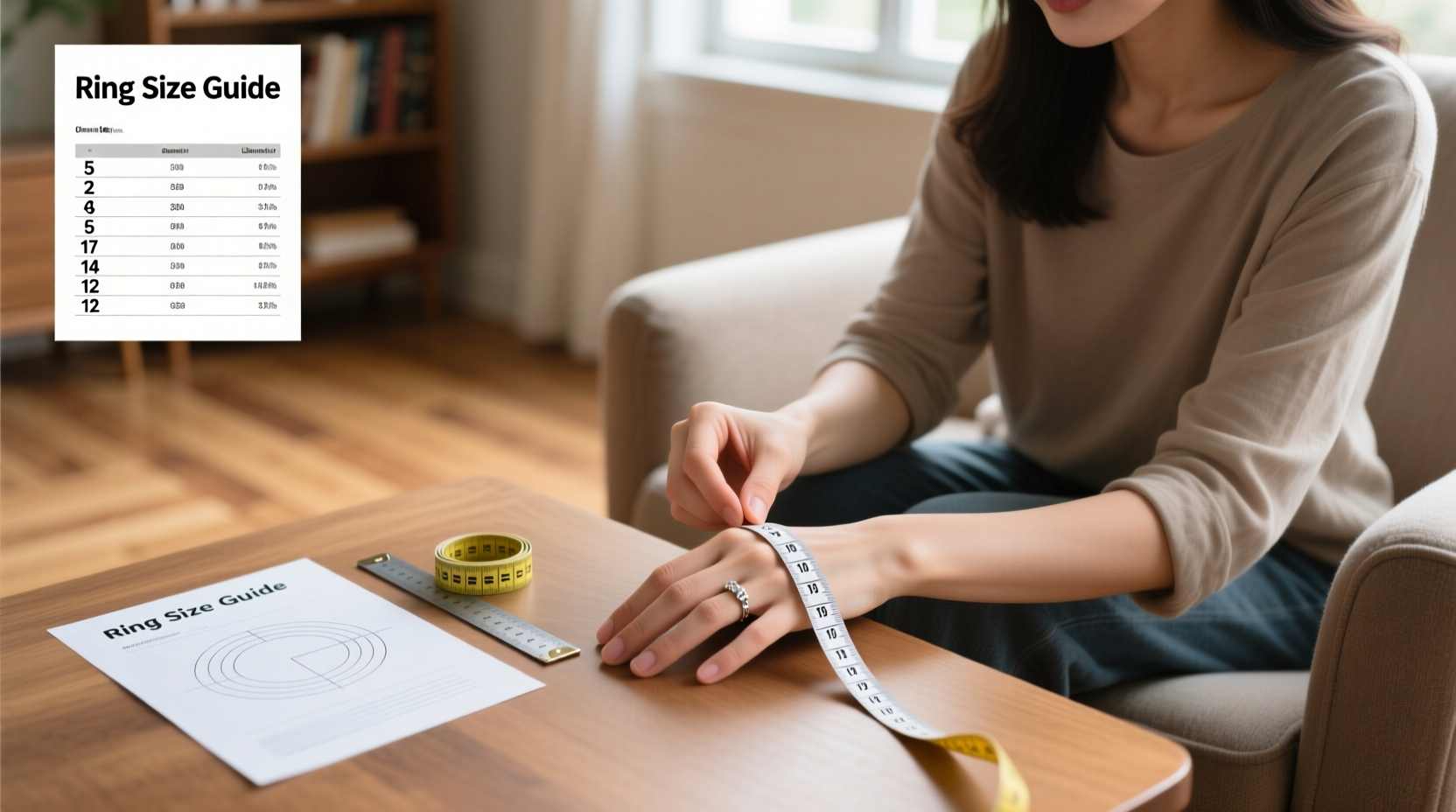
A ring that doesn’t fit properly can cause discomfort, slip off unexpectedly, or fail to convey the thoughtfulness behind the gesture. Too tight, and it restricts circulation; too loose, and it risks being lost forever. The average women’s ring size ranges between size 5 and 7 in the U.S., but individual variation is significant. Factors like temperature, time of day, and even diet can temporarily affect finger size. That’s why relying on guesswork or anecdotal advice is risky. A precise measurement ensures the ring feels natural, stays secure, and reflects attention to detail.
“Even a half-size difference can impact wearability. When buying a ring sight unseen, accuracy in sizing is just as important as the design.” — Daniel Reyes, Master Jeweler & GIA Graduate
Step-by-Step Guide: Measuring Ring Size at Home
The most reliable way to determine ring size at home involves using a ring she already wears. If that’s not possible, direct finger measurement can yield excellent results when done correctly.
- Choose the Right Time of Day: Fingers are smallest in the morning and swell slightly throughout the day due to activity and temperature. Measure in the late afternoon or evening for the most realistic fit.
- Select the Correct Finger: Ring size varies from finger to finger. Always measure the finger where the ring will be worn—typically the ring finger on the left hand for engagement rings.
- Ensure Normal Conditions: Avoid measuring after exercise, in extreme heat or cold, or during periods of bloating (e.g., menstruation), as these can temporarily alter finger size.
Method 1: Using a Well-Fitting Ring She Already Owns
This is the most accurate method if you have access to a ring that fits the intended finger comfortably.
- Choose a ring that sits snugly on the target finger without sliding easily.
- Place the ring on a flat surface.
- Use a ruler or digital caliper to measure the internal diameter in millimeters (mm).
- Cross-reference the diameter with a ring size chart (see table below).
Method 2: String or Paper Strip Method
When you don’t have access to one of her rings, wrap a thin, non-stretchy material around the base of the finger.
- Cut a narrow strip of paper or use a piece of thread.
- Wrap it snugly around the base of the finger, marking where the ends meet.
- Lay the strip flat and measure the length in millimeters with a ruler.
- Divide the circumference by 3.14 (π) to get the diameter, then match it to a ring size chart.
Ring Size Conversion Table
| U.S. Size | Internal Diameter (mm) | Circumference (mm) | UK / Australia | France / Russia |
|---|---|---|---|---|
| 4 | 14.9 | 46.8 | I | 47 |
| 5 | 15.7 | 49.3 | K | 50 |
| 6 | 16.5 | 51.9 | M | 52 |
| 7 | 17.3 | 54.4 | O | 54 |
| 8 | 18.1 | 56.9 | Q | 57 |
Note: International sizing varies. Always confirm the standard used by the jeweler or retailer before ordering.
Common Mistakes to Avoid
- Measuring only once: Repeat the process 2–3 times to confirm consistency.
- Ignoring knuckle size: Some fingers have larger knuckles than the base of the finger. If the knuckle is significantly wider, consider going up half a size and adding a ring guard.
- Using old or ill-fitting rings: Rings that spin freely or require resizing are poor references.
- Forgetting seasonal changes: Fingers shrink in cold weather and expand in heat. If gifting in winter, lean toward a slightly smaller size; in summer, opt for a touch more room.
Real Example: Planning a Surprise Proposal
Sarah wanted to propose to her partner, Maya, but didn’t want to risk spoiling the surprise by asking for her ring size. She borrowed Maya’s favorite silver ring, which she wore daily on her left ring finger. Using a digital caliper, Sarah measured the inner diameter at 16.5 mm—exactly matching a U.S. size 6. To verify, she used the string method twice, recording circumferences of 51.8 mm and 52.0 mm, averaging to 51.9 mm—again confirming size 6. Confident in her measurements, Sarah ordered a custom engagement ring. When she proposed, the fit was perfect—snug enough to stay secure, comfortable enough to wear all day.
Checklist: How to Accurately Determine Ring Size at Home
- ✅ Measure in the late afternoon or early evening
- ✅ Use a ring she wears regularly on the correct finger
- ✅ Measure the inner diameter in millimeters
- ✅ Cross-check with a reliable ring size chart
- ✅ Confirm with a second method (e.g., string or paper strip)
- ✅ Account for knuckle size and seasonal factors
- ✅ Double-check international sizing if ordering abroad
FAQ
Can I estimate ring size based on shoe or glove size?
No. There is no scientifically valid correlation between shoe size, glove size, and ring size. These myths lead to frequent inaccuracies and should be avoided.
What if I don’t have access to any of her rings?
You can still use the string method, but increase accuracy by measuring over three different days and taking the average. Enlist a trusted friend or family member to help discreetly if possible.
Should I size up or down if I’m unsure?
If caught between two sizes, it’s generally safer to size up. A slightly loose ring can be fitted with a ring adjuster or resized more easily than a too-tight ring, which may require band reconstruction.
Expert Tips for Long-Term Fit Success
Even the most accurate initial measurement may need adjustment over time. Weight fluctuations, aging, and hormonal changes can alter finger size. Many jewelers offer free resizing within the first year of purchase—ask about this policy before buying. For heirloom or custom pieces, consider designing the ring with a comfort-fit band, which feels looser due to its rounded interior profile, or opting for adjustable bands during uncertain periods.
“Over 30% of online ring purchases require resizing. Taking 10 extra minutes to measure correctly can save weeks of waiting and potential disappointment.” — Lena Park, Jewelry Concierge at Bridal & Co.
Conclusion
Accurately determining a woman’s ring size at home is entirely achievable with patience, the right tools, and attention to detail. Whether you're preparing for a life-changing moment or selecting a meaningful gift, precision shows care and commitment. By following the methods outlined—using existing rings, measuring circumference, avoiding common errors, and verifying results—you can confidently choose a size that fits perfectly from day one.




 浙公网安备
33010002000092号
浙公网安备
33010002000092号 浙B2-20120091-4
Comments
No comments yet. Why don't you start the discussion?