
Heavy craft enamel bracelets are more than accessories—they’re wearable art. Handcrafted with layers of vibrant glass fused over metal, these pieces combine bold design with artisanal technique. However, their beauty demands thoughtful care. Without proper maintenance, enamel can chip, tarnish, or lose its luster. Understanding how to protect and enhance your bracelet ensures it remains a standout piece for years.
Understanding Craft Enamel: What Makes It Special
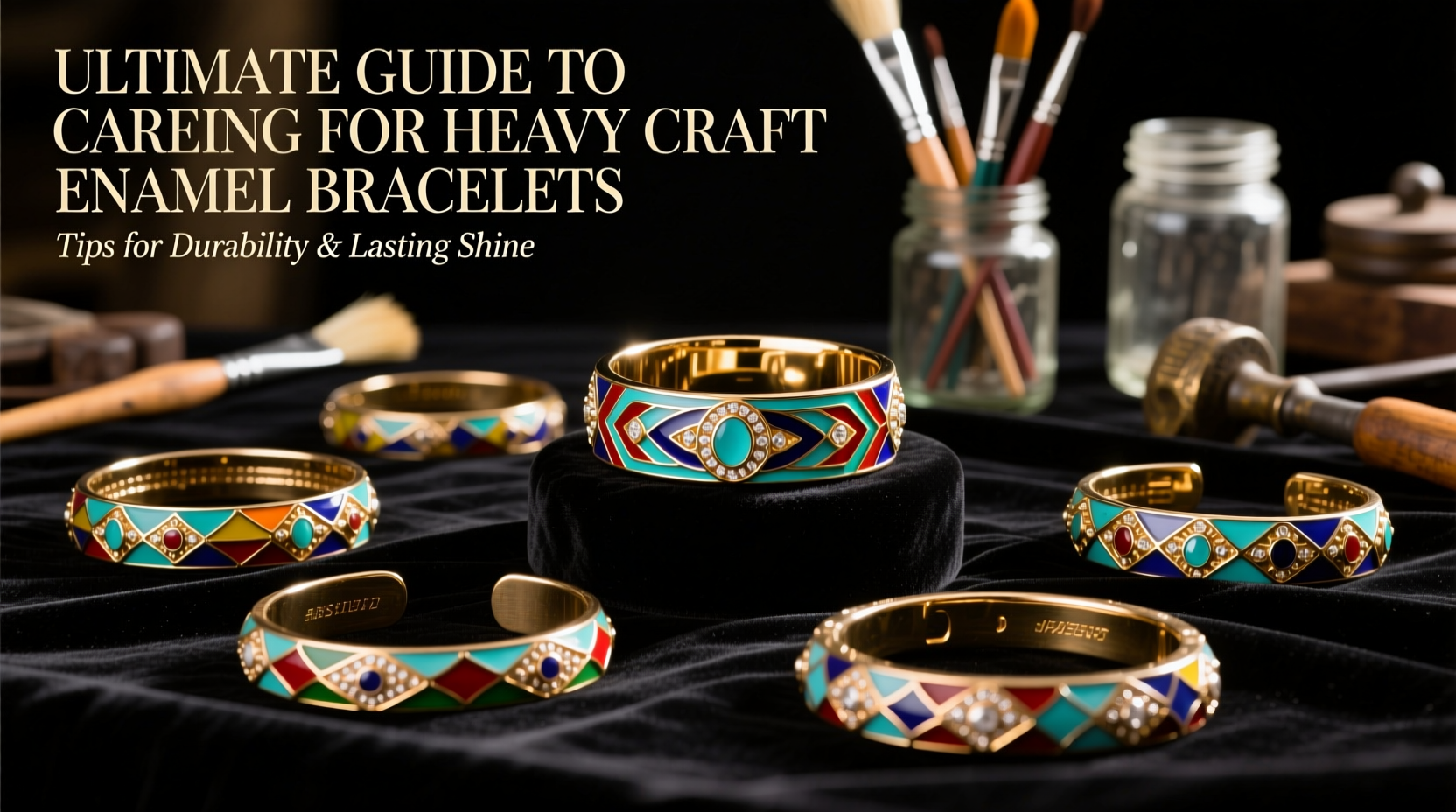
Craft enamel is created by fusing powdered glass to a metal base—typically copper, silver, or brass—at high temperatures. This process produces a smooth, glossy finish that resists fading and offers exceptional color depth. Unlike mass-produced jewelry, handcrafted enamel bracelets often feature unique textures, gradients, and intricate detailing. Their weight signals quality: thicker metal bases and multiple enamel firings add durability but also require mindful handling.
The very qualities that make enamel desirable—its hardness and brilliance—also make it vulnerable to impact and thermal shock. Sudden temperature changes or hard knocks can cause micro-cracks or flaking. Proper care begins with understanding the material’s strengths and sensitivities.
“Enamel is durable but not indestructible. Think of it like fine porcelain on metal—it can last generations with careful stewardship.” — Lila Torres, Master Enamelist & Jewelry Conservator
Essential Daily Care Practices
Daily wear exposes enamel bracelets to sweat, chemicals, and friction. While enamel itself is resistant to corrosion, the underlying metal and the junctions between materials are not. Simple habits significantly extend lifespan and maintain appearance.
- Avoid contact with liquids: Chlorine, saltwater, and soaps degrade metal settings and weaken enamel bonds over time.
- Put it on last: After applying makeup, perfume, and hair products, to minimize chemical buildup.
- Rotate wear: Avoid wearing the same piece daily to reduce cumulative stress and grime accumulation.
- Wipe gently after use: Use a soft, dry microfiber cloth to remove skin oils and dust.
Step-by-Step Cleaning Routine for Long-Term Shine
Regular cleaning prevents dullness and preserves vibrancy. The key is using non-abrasive methods tailored to both enamel and metal components.
- Prepare your tools: Gather a soft-bristled toothbrush (unused), lukewarm water, mild dish soap (ph-neutral), and two lint-free cloths.
- Mix a gentle solution: One drop of soap in a bowl of water. Avoid detergents with bleach or ammonia.
- Soak briefly: Submerge the bracelet for no more than 2 minutes. Prolonged soaking risks water seepage under enamel edges.
- Brush lightly: Use the toothbrush to clean crevices and metal borders. Never scrub the enamel surface directly.
- Rinse carefully: Hold under running water for 5 seconds, then immediately pat dry.
- Dry thoroughly: Use one cloth to absorb moisture, then a second to buff gently. Air-drying can leave mineral spots.
- Inspect seams: Check where enamel meets metal for trapped moisture or debris.
Storage Solutions to Prevent Damage
Improper storage is a leading cause of chipping and scratching. Heavy enamel bracelets should never be tossed into drawers or piled with other jewelry.
| Storage Method | Recommended? | Why |
|---|---|---|
| Individual fabric pouch | Yes | Prevents scratches and isolates from humidity |
| Jewelry box with compartments | Yes | Keeps pieces separated and dust-free |
| Hanging organizer | Sometimes | Only if hooks are padded; avoid dangling chains |
| Plastic wrap or sandwich bag | No | Traps moisture and may react with metal |
| Open shelf display | Limited | Acceptable only in low-humidity, dust-controlled areas |
Store in a cool, dry place away from direct sunlight. UV exposure can fade certain pigments over time, especially reds and purples.
Common Mistakes That Shorten Lifespan
Even well-intentioned owners unknowingly damage enamel. Awareness of these pitfalls helps avoid irreversible harm.
- Using commercial jewelry dips: These acidic solutions corrode metal substrates and cloud enamel surfaces.
- Stacking too tightly: Wearing multiple rigid bangles together increases pressure and impact risk.
- Exposing to extreme temperatures: Leaving a bracelet in a hot car or near heaters can cause enamel to expand and crack.
- Ignoring metal tarnish: Oxidation at the base can lift enamel edges if left untreated.
“Most enamel repairs I see come from neglect during storage or cleaning with household products. A little knowledge goes a long way.” — Rajiv Mehta, Restoration Specialist at Heritage Jewelry Lab
Real-World Example: Recovering a Neglected Heirloom
Sophie inherited a vintage copper-enamel cuff from her grandmother. Stored in a cedar chest for decades, it arrived with darkened metal, cloudy patches, and a faint smell of mildew. She avoided DIY fixes and consulted a conservator. The professional used a cotton swab with distilled water and a pH-balanced cleaner to gently lift residue. The metal was polished with a non-acidic compound, and the enamel was sealed with a museum-grade protective varnish. After restoration, the bracelet regained its original brilliance. Sophie now stores it in an anti-tarnish pouch with silica gel packets—proof that proper care can revive even long-neglected pieces.
Checklist: Monthly Maintenance for Enamel Bracelets
Stay proactive with this concise monthly routine:
- Inspect for chips, cracks, or loose edges
- Check metal for tarnish or pitting
- Clean using the gentle method outlined above
- Polish metal borders with a jewelry-safe cloth (avoid enamel)
- Verify storage conditions—dry, dark, and isolated
- Rotate out of regular wear for 3–4 days to rest the piece
Frequently Asked Questions
Can I repair a chipped enamel bracelet?
Minor chips can sometimes be filled by a professional enamelist using matching glass powder and re-firing. Larger damage may require partial re-enameling. Avoid DIY glue repairs—they trap moisture and worsen deterioration.
How do I know if my enamel is cold-painted or fired?
Fired enamel feels smooth and integrated with the metal, with no raised edges. Cold-painted enamel (painted on after firing) has a slightly textured surface and fades faster. If unsure, consult the maker or a jeweler. Cold-painted pieces need even gentler care.
Is it safe to wear enamel bracelets every day?
Yes, but with caution. Reserve heavy enamel pieces for occasions where they won’t knock against hard surfaces. Save delicate designs for special events rather than daily wear.
Preserving Beauty Through Intentional Care
A heavy craft enamel bracelet is an investment in artistry and individuality. Its weight, color, and craftsmanship tell a story—one worth preserving. By integrating simple yet precise care habits, you protect not just the physical object but the legacy it carries. Whether passed down or newly acquired, each piece thrives when treated with respect and consistency.




 浙公网安备
33010002000092号
浙公网安备
33010002000092号 浙B2-20120091-4
Comments
No comments yet. Why don't you start the discussion?