
Modern life demands versatility. Whether navigating a crowded city, commuting across town, or traveling light, men increasingly rely on chest bags—also known as sling bags or crossbody packs—for efficient, hands-free carrying. But not all chest bags are created equal. The ideal one blends seamless style with long-term comfort and intelligent functionality. Choosing the right model isn’t about following trends—it’s about matching design to your lifestyle, body type, and daily needs.
A well-chosen chest bag enhances mobility, keeps essentials secure, and complements your personal aesthetic without sacrificing ergonomics. From material durability to strap adjustability and internal organization, every detail impacts performance. This guide breaks down what truly matters when selecting a chest bag, helping you make an informed decision that lasts beyond seasonal fads.
Understanding Chest Bag Styles and Their Uses
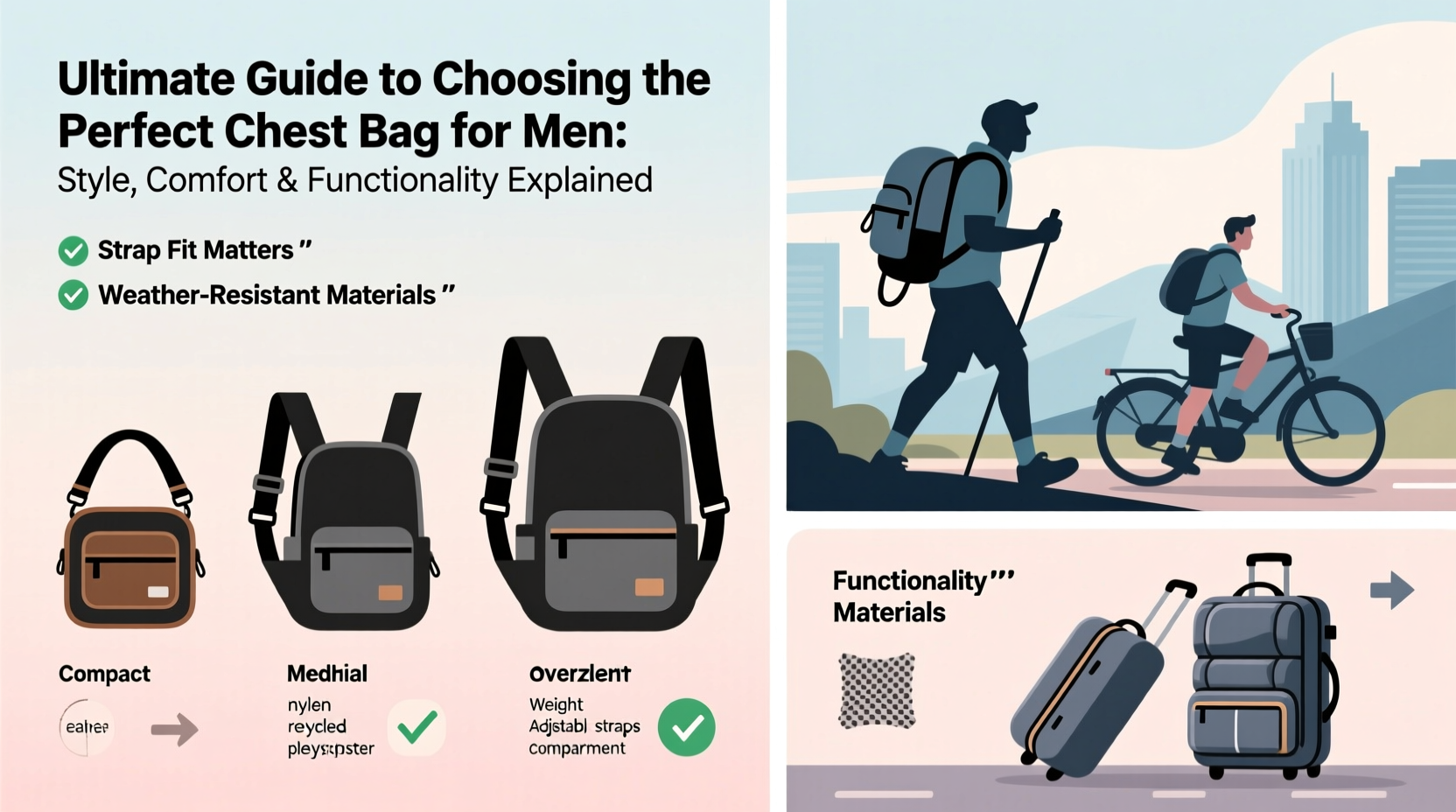
Chest bags come in multiple variations, each suited to different activities and preferences. Recognizing these styles helps narrow choices based on real-world application rather than appearance alone.
- Minimalist Sling: Compact, single-compartment designs ideal for urban commuters who carry only the essentials—phone, wallet, keys, and earbuds.
- Tactical/Utility Bags: Built for function, often featuring MOLLE webbing, water-resistant fabrics, and multiple zippered pockets. Popular among travelers and outdoor enthusiasts.
- Fashion-Focused Crossbody: Designed with aesthetics in mind, using premium leather or designer textiles. Often seen in streetwear or business-casual settings.
- Hybrid Daypacks: Larger capacity models that offer chest-worn convenience with day-hiking features like padded compartments for tablets or hydration sleeves.
The key is alignment: if you're biking through the city daily, a low-profile, aerodynamic sling makes sense. If you're hiking trails or attending back-to-back meetings, a structured hybrid with padding and organization will serve better.
Material Matters: Durability vs. Aesthetic Appeal
The fabric or hide of a chest bag determines its longevity, weather resistance, and visual evolution over time. Common materials include:
| Material | Pros | Cons | Best For |
|---|---|---|---|
| Nylon (Cordura/Ripstop) | Lightweight, abrasion-resistant, water-repellent | Can look utilitarian; prone to static | Travelers, cyclists, outdoor use |
| Leather (Full-grain/Bonded) | Develops patina, ages beautifully, premium look | Heavy when wet, requires maintenance | Dressier occasions, urban professionals |
| Polyester | Affordable, colorfast, easy to clean | Less breathable, may degrade in UV light | Casual wear, short-term use |
| Cotton Canvas | Breathable, soft feel, eco-friendly options | Stains easily, absorbs moisture | Weekend outings, warm climates |
“Material choice should reflect your environment. If you’re in rainy cities like Seattle or London, prioritize treated nylon or waxed canvas.” — Marcus Lin, Urban Gear Designer at Trailform Labs
For year-round reliability, many experts recommend high-denier nylon with a DWR (durable water repellent) finish. It resists scuffs, dries quickly, and maintains shape under load.
Evaluating Comfort and Fit: The Hidden Priority
No matter how stylish or functional a chest bag appears, poor ergonomics lead to shoulder strain, chafing, or imbalance. Proper fit ensures weight distribution across the torso, not just one shoulder.
The strap system is critical. Look for:
- Adjustable length with quick-release sliders
- Padded or ventilated shoulder straps (especially for heavier loads)
- Anti-slip silicone grip lining on the strap underside
- Sternum strap (common in tactical models) to stabilize movement during activity
To test fit, wear the bag loaded with typical contents. The bottom should rest between your sternum and belly button—not riding too high or sagging low. When moving, it should stay close to your body without swinging side to side.
Step-by-Step Guide to Testing Fit
- Load the bag with items you’d normally carry (phone, power bank, notebook).
- Adjust the strap so the center of the bag aligns with your lower chest.
- Walk briskly, then climb stairs or turn sharply to assess stability.
- Check for pressure points on the shoulder or collarbone.
- Unstrap and re-adjust after five minutes to see if slippage occurs.
Functionality: Organization, Security, and Accessibility
A chest bag must do more than hold things—it should organize them intelligently. Internal layout separates competent designs from clutter traps.
Key functional features include:
- Compartmentalization: Separate padded sleeves for devices, zippered mesh pockets for small items, RFID-blocking slots for cards.
- Quick-access panels: Magnetic flaps or rear pockets for frequent-use items like transit cards or passports.
- Zippers: YKK zippers are industry standard for smooth operation and durability. Lockable zippers add theft resistance.
- Water-resistant closures: Roll-top or storm-flap designs protect against rain.
Consider your routine. A photographer might need padded internal dividers for lenses. A business traveler benefits from a hidden anti-theft pocket behind the back panel. Everyday users appreciate a dedicated phone slot that doesn’t require full opening.
Mini Case Study: Alex, Digital Nomad & Frequent Flyer
Alex spends three months a year working remotely from Southeast Asia. He initially chose a sleek leather chest bag for its appearance but found it impractical: no laptop sleeve, poor ventilation caused sweat stains, and the single compartment led to constant digging for his passport. After switching to a 15L ripstop nylon hybrid with a ventilated back panel, lockable zippers, and a tablet sleeve, his daily stress dropped significantly. “I realized style without function was just baggage,” he said. “Now I move through airports faster and actually enjoy using my bag.”
Essential Checklist Before You Buy
Before finalizing your purchase—online or in-store—run through this practical checklist:
- ✅ Measure your torso to ensure proper strap range (most fit 38–48 inch chests).
- ✅ Verify internal dimensions can accommodate your largest item (e.g., 10” tablet).
- ✅ Test zipper pull strength and closure security.
- ✅ Confirm weight: anything over 1.5 lbs empty may become burdensome when filled.
- ✅ Check return policy if buying online—fit is personal and hard to judge from photos.
- ✅ Assess warranty: reputable brands offer 2–5 year coverage against defects.
Frequently Asked Questions
Are chest bags suitable for formal settings?
Yes, if chosen carefully. Opt for slim, minimalist designs in black leather or textured matte nylon. Avoid bulky hardware or military styling. Wear it under a tailored coat or blazer for a discreet, modern look.
Can I carry a laptop in a chest bag?
Some models support laptops up to 13 inches with padded sleeves. However, prolonged use with heavy electronics may cause posture strain. For regular laptop transport, consider a backpack or briefcase instead.
How do I clean and maintain my chest bag?
Spot clean with mild soap and damp cloth. For nylon, air dry away from direct heat. Leather requires conditioning every 3–6 months. Never machine wash unless explicitly stated by the manufacturer.
Final Thoughts: Style Meets Substance
The perfect chest bag isn’t defined by brand names or viral trends. It’s the one that disappears into your routine—secure, balanced, and always ready. When style, comfort, and functionality align, your bag becomes an extension of your movement, not a burden. Prioritize thoughtful construction over flashy details, and choose materials that match your climate and pace of life.
Whether you're streamlining your commute, exploring a new city, or simply decluttering your pockets, the right chest bag empowers simplicity. Take the time to evaluate your needs, try options in person when possible, and invest in quality. Your future self—rushing through a train station or reaching for a boarding pass—will thank you.




 浙公网安备
33010002000092号
浙公网安备
33010002000092号 浙B2-20120091-4
Comments
No comments yet. Why don't you start the discussion?