
Mecha toys have evolved from niche collectibles into mainstream favorites, especially in the form of modular building blocks that combine engineering, creativity, and storytelling. Whether it’s a towering robot warrior or a transformable space fighter, these kits offer more than just play—they encourage problem-solving, spatial reasoning, and sustained focus. But with hundreds of models on the market, selecting the right one can be overwhelming. The ideal mecha building set balances complexity, durability, theme appeal, and age appropriateness. This guide cuts through the noise with practical insights to help you choose a gift that inspires and delights.
Understanding Mecha Toy Building Blocks
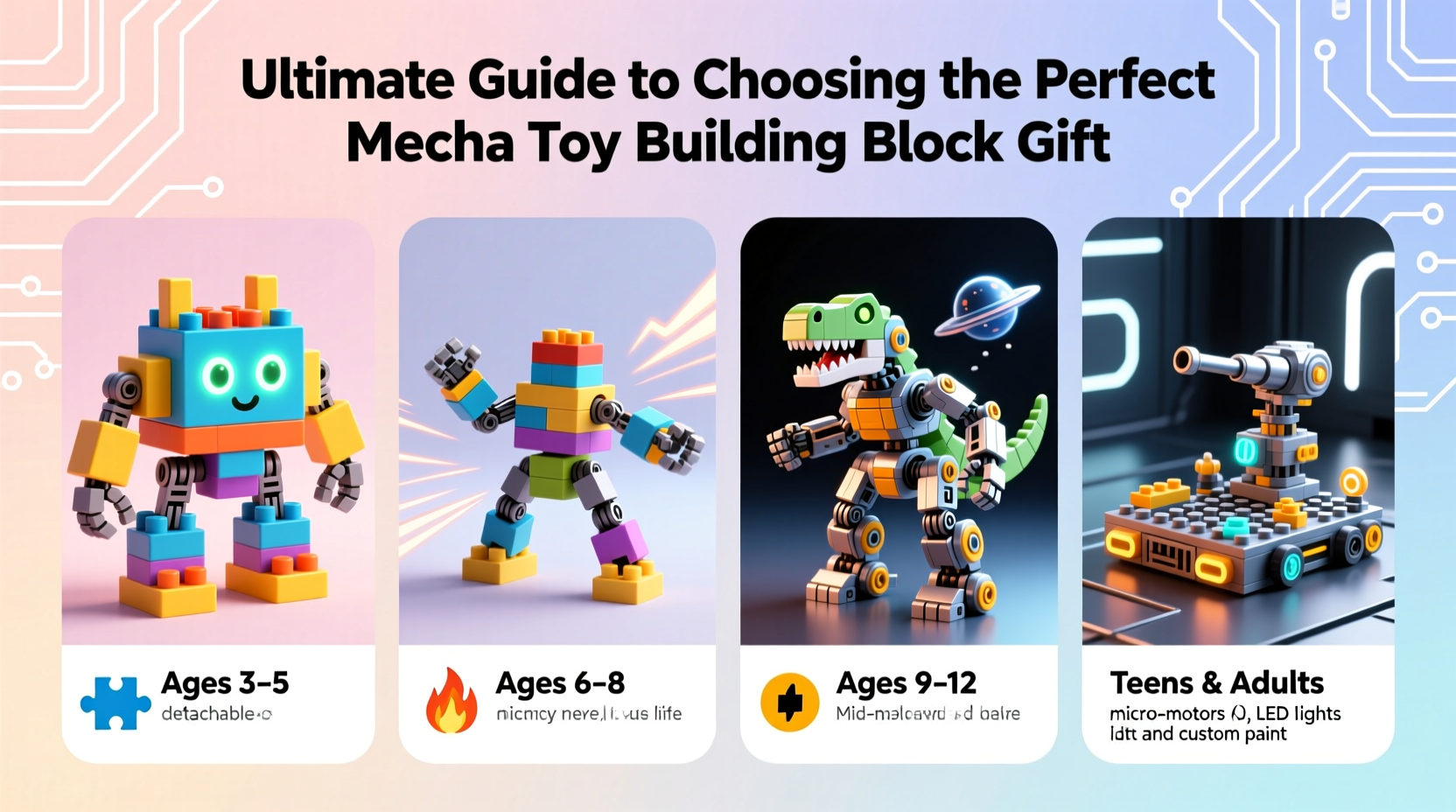
Mecha (short for “mechanical”) refers to large, often humanoid machines featured in anime, sci-fi films, and video games. Toy versions made from interlocking plastic bricks allow users to assemble, customize, and display these mechanical giants. Unlike standard building sets, mecha designs typically emphasize articulation, weapon systems, transformation mechanics, and thematic accuracy to their source material.
The best mecha building blocks merge aesthetic fidelity with structural integrity. They use specialized pieces like ball joints, armor panels, and connector rods to achieve dynamic poses and realistic silhouettes. Some even integrate LED lighting or motorized parts for advanced builders. However, not all kits are created equal. Complexity varies widely—from 50-piece starter models to 3,000+ piece masterpieces requiring hours of assembly.
“Mecha building sets sit at the intersection of art, engineering, and narrative. When chosen well, they become heirloom-quality projects.” — Dr. Lena Park, Educational Toy Design Researcher, MIT Media Lab
Matching Skill Level and Age Appropriately
Selecting by age alone isn’t enough. A 10-year-old with experience in robotics may handle advanced kits, while an adult novice might prefer simpler builds. Instead, assess both developmental stage and prior building experience.
| Age Group | Skill Level | Piece Count Range | Recommended Features |
|---|---|---|---|
| 4–7 years | Beginner | 20–150 | Large connectors, minimal instructions, bright colors, character themes |
| 8–12 years | Intermediate | 150–600 | Articulated limbs, basic weapons, step-by-step visual guides |
| 13–17 years | Advanced | 600–1,500 | Transformation functions, detailed armor, multi-mode builds |
| 18+ years | Expert | 1,500+ | Display stands, light-up features, screen-accurate designs |
Key Factors in Choosing the Right Kit
Beyond age and complexity, several factors determine whether a mecha building set will be a lasting success as a gift.
- Theme and Franchise Appeal: Fans of specific series like Gundam, Pacific Rim, or Transformers respond better to officially licensed models. Recognizable designs increase motivation to complete the build.
- Durability: Look for ABS plastic construction and reinforced joints. Sets meant for play (not just display) should withstand moderate handling without breaking.
- Instruction Quality: Clear, color-coded manuals with exploded diagrams reduce frustration. Digital QR-linked guides are increasingly common and helpful.
- Rebuild Potential: Some kits support multiple configurations—robot mode, vehicle mode, fortress mode—extending replay value.
- Storage and Space: Large builds require shelf space. Consider whether the recipient has room for display before gifting a 2-foot-tall model.
Real Example: The Middle School Engineer
Jamal, a 12-year-old with a passion for robotics club, received a 450-piece mecha building set based on a popular anime series. It featured rotating shoulders, opening cockpit, and a detachable energy sword. His parents chose it after reviewing the box rating and watching unboxing videos to assess difficulty. Though it took him three weekends to complete, Jamal proudly displayed it on his desk and later modified the arms using spare bricks to add extra weaponry. The balance of challenge and creative freedom turned a simple gift into a confidence-building project.
Step-by-Step Guide to Selecting Your Gift
- Identify the recipient’s interests: Are they into military tech, fantasy robots, or space operas? Match the mecha’s origin story to their favorite media.
- Assess building experience: Ask about past kits completed or check their current collection. Did they finish it? Was it too easy?
- Check age and piece count guidelines: Use manufacturer recommendations as a baseline, but adjust based on actual skill.
- Review part diversity: Kits with unique pieces (gears, lights, hinges) offer more satisfaction than those relying on repetitive bricks.
- Consider long-term engagement: Can the model be upgraded? Is there a series to collect next? Does it support integration with other sets?
- Evaluate price-to-value ratio: Premium sets ($80+) should include display bases, nameplates, or interactive elements to justify cost.
Top Picks by Category
To simplify your decision, here are standout models across key categories:
- Best for Young Beginners: BrickForge Mini Mech Series – 80 pieces, snap-together design, no tools required.
- Best for Tweens: TitanBrick DX-17 Armored Vanguard – 500 pieces, transformable jet mode, glow-in-the-dark eyes.
- Best for Teens: NeoGundam HGUC Strike Freedom – 1,200 pieces, high articulation, authentic decals.
- Best for Adults: MasterModel MM-09 Colossus Warlord – 2,800 pieces, integrated LED chest core, comes with diorama base.
- Best Value: BlockWars Mech Arena Pack – 700 pieces, includes two battling units and arena tiles.
Frequently Asked Questions
Are mecha building blocks compatible with major brick brands?
Most third-party mecha sets are designed to be cross-compatible with leading brick systems. Armor panels, weapons, and connectors often fit standard studs, allowing integration into larger creations. Always verify compatibility on the packaging or manufacturer website.
Can these sets be safely disassembled and rebuilt?
Yes, provided proper tools are used. Many brands include mini crowbars or removal tools to prevent damage during disassembly. Frequent rebuilding may wear down connection points over time, so rotate between multiple sets if possible.
Do advanced kits require glue or adhesives?
No reputable mecha building set requires glue. All connections should be mechanical and reversible. If a product suggests permanent bonding, it’s likely low quality or not intended for repeated use.
Final Checklist Before Buying
- ✅ Is the theme aligned with the recipient’s interests?
- Check favorite shows, games, or genres.
- ✅ Does the piece count match their skill level?
- Avoid overwhelming beginners or under-challenging experts.
- ✅ Are instructions clear and accessible?
- Look for multilingual manuals or digital support.
- ✅ Does it offer display or play value?
- Determine if it's meant for shelf pride or active combat scenarios.
- ✅ Is replacement part support available?
- Reputable brands offer lost-part services online.
Conclusion: Build More Than Just a Robot
Choosing the perfect mecha toy building block is about more than matching specs—it’s about matching aspirations. A well-chosen set becomes a catalyst for focus, creativity, and achievement. Whether it’s a child’s first independent build or an adult’s weekend escape from screens, these kits offer tangible progress in a world of fleeting digital interactions. By considering age, skill, interest, and long-term usability, you’re not just giving a toy. You’re giving a project, a challenge, and possibly a new hobby.




 浙公网安备
33010002000092号
浙公网安备
33010002000092号 浙B2-20120091-4
Comments
No comments yet. Why don't you start the discussion?