
Traveling should be about exploration and relaxation—not stress over lost documents or stolen cards. A well-chosen travel wallet acts as your personal command center, keeping essentials secure, organized, and accessible. With so many designs, materials, and security features on the market, selecting the right one can feel overwhelming. This guide breaks down every critical factor, from RFID protection to ergonomic design, helping you make an informed decision that matches your travel style and needs.
Why a Dedicated Travel Wallet Matters
Everyday wallets are built for daily commutes, not international trips. They often lack the organization for passports, boarding passes, multiple currencies, and backup documents. A travel wallet consolidates these items in one compact, secure place—reducing bulk, minimizing theft risk, and streamlining airport navigation.
More importantly, frequent travelers face unique risks: pickpockets in crowded markets, accidental loss during transit, or digital skimming at public terminals. A high-quality travel wallet addresses each of these concerns with thoughtful design and protective technology.
Key Features to Look For
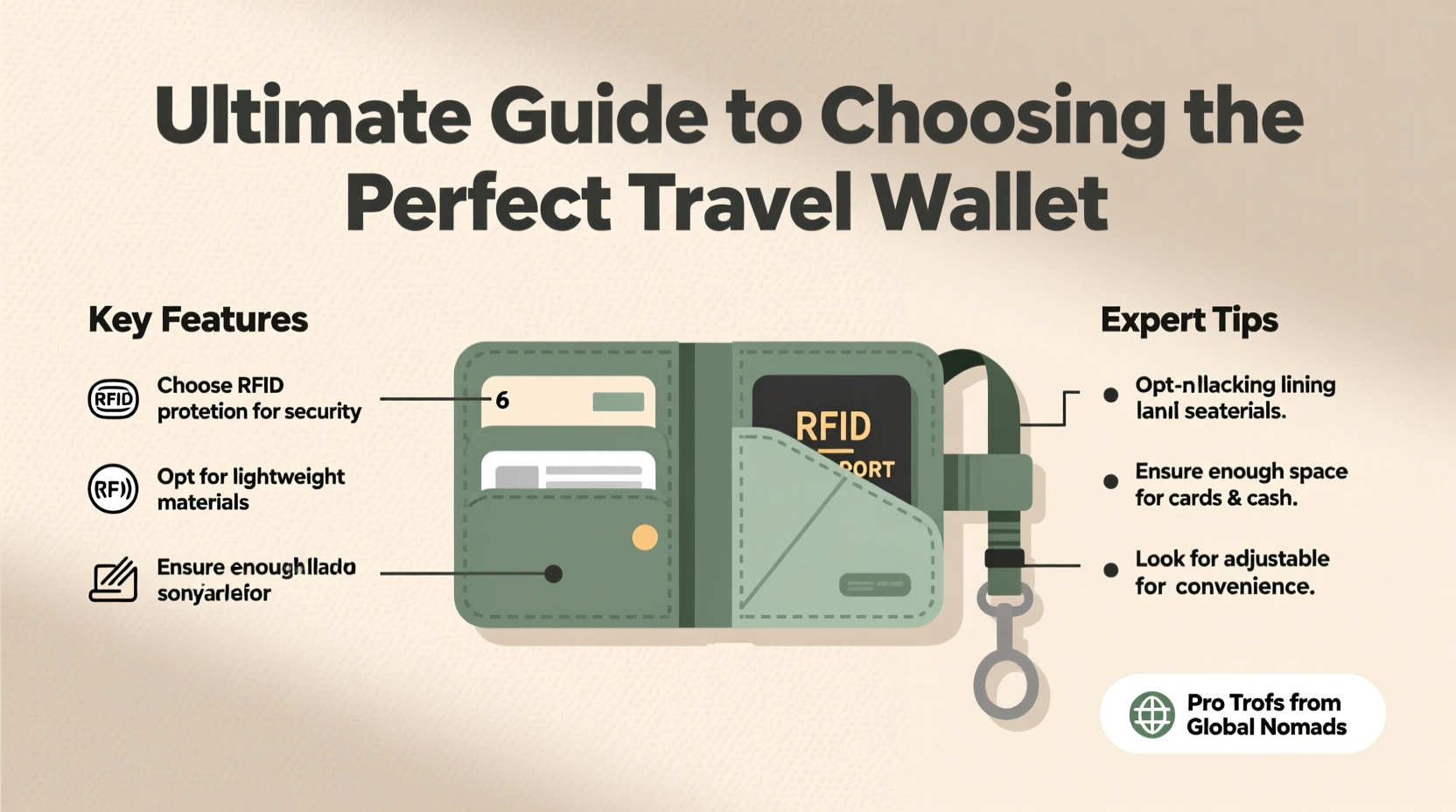
The best travel wallets balance function, durability, and discretion. Here are the essential features worth prioritizing:
- RFID Blocking Technology: Prevents electronic theft of credit card and passport data via radio frequency scanning.
- Passport-Sized Slot or Compartment: Ensures quick access without removing the document.
- Multiple Currency Pockets: Allows separation of local and foreign bills for faster transactions.
- Pen Holder & ID Window: Useful for filling out customs forms or showing identification without opening the entire wallet.
- Water-Resistant Material: Nylon, ballistic polyester, or treated leather protects against spills and light rain.
- Lockable Zippers or Anti-Theft Closures: Deters opportunistic thieves in busy environments.
- Compact and Slim Profile: Fits comfortably in front pockets or under clothing, reducing back strain and pickpocket risk.
“Security starts with awareness, but it’s reinforced by gear. A wallet with RFID shielding and hidden pockets adds a silent layer of defense.” — Daniel Reyes, International Security Consultant
Material Comparison: What Holds Up Best on the Road?
Not all materials offer the same longevity or protection. Your choice impacts durability, weight, and resistance to wear and tear.
| Material | Pros | Cons |
|---|---|---|
| Ballistic Nylon | Extremely durable, water-resistant, lightweight | Can look utilitarian; less premium feel |
| Genuine Leather | Elegant appearance, ages well, molds to shape | Heavier, requires maintenance, vulnerable to moisture |
| Recycled Polyester | Eco-friendly, affordable, quick-drying | Less abrasion-resistant than nylon |
| Waxed Canvas | Natural water resistance, vintage aesthetic | Bulky when wet, limited RFID compatibility |
For most travelers, ballistic nylon offers the best balance of resilience and practicality. It withstands rough handling, resists stains, and dries quickly—ideal for backpackers, urban explorers, and frequent flyers alike.
Step-by-Step Guide to Choosing Your Ideal Travel Wallet
Follow this sequence to ensure your selection aligns with your real-world needs:
- Assess Your Travel Style: Are you a minimalist city hopper or a long-term backpacker? Compact bifold wallets suit short trips, while expandable zip-around styles work better for extended journeys.
- Determine Essential Items: List what you carry—passport, 2–3 cards, local currency, SIM cards, hotel keys. Choose a wallet with dedicated slots for each.
- Prioritize Security Needs: If visiting high-theft areas (e.g., Southeast Asia, Southern Europe), opt for RFID blocking and slash-proof straps.
- Test Ergonomics: Hold sample sizes in hand. Can you open zippers easily? Is the ID window positioned for quick scanning?
- Check Weight and Bulk: Aim for under 6 oz (170g). Excess weight becomes noticeable over time, especially when worn under clothing.
- Read Verified Reviews: Look for feedback on zipper durability, stitching quality, and real-world theft prevention.
Real-World Scenario: How One Traveler Avoided Disaster
Sophie, a solo traveler in Bangkok, was jostled in a crowded night market. Her previous wallet—a standard leather bifold—had been snatched in Lisbon two years prior, costing her passport, cards, and three days of recovery time. This time, she used a slim RFID-blocking wallet with a steel-reinforced strap clipped to her belt loop.
Though the thief managed to unclip the strap, the lockable zipper prevented immediate access. By the time he realized the wallet wouldn’t open, Sophie had turned around and retrieved it. “It wasn’t flashy,” she said, “but it saved my trip.”
This incident underscores how layered security—physical attachment plus tamper-resistant closures—can thwart even determined attempts.
Smart Usage Tips and Maintenance
Even the best wallet fails if misused. Follow these practices to maximize performance and lifespan:
- Regularly clean the exterior with a damp cloth; avoid submerging RFID-lined wallets.
- Rotate cards to prevent creasing and magnetic strip damage.
- Use a separate money clip for large bills to avoid overstuffing.
- Keep a photocopy of your passport and emergency contacts in a sealed inner pocket.
- Update your wallet contents before each trip—remove unnecessary cards or expired tickets.
Checklist: Pre-Trip Wallet Setup
- Verify RFID protection is intact (test with a contactless card reader)
- Organize compartments: passport, primary ID, emergency cash
- Label a hidden pocket for backup credit card
- Attach a discreet luggage tag with your email (not full address)
- Ensure zippers glide smoothly—apply silicone-based lubricant if stiff
Frequently Asked Questions
Do RFID-blocking wallets really work?
Yes—when properly designed. Look for wallets tested to block frequencies between 13.56 MHz and 900 MHz, which cover most contactless cards and e-passports. Avoid cheap knockoffs with thin or incomplete lining.
Should I use a neck wallet or a waist pouch?
Neck wallets offer quick access and visibility but may draw attention. Waist pouches (worn under shirts) are more discreet and comfortable for long walks. Choose based on your comfort and destination risk level.
How often should I replace my travel wallet?
Inspect annually for frayed seams, broken zippers, or weakened RFID shielding. Most quality wallets last 3–5 years with regular use. Replace immediately if structural integrity is compromised.
Final Thoughts: Invest in Peace of Mind
A travel wallet isn't just an accessory—it's a tool for smarter, safer journeys. The right model reduces clutter, enhances security, and gives you confidence whether navigating a metro station or checking into a hostel. Don’t compromise on core features like RFID protection, material strength, and intuitive layout. Whether you're crossing continents or exploring nearby cities, your wallet should work quietly and reliably in the background.




 浙公网安备
33010002000092号
浙公网安备
33010002000092号 浙B2-20120091-4
Comments
No comments yet. Why don't you start the discussion?