
For athletes, hikers, cyclists, and outdoor adventurers, music isn’t just entertainment—it’s motivation. Whether you're pushing through a high-intensity interval session or navigating rugged trails, the right soundtrack can elevate your performance and mood. But not every speaker can survive sweat, rain, drops, or submersion. Choosing the perfect waterproof Bluetooth speaker means balancing durability, sound quality, portability, and connectivity in a design built for movement.
This guide cuts through the marketing noise to deliver actionable insights on selecting a speaker that matches your lifestyle, withstands the elements, and delivers crisp audio when it matters most.
Understanding Waterproof Ratings: IPX7 vs IP68 and What They Mean
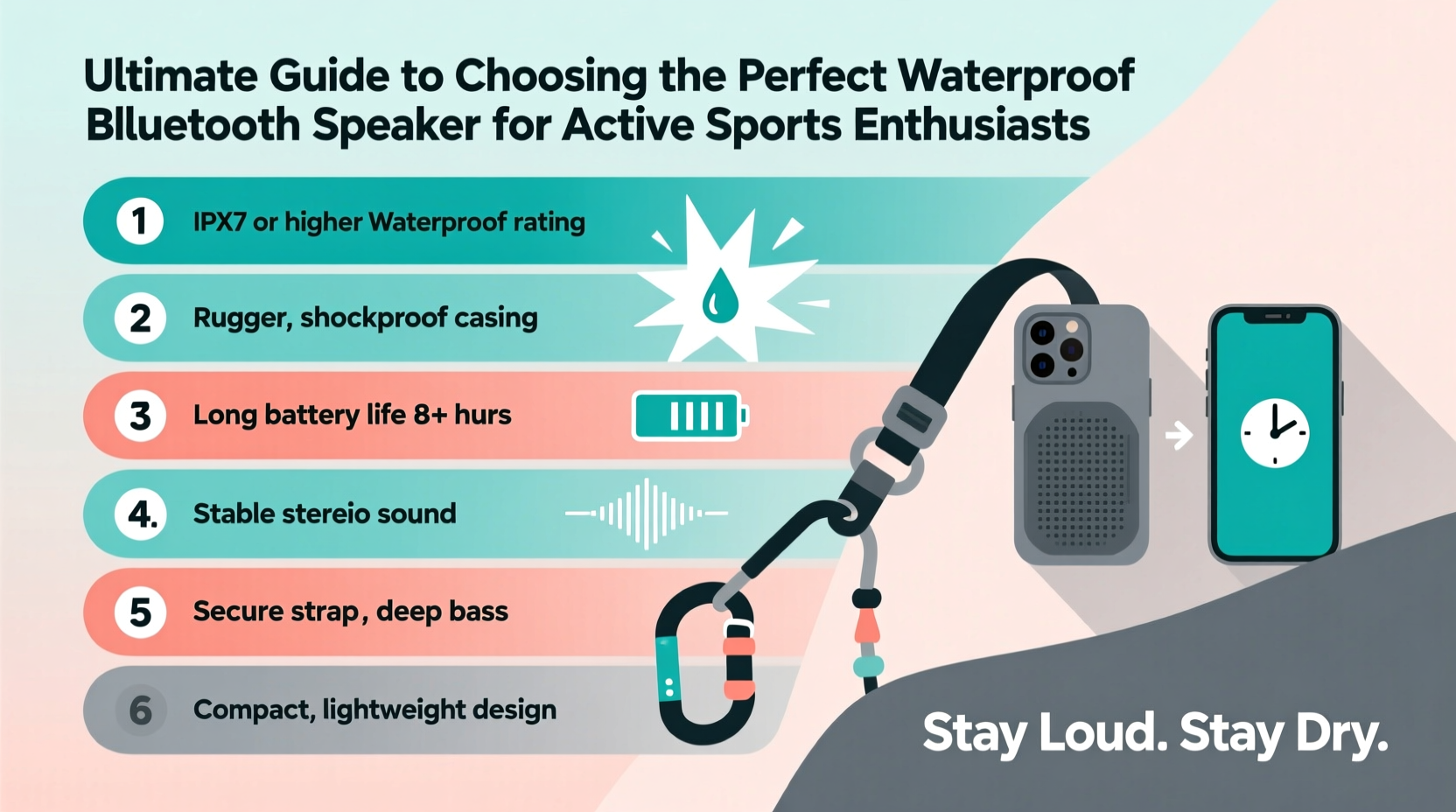
Not all “water-resistant” speakers are created equal. The Ingress Protection (IP) rating system is your best tool for understanding how well a speaker handles water and dust. For sports enthusiasts, two ratings dominate: IPX7 and IP68.
| Rating | Water Protection | Dust Protection | Ideal For |
|---|---|---|---|
| IPX7 | Submersion up to 1 meter for 30 minutes | No dust rating | Swimming, kayaking, rainy runs |
| IP68 | Submersion beyond 1 meter (manufacturer-defined) | Full dust protection | Triathlons, mountain biking, desert hikes |
If your activities involve full immersion—like open-water swimming or paddleboarding—IPX7 is the minimum acceptable standard. For extreme environments with both water and fine particulates (e.g., trail running in dusty canyons), IP68 offers superior overall resilience.
Sonics That Keep Up: Sound Quality Meets Portability
A speaker might survive a waterfall, but if the audio distorts at high volumes, it defeats the purpose. Active users need balanced sound profiles with strong midrange clarity for podcasts and voice cues, plus enough bass to energize workouts—without being so bulky it hampers mobility.
Look for models with:
– Dual drivers and passive radiators for richer sound
– 360-degree audio dispersion for group use
– Adaptive EQ that adjusts output based on environment
Brands like JBL, Ultimate Ears, and Bose have mastered this balance. The JBL Charge 5, for example, delivers room-filling sound from a palm-sized cylinder, while the Ultimate Ears MEGABOOM 3 offers directional control via app settings—ideal for beach workouts where wind interferes with audio clarity.
“Sound quality shouldn’t be sacrificed for ruggedness. Modern engineering allows both—look for sealed enclosures with tuned acoustic chambers.” — David Lin, Audio Engineer at Outdoor Gear Lab
Power and Endurance: Battery Life That Matches Your Stamina
No one wants their playlist to die mid-marathon. Battery life is critical, especially for multi-day treks or training camps without charging access.
Most high-performance waterproof speakers offer 12–20 hours of playback. However, real-world usage varies significantly based on volume levels and environmental conditions. Cold temperatures, common during early morning runs or alpine climbs, reduce battery efficiency by up to 30%.
Consider these factors:
– Fast charging: 15–20 minutes for 2–3 hours of playback
– USB-C or wireless charging compatibility
– Speaker-to-speaker charging (some models power phones in emergencies)
Design Features Built for Motion
The best speakers for athletes don’t just survive—they integrate seamlessly into active routines. Key design elements include:
- Rugged exteriors: Silicone overmolding or rubberized shells absorb shocks from drops onto pavement or rocks.
- Mounting options: Integrated carabiner clips, magnetic backs, or bike handlebar straps keep the speaker secure during motion.
- Floatation: Many modern speakers float, preventing loss in lakes or pools.
- One-touch controls: Large, tactile buttons work with gloves or wet hands.
For climbers and trail runners, weight matters. Aim for under 1.5 pounds (680g). Cyclists benefit from magnetic mounts that attach securely to frames. Swimmers should prioritize compact floating designs like the Sony SRS-XB13, which weighs only 7.5 ounces.
Mini Case Study: Trail Runner’s Experience in Pacific Northwest Rains
Jamila Reed, an ultramarathoner based in Seattle, tested three waterproof speakers during a six-week rainy season training cycle. She needed reliable audio during 4-hour forest trail runs, often in heavy drizzle.
She started with a budget IPX5 model, which failed after two weeks due to moisture ingress. Switching to an IPX7-rated JBL Clip 4 with a carabiner clip, she clipped it to her hydration pack. It survived daily downpours, delivered clear audio even under wind noise, and lasted 10 hours per charge. “It became part of my gear checklist—like my headlamp,” she said.
The takeaway? Real-world endurance trumps lab specs. Choose a speaker proven in conditions similar to yours.
Step-by-Step Guide to Selecting Your Ideal Speaker
Follow this sequence to make a confident, informed decision:
- Define your primary activity: Swimming? Cycling? Gym workouts? This determines required IP rating and mounting needs.
- Set a size and weight limit: Will you carry it in a pocket, strap it to gear, or place it nearby?
- Prioritize key features: Battery life > 15 hours? Floatation? App connectivity?
- Check pairing stability: Look for Bluetooth 5.0 or higher for consistent connection up to 100 feet.
- Read verified owner reviews: Focus on long-term durability feedback, not just initial impressions.
- Test return policy: Buy from retailers with 30-day returns in case real-world use reveals flaws.
Frequently Asked Questions
Can I use a waterproof speaker in saltwater?
Yes, but with caution. While IPX7/IP68 ratings cover submersion, salt can corrode ports and grilles over time. Rinse thoroughly with fresh water immediately after use and dry completely before charging.
Do waterproof speakers lose sound quality over time?
Not inherently. However, repeated exposure to extreme conditions without proper maintenance—like failing to dry charging ports—can degrade internal components. Regular cleaning preserves performance.
Is stereo pairing necessary for sports use?
Only if you're hosting group events or need immersive sound. For personal use, a single high-quality speaker is more practical and portable.
Final Checklist Before You Buy
- ✅ Minimum IPX7 rating (IP68 preferred for extreme conditions)
- ✅ At least 12 hours of real-world battery life
- ✅ Durable build with shock and drop resistance
- ✅ Secure attachment option (carabiner, strap, magnet)
- ✅ Bluetooth 5.0 or later with stable range
- ✅ Floatation capability (if used near water)
- ✅ Positive long-term user reviews for reliability
Conclusion
Choosing the perfect waterproof Bluetooth speaker isn’t about chasing specs—it’s about finding harmony between performance, resilience, and practicality. The ideal speaker becomes an invisible extension of your routine: tough enough for the elements, clear enough to inspire, and compact enough to never hold you back.
Whether you’re sprinting through city streets or summiting remote peaks, your audio companion should keep pace. Use this guide to cut through the clutter and invest in a speaker that doesn’t just survive your lifestyle—but enhances it.




 浙公网安备
33010002000092号
浙公网安备
33010002000092号 浙B2-20120091-4
Comments
No comments yet. Why don't you start the discussion?