
Arriving at college often means stepping into a new chapter—academically, socially, and spatially. Your dorm room may be small, but it’s your first true personal sanctuary away from home. One of the most impactful ways to transform a sterile, institutional space into a warm, inviting retreat is through thoughtful coordination between your bedding and overall room decor. Bedding isn’t just functional; it’s the centerpiece of your room’s aesthetic. When done right, it sets the tone, pulls colors together, and creates visual harmony. This guide walks you through how to align your sheets, comforter, pillows, and throws with wall art, lighting, furniture, and accessories to achieve a polished, intentional look.
Understand Your Room’s Design Foundation
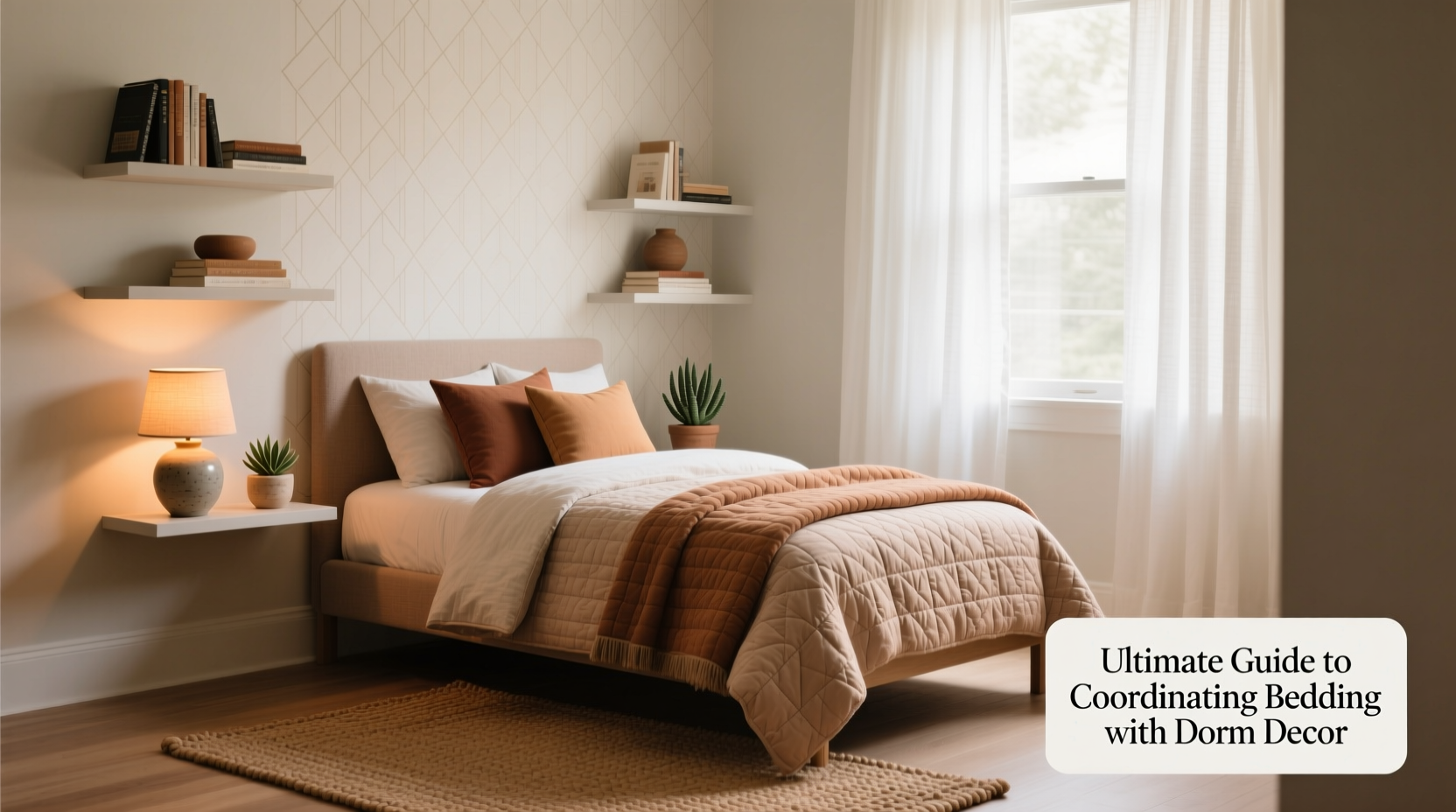
Before selecting a single pillowcase, assess the existing elements in your dorm room. Most dorms come with neutral walls (white or beige), basic furniture (wood-tone or gray laminate), and limited natural light. These are blank canvases—but they also present constraints. Begin by identifying your design direction: Are you drawn to minimalist Scandinavian styles? Bohemian textures? Modern monochrome? Or vibrant maximalism?
Your bedding will either complement or contrast these choices, so clarity on your preferred style is essential. For example, if your desk and shelves are sleek and modern, pairing them with crisp white linens and navy accents reinforces a clean, focused atmosphere. On the other hand, layered patterned quilts and woven throws can soften a rigid layout and add personality.
Choose a Cohesive Color Palette
Color is the fastest way to create cohesion. A well-chosen palette ties together disparate elements—from your rug to your bulletin board pins. Start with one dominant color derived from something permanent in your room: maybe your area rug, a favorite poster, or even your school colors.
Use the 60-30-10 rule as a guide:
- 60% dominant color (e.g., bedding, walls)
- 30% secondary color (e.g., curtains, chair)
- 10% accent color (e.g., throw pillows, artwork)
If your comforter is navy blue (the 60%), pair it with light gray sheets (30%) and mustard yellow decorative pillows (10%). This structure prevents visual clutter while allowing for expressive accents.
| Style Theme | Dominant Color | Secondary Color | Accent Color |
|---|---|---|---|
| Coastal Calm | Aqua Blue | Sand Beige | Coral Pink |
| Urban Minimalist | Charcoal Gray | White | Rust Orange |
| Boho Chic | Earthy Terracotta | Olive Green | Mustard Yellow |
| Modern Monochrome | Black | Gray | White (texture-based) |
Layer Textures and Patterns Thoughtfully
In a small space, texture adds depth without overwhelming. A flat color scheme can feel dull, but introducing tactile variety—like a knit throw, quilted duvet, or velvet pillow—brings richness. The key is balance. If your comforter has a subtle geometric print, keep sheets solid. If your sheets are striped, opt for a solid or tonal quilt.
When mixing patterns, follow this hierarchy:
- Start with a large-scale pattern (e.g., floral duvet).
- Add a medium-scale pattern (e.g., plaid blanket).
- Finish with a small-scale pattern (e.g., polka-dot pillowcase).
- Ensure all patterns share at least one common color.
“Texture transforms function into feeling. A soft, layered bed doesn’t just look good—it makes students feel rested before they even sleep.” — Jordan Lee, Interior Designer & Dorm Styling Consultant
Align Bedding with Functional Decor Elements
Your bed should visually connect with surrounding items. A few strategic moves can unify the space:
- Pillows and Rugs: Match pillow piping or rug fringe to your sheet color.
- Lighting: Choose lampshades in a hue that echoes your comforter. A blush pink shade complements rose-gold hardware and dusty rose bedding.
- Furniture: If your storage bins are sage green, echo that in your throw blanket or wall tapestry.
- Wall Art: Select prints that include one of your bedding colors. Even abstract art can anchor a palette.
For instance, if you have a gallery wall with teal accents, use teal throw pillows on a white comforter. This small link creates continuity across vertical and horizontal planes.
Mini Case Study: Transforming a Basic Dorm Setup
Maya, a freshman at a midwestern university, moved into a standard double dorm with cinderblock walls and twin XL beds. Her initial setup featured mismatched thrift-store sheets and a plain gray comforter. After attending a campus interior styling workshop, she reimagined her space around a “forest escape” theme.
She chose an olive green comforter (60%), paired it with cream-colored sheets (30%), and added rust-colored waffle-weave pillows (10%). She then placed a jute rug beside the bed, hung framed botanical prints with matching earth tones, and used a wooden nightstand with a terracotta lamp. The result was a serene, grounded environment that felt uniquely hers—without exceeding her $150 budget.
Step-by-Step Guide to Coordinating Your Bedding
Follow this five-step process to ensure every element works in harmony:
- Assess the Space: Note fixed elements (wall color, flooring, furniture) and identify your style preference.
- Select a Base Color: Choose a dominant color inspired by something you already own or love.
- Build the Layering System: Pick a comforter or duvet first, then coordinate sheets, blankets, and decorative pillows.
- Integrate Supporting Decor: Align rugs, lamps, storage, and wall art with your chosen palette.
- Edit Ruthlessly: Remove any item that clashes or distracts. Less is more in tight quarters.
Common Mistakes to Avoid
- Overcrowding the bed: Too many pillows or competing patterns make the space look chaotic.
- Ignoring scale: Oversized quilts on narrow dorm beds can overwhelm the frame.
- Mismatched thread counts: Mixing shiny satin with matte cotton creates visual dissonance.
- Forgetting functionality: Beautiful bedding that wrinkles easily or shrinks in the wash isn’t practical.
“Students often prioritize aesthetics over durability. The best dorm designs marry both—style that survives finals week.” — Dr. Lila Nguyen, Professor of Sustainable Design at Boston College
Checklist: Create a Cohesive Dorm Bedding Scheme
- ☐ Define your preferred style (minimalist, boho, modern, etc.)
- ☐ Identify the room’s permanent features (walls, furniture, lighting)
- ☐ Choose a dominant color based on a key item (rug, art, chair)
- ☐ Apply the 60-30-10 color rule to bedding layers
- ☐ Mix textures, not too many patterns
- ☐ Ensure at least one color repeats in bedding, rug, and wall decor
- ☐ Test fabric quality and care instructions
- ☐ Step back and evaluate balance—remove anything that feels off
FAQ
Can I mix different bedding brands and still look cohesive?
Absolutely. Brand consistency matters less than color, texture, and scale alignment. As long as the hues match and materials complement each other, mixing brands can actually add curated charm.
How do I make a twin XL bed look proportional in a small dorm?
Use a low-profile comforter and avoid excessive draping. Center the bed against a wall and flank it with minimal nightstands or stacked books. Keep bedding tones aligned with walls to reduce visual weight.
Is it worth investing in higher-end bedding for a temporary dorm stay?
Yes—if you define “higher-end” as durable, easy-care fabrics. A well-made cotton blend or microfiber set lasts beyond dorm life and supports better sleep, which impacts academic performance.
Final Thoughts: Make Your Dorm Feel Like Home
Your dorm room doesn’t need square footage to shine. With intentional coordination between bedding and decor, you can create a space that reflects who you are and supports how you live. The bed is your anchor—let it radiate calm, confidence, and creativity. By grounding your design in a clear color story, layering thoughtfully, and connecting every element, you turn a functional necessity into a statement of self.




 浙公网安备
33010002000092号
浙公网安备
33010002000092号 浙B2-20120091-4
Comments
No comments yet. Why don't you start the discussion?