
Whether you're applying for a new job, preparing for a background check, or building a comprehensive resume, knowing your full employment history is essential. Yet many people struggle to recall every position they've held—especially over decades of work. Gaps in memory, short-term roles, or informal employment can create confusion and raise red flags for employers. The good news? With the right strategies, you can reconstruct and verify your entire work history accurately and efficiently.
Why Accurate Work History Matters
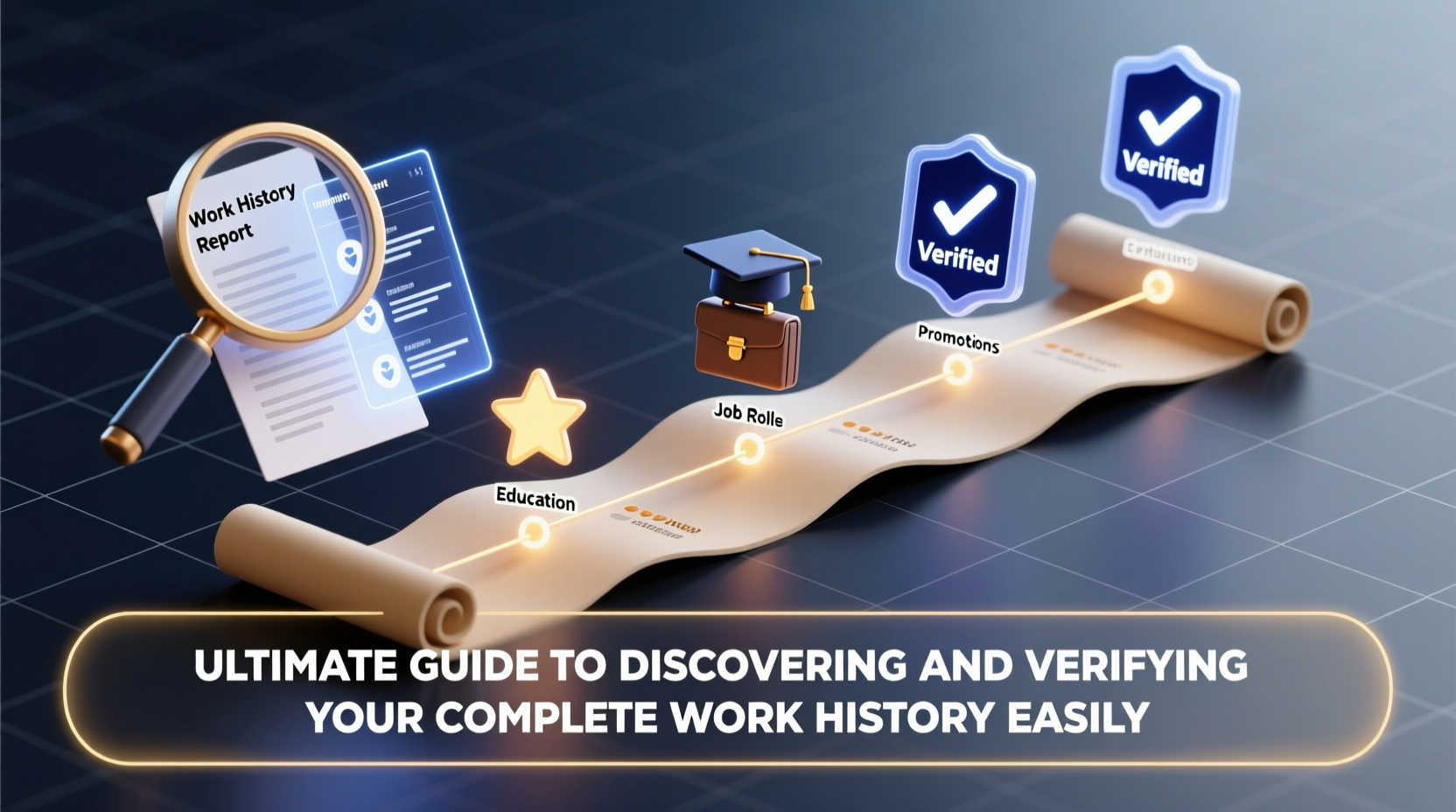
Your employment history isn’t just a list of past jobs—it’s a professional narrative that tells employers about your experience, reliability, and career progression. Inaccuracies or omissions can damage credibility, delay hiring decisions, or even disqualify you from opportunities. Background screening companies routinely verify dates, titles, and responsibilities, making it critical to ensure your records are precise.
Additionally, understanding your full work history helps with personal financial planning, retirement benefits verification, and qualifying for loans or visas. It also empowers you during salary negotiations by providing concrete evidence of career growth.
“Employers don’t expect perfection, but they do expect honesty and consistency. A well-documented work history builds trust.” — Sarah Lin, HR Director at TalentEdge Solutions
Step-by-Step: Reconstructing Your Employment Timeline
Start by gathering all available documentation. Even incomplete records can serve as anchors to rebuild your timeline. Follow this structured approach:
- Collect Personal Records: Review old resumes, business cards, tax returns (W-2s, 1099s), pay stubs, and email signatures. These often contain overlooked details like exact job titles and start/end dates.
- Check Financial Statements: Bank statements or direct deposit records may show employer names and payment dates, helping confirm tenure.
- Review LinkedIn and Professional Profiles: Your LinkedIn profile likely lists past positions. While not always accurate, it serves as a helpful reference point.
- Contact Former Colleagues: Reach out to former managers or coworkers who might remember overlapping employment periods.
- Use Government Resources: Request wage and employment data from the Social Security Administration via their online portal.
Official Methods to Verify Past Employment
Once you’ve reconstructed your history, validate it using authoritative sources. Verification ensures accuracy and strengthens your credibility when submitting information formally.
- Request W-2 Forms: Contact former employers or request copies from the IRS using Form 4506-C. You can obtain up to seven years of W-2s this way.
- Use the SSA Earnings Record: Log into your mySocialSecurity account to view your lifetime earnings report. This document lists reported wages by year and employer, offering strong corroboration.
- Submit a Freedom of Information Act (FOIA) Request: If you worked in federal, state, or local government, file a FOIA request to retrieve personnel files.
- Hire a Background Check Service: Companies like HireRight or GoodHire offer self-check services that simulate what employers see during verification.
| Method | What It Provides | Time Required | Cost |
|---|---|---|---|
| SSA Earnings Record | Yearly wages and employer names | Immediate (online) | Free |
| IRS Form 4506-C | Copy of W-2 forms | 3–6 weeks | $0–$50 depending on number |
| Former Employer HR | Job title, dates, salary confirmation | 1–2 weeks | Free (if cooperative) |
| Third-Party Verification Service | Full employment validation report | 2–5 business days | $30–$75 |
Common Challenges and How to Overcome Them
Not every job leaves a paper trail. Freelance gigs, cash-based work, or roles at defunct companies complicate verification. Here’s how to handle common obstacles:
- Company No Longer Exists: Search the Secretary of State’s business registry for dissolution records. Use archived versions of the company website via the Wayback Machine (archive.org) to find historical references.
- Cash Jobs or Informal Work: Document these with client testimonials, invoices, contracts, or portfolio samples. While not officially verifiable, they demonstrate real experience.
- Memory Gaps: Cross-reference major life events—moves, births, education—with potential employment windows to narrow down timelines.
Real Example: Rebuilding a 20-Year Career Path
Mark, a 52-year-old project manager, struggled to recall two short consulting roles from the early 2000s when updating his resume for a senior leadership role. He had no contact information for those employers and lacked formal records. Using his SSA earnings statement, he identified both companies through matching wage reports. One had merged into another firm; Mark contacted the current HR department, which confirmed his employment after searching legacy databases. For the second, he found an old invoice in a personal finance folder, which he used alongside a LinkedIn recommendation from a former client to substantiate the role. His thoroughness impressed the hiring team and contributed to his successful placement.
Essential Checklist: Verify Your Work History in 7 Steps
Follow this actionable checklist to ensure no detail is missed:
- Compile all existing resumes and job applications.
- Gather W-2s, pay stubs, or tax returns from the last 10+ years.
- Log into your Social Security account and download your earnings record.
- Create a master timeline listing each job with estimated dates and details.
- Contact former employers or HR departments for official verification.
- Use third-party tools or background checks to validate consistency.
- Document unverifiable roles with supporting materials (emails, contracts, references).
Frequently Asked Questions
Can I be penalized for missing a short-term job on my resume?
Not necessarily. Minor omissions of brief or irrelevant roles are common and usually acceptable, especially if they don’t create misleading gaps. However, if asked directly during a background check, failing to disclose a position can be seen as dishonesty. Transparency is always the safer approach.
How far back should my work history go?
Most employers expect 10–15 years of detailed history. Older roles can be summarized briefly unless directly relevant. Some industries (e.g., government, finance) may require full career disclosure regardless of age.
What if my former employer refuses to verify my employment?
Some companies have policies limiting verification to basic facts like dates and job title. If denied, use alternative proof such as W-2s, contracts, or colleague references. You can also explain the situation in a cover letter or interview.
Final Thoughts: Take Control of Your Professional Narrative
Your work history is more than a formality—it’s the foundation of your professional identity. Taking the time to accurately reconstruct and verify your employment journey pays dividends in credibility, confidence, and career advancement. Whether you’re preparing for a new opportunity or simply organizing your records, the process empowers you to present yourself authentically and thoroughly.




 浙公网安备
33010002000092号
浙公网安备
33010002000092号 浙B2-20120091-4
Comments
No comments yet. Why don't you start the discussion?