
A well-organized work handbag isn’t just about looking put-together—it’s a cornerstone of professional efficiency. When your bag holds everything from laptops to lunch containers, finding what you need quickly becomes essential. Clutter leads to stress, wasted time, and even missed opportunities. The solution lies not in carrying less, but in organizing smarter. This guide reveals how to transform your oversized work bag into a streamlined command center that supports focus, readiness, and confidence—no matter where the day takes you.
1. Declutter with Purpose: Start with What Stays and What Goes
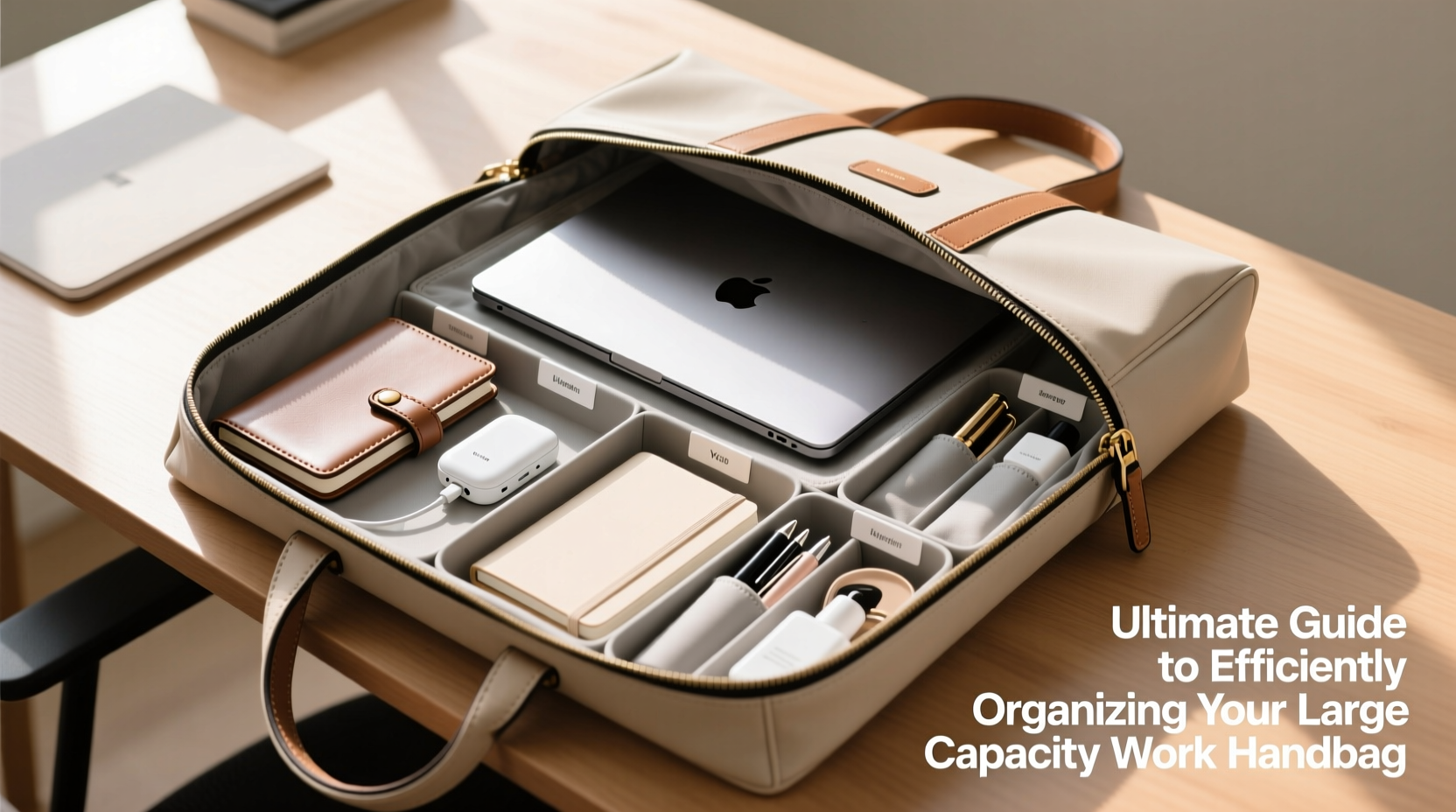 Before organizing, eliminate excess. A full inventory prevents redundancy and identifies space hogs. Begin by emptying your bag completely onto a clean surface. Categorize every item: electronics, documents, personal care, tools, snacks, etc. Ask three questions for each object:
- Have I used this in the past two weeks?
- Does it serve a clear professional or personal necessity?
- If lost, would I urgently miss it?
2. Use Strategic Compartments and Organizers
Large bags fail when they become black holes. Structure is key. Invest in internal organization tools tailored to your workflow:- Pouches: Use zippered fabric cases for small electronics, cords, or makeup.
- Pen holders: Prevent ink leaks and lost styluses with rigid inner sleeves.
- Document folders: Choose slim, water-resistant sleeves for contracts, notebooks, or tablets.
- Insulated inserts: For those who carry meals or drinks, these prevent spills and odors.
“Efficiency begins with accessibility. If you’re digging for your keys every morning, your system isn’t working.” — Lena Torres, Productivity Consultant at WorkWell Systems
Recommended Organizer Setup by Function
| Item Type | Best Organizer | Placement |
|---|---|---|
| Phone, Keys, Wallet | Hard-sided quick-access pouch | Top layer or front slip pocket |
| Laptop/Tablet | Padded sleeve (minimum 15”) | Bottom-center for weight balance |
| Cords & Chargers | Zippered tech cube | Middle section, near side access |
| Documents & Notebooks | Foldable file folder | Behind laptop, upright |
| Personal Items | Soft-lined vanity case | Side or upper compartment |
3. Optimize Layout Using the Zone Method
Adopt the “zone” approach—assign specific areas of your bag to categories of use. This reduces search time and reinforces habit-based retrieval.Zones Explained:
- Access Zone (Top/Outer): Daily essentials—keys, phone, transit card, lip balm. Must be reachable without opening the main compartment.
- Work Core (Center): Laptop, notebook, planner, pens. Protected and stable to prevent damage.
- Tech Hub (Side or Inner Pocket): Power bank, cables, headphones, USB drives. Grouped to avoid tangling.
- Personal Care Nook (Sealed Pouch): Sanitizer, tissues, menstrual products, medications. Leak-proof and discreet.
- Flex Space (Bottom or Expandable): Lunch container, gym clothes, umbrella. Used selectively based on daily needs.
4. Real-World Example: How Sarah Regained 12 Minutes a Day
Sarah, a project manager at a tech startup, carried a 17-liter tote packed with dual monitors, notebooks, snacks, and client gifts. Each morning, she spent nearly 15 minutes locating her security badge, presentation clicker, and charger. After missing two virtual stand-ups due to misplaced earbuds, she redesigned her system. She introduced four labeled pouches: “Tech,” “Client Ready,” “Daily Essentials,” and “Backup.” She placed her badge on a retractable lanyard clipped inside the Access Zone. Within one week, her average morning prep dropped to under three minutes. Over a year, that reclaimed more than 50 hours—equivalent to over six full workdays saved. Her transformation wasn’t about buying new gear; it was about designing intentionality into every pocket.5. Build Your Weekly Bag Reset Routine
Consistency sustains organization. Create a repeatable process that keeps your bag functional long-term.Step-by-Step Weekly Reset Timeline
- Sunday Evening – Empty: Remove all contents. Wipe interior with a microfiber cloth dampened with diluted vinegar (1:3 ratio).
- Sort & Evaluate: Check expiration dates, battery levels, and document relevance.
- Recharge: Plug in power banks, earbuds, and smart devices overnight.
- Restock: Replace used tissues, add fresh pens, update weekly planner.
- Pre-stage: Based on Monday’s agenda, load only necessary items—lunch, presentation materials, travel adapter.
- Final Check: Verify wallet, ID, keys, and mask are in the Access Zone.
Essential Bag Reset Checklist
- Empty all compartments
- Wipe down interior surfaces
- Check for damaged or worn organizers
- Recharge all electronic devices
- Discard expired or used-up items
- Refill tissue packets and sanitizer
- Update planner with current week
- Confirm location of ID, keys, wallet
- Align contents with next day’s schedule
- Close and store flat if not in immediate use
6. Avoid Common Organization Pitfalls
Even well-designed systems fail when undermined by habits. Recognize these frequent mistakes:- The “Just One More Thing” Trap: Adding unrelated items “for now” erodes zoning discipline.
- Ignoring Weight Distribution: Heavy laptops at the top cause imbalance and strain shoulders.
- Using Damaged Organizers: Torn pouches lead to scattered contents—replace them promptly.
- Overpacking for Hypothetical Needs: Carrying an entire pharmacy “just in case” adds unnecessary bulk.
7. Frequently Asked Questions
How do I keep my bag organized when traveling between office, home, and meetings?
Use a modular system. Keep core items (laptop, documents) in a detachable inner briefcase. At home, remove only the modules you need. This minimizes re-packing and maintains structure across locations.
What if my bag doesn’t have enough pockets?
Add versatility with aftermarket solutions. Magnetic divider panels, hanging organizers, or even repurposed pencil cases can create new zones. Focus on vertical separation to maximize depth without sacrificing access.
How often should I deep-clean my handbag?
Every 4–6 weeks for daily-use bags. Spot-clean spills immediately. For leather or synthetic exteriors, use manufacturer-approved wipes. Fabric linings can often be removed and machine-washed on gentle cycle.




 浙公网安备
33010002000092号
浙公网安备
33010002000092号 浙B2-20120091-4
Comments
No comments yet. Why don't you start the discussion?