
A well-packed chest bag transforms from a simple carrying solution into an extension of your personal workflow. Whether you're commuting through city streets, traveling light across continents, or navigating a full day of meetings and errands, how you organize your gear determines comfort, accessibility, and efficiency. Large-capacity chest bags—often ranging from 10 to 25 liters—offer ample room, but without intentional packing, they can become chaotic black holes where essentials vanish beneath layers of clutter. This guide reveals how to leverage every compartment, distribute weight intelligently, and maintain instant access to what matters most.
Understand Your Bag’s Architecture
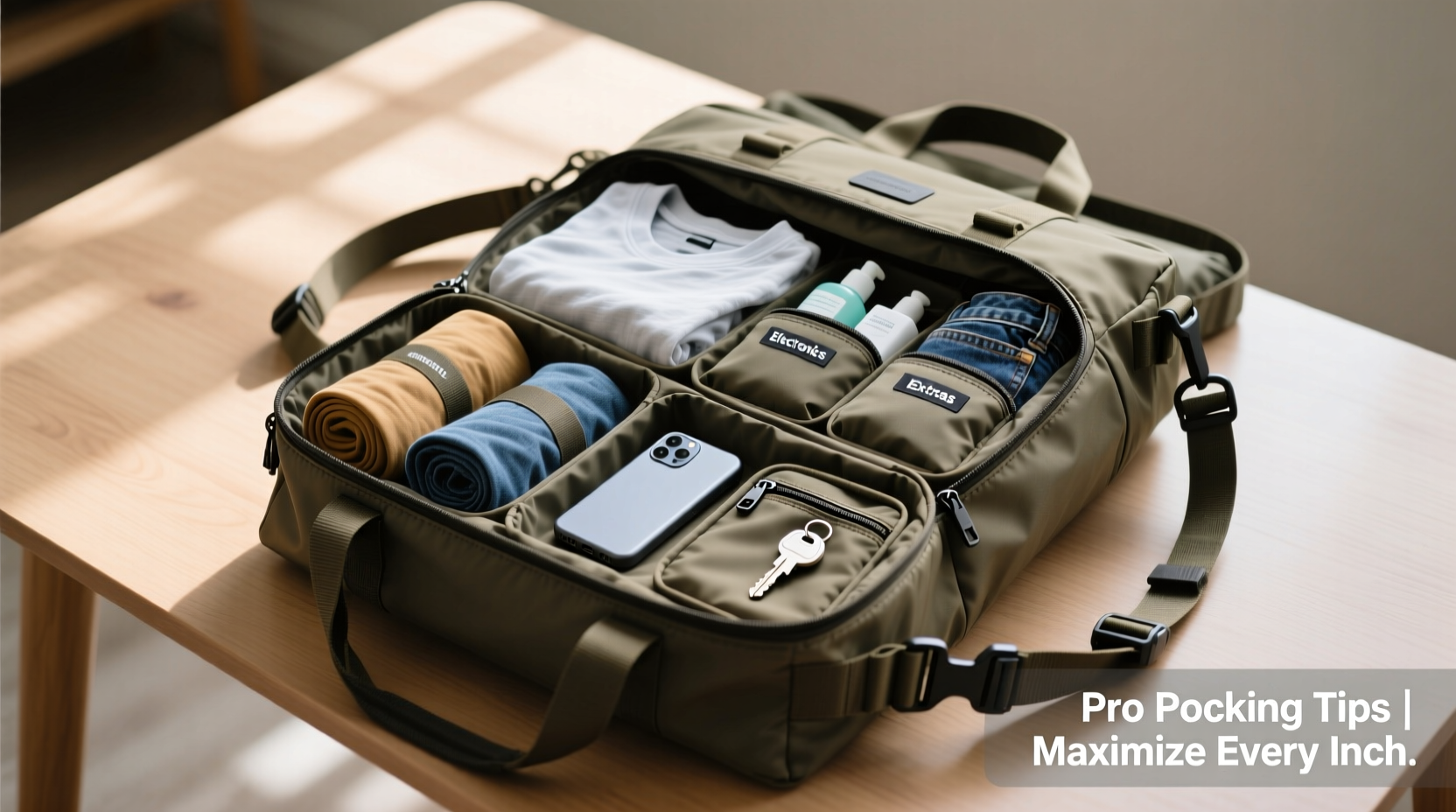
Before placing a single item inside, study the internal and external layout. Most high-capacity chest bags feature multiple zones: a main compartment, front organizational panel, side pockets, hidden anti-theft sections, and sometimes hydration sleeves or tech-specific padding. Knowing which section serves which purpose is foundational to efficient packing.
The largest volume—the main compartment—is best reserved for bulkier, less frequently accessed items like extra layers, notebooks, or packed lunches. The front flap and zippered panels are ideal for quick-access tools: passports, tickets, wallets, pens, or power banks. Side mesh pockets handle water bottles, umbrellas, or compact tripods. Some models even include RFID-blocking slots or laptop sleeves with clamshell opening for airport screening.
“Efficiency starts with spatial awareness. Treat your bag like a miniature office—you wouldn’t toss files randomly onto a desk; don’t do it in your bag.” — Jordan Lin, Urban Mobility Consultant
Weight Distribution and Ergonomics
Even the most organized chest bag becomes burdensome if weight is poorly balanced. Unlike backpacks, chest bags concentrate load across the upper torso, making center-of-gravity critical. Items should be arranged so heavier objects sit close to the sternum, aligned with your body's midline. Avoid loading one side excessively, as this causes shoulder strain and posture drift over time.
Laptops, books, and water bottles are common heavy items. Place them vertically in the central compartment, ideally against the back panel. Never let weight shift downward toward the lower edges—this pulls the bag forward, increasing neck and shoulder fatigue.
| Item Type | Recommended Placement | Risks of Poor Placement |
|---|---|---|
| Laptop (13–15\") | Central padded sleeve, back-facing | Spine pressure, awkward reach |
| Water Bottle | Side mesh pocket, mid-height | Bag tilting, imbalance |
| Power Bank & Cables | Front zippered organizer | Tangled cords, slow access |
| Jacket or Layer | Main compartment, bottom layer | Compression of fragile items |
| Wallet / ID | Inner flap or RFID pocket | Theft risk, fumbling access |
Step-by-Step Packing Process
Follow this sequence to build a consistently functional loadout:
- Empty and clean: Remove all contents and wipe down compartments. Dust and debris accumulate quickly, especially in zipper tracks.
- Sort by category: Group items into categories: tech, documents, personal care, food, emergency kit, etc.
- Layer from heaviest to lightest: Start with dense items (laptop, book) placed centrally and low. Add medium-weight (notebook, cables) around them. Finish with soft, compressible items (jacket, scarf) on top or in outer pockets.
- Use organizers within the bag: Insert small pouches for cables, toiletries, or medications. A zippered tech cube keeps USB drives and adapters visible and contained.
- Test accessibility: Simulate real-world use—can you grab your transit card without removing the bag? Can you unzip the main compartment while walking?
- Adjust straps and wear test: Fasten the bag and walk around for five minutes. Ensure no bouncing, pinching, or shifting. Tighten sternum strap slightly above nipple line for optimal stability.
Smart Organization Systems
Maximizing space isn't just about fitting more—it's about creating systems that reduce decision fatigue. Adopt a modular approach using dedicated containers:
- Electronics Pouch: Store chargers, earbuds, SD cards, and adapters in a neoprene roll-up case with labeled sections.
- Document Sleeve: Keep IDs, credit cards, and folded maps in a slim, rigid holder that slides into the front panel.
- Toiletry Wrap: For extended outings, use a compact roll-up with sealed compartments for hand sanitizer, lip balm, and tissues.
- Snack & Hydration Zone: Reserve a waterproof inner pocket or reusable silicone bag for food. Pair with a collapsible bottle in the side mesh.
Real-World Example: The Digital Nomad’s Setup
Maria, a freelance designer based in Lisbon, uses a 20-liter chest bag for co-working spaces and weekend trips. Her setup reflects months of refinement:
She places her 14\" laptop in the rear padded sleeve, directly against her chest. In the main compartment, she stacks a Moleskine notebook, tablet, and sweater in descending order of use frequency. Her front organizer holds a passport wallet, Apple Watch charger, and a multi-tool. On the left side, a leak-proof bottle of electrolyte water; on the right, a folded umbrella. Inside a transparent zip-lock, she keeps receipts, SIM cards, and backup cash.
After three months, Maria reports reduced back strain and faster transitions between cafes and trains. “I used to unpack everything at each stop,” she says. “Now I open one zipper and find exactly what I need.”
Essential Packing Checklist
Use this checklist to ensure nothing critical is missed—and nothing unnecessary is added:
- ✅ Laptop/tablet + protective sleeve
- ✅ Phone + portable charger
- ✅ Wallet, ID, transit card
- ✅ Key set (house, car, locker)
- ✅ Minimal toiletry kit (hand sanitizer, tissues, lip balm)
- ✅ Reusable water bottle
- ✅ Lightweight jacket or packable hoodie
- ✅ Small first-aid or blister kit
- ✅ Notebook and pen
- ✅ Noise-isolating earbuds
- ✅ Backup cables (USB-C, Lightning)
- ✅ Snack bar or nuts (in sealed container)
Every item should serve a clear purpose. If you haven’t used something in the past two weeks, reconsider its daily inclusion.
Frequently Asked Questions
Can I carry a full-size DSLR camera in a chest bag?
Yes, provided the model includes a padded, customizable insert. Position the camera body upright with lenses stored horizontally beside it. Always remove the lens hood and attach the strap securely to prevent movement during transit.
How do I prevent my bag from bouncing while walking?
Bouncing usually results from loose straps or uneven weight. Tighten both shoulder and sternum straps until the bag sits snugly across your chest, roughly 2–3 inches below the collarbone. Distribute weight evenly and avoid overloading beyond 10–12% of your body weight.
Is it safe to carry a laptop in a chest bag?
Modern chest bags with suspended laptop compartments offer excellent protection for short commutes and travel. Look for models with shock-absorbing foam and back-panel access. However, for frequent air travel or rugged environments, consider adding a slim sleeve inside for extra cushioning.
Final Thoughts: Pack with Purpose
Efficient packing is not a one-time task—it’s a habit built through repetition and refinement. The goal isn’t merely to fit everything inside, but to create a seamless interface between your life and your gear. A thoughtfully packed chest bag reduces friction, enhances mobility, and supports focus by eliminating the stress of searching, over-carrying, or reorganizing on the go.
Start today: empty your bag, assess each item’s role, and rebuild your loadout using these principles. Over time, you’ll develop an intuitive sense of what belongs where. When your bag works as smoothly as your morning routine, you’ll wonder how you ever carried any other way.




 浙公网安备
33010002000092号
浙公网安备
33010002000092号 浙B2-20120091-4
Comments
No comments yet. Why don't you start the discussion?