
Finding local events that match your passions doesn’t have to be a time-consuming chore. Whether you're into live music, art exhibitions, fitness classes, or niche hobby meetups, there’s a growing ecosystem of tools and strategies designed to connect you with what's happening in your area. With the right approach, discovering engaging, community-driven experiences can become seamless—and even part of your weekly routine.
The key lies not just in knowing where to look, but in how to filter noise, set up personalized alerts, and leverage both digital platforms and real-world networks. This guide walks through proven methods to uncover high-quality local events tailored to your interests—without endless scrolling or missed opportunities.
Why Local Events Matter More Than Ever
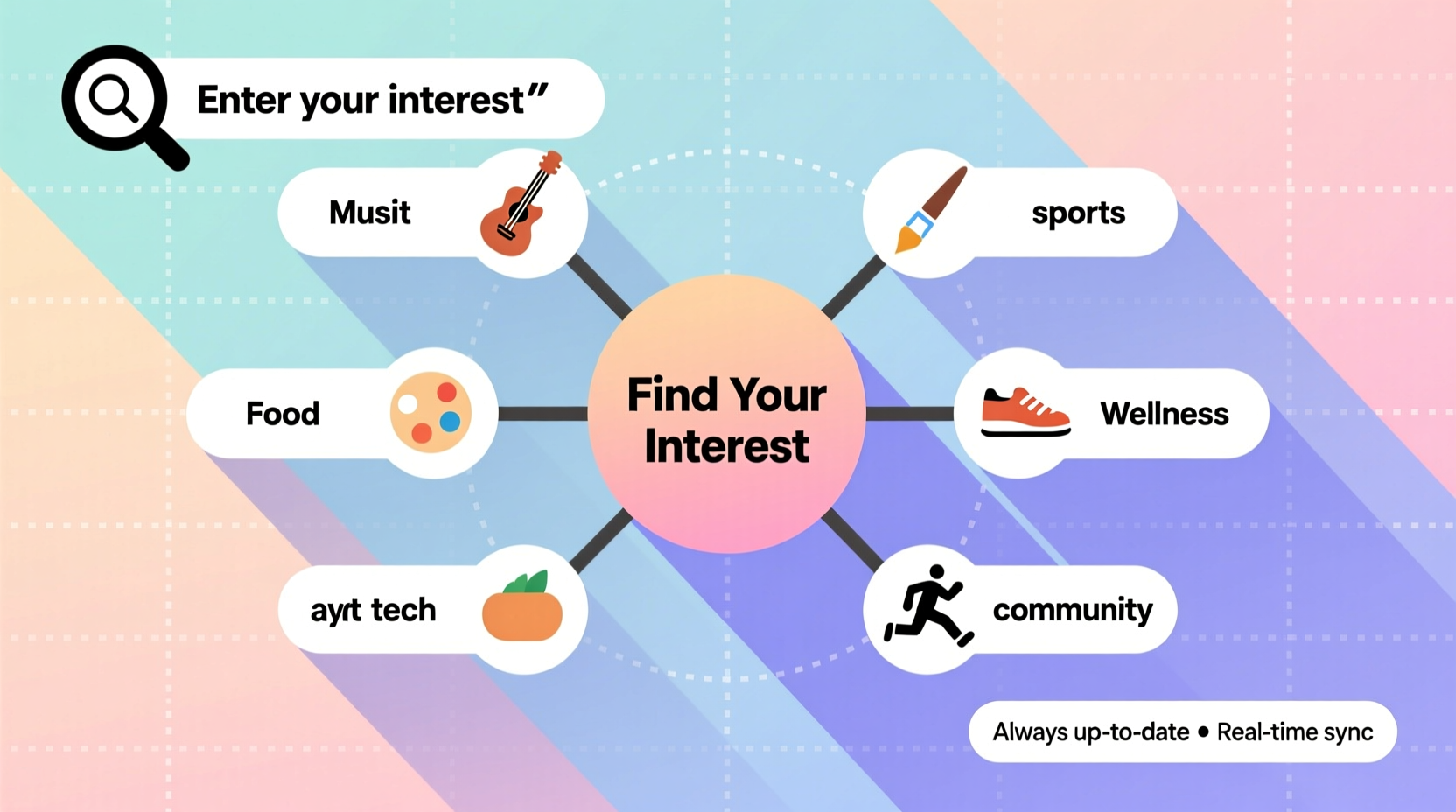
In an age dominated by digital interaction, local events offer something irreplaceable: authentic human connection. They foster community, spark inspiration, and often provide unique experiences you won’t find online. From small farmers markets to indie film screenings, these gatherings enrich daily life and support local economies.
Yet many people miss out simply because they don’t know where—or how—to look. The misconception that “nothing ever happens around here” is usually rooted in poor discovery habits, not actual lack of activity. By refining your search strategy, you open doors to a vibrant cultural landscape right in your backyard.
“People underestimate the power of proximity. Some of the most transformative experiences happen within five miles of home.” — Dana Reyes, Urban Community Engagement Specialist
Top Platforms to Find Events by Interest
Different platforms cater to different types of events. Knowing which ones align with your interests saves time and increases relevance.
| Platform | Best For | Key Feature |
|---|---|---|
| Eventbrite | Workshops, conferences, classes | Advanced filters by date, price, category |
| Meetup | Hobby groups, networking, social clubs | Recurring member-based communities |
| Facebook Events | Local parties, concerts, pop-ups | Integration with friends’ plans and location |
| Google Search (\"events near me\") | Real-time discovery on mobile | Instant results based on current location |
| Nextdoor | Hyperlocal neighborhood happenings | Resident-only verified posts |
Step-by-Step: Building Your Personalized Event Discovery System
Relying on chance isn’t efficient. A structured system ensures you never miss an event you’d love. Follow this timeline to build one in under an hour.
- Define your top 3 interests (e.g., photography, yoga, craft beer).
- Create dedicated email filters for event newsletters (e.g., “Events – [City Name]” folder).
- Sign up for 2–3 core platforms relevant to your interests (e.g., Eventbrite + Meetup).
- Enable location services on apps so recommendations are automatically localized.
- Set up weekly alerts (e.g., every Monday morning, check saved searches).
- Add one new event per month outside your comfort zone to expand horizons.
This system turns passive browsing into proactive engagement. Over time, algorithms learn your preferences, and notifications become increasingly accurate.
Hidden Gems: Offline & Community-Based Discovery Methods
Digital tools dominate, but some of the best events aren’t advertised online. Physical bulletin boards at coffee shops, libraries, and co-working spaces often list grassroots gatherings not found on major platforms. Local bookstores frequently host author readings; community centers run low-cost classes.
Volunteering is another powerful—but overlooked—gateway. Helping organize a festival or charity run gives early access to schedules and insider knowledge about future happenings. It also connects you with passionate locals who become personal event curators.
“I found my favorite monthly poetry slam because I volunteered to help set up chairs. Now I go every time.” — Marcus Tran, Attendee & Volunteer, Seattle
Checklist: Optimize Your Event-Finding Routine
- ✅ Audit your current event sources—remove outdated or irrelevant ones.
- ✅ Install one new app focused on your primary interest (e.g., Bandsintown for music).
- ✅ Follow 3 local organizations or venues on social media.
- ✅ Subscribe to a city-run newsletter or arts council update.
- ✅ Schedule a recurring 15-minute “event check” each week.
- ✅ Attend at least one event per month, even if solo.
Avoid These Common Event-Discovery Mistakes
Even frequent attendees fall into traps that limit their options. Steering clear of these pitfalls improves both quantity and quality of discoveries.
- Over-relying on one platform – No single site has everything. Diversify your sources.
- Ignoring free events – Some of the best experiences cost nothing (e.g., gallery openings, street fairs).
- Skipping RSVPs – Even for drop-in events, registering shows interest and may unlock perks.
- Not checking accessibility details – Verify public transit access, ADA compliance, and entry fees upfront.
Real Example: How Sarah Found Her Niche Running Group
Sarah moved to Denver and wanted to stay active while meeting people. She tried searching “running events near me” but kept seeing marathon expos and races she wasn’t ready for. Frustrated, she shifted tactics.
Instead of broad searches, she typed “beginner running group Denver” into Google and discovered a Meetup called “Trail Mates,” a casual weekly joggers’ collective. She attended her first session the next Saturday. Within two months, she’d made close friends and completed her first 10K.
Her breakthrough came from refining keywords and using community-focused platforms rather than generic event directories. Precision—not volume—led to success.
FAQ: Quick Answers to Common Questions
How far in advance should I look for local events?
For weekends, start checking mid-week (Tuesday–Thursday). Popular events fill quickly. Weekday events can often be decided 1–2 days ahead.
Are free events worth attending?
Absolutely. Many free events are hosted by artists, nonprofits, or brands building community presence. Quality varies, but the barrier to entry allows experimentation without risk.
What if there are no events for my very specific hobby?
Consider starting one. Platforms like Meetup allow you to create a group with as few as two members. Often, others share your interest but haven’t spoken up either.
Final Tips for Effortless, Ongoing Discovery
Maintaining momentum is easier than starting from scratch. Once your system is in place, keep it fresh with minor updates:
- Every quarter, review your subscriptions and unsubscribe from inactive lists.
- Ask friends what events they’ve enjoyed recently—word-of-mouth remains powerful.
- Use calendar integrations (like Google Calendar auto-import) to visualize your social rhythm.
The goal isn’t to attend every event, but to always have a few appealing options at hand. That sense of possibility—knowing something interesting is happening nearby—is what makes a place feel like home.
Take Action Today
You don’t need to overhaul your lifestyle to enjoy more local events. Start small: pick one platform you’ve never used, sign up, and explore events for your favorite interest this week. Click “Going” on one thing—even if you’re unsure. Momentum builds from action, not perfection.




 浙公网安备
33010002000092号
浙公网安备
33010002000092号 浙B2-20120091-4
Comments
No comments yet. Why don't you start the discussion?