
A large capacity crossbody bag offers unmatched versatility—ideal for travel, daily commutes, or weekend adventures. Yet, without proper organization, it can quickly become a chaotic pit of misplaced keys, tangled cords, and forgotten receipts. The difference between a functional powerhouse and a cluttered burden lies not in size, but in strategy. With intentional systems and smart spatial planning, you can transform your spacious crossbody into an efficient, accessible, and stress-free extension of your lifestyle.
Why Organization Matters in Large Capacity Bags
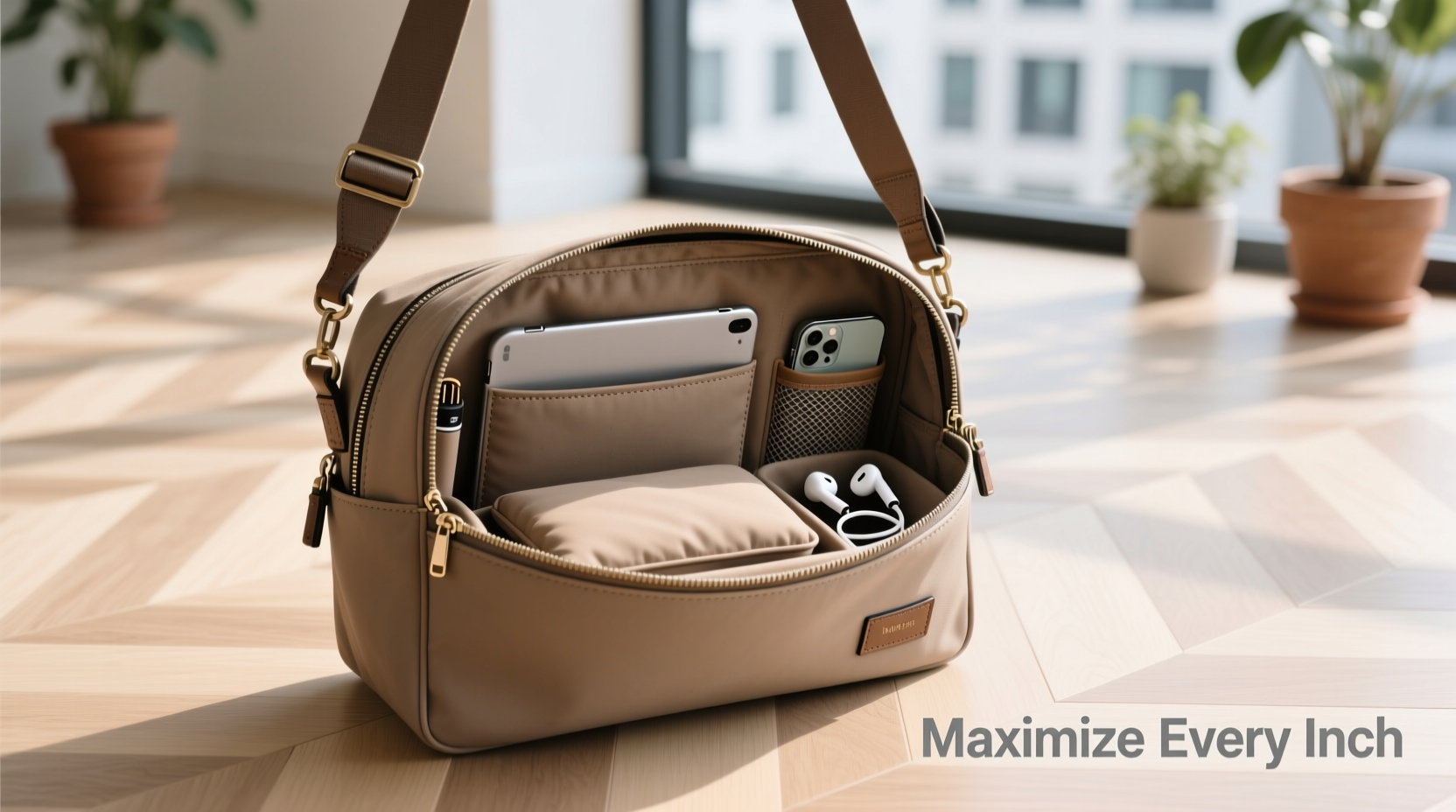
It’s a common misconception that more space equals more convenience. In reality, oversized compartments often lead to disorganization because items get buried, visibility drops, and retrieval becomes frustrating. A well-organized large crossbody bag isn’t just about fitting more—it’s about accessing what you need instantly, protecting delicate items, and reducing mental load throughout the day.
Studies in behavioral psychology suggest that physical clutter contributes to cognitive overload. When your bag is a black hole of uncertainty, each time you reach in, you expend small amounts of mental energy searching and sorting. Over days and weeks, this accumulates into unnecessary stress. Efficient organization counters that by creating predictable zones and reliable access.
The Foundation: Declutter Before You Organize
No organizational system works if it’s built on excess. Begin with a complete emptying of your bag. Lay everything out and categorize items into three groups: essentials, situational tools, and clutter.
- Essentials: Phone, wallet, keys, lip balm, hand sanitizer, sunglasses.
- Situational: Notebook, pens, portable charger, snacks, reusable mask.
- Clutter: Old receipts, duplicate adapters, expired coupons, broken earbuds.
Be ruthless. If you haven’t used an item in the past month—and it’s not seasonal—remove it. A 2023 consumer behavior survey found that the average person carries 7 non-essential items daily, adding up to nearly 2 extra pounds over time. Reducing weight improves comfort and posture, especially during extended wear.
“Organization starts with subtraction. You can’t optimize space until you know what truly belongs.” — Lena Torres, Productivity Consultant & Author of *Carry Less, Live More*
Step-by-Step: Building Your Ideal Layout
Follow this five-step process to build a customized system tailored to your routine:
- Assess Your Daily Needs: Track what you use hourly for three days. Note patterns—when do you charge your phone? Do you carry a water bottle? This reveals usage peaks and gaps.
- Map Compartments: Sketch your bag’s interior. Label existing pockets: main chamber, front zip, side slip, inner divider, etc.
- Assign Zones: Group similar items:
- Quick-Access Zone: Outer pockets for phone, transit card, keys.
- Electronics Hub: Main pocket with padded sleeve for power bank, cables, earbuds.
- Personal Care Corner: Small pouch for tissues, sanitizer, tampons.
- Documents & Notes: Flat pocket for ID, cards, folded notebook.
- Use Modular Inserts: Invest in slim, lightweight organizers—zippered pouches, foldable cable wraps, or silicone coin cases. These act as “furniture” inside your bag, defining spaces without rigidity.
- Test and Refine: Use the system for two days. Adjust based on friction points—e.g., if you’re fumbling for your keys, move them to a shallower pocket.
Smart Storage Solutions and Accessories
Not all bags come with optimal internal design. Enhance yours with targeted accessories that maximize utility without bulk.
| Solution | Purpose | Best For |
|---|---|---|
| Mini Zip Pouch (3x5 in) | Contains small items like pills, USB drives, SIM ejector tool | Frequent travelers, tech users |
| Magnetic Key Clip | Attaches keys to bag lining; prevents noise and scratches | Minimalists, urban commuters |
| Foldable Tote Bag (packable) | Stored inside for impromptu shopping or laundry transport | Errand runners, parents |
| Roll-Up Cable Organizer | Keeps charging cables tangle-free with labeled slots | Digital nomads, students |
| RFID-Blocking Cardholder | Protects credit cards from digital theft in public spaces | Commuters, international travelers |
Real-Life Example: From Chaos to Control
Sophie, a freelance photographer based in Portland, carried a 14L canvas crossbody loaded with lenses, batteries, notebooks, and personal items. She often missed client calls because her phone was buried under lens caps and snack wrappers. After spending 20 minutes unpacking at cafes, she realized her bag was hindering her workflow.
She applied the zone system: installed a padded electronics sleeve, added a magnetic key holder, and began using color-coded pouches—blue for camera accessories, red for personal care. Within a week, she reduced retrieval time for critical items by 70%. “Now I open my bag and see everything at a glance,” she said. “It feels like I gained an hour a week.”
Do’s and Don’ts of Crossbody Organization
| Do | Don’t |
|---|---|
| Use vertical stacking with flat pouches to maintain visibility | Overstuff the main compartment—leave 20% free space for flexibility |
| Label pouches with masking tape or mini tags for quick ID | Store liquids without sealing—use silicone sealant on zippers of liquid containers |
| Rotate seasonal items weekly (e.g., swap sunscreen for hand warmers) | Keep sharp objects loose—always place scissors or multitools in protective sleeves |
| Clean compartments monthly with microfiber cloth and mild soap | Ignore weight distribution—keep heavy items centered and low to prevent shoulder strain |
Frequently Asked Questions
How do I keep my bag from sagging when fully packed?
Distribute weight evenly and avoid placing all heavy items (like books or laptops) in one corner. Use structured inserts or a small rigid tray at the base to maintain shape. Also, ensure the shoulder strap is adjusted so the bag rests snugly against your back, not dangling low.
What’s the best way to organize cords and chargers?
Use a roll-up organizer with elastic loops or a compact case with labeled sections. Wrap each cable around a cardboard strip or use velcro ties before storing. Never coil cords tightly around devices—they degrade faster. Unplug connectors after use to prevent port damage.
Can I wash the interior of my crossbody bag?
Most manufacturers advise against submerging bags. Instead, spot-clean with a damp microfiber cloth and mild detergent. For fabric linings, use a soft brush to remove dust. Always air-dry completely away from direct heat. Check the care label—if unsure, test on a small hidden area first.
Final Checklist: Maintain Your System Weekly
- Empty and wipe down all compartments
- Reassess which items were used vs. carried unused
- Recharge power banks and replace depleted batteries
- Restock consumables (tissues, sanitizer, bandaids)
- Verify all zippers and straps function smoothly
- Update seasonal items (sunscreen, gloves, umbrella)
Conclusion: Transform Function Into Freedom
An organized large capacity crossbody bag does more than hold things—it supports your rhythm, reduces friction, and empowers mobility. When every item has a home, you stop managing your bag and start living through it. The effort invested in thoughtful layout pays compound dividends in time saved, stress reduced, and confidence gained.
You don’t need perfection—just intention. Start tonight: empty your bag, remove three unnecessary items, and place your phone and keys in designated spots. Build from there. Share your setup in the comments or tag a friend who needs this guide—because great organization shouldn’t stay hidden in a pocket.




 浙公网安备
33010002000092号
浙公网安备
33010002000092号 浙B2-20120091-4
Comments
No comments yet. Why don't you start the discussion?