
For millions of cat owners, managing litter boxes is a daily necessity—but it doesn’t have to be a constant drain on time, resources, and budgets. Cat litter can be one of the most frequently replaced household supplies, often used in large quantities and discarded far too soon. However, with smarter choices and consistent maintenance, you can significantly extend the life of each litter batch, reduce environmental impact, and save hundreds of dollars annually.
The key lies not in cutting corners on cleanliness, but in optimizing how you use, maintain, and store your litter. From choosing the right type to mastering scooping routines, every decision affects longevity. This guide breaks down proven strategies that go beyond basic advice, delivering real-world solutions backed by veterinary insight and owner experience.
Choose the Right Litter Type for Maximum Efficiency
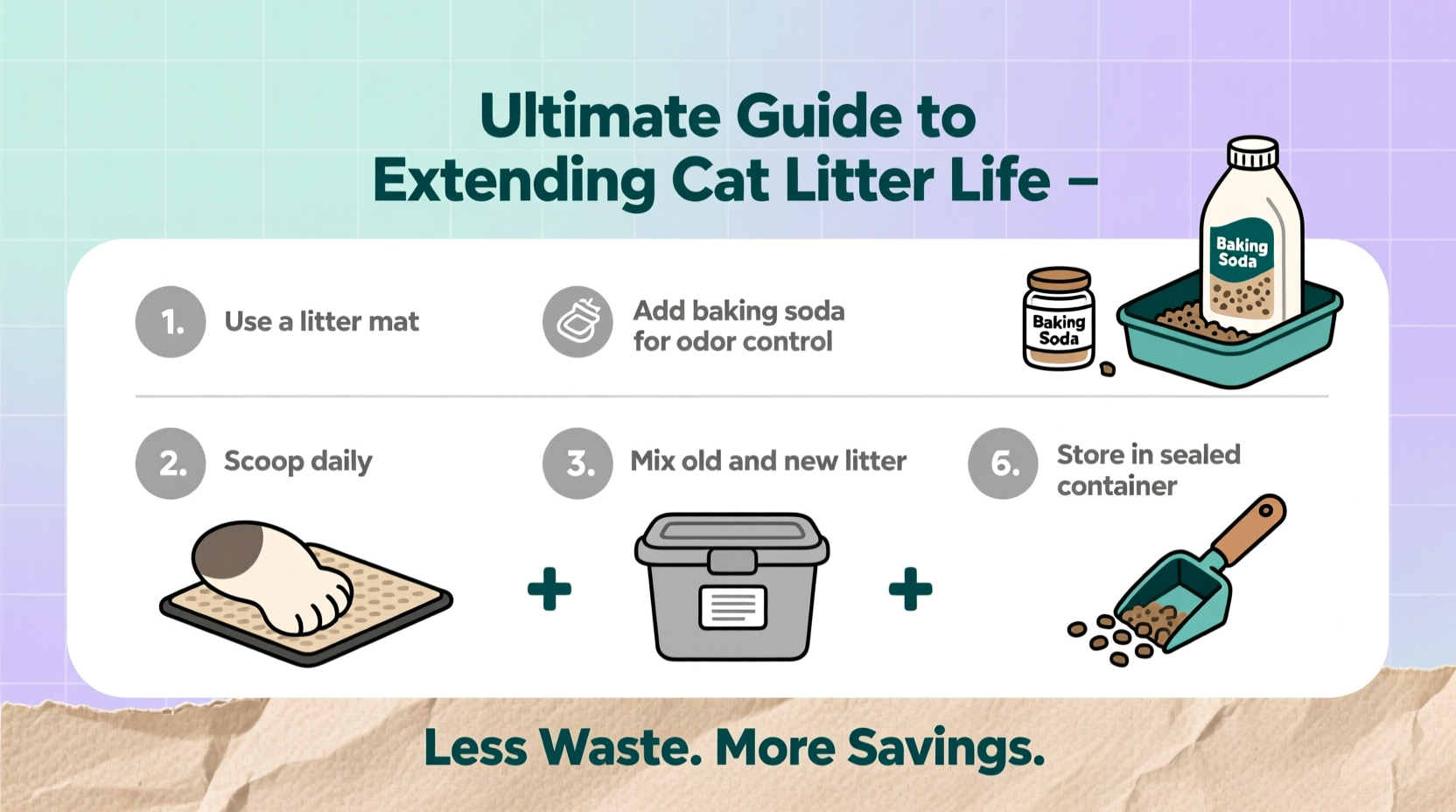
Not all litters are created equal when it comes to lifespan. The type you select directly influences how long it lasts before needing replacement. Clumping clay, silica gel crystals, natural plant-based, and recycled paper litters each behave differently under use.
| Litter Type | Clumping Ability | Absorbency | Typical Lifespan (per pound) | Best For |
|---|---|---|---|---|
| Clay (Clumping) | High | Good | 2–3 weeks | Daily scoopers; multi-cat homes |
| Silica Gel Crystals | Non-clumping (absorbs) | Excellent | 4+ weeks | Odor control; low maintenance |
| Wood Pellets | Moderate (forms soft clumps) | Fair | 2–3 weeks | Eco-conscious owners |
| Wheat/Corn-Based | Good | Good | 2–3 weeks | Biodegradable needs |
Silica gel crystals, while higher in upfront cost, last significantly longer due to their superior moisture absorption and odor-trapping capabilities. They don’t clump but form a dry top layer even after weeks of use, making them ideal for owners seeking low-waste solutions.
Optimize Scooping Frequency and Technique
Daily scooping isn’t just about hygiene—it’s the single most effective way to extend litter life. Removing waste promptly prevents bacterial breakdown, ammonia buildup, and premature saturation of surrounding granules.
Use a high-quality sifter scoop with fine mesh to separate clean litter from clumps efficiently. Avoid over-scooping: aggressive stirring or removing too much material during cleaning wastes usable product. Instead, focus only on soiled clumps and loose debris.
- Scoop at least once per day, preferably at the same time.
- Hold the scoop just below the surface to avoid pulling up clean litter.
- Shake gently over the box to return sifted litter.
- Dispose of waste in sealed bags to prevent odor migration.
In multi-cat households, increase scooping to twice daily. A study by the American Association of Feline Practitioners found that litter boxes cleaned more than once daily retained freshness 40% longer than those cleaned once every other day.
Control Moisture and Humidity Levels
Moisture is the enemy of long-lasting litter. High humidity causes clay and plant-based litters to break down faster, lose clumping ability, and develop odors prematurely. Bathrooms and basements—common litter locations—are especially prone to damp air.
Place the litter box in a well-ventilated area away from showers, washing machines, or exterior doors. Consider using a small dehumidifier in rooms where relative humidity exceeds 50%. Even a fan running periodically can improve airflow and reduce moisture retention in litter.
“Humidity accelerates litter degradation almost as much as urine volume. Controlling the environment around the box is half the battle.” — Dr. Lena Torres, DVM, Feline Health Consultant
Implement a Layered Litter Strategy
A smart layering technique can dramatically improve performance and longevity. This method involves combining two compatible litter types to maximize benefits:
- Bottom Layer (1–2 inches): Use highly absorbent silica crystals or baking soda to trap moisture and neutralize odors.
- Top Layer (2–3 inches): Add your preferred clumping litter for texture and ease of digging.
The base layer absorbs excess liquid before it spreads through the top, preserving clumping efficiency and reducing overall saturation. Owners report up to 30% longer usage per bag when using this dual-layer system.
Storage Matters: Keep Unused Litter Fresh
Litter begins degrading the moment it’s exposed to air and moisture. Storing it improperly shortens its shelf life before it even reaches the box.
Transfer unused litter into airtight plastic bins with locking lids. Avoid leaving it in the original cardboard packaging, which absorbs ambient humidity. Store the container in a cool, dry closet or pantry—never in garages or under sinks where temperature fluctuates.
If using scented litter, keep it sealed tightly to preserve fragrance agents, which degrade quickly when exposed to oxygen.
Checklist: Maximize Litter Longevity
- ☑ Scoop waste at least once daily
- ☑ Top off litter to maintain 3–4 inch depth
- ☑ Wipe interior walls of box with odor-neutralizing cleaner
- ☑ Check for tracking and clean surrounding floor
- ☑ Inspect storage container seal integrity
- ☑ Rotate boxes monthly if multiple are used
Real Example: How One Household Cut Litter Costs by 60%
Sarah M., a pet owner in Portland with three cats, was replacing her litter every 10 days—spending nearly $700 a year. After consulting a feline behavior specialist, she implemented several changes:
- Switched from standard clay to a silica-crystal/clay hybrid system
- Moved boxes from basement to laundry room with better ventilation
- Started daily double-scooping (morning and evening)
- Began storing unused litter in sealed 5-gallon buckets
Within six weeks, she extended litter life to five weeks per batch. Her annual spending dropped to $280—a 60% reduction—without compromising cleanliness or her cats’ comfort.
Frequently Asked Questions
How often should I completely change the litter?
With proper scooping and maintenance, a full change is needed every 3–5 weeks for clumping litter, and up to 6 weeks for silica crystal varieties. Always wash the box thoroughly between refills using mild soap and water—avoid ammonia-based cleaners, which repel cats.
Can adding baking soda extend litter life?
Yes. Baking soda is a natural odor neutralizer. Mix ½ cup into a fresh batch or place an open box beneath the litter box to absorb ambient smells. It won’t increase absorbency but helps delay odor-related replacement.
Is it safe to reuse litter that’s been sifted?
No. Once litter has absorbed urine—even if clumped and removed—microbial residue remains. Reusing any portion poses hygiene risks and increases ammonia exposure. Always discard used clumps and replenish with fresh product.
Final Steps Toward Smarter Litter Management
Extending cat litter life isn’t about doing less—it’s about doing better. Every scoop, storage choice, and product selection compounds over time into significant savings and reduced ecological footprint. By choosing high-performance litters, maintaining strict hygiene, controlling environmental factors, and adopting layered systems, you create a sustainable cycle that benefits both your wallet and your cat’s well-being.
The habits outlined here require minimal extra effort but deliver outsized returns. Start with one change—like switching to airtight storage or adjusting your scooping schedule—and build from there. Small improvements add up fast.




 浙公网安备
33010002000092号
浙公网安备
33010002000092号 浙B2-20120091-4
Comments
No comments yet. Why don't you start the discussion?