
In a world of mass-produced fashion, standing out means embracing individuality. One of the most accessible ways to express personal style is through customizing everyday items—especially your bags. Whether it’s a tote, backpack, crossbody, or clutch, adding handmade accessories transforms an ordinary carryall into a statement piece. This guide explores how to discover inspiration, source materials, and craft one-of-a-kind additions that reflect your personality, values, and creativity.
Why Customize Your Bag Accessories?
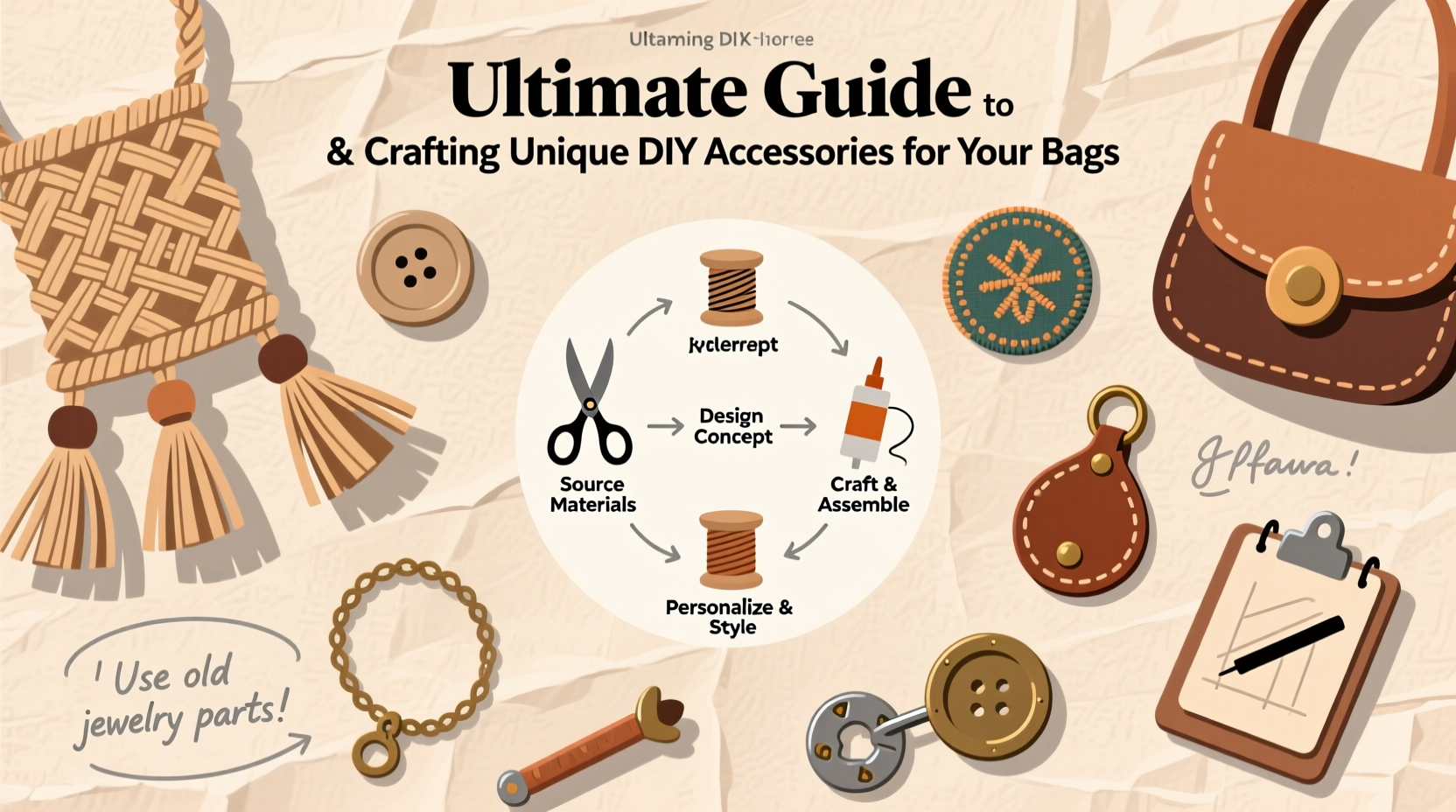
Bag accessories do more than decorate—they tell stories. A tassel from a trip to Morocco, a charm representing a hobby, or a hand-stitched patch made from recycled fabric all add layers of meaning. Beyond aesthetics, customization offers practical benefits: improved functionality (like added key clips), protection (dust flaps or corner guards), and emotional connection to your belongings.
Designers like Stella McCartney have long championed personalization as part of sustainable fashion. As she notes:
“Personalization isn’t just about style—it’s a commitment to keeping pieces longer by making them uniquely yours.” — Stella McCartney, Sustainable Fashion Designer
When you invest time in crafting your own accessories, you reduce reliance on fast fashion and contribute to a slower, more intentional wardrobe.
Finding Inspiration: Where Creativity Begins
Original ideas don’t come from scrolling endlessly through social media. They emerge from observation, memory, and experimentation. Start by asking: What emotions or memories do I want my bag to evoke? Adventure? Calm? Rebellion?
- Travel souvenirs: Turn buttons, coins, or small trinkets collected abroad into charms.
- Nature walks: Sketch leaves, stones, or bark patterns to replicate in fabric or clay.
- Vintage markets: Study old purses, military gear, or costume jewelry for retro design cues.
- Cultural symbols: Incorporate motifs from your heritage—embroidery styles, knotting techniques, or traditional color palettes.
Materials & Tools: Building Your DIY Kit
You don’t need a fully equipped studio to begin. Most effective accessories are made from simple, accessible supplies. The key is matching material to function and durability.
| Material | Best For | Pros | Cons |
|---|---|---|---|
| Felt | Patches, pom-poms | Durable, no fraying, easy to cut | Limited texture variation |
| Leather scraps | Tabs, straps, edging | Long-lasting, ages beautifully | Requires special tools |
| Embroidery floss | Tassels, friendship bracelets | Vibrant colors, affordable | Can fray if not sealed |
| Recycled zippers/buttons | Charm clusters, zipper pulls | Eco-friendly, unique finishes | May require cleaning/sanding |
| Beads (glass, wood, metal) | Strap accents, fringe | Adds elegance and movement | Heavy if overused |
Essential tools include sharp scissors, fabric glue, needle and thread, pliers (for jump rings), and a hole punch for leather or vinyl. Store everything in a labeled container so you can start creating without setup delays.
Step-by-Step: Crafting a Custom Tassel & Charm Set
A tassel paired with a meaningful charm is both elegant and simple to make. Follow this timeline to complete your first accessory in under two hours.
- Gather supplies: Embroidery floss (3 colors), cardboard strip (2” x 4”), scissors, ruler, beads, jump ring, lobster clasp.
- Create the tassel: Wrap floss around the cardboard 20 times. Cut another 6-inch strand and slide it between the loops at the top; tie tightly. Cut the bottom loops and tie another strand 1 inch down to form the head.
- Trim and shape: Even the ends with scissors for a clean look. Optionally, lightly singe synthetic fibers with a match (do this carefully in a sink).
- Add a bead accent: Slide a wooden or metal bead onto a thin wire, twist into a loop, and attach beneath the tassel head using the jump ring.
- Attach closure: Secure the jump ring to a lobster clasp so it can hook onto zippers or D-rings.
- Test and adjust: Clip onto your bag. If too heavy, replace the bead with a lighter alternative.
Real Example: Maya’s Upcycled Denim Patch Project
Maya, a college student in Portland, wanted her canvas backpack to feel more “her.” Instead of buying new, she repurposed an old pair of jeans. She cut a pocket section with stitching intact, backed it with iron-on fusible webbing, and applied it over a worn area on her bag. Then, she stitched colorful yarn flowers along the edges using a whipstitch.
The result wasn’t flawless—but it was authentic. Classmates began asking where she bought the design. When she explained it was handmade from scrap fabric, three friends asked her to teach a mini workshop at their campus sustainability club. What started as personal expression sparked community engagement.
Do’s and Don’ts of Bag Accessorizing
To maintain balance between creativity and practicality, follow these guidelines:
| Do | Don't |
|---|---|
| Match hardware finishes (e.g., all gold or all silver) | Mix metals haphazardly |
| Test weight before permanent attachment | Add heavy pendants that strain straps |
| Use washable glue for temporary placements | Glue directly without allowing repositioning |
| Secure moving parts like tassels with double knots | Ignore wear points (e.g., frequent rubbing zones) |
| Consider seasonality (e.g., bright tassels for summer) | Keep bulky winter charms year-round |
Checklist: Launch Your First DIY Accessory Project
- ☐ Choose one bag to personalize
- ☐ Identify its primary use (work, travel, casual)
- ☐ Select 1–2 accessory types (patch, tassel, strap wrap)
- ☐ Gather materials from home or eco-conscious suppliers
- ☐ Sketch a quick design or layout
- ☐ Make a prototype with temporary adhesives
- ☐ Evaluate comfort, balance, and durability
- ☐ Finalize with secure stitching or industrial glue
- ☐ Share photos or tips with a friend
Frequently Asked Questions
Can I remove a DIY accessory if I change my mind?
Absolutely. Sewn elements can be unpicked carefully. Glued items may leave residue, but most can be cleaned with rubbing alcohol or gentle solvents depending on the surface. Always test removal methods on an inconspicuous area first.
How do I keep handmade accessories from looking messy?
Consistency is key. Stick to a cohesive color scheme, limit the number of techniques (e.g., don’t combine embroidery, paint, and beads unless planned), and ensure symmetry when placing dual elements like side tassels. Step back frequently while working to assess overall balance.
Are DIY accessories durable enough for daily use?
Yes—if constructed thoughtfully. Reinforce stress points with bar tacks (tight zigzag stitches) or rivets. Avoid fragile materials like paper or untreated cotton in high-friction areas. Rotate accessories seasonally to extend their life.
Make It Yours—And Make It Last
Creating DIY bag accessories isn’t just a craft—it’s an act of self-definition. Each stitch, knot, or glued element reflects choices only you could make. In a culture saturated with sameness, your bag becomes a quiet rebellion: proof that beauty lives in imperfection, intention, and hands-on creation.
Start small. Try one tassel. Repurpose one scrap. Attach one symbol that means something. Over time, your collection will grow—not just in quantity, but in story. And when someone asks, “Where did you get that?” you’ll smile and say, “I made it.”




 浙公网安备
33010002000092号
浙公网安备
33010002000092号 浙B2-20120091-4
Comments
No comments yet. Why don't you start the discussion?