
Remote work has become a defining feature of modern employment, and few companies symbolize both innovation and flexibility like Google. Landing a remote role at Google is more than just securing a high-paying tech job—it’s about joining a culture that values autonomy, problem-solving, and global collaboration. However, competition is fierce, and succeeding in a remote setup demands discipline, technical readiness, and emotional intelligence. This guide breaks down exactly how to position yourself as an ideal candidate and thrive once you're in.
Understanding Google’s Remote Work Culture
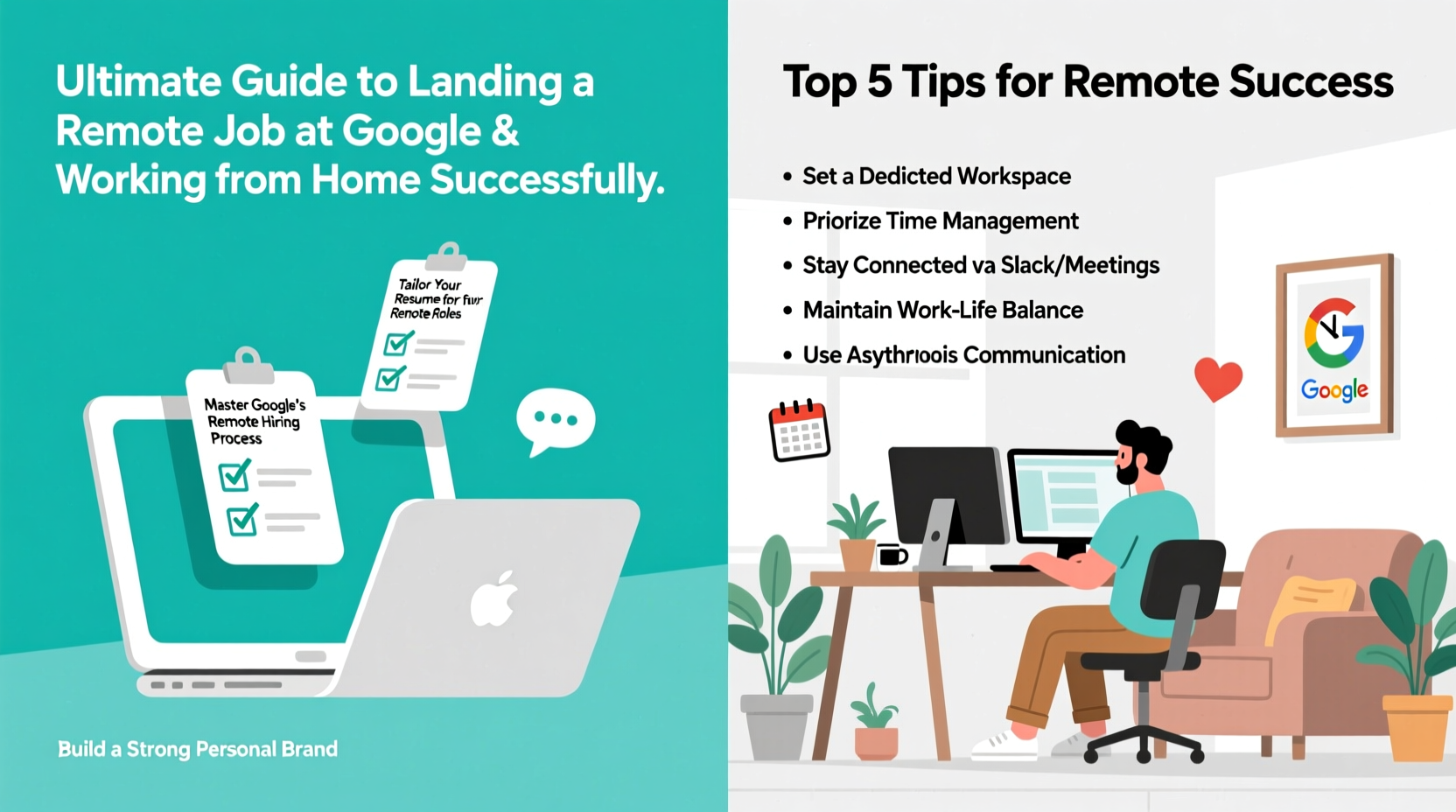
Google doesn’t advertise “remote-only” roles as frequently as some fully distributed startups, but many positions—especially in engineering, UX design, product management, and customer success—offer flexible or hybrid arrangements. The company uses a model called \"Hybrid Flexible,\" allowing teams to define their own norms based on project needs. That means remote employees must demonstrate exceptional communication skills, self-direction, and reliability to earn trust across time zones.
Google prioritizes candidates who show initiative, adaptability, and strong written communication—skills critical when most interactions happen asynchronously via email, Docs, or Chat. Unlike traditional offices where visibility equals contribution, remote success at Google depends on delivering measurable outcomes and maintaining transparency through documentation.
“Remote work at Google isn’t about location—it’s about impact. We look for people who can operate independently, collaborate inclusively, and ship results without constant oversight.” — Lena Patel, Engineering Manager, Google Cloud
How to Land a Remote Role at Google: A Step-by-Step Guide
Getting hired by Google remotely follows the same rigorous process as onsite roles—but your application must clearly signal that you’re built for distributed work. Here’s how to navigate it strategically.
- Target Roles Designed for Flexibility: Use filters on Google Careers (careers.google.com) and select “Remote” under location. Focus on departments known for remote-friendly workflows: Software Engineering, Technical Writing, Data Analytics, and certain Product Management tracks.
- Optimize Your Resume for ATS & Remote Signals: Include keywords like “asynchronous collaboration,” “cross-functional coordination,” “distributed team,” and “remote project delivery.” Quantify achievements and emphasize tools like GitHub, Jira, or Confluence if applicable.
- Write a Cover Letter That Addresses Remote Competence: Don’t just repeat your resume. Explain how you’ve worked independently before, managed time across time zones, or resolved conflicts over digital channels. Show awareness of remote challenges and how you overcome them.
- Prepare for Behavioral and Technical Interviews: Expect multiple rounds, including coding challenges (for engineers), case studies (for PMs), and behavioral questions using the STAR method. Practice articulating how you’d handle isolation, miscommunication, or delayed feedback—all common in remote settings.
- Demonstrate Digital Presence and Thought Leadership: Google recruiters often review LinkedIn, GitHub, or public blogs. Publish technical articles, contribute to open-source projects, or share insights on platforms like Medium. Visibility builds credibility.
Essential Skills for Thriving Remotely at Google
Once hired, your ability to stay productive, connected, and engaged determines long-term success. These competencies go beyond technical expertise:
- Proactive Communication: Over-communicate context, progress, and blockers. Use status updates, async videos, or shared dashboards to keep teammates informed.
- Time Zone Agility: If working with global teams, rotate meeting times fairly and record key sessions for those who can’t attend live.
- Self-Management: Set daily goals, block focus time, and use calendar guards to prevent burnout. Tools like Google Calendar and Tasks are essential.
- Emotional Resilience: Remote work can feel isolating. Build routines that include virtual coffee chats, ERG participation, or mentorship circles.
Do’s and Don’ts of Remote Collaboration at Google
| Do | Don’t |
|---|---|
| Document decisions in shared drives or internal wikis | Rely solely on verbal agreements in meetings |
| Use emoji reactions in Chat to acknowledge messages | Assume silence means agreement |
| Schedule regular 1:1s with your manager | Wait weeks to raise concerns or ask for feedback |
| Turn on video during important discussions | Join camera-off constantly, especially in small groups |
Real Example: How Sarah Transitioned to a Remote Role at Google
Sarah Kim, a senior UX researcher based in Portland, spent two years preparing for a remote role at Google. She didn’t have direct connections, so she focused on visibility: publishing research summaries on Medium, speaking at virtual design conferences, and contributing to Google’s public UX research repository.
When a remote-facing role opened in Google’s Android Accessibility team, she tailored her application to highlight past experience leading user tests across five time zones. During the interview, she presented a case study showing how she used asynchronous video feedback to improve prototype iteration speed by 40%.
She was hired—and within six months, led a globally distributed research sprint that influenced navigation redesigns in Google Maps. Her secret? Daily check-ins via short Loom videos, meticulous note-taking in shared Docs, and scheduling bi-weekly virtual coffees with teammates to build rapport.
Checklist: Are You Ready for a Remote Job at Google?
Before applying, assess your readiness with this practical checklist:
- ✅ Resume includes remote-relevant keywords and quantified achievements
- ✅ LinkedIn profile is updated with endorsements and a clear headline (e.g., “Product Designer | Remote-First Collaborator”)
- ✅ Portfolio or GitHub reflects clean, well-documented work
- ✅ Home workspace supports uninterrupted focus (quiet, reliable internet, dual monitors if possible)
- ✅ Familiarity with Google Workspace tools (Docs, Sheets, Meet, Drive)
- ✅ Prepared answers for behavioral questions around independence, conflict resolution, and time management
- ✅ Set up a routine for tracking job applications and following up
Frequently Asked Questions
Can I get a fully remote job at Google without living near an office?
Yes, though availability varies by region and role. Google hires remote employees in select countries under local employer-of-record agreements. Check eligibility on the official careers site before applying.
Do remote employees get the same compensation and benefits?
Compensation is adjusted based on geographic pay bands, but benefits—including healthcare, parental leave, and learning stipends—are generally consistent regardless of location.
How does promotion work for remote staff?
Promotions are based on performance, impact, and peer feedback—not physical presence. Remote employees are evaluated equally through documented contributions, 360 reviews, and goal achievement.
Final Tips for Long-Term Success
Landing a remote job at Google is a milestone, but sustainability comes from daily habits. Create rituals: start each day with intention-setting, end with reflection. Participate actively in digital communities like internal Slack channels or interest-based groups. Most importantly, don’t underestimate the power of showing up consistently—even when no one is watching.
Remote work rewards those who take ownership. At Google, where innovation moves fast, being visible, responsive, and solution-oriented makes all the difference.




 浙公网安备
33010002000092号
浙公网安备
33010002000092号 浙B2-20120091-4
Comments
No comments yet. Why don't you start the discussion?